
Clogged drains are one of the most frustrating household issues, disrupting daily routines and often leading people to reach for chemical drain cleaners. While these products promise quick fixes, they come with serious drawbacks: they can damage pipes, harm septic systems, pollute waterways, and pose health risks due to toxic fumes and skin irritation. Fortunately, effective alternatives exist—right in your kitchen pantry.
Using everyday household items such as baking soda, vinegar, salt, dish soap, and boiling water, you can clear minor to moderate clogs safely and inexpensively. These methods are not only environmentally friendly but also gentler on your plumbing over time. Whether it's a sluggish kitchen sink, a slow-showering bathroom drain, or a gurgling floor trap, natural solutions can restore flow without compromising pipe integrity.
The Science Behind Natural Drain Cleaning
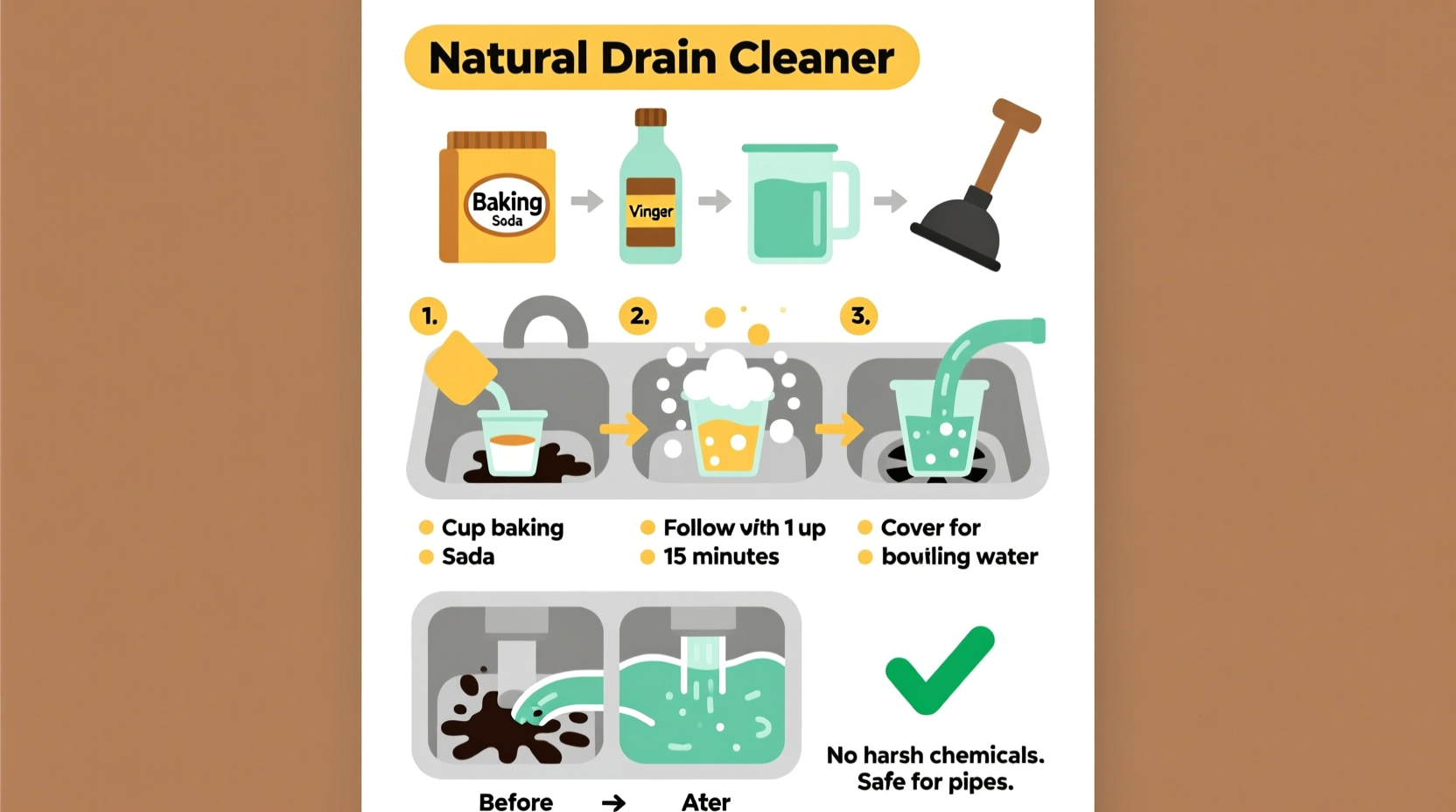
Understanding why certain household combinations work helps optimize their use. The most popular method—baking soda and vinegar—relies on a simple acid-base reaction. When combined, sodium bicarbonate (baking soda) and acetic acid (vinegar) produce carbon dioxide gas, which creates effervescence. This bubbling action helps dislodge debris stuck along pipe walls.
While the fizzing is visually impressive, its real power lies in mechanical agitation rather than dissolving organic matter. For this reason, pairing the reaction with hot water before and after enhances effectiveness by loosening grease and flushing away loosened grime.
Other ingredients play supporting roles:
- Salt acts as a mild abrasive, helping scrub buildup from pipe interiors when mixed with baking soda.
- Dish soap breaks down grease and oils, particularly useful in kitchen sinks where food residue accumulates.
- Boiling water melts congealed fats and flushes small obstructions through thermal shock.
“Natural drain maintenance prevents long-term corrosion caused by repeated exposure to caustic chemicals.” — Dr. Lena Peterson, Environmental Health Scientist at Green Plumbing Initiative
Step-by-Step Guide: Unclogging Drains Naturally
This comprehensive sequence combines multiple techniques for maximum impact. It’s ideal for moderately clogged drains showing slow drainage but not complete blockage.
- Boil two kettles of water – Start with clean, hot tap water heated just below boiling point (around 95°C or 200°F). Avoid using distilled or softened water if possible, as minerals in regular tap water aid the cleaning process.
- Pour half a cup of coarse salt followed by half a cup of baking soda directly into the drain. Coarse salt provides better abrasion than table salt. Let this mixture sit for two minutes to begin penetrating the clog.
- Add one cup of white vinegar. Immediately cover the drain opening with a plug or wet cloth to contain the fizzing reaction. Allow the mixture to work for 5–10 minutes. You’ll hear bubbling—this indicates active breakdown of organic material.
- Flush with boiling water. Slowly pour the first kettle down the drain to push out loosened debris. Follow immediately with the second kettle to ensure thorough rinsing.
- Repeat if necessary. For stubborn clogs, repeat the full cycle once more after waiting 30 minutes.
Alternative Methods for Different Clog Types
Not all clogs are created equal. Grease, hair, soap scum, and food particles each respond differently to treatment. Tailoring your approach increases success rates.
| Clog Type | Best Method | Why It Works |
|---|---|---|
| Fat/Grease (kitchen sink) | Dish soap + boiling water | Liquid dish soap emulsifies oils; hot water flushes them through |
| Hair & Soap Scum (shower/bath) | Baking soda + vinegar + salt | Abrasive mix scrubs biofilm and dislodges tangled hair |
| Food Particles (disposal line) | Baking soda + lemon juice flush | Gentle acidity clears odor-causing bacteria and softens residue |
| Mild General Sluggishness | Weekly baking soda + vinegar treatment | Prevents buildup before it becomes problematic |
Manual Assistance: When Chemistry Isn’t Enough
If natural liquids fail, physical intervention may be required—but still without chemicals. A plunger or plumber’s snake made from repurposed wire hangers can provide mechanical relief.
To use a plunger effectively:
- Seal overflow openings in double sinks with wet rags.
- Ensure enough water covers the rubber cup to create suction.
- Apply firm, steady pumps for 20 seconds, then check flow.
For showers, remove the drain cover first. Hair-based clogs often sit just beneath the surface and can be pulled out by hand or with needle-nose pliers.
Real Example: Clearing a Kitchen Sink Clog in 15 Minutes
Sarah, a home cook in Portland, noticed her kitchen sink draining slower each day after preparing several meals involving butter and oils. She avoided chemical cleaners due to having a septic system and young children.
She began by pouring a pot of near-boiling water down the drain. No improvement. Next, she added 1/2 cup of kosher salt and 1/2 cup of baking soda. After letting it sit for three minutes, she poured in one cup of apple cider vinegar (the only vinegar she had). She covered the drain with a damp cloth and waited eight minutes while the mixture bubbled vigorously.
Finally, she flushed with another full kettle of boiling water. The sink drained completely within seconds. To maintain results, Sarah now runs hot water with dish soap after every cooking session and performs the baking soda-vinegar treatment weekly.
Tip: Use apple cider or white vinegar—they’re equally effective. The color doesn’t matter, only the acetic acid content (~5%).Do’s and Don’ts of Chemical-Free Drain Care
Even with safe ingredients, improper usage can reduce effectiveness or cause minor issues. Follow this checklist to get the best results.
| Do’s | Don’ts |
|---|---|
| Use boiling water only on metal pipes (PVC can warp) | Never pour boiling water down PVC or plastic pipes |
| Cover the drain during vinegar reactions to trap pressure | Don’t mix vinegar with bleach or ammonia (toxic gas risk) |
| Run cold water after greasy meals to solidify fats before disposal | Don’t rely solely on baking soda/vinegar for deep-rooted clogs |
| Remove visible debris manually when accessible | Don’t use steel wool or sharp tools that scratch pipes |
| Perform monthly maintenance even if no clog exists | Don’t expect instant results—some clogs take repeated treatments |
When to Call a Professional
Natural remedies excel at addressing early-stage clogs caused by organic buildup. However, persistent issues may indicate deeper problems beyond DIY resolution. Signs you need professional help include:
- Water backing up into other fixtures (e.g., toilet bubbles when sink drains)
- Foul sewage odors despite cleaning
- Multiple drains clogging simultaneously
- No improvement after three attempts with natural methods
These symptoms suggest a mainline blockage, tree root intrusion, collapsed piping, or venting issues—all requiring camera inspection and mechanical clearing. Attempting aggressive plunging or improvised snaking on compromised systems could worsen damage.
“About 70% of service calls we receive involve homeowners who delayed action after failed chemical-free attempts. Early intervention saves cost and complexity.” — Mark Tran, Master Plumber at Northwest Flow Services
FAQ
Can I use lemon juice instead of vinegar?
Yes, but less effectively. Lemon juice has lower acidity (around 5–6% citric acid) compared to vinegar’s consistent 5% acetic acid. It works in a pinch and leaves a pleasant scent, but vinegar produces stronger reactions and better degreasing.
Is it safe to use baking soda and vinegar on septic systems?
Absolutely. Unlike chemical cleaners that kill beneficial bacteria essential for septic function, baking soda and vinegar are biodegradable and non-toxic in moderate amounts. In fact, maintaining biological balance in septic tanks makes natural cleaning preferable.
Why shouldn’t I pour boiling water down PVC pipes?
PVC softens at temperatures above 60°C (140°F). Boiling water (100°C / 212°F) can deform joints, cause leaks, or weaken pipe structure over time. If you have plastic plumbing, use very hot tap water instead—set your heater to 55–60°C for optimal safety and cleaning power.
Checklist: Your Chemical-Free Drain Rescue Plan
Keep this actionable list handy under your sink or in your home maintenance journal:
- Assess clog severity – Is it slow drainage or a full stoppage?
- Clear visible debris from strainers or pop-up stops.
- Pour ½ cup salt + ½ cup baking soda down the drain.
- Add 1 cup vinegar and cover the drain for 5–10 minutes.
- Flush with hot (not boiling, if PVC) water.
- If needed, plunge gently with proper seal and technique.
- Repeat once if flow improves but remains partial.
- Switch to professional help if no progress after two rounds.









