Rustic bar design transcends trend—it’s a philosophy rooted in material honesty, tactile warmth, and quiet intentionality. When executed thoughtfully, it avoids cliché (think: overused barn wood signs or mass-produced “farmhouse” kitsch) and instead cultivates presence—where every object tells a story of origin, making, and use. At its heart lies a powerful pairing: hand-thrown ceramic tumblers and foraged wood trays. These aren’t decorative accessories; they’re functional heirlooms in the making—each tumbler bearing the subtle fingerprint of its maker, each tray revealing grain patterns shaped by wind, soil, and season. This article details how to curate, compose, and sustain that authenticity—not as a set-dressing exercise, but as a grounded, repeatable practice for hospitality professionals, home bar owners, and design-conscious hosts.
The Material Logic Behind the Pairing
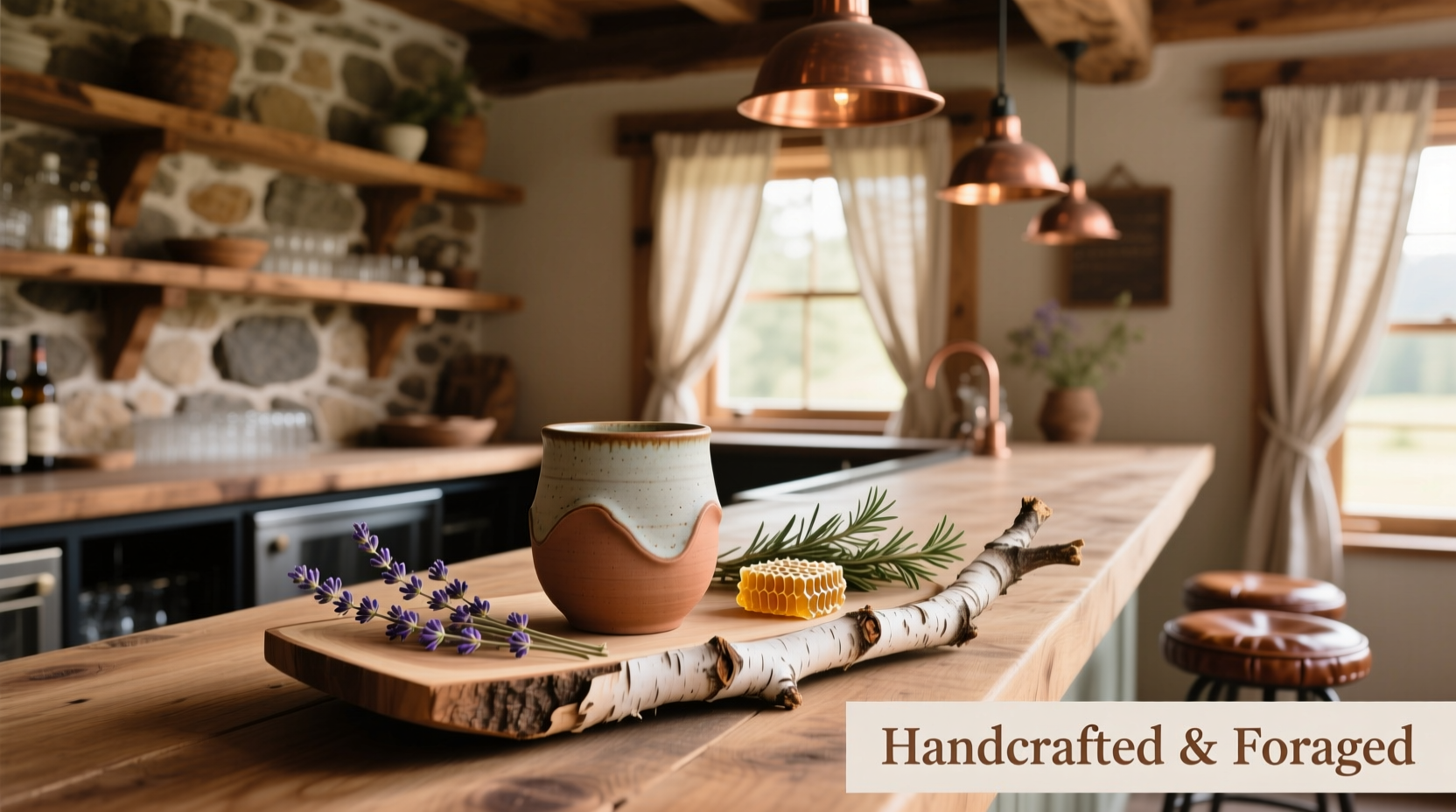
Why ceramics and foraged wood? It begins with complementary integrity. Hand-thrown ceramics carry an inherent irregularity—slight asymmetry, subtle glaze pooling, visible throwing rings—that speaks to human scale and process. Foraged wood trays offer parallel honesty: no two pieces share identical grain direction, knot placement, or mineral streaks. Neither is “perfect”—and that imperfection is their shared strength. Where machine-pressed glass or laminated trays emphasize uniformity and disposability, these materials reward attention and invite slow interaction.
This pairing also fulfills three functional imperatives: thermal performance, grip security, and visual rhythm. Ceramic retains temperature better than metal or thin glass—keeping drinks chilled longer without condensation overload. Its slightly porous surface (especially in unglazed or matte-finish pieces) provides natural friction against smooth wood, reducing slippage. Visually, the earthy tonal range of stoneware—iron-rich blacks, oatmeal whites, celadon greens—harmonizes effortlessly with the warm ochres, greys, and silvers found in aged or weathered foraged woods like black walnut, white oak, or reclaimed cedar.
Tip: Prioritize ceramics fired to cone 6 or higher (2232°F/1222°C)—they’re fully vitrified, non-porous, and dishwasher-safe without compromising aesthetic integrity.Sourcing with Integrity: Beyond Aesthetics
Authenticity collapses when provenance is obscured. Sourcing isn’t about finding “rustic-looking” items—it’s about tracing lineage. For hand-thrown ceramics, seek working potters—not Etsy resellers or wholesale importers. Visit local craft fairs, studio tours, or regional clay guild directories. Ask direct questions: “Is this piece thrown on the wheel by you?” “What local clays or ash glazes do you use?” True makers welcome such inquiry. Expect price points between $38–$75 per tumbler—not because of markup, but because of labor: 12–18 hours per piece across throwing, trimming, drying, bisque firing, glazing, and final firing.
For foraged wood trays, legality and ecology are non-negotiable. Never harvest live trees or protected species. Instead, partner with arborists, municipal tree services, or wildfire recovery programs that reclaim fallen, storm-damaged, or hazard-removed timber. One California-based bar owner, Lena Torres, collaborated with Oakland’s Urban Forestry Division to source black oak slabs from street trees removed after the 2022 winter storms. She commissioned a local woodworker to mill, stabilize, and finish them using food-safe, plant-based walnut oil and beeswax—no polyurethane or synthetic sealants. Each tray bears a small brass tag noting species, harvest date, and location.
“People don’t just taste the drink—they taste the ethics behind the vessel. If your tumbler was made in a factory overseas and your tray came from a clear-cut forest, guests sense the dissonance before the first sip.” — Javier Mendoza, Owner of *Hearth & Still*, Asheville, NC
A Step-by-Step Styling Framework
Styling isn’t decoration—it’s choreography. Follow this sequence to build cohesion, not clutter:
- Anchor with the bar top: Begin with your primary surface. If using reclaimed wood, ensure it’s level, sanded to 220-grit, and finished with a natural oil (e.g., pure tung oil). Avoid glossy polyurethane—it creates visual competition with ceramic texture.
- Define zones with trays: Place 2–3 foraged wood trays at staggered intervals along the bar front. Vary sizes: one large (18\" × 12\"), one medium (14\" × 9\"), one small (10\" × 7\"). Position them perpendicular to the bar edge—not parallel—to break linearity and encourage movement.
- Group ceramics by function, not color: Don’t arrange tumblers in monochromatic rows. Instead, cluster by use: 4–5 tumblers for spirits service on the left tray; 3–4 for water or low-ABV drinks on the right; 2–3 reserved for tasting pours near the well. Mix heights and profiles—tall narrow tumblers beside short wide ones—to create organic rhythm.
- Add calibrated contrast: Introduce one deliberate counterpoint: a single matte-black tumbler among warm-toned ceramics, or a pale maple tray beside darker walnut. This prevents visual fatigue without disrupting harmony.
- Finalize with active emptiness: Leave 30–40% of each tray intentionally bare. Rustic design breathes through negative space. Overcrowding implies haste—not hospitality.
Do’s and Don’ts: A Practical Decision Matrix
| Action | Do | Don’t |
|---|---|---|
| Ceramic care | Wash by hand with pH-neutral soap; air-dry upside-down on a linen towel | Stack wet tumblers or use abrasive sponges that scratch matte glazes |
| Wood tray maintenance | Re-oil every 4–6 weeks with food-grade walnut oil; wipe spills immediately | Soak in water or expose to direct sunlight for >20 minutes |
| Bar lighting | Use warm-white (2700K) LED pendants with fabric or paper shades to diffuse glare | Install cool-white track lighting that casts harsh shadows on textured surfaces |
| Complementary elements | Add raw linen napkins, hammered copper jiggers, and dried native grasses in ceramic bud vases | Introduce painted signage, plastic bottle openers, or neon accents |
| Guest interaction | Place one tumbler per guest at service stations with a small card: “Made by Elena Ruiz, Clay River Studio, 2024” | Hide ceramics in cabinets until ordered—depriving guests of tactile discovery |
Real-World Execution: The Cedar Hollow Tavern Case Study
Cedar Hollow Tavern, a 32-seat neighborhood bar in Portland, Oregon, underwent a full bar redesign in early 2023. Their prior setup used standard glassware and MDF trays—a disconnect their clientele increasingly voiced. Owner Micah Bell committed to a 90-day material reset: no new purchases until all ceramics and wood were sourced locally and ethically.
Phase one involved commissioning six ceramicists within 100 miles. Each contributed 12–15 tumblers in distinct palettes—two focused on iron-saturated Oregon coastal clays (yielding deep rust and charcoal finishes), three on locally foraged wood ash glazes (producing soft celadons and ash-greys), and one specializing in salt-glazed pieces using Pacific sea salt. Simultaneously, Bell partnered with Portland State University’s Urban Wood Lab to mill 14 slabs from urban cherry, madrone, and bigleaf maple—trees removed from city parks due to disease or instability.
The result? A bar where guests routinely pause before ordering—not to scan a menu, but to run fingers over a tumbler’s ridged base or trace the path of a wormhole in a tray. Staff report a 27% increase in “craft spirit” orders since the redesign, with patrons citing “the feeling of holding something real” as their reason. More telling: 83% of guests who posted photos on Instagram tagged both the ceramicist and the wood lab—proof that material storytelling drives authentic engagement.
FAQ: Addressing Common Concerns
How do I prevent foraged wood trays from warping or cracking?
Warping occurs when moisture enters unevenly. Always store trays flat—not leaning—and avoid placing near HVAC vents or radiators. Before first use, condition thoroughly: apply walnut oil liberally, let absorb 12 hours, then buff with clean linen. Repeat weekly for the first month. If minor cupping appears, reverse the tray (flip top-to-bottom) for 48 hours—it often self-corrects.
Can hand-thrown ceramics be used for carbonated drinks without risk of shattering?
Yes—if properly fired and free of micro-fractures. Cone 6+ stoneware withstands thermal shock far better than earthenware. To test: fill a tumbler with ice water, then pour room-temperature sparkling water directly into it. No stress fractures should appear. Avoid sudden extreme shifts—e.g., pulling a tumbler straight from freezer to boiling liquid.
What if I can’t find local ceramicists or foragers?
Start regionally, not locally. Many potters ship safely with custom crating (request double-walled cardboard + biodegradable cornstarch packing peanuts). For wood, contact state forestry departments—they often maintain lists of certified urban wood recyclers. As a last resort, choose FSC-certified reclaimed wood from verified suppliers like Urban Lumber Co. or Heartwood Reclaimed Timber, and commission a local woodworker to mill and finish it to your specs.
Conclusion: Cultivating Atmosphere, Not Aesthetic
Styling a rustic bar with hand-thrown ceramics and foraged wood trays isn’t about achieving a Pinterest-perfect image. It’s about cultivating atmosphere through accountability—to craft, to ecology, and to human connection. Every time a guest lifts a tumbler whose curve echoes the potter’s wrist motion, or sets a glass down on a tray whose grain maps decades of Oregon rain, they participate in a quiet act of resistance against disposability. This approach demands more time, more research, and more dialogue—but it returns immeasurably richer dividends: loyalty, resonance, and a bar that feels less like a venue and more like a gathering place with memory.
Your next step isn’t buying. It’s reaching out: email a nearby ceramic studio asking about studio visits. Call your city’s parks department about fallen tree policies. Sketch a simple tray dimension on a napkin and text it to a woodworker. Authentic rustic design begins not with objects, but with curiosity—and the courage to ask, “Who made this? Where did it grow? How can I honor both?”
💬 Have you styled a bar with handmade ceramics or foraged wood? Share your sourcing wins, challenges, or a photo of your favorite tumbler-tray pairing in the comments—we’ll feature standout stories in our next community roundup.








