Packing up holiday decorations is often rushed, done in the dim glow of fading Christmas music and leftover eggnog. Among the most frustrating items to store are Christmas lights. Tossing them into a box leads to a tangled mess every year—wires knotted like fishing line, bulbs cracked or pulled loose, and hours wasted untangling before the next season. But there’s a better way: using cardboard rolls to wind and store your lights. When done correctly, this method keeps strands organized, snag-free, and ready to hang with minimal effort. This guide reveals a proven technique for packing Christmas lights on cardboard rolls—without tangles, breaks, or frustration.
Why Cardboard Rolls Work for Storing Lights
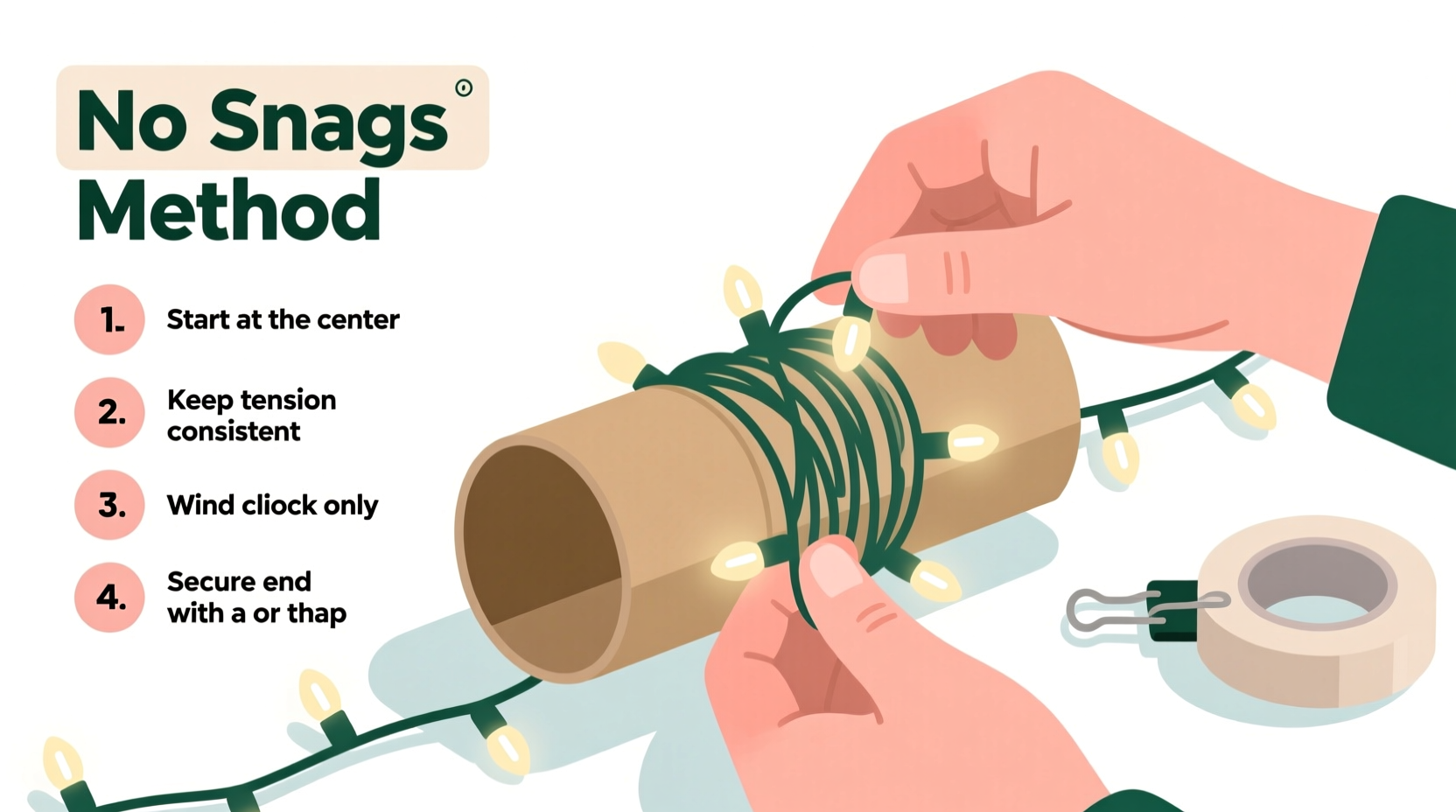
Cardboard tubes—from paper towels, wrapping paper, or mailing tubes—are ideal for storing Christmas lights because they provide structure. Without support, flexible wires collapse into themselves, creating friction points where strands cross and knot. A rigid roll prevents this by maintaining consistent curvature, allowing you to wrap the cord in a single direction without backtracking or overlapping haphazardly.
The diameter of most household cardboard rolls (1.5 to 3 inches) is suitable for standard light gauges. Wrapping around too narrow a core can stress the wire insulation or internal filaments, especially with older incandescent sets. Larger-diameter rolls reduce bending strain, helping preserve both wire integrity and bulb alignment.
Tip: If you don’t have large enough rolls, tape two together end-to-end or use PVC pipe scraps wrapped in kraft paper for durability.Step-by-Step Guide: Packing Lights Without Snags
The key to snag-free storage isn’t just the roll—it’s the winding technique. Follow these steps carefully to ensure your lights stay intact and accessible year after year.
- Test each strand before packing. Plug in every set of lights to confirm all bulbs work and identify any flickering sections. Replace faulty bulbs now, not next December.
- Cut cardboard rolls to match light length. Ideally, the roll should be slightly shorter than the total plug-to-end length of the strand. For 25-light mini strings (~25 ft), an 18–24 inch roll works well. Use a utility knife or scissors for clean cuts.
- Secure the plug end first. Tape the plug base firmly to one end of the cardboard. This prevents slippage during winding and ensures the heaviest part stays anchored.
- Begin wrapping from the plug outward. Hold the cord taut but not stretched. Wrap clockwise or counterclockwise consistently—never reverse direction mid-string. Keep spacing even, about half an inch between loops, so wires don’t press against each other under tension.
- Avoid overlapping or crisscrossing. Each loop should lie flat and parallel. Crossing wires create pinch points that lead to snags when unwrapping.
- Finish with the socket end. Once fully wound, secure the last few inches near the final bulb using low-adhesion painter’s tape. Do not tape over bulbs—this can crack plastic sockets or trap moisture.
- Label clearly. Use waterproof marker or adhesive tag to note color, bulb type (LED/incandescent), length, and location used (e.g., “Front Porch – Warm White”).
- Store vertically or flat in dry area. Place rolls in a bin with dividers or stand them upright like records to prevent crushing. Avoid attics or garages with extreme temperature swings unless climate-controlled.
Common Mistakes That Cause Snags
Even with a cardboard roll, improper technique can defeat the purpose. These common errors introduce tangles and damage despite good intentions.
- Rushing the wrap: Yanking or loosely looping creates slack that shifts during storage, leading to internal knots.
- Using damaged rolls: Crushed or warped tubes cause uneven winding surfaces, increasing friction and misalignment.
- Taping bulbs directly: Pressure from tape can fracture plastic sockets or dislodge filaments in delicate vintage sets.
- Overfilling one roll: Attempting to wrap multiple strands on a single roll invites crossover and confusion during unpacking.
- Ignoring weight distribution: Heavy C7 or C9 bulbs require sturdier cores; flimsy paper towel rolls may buckle under pressure.
“Proper coiling is more important than the container. A well-wrapped string on a simple roll lasts longer than a messy bundle in a premium case.” — Marcus Lin, Holiday Lighting Technician, 18 years experience
Do’s and Don’ts: Storage Comparison Table
| Action | Do | Don’t |
|---|---|---|
| Wrapping Direction | Wrap in one consistent direction | Reverse direction mid-wrap |
| Tension Control | Keep cord taut but not stretched | Pull tightly enough to deform bulbs |
| Securing Ends | Use tape on wire only, away from sockets | Tape over bulbs or plugs |
| Roll Material | Sturdy, cylindrical form (cardboard/PVC) | Bendable or oval-shaped supports |
| Storage Environment | Cool, dry, pest-free space | Damp basement or hot attic |
Real Example: From Chaos to Calm in One Season
Sarah M., a homeowner in Portland, Oregon, used to spend nearly eight hours every November untangling her family’s collection of 14 light strings. Stored in a single plastic tub, the cords had fused into what she called “a glowing octopus.” After reading about the cardboard roll method, she repurposed old wrapping paper tubes, labeled each by display location, and spent one afternoon rewinding everything.
The following year, she retrieved the rolls and unspooled each strand directly onto her roofline—no knots, no broken bulbs. Her prep time dropped to under 45 minutes. “It felt like cheating,” she said. “Like I’d discovered a secret level in holiday setup.” She now teaches neighbors the technique at an annual post-Christmas workshop.
Checklist: Pack Your Lights Right This Year
Use this checklist as you begin your post-holiday cleanup:
- ☐ Test all light strands for functionality
- ☐ Gather clean, undamaged cardboard rolls (or alternatives)
- ☐ Cut rolls to appropriate lengths
- ☐ Anchor plug securely before winding
- ☐ Wrap in consistent, non-overlapping loops
- ☐ Secure end with tape—avoid covering bulbs
- ☐ Label each roll clearly with details
- ☐ Store in upright position in climate-stable area
- ☐ Inspect rolls annually for wear or insect activity
Frequently Asked Questions
Can I use toilet paper rolls for mini lights?
Only for very short strands (under 5 feet). Standard toilet paper rolls are too narrow and weak for anything beyond fairy lights. The small radius increases wire fatigue, and the thin walls crush easily. Opt for paper towel or gift wrap cores instead.
What if I run out of cardboard rolls?
Consider alternatives like empty Pringles cans (cut to size), sectioned PVC pipe, or even sturdy oatmeal containers with the top removed. You can also flatten and fold heavy cardstock into square reels with a center hole—just ensure edges are smooth to avoid cutting the wire coating.
Should I remove lights from trees before rolling?
If the lights are pre-strung on an artificial tree, leave them in place. The manufacturer designed them for repeated folding. However, if you’ve added supplemental strands or removed them for repair, treat those as separate units and roll individually using the method above.
Extending the Life of Your Lights
Proper storage doesn’t just save time—it extends the functional lifespan of your lights. LEDs can last 25,000 to 50,000 hours, but physical damage from tugging, kinking, or corrosion often ends their life prematurely. By eliminating stress points through careful rolling, you protect both electrical connections and housing materials.
Additionally, avoiding moisture buildup prevents oxidation at plug contacts and socket junctions. Cardboard is naturally breathable, unlike plastic cases that can trap humidity. Just ensure your storage environment is dry—a silica gel packet placed near the rolls helps absorb ambient moisture without direct contact.
Tip: Rotate older strands to less visible areas each year. Reserve pristine sets for focal displays, extending aesthetic longevity across your collection.Conclusion: A Small Effort, Lasting Rewards
Taking the time to pack Christmas lights on cardboard rolls without snags transforms a recurring seasonal headache into a one-time system. What feels like a minor chore in January becomes a gift to your future self—one that pays dividends in saved time, reduced frustration, and preserved decorations. This method costs nothing but attention and ten minutes per strand, yet it delivers reliability year after year.
💬 Ready to ditch the tangle? Grab your cardboard rolls this weekend and start wrapping. Share your success—or ask questions—in the comments below. Let’s make next holiday season the smoothest one yet.








