A blind spirit tasting party is more than a novelty—it’s an invitation to recalibrate your palate, challenge assumptions, and deepen appreciation for craftsmanship. When labels are hidden and expectations suspended, the focus shifts from brand prestige to texture, balance, and nuance. Whether you’re introducing friends to aged rum, exploring the terroir of single malt Scotch, or demystifying agave spirits, a well-organized blind tasting transforms casual drinking into a shared intellectual and sensory experience. Done right, it fosters lively debate, surprising revelations, and genuine connection—not just among enthusiasts, but across all levels of familiarity with spirits.
Why Blind Tasting Works—and Why It Matters
Blind tasting removes cognitive bias: studies in sensory science consistently show that label information—price, region, age statement, even bottle shape—alters perception of aroma, mouthfeel, and even perceived quality. A 2021 study published in Food Quality and Preference found participants rated identical whiskies 37% higher when told they were “18-year-old limited edition” versus “standard blend,” despite no chemical difference. In spirit tasting, this effect is magnified by cultural narratives around provenance and prestige.
Hosting blind means prioritizing authenticity over authority. It encourages guests to trust their own senses rather than defer to marketing copy or peer influence. For newcomers, it lowers intimidation; for seasoned drinkers, it reveals blind spots. As Master Distiller Sarah Chen observes:
“Blind tasting is the great equalizer. It doesn’t matter if you’ve tasted 500 bourbons or five—you’re starting from the same place: nose, palate, memory. That’s where real learning begins.” — Sarah Chen, Head Distiller, Cedar Hollow Spirits
The goal isn’t to “guess correctly”—it’s to sharpen observation, articulate impressions, and discover personal preferences without scaffolding.
Step-by-Step: Hosting Your Blind Spirit Tasting (From Planning to Pour)
- Define scope & guest count: Limit to 4–6 spirits per session. More than six overwhelms the palate and dilutes attention. Ideal group size: 4–10 people (small enough for discussion, large enough for diverse perspectives).
- Select spirits thoughtfully: Choose within one category (e.g., all rye whiskeys) or across a controlled variable (e.g., “peat level in Islay malts” or “aging vessel: ex-bourbon vs. sherry cask”). Avoid mixing wildly divergent categories (e.g., gin + mezcal + Cognac) unless the theme explicitly invites contrast.
- Source & prepare samples: Decant each spirit into identical, unmarked 2-oz bottles or small flasks. Use neutral glassware (ISO-standard tulip glasses preferred). Label bottles only with letters (A–F) or numbers (1–6); keep master key sealed and inaccessible until after scoring.
- Set up the tasting space: Provide still water, plain crackers or unsalted almonds (to cleanse palate), notepads, pens, and printed scoring sheets. Ensure good lighting and minimal ambient scent (no candles, perfume, or cooking odors).
- Run the session: Begin with a brief orientation—explain the theme, how to nose/taste, and timing (2–3 minutes per spirit). Encourage quiet reflection before discussion. Reveal identities only after all scores and notes are complete.
Fun, Cohesive Themes That Spark Conversation
Themes give structure and narrative momentum. Avoid gimmicks; choose concepts that invite comparison and reveal meaningful differences. Below are five tested, crowd-pleasing themes—with rationale and spirit examples:
| Theme | Why It Works | Spirit Examples (All Blind) |
|---|---|---|
| “The Age Illusion” (Same distillery, different ages) |
Challenges assumptions about age = quality. Highlights how maturation changes texture and integration—not just intensity. | Glenmorangie 10, 18, and 25; Elijah Craig Small Batch (12 yr) vs. Barrel Proof (13 yr) |
| “Cask Speak” (Same spirit, different wood) |
Demonstrates how casks shape character—vanilla vs. dried fruit vs. tannin—without altering base distillate. | Ardbeg Wee Beastie (ex-bourbon) vs. Ardbeg Traigh Bhan (ex-sherry & bourbon) vs. Ardbeg Kelpie (ex-red wine) |
| “Agave Spectrum” (Diverse Mexican spirits) |
Reveals how terroir, roasting method, and fermentation drive flavor—beyond the “tequila vs. mezcal” binary. | Highland-style blanco tequila, artisanal espadín mezcal, wild tobalá mezcal, sotol (desert spoon) |
| “Rye Revival” (American rye whiskies, 95%+ rye mash bills) |
Highlights spice, herbal, and earthy signatures distinct from bourbon—ideal for palate calibration. | WhistlePig 10 Year, Dad’s Hat Pennsylvania Rye, Leopold Bros Maryland Rye |
| “Global Gin Grid” (London Dry vs. New Western vs. Japonic styles) |
Shows how botanical treatment and base spirit alter balance—from juniper-forward to floral-citrus to umami-tinged. | Sipsmith London Dry, St. George Terroir Gin, Roku Japanese Gin, Four Pillars Bloody Shiraz Gin |
Each theme includes built-in talking points: “Which showed the most integrated oak?” “Where did the heat feel medicinal vs. peppery?” “Did the ‘youngest’ spirit surprise you with depth?” This keeps conversation grounded in observation—not opinion.
Scoring Sheets That Capture Nuance (Not Just Preference)
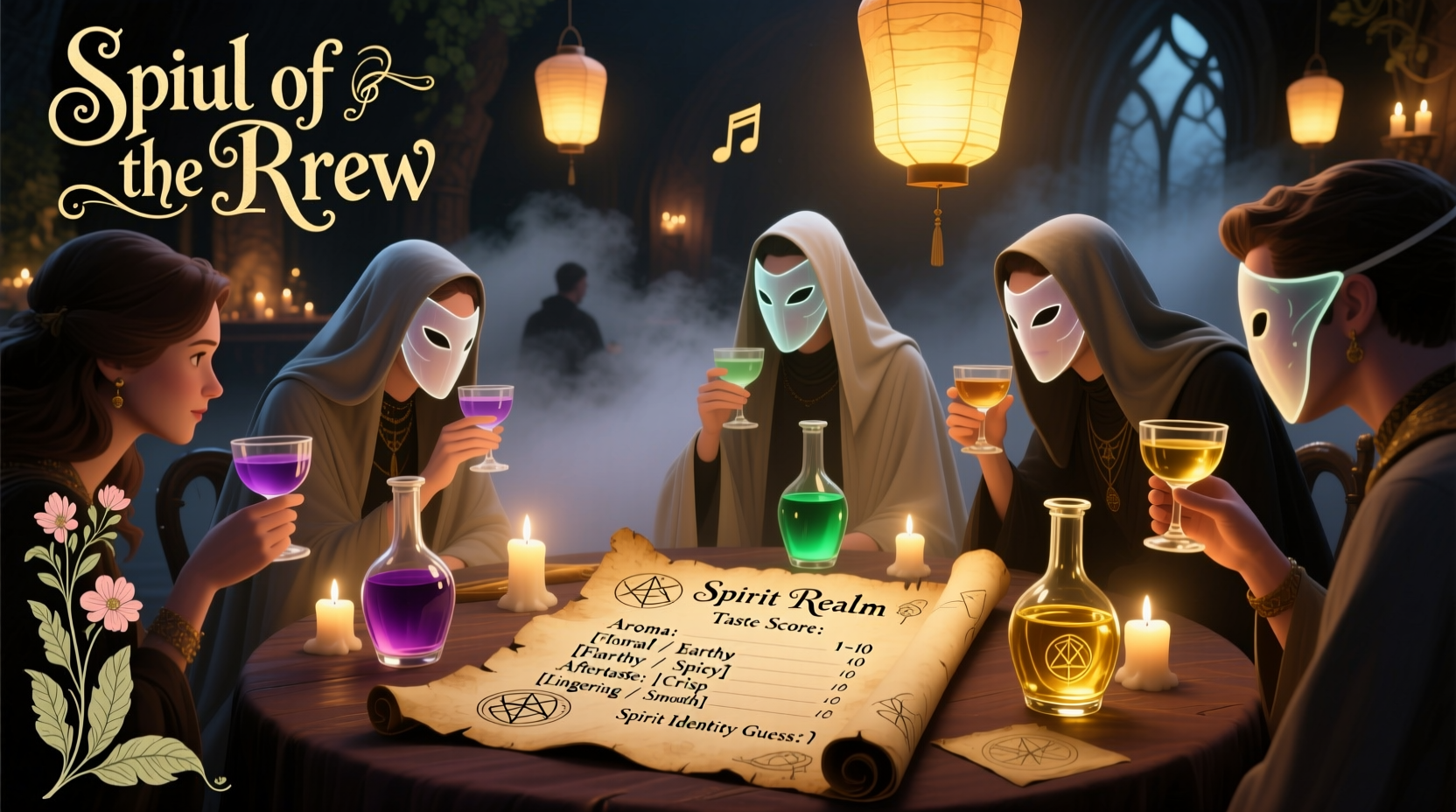
A good scoring sheet guides attention without oversimplifying. Avoid star ratings or vague “like/dislike” scales. Instead, use a structured 10-point system focused on objective attributes—then add qualitative space. Below is a field-tested template used by certified spirits educators:
Spirit Tasting Scorecard (Per Sample)
- Nose (0–3 pts): Intensity (1), complexity (1), harmony (1). Note dominant notes: citrus peel, wet stone, clove, leather, etc.
- Pallet (0–4 pts): Balance (1), texture (1), finish length (1), integration of alcohol (1). Is heat present? Does it linger pleasantly or harshly?
- Overall Impression (0–3 pts): Memorability (1), typicity (does it express its category authentically?) (1), drinkability (1).
Below the grid, include:
- Key descriptors: 3 words that best capture the spirit’s identity (e.g., “smoky, briny, medicinal” or “bright, grassy, saline”).
- Surprise factor: “What contradicted your first impression?”
- Food pairing idea: One specific dish that would elevate it (e.g., “grilled octopus with lemon aioli” for a saline gin).
This format trains guests to move beyond “smooth” or “strong” into precise language—and creates rich data for post-tasting analysis. When scores are compiled, outliers (e.g., one person rating “balance” highly while others note harsh heat) spark the most revealing discussions.
Tip: Print double-sided scorecards: front for notes, back for ranking order (1st–6th) and final guess. Collect all sheets before revealing identities—this preserves honest reactions.Real-World Example: The “Peat Puzzle” Party in Portland
Last October, sommelier Maya Rodriguez hosted a blind tasting for eight guests centered on Islay Scotch—a region synonymous with peat smoke. She selected six expressions spanning light (Caol Ila 12) to extreme (Ardbeg Uigeadail, Laphroaig Quarter Cask). To avoid bias, she sourced miniatures from different retailers, decanted into identical amber glass vials labeled A–F, and stored them in a dark cabinet for 48 hours to equalize temperature.
Midway through, guest David—a self-proclaimed “peat avoider”—gave Spirit D a perfect 10/10 for “balance and citrus lift,” then guessed it was a Highland Park. It was actually Laphroaig PX Cask, a spirit he’d previously dismissed as “too medicinal.” His note read: “Smells like campfire marshmallows and orange zest—not iodine. Mouth is creamy, not sharp.” When identities were revealed, the room erupted—not in shock, but in recognition. Three others had misidentified the same bottle, citing similar citrus and texture cues. The takeaway wasn’t who guessed right, but how the blind format dissolved preconceptions and highlighted shared sensory anchors.
Maya later told attendees: “You didn’t taste Laphroaig tonight. You tasted *that*—and named it on your terms. That’s the power of removing the label.”
Essential Checklist: Before You Hit Pour
- ✅ Confirm all spirits are at consistent temperature (65–68°F)
- ✅ Decant into identical, unmarked vessels; seal master key in envelope
- ✅ Prepare palate cleansers: chilled still water + plain, unsalted crackers
- ✅ Print sufficient scoring sheets (one per guest, per spirit)
- ✅ Test lighting—avoid glare on glasses; ensure readable text
- ✅ Assign a neutral facilitator (not the host) to time rounds and manage reveals
- ✅ Brief guests on tasting protocol: nose first, then small sip, hold 10 seconds, swallow or spit, wait 30 seconds before cleansing
FAQ: Practical Questions Answered
How much spirit should I pour per sample?
15–20 ml per tasting is ideal—enough for 2–3 nosings and 2 sips without overwhelming the palate or encouraging overconsumption. For a 6-spirit tasting, total intake is ~100 ml—less than a standard cocktail.
Can I include non-alcoholic “control” samples?
Yes—and it’s highly recommended. Include one sample of filtered water and one of a neutral spirit (e.g., unflavored vodka diluted to 20% ABV). This recalibrates guests�� sensitivity to alcohol burn and highlights how water interacts with spirits (e.g., opening esters in rum). Label them “Control W” and “Control V” to maintain blinding.
What if someone guesses every spirit correctly?
Celebrate—but don’t assume expertise. Often, it signals strong familiarity with brand signatures (e.g., Glenfiddich’s pear note) rather than refined sensory skill. Gently redirect: “What specific note made you certain? Was it the oak tannin, the fruit profile, or something else?” True mastery lies in articulation, not identification.
Conclusion: Taste Beyond the Label
Hosting a blind spirit tasting party isn’t about staging a competition—it’s about cultivating presence, curiosity, and humility in the face of complexity. It asks guests to slow down, listen closely to their own senses, and engage with what’s actually in the glass—not what they expect to be there. The themes, scoring sheets, and protocols outlined here aren’t rigid rules; they’re invitations to experiment, refine, and return to the fundamentals of flavor: aroma, texture, balance, and memory.
Start small: try a four-spirit “Rye Roundup” with friends next weekend. Use the free printable scorecard template (available in our resource library). Notice how the conversation shifts when the focus moves from “What is it?” to “What do you taste?” That shift—quiet, deliberate, human—is where genuine appreciation takes root.
💬 Ready to host your first blind tasting? Download our editable scoring sheet PDF, share your theme idea in the comments, or tag a friend who needs this guide. The most memorable spirits aren’t always the priciest—they’re the ones that make you pause, lean in, and say, “Wait—what *is* that?”








