Folding fitted sheets has long been considered one of the most frustrating household tasks. Unlike flat sheets or pillowcases, their elastic edges resist neat folding, often ending up crumpled at the bottom of the linen closet. But it doesn’t have to be this way. With a consistent, logical method, anyone can fold fitted sheets into a compact, wrinkle-free rectangle on the first attempt. This guide breaks down the process into clear, repeatable steps, backed by expert insights and real-life experience. Whether you're organizing a linen cupboard or prepping for laundry day, mastering this skill will save time, reduce clutter, and bring order to your home.
The Problem with Fitted Sheets
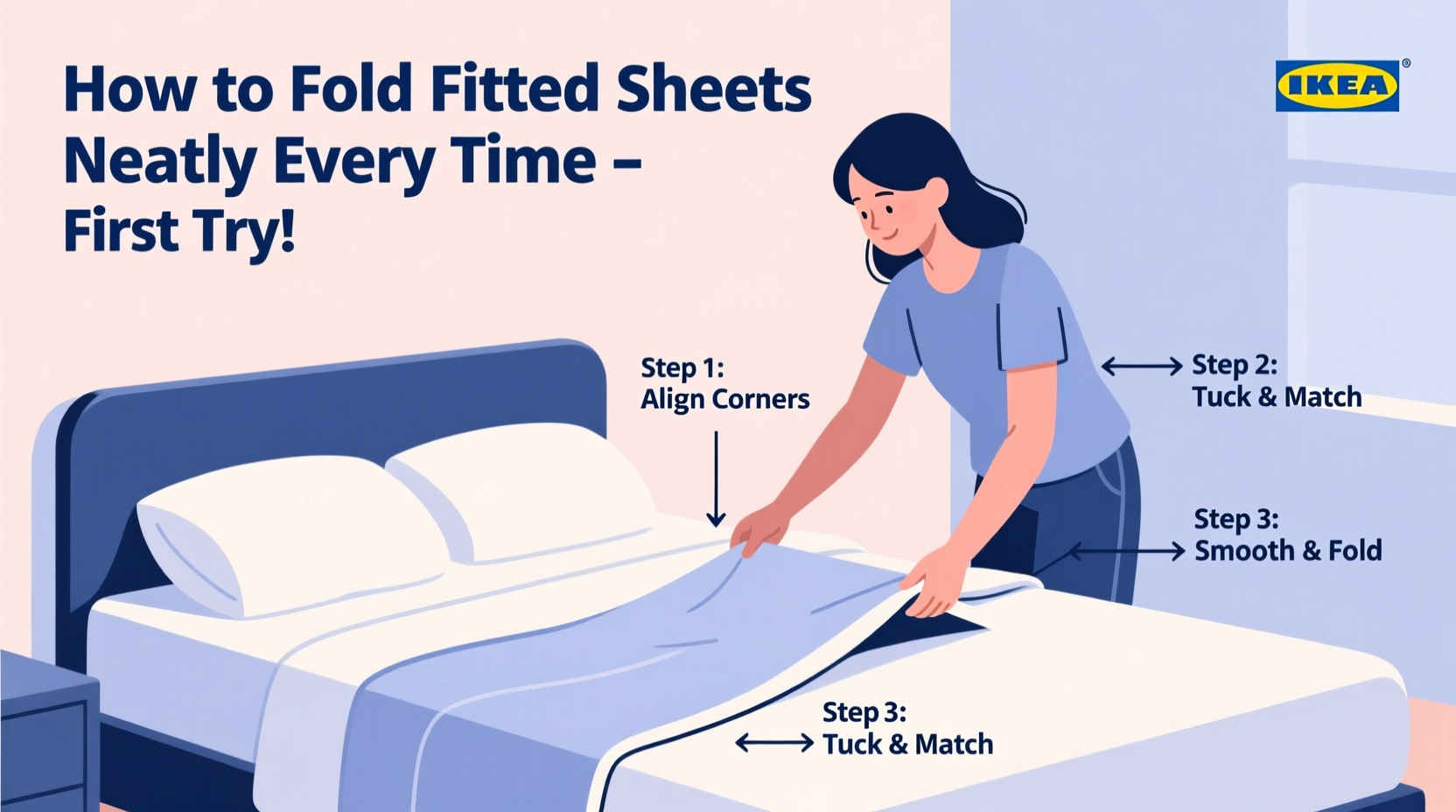
Fitted sheets are designed for function—snug corners, stretchy fabric, and deep pockets ensure they stay on the mattress. However, these same features make them difficult to fold. The elastic pulls the fabric into uneven shapes, corners twist over each other, and without a structured approach, the result is often a messy ball of cotton.
This challenge isn't just about aesthetics. Poorly stored sheets take up more space, tangle with other linens, and create visual clutter. Over time, constant wrinkling can even weaken fabric fibers, shortening the lifespan of high-quality bedding. Yet, surveys show that nearly 70% of people admit they don’t know how to fold fitted sheets properly. Many resort to tossing them loosely into drawers or closets, hoping no one will notice.
Tip: Always fold sheets immediately after they come out of the dryer while they’re still warm and pliable—this makes manipulation easier.A Step-by-Step Guide to Perfectly Folded Fitted Sheets
The key to success lies in reversing the sheet’s natural form. Instead of fighting the elasticity, work with it. By aligning corners and smoothing layers, you transform chaos into order. Follow this detailed sequence to achieve a clean, rectangular fold every time.
- Hold the sheet inside-out. Start by turning the fitted sheet inside out so the elastic edges face outward. This reduces friction and makes it easier to match corners.
- Locate two adjacent corners. Reach into one corner with both hands and grasp the two connected edges. Bring those corners together so they nest perfectly, forming a double-layered pocket.
- Repeat with the opposite side. Move to the diagonal corner and repeat the process—insert your hands and pull the two corners together. Now you have two paired corners.
- Join all four corners. Hold the two sets of corners in each hand and flip the sheet right-side out by tucking one set inside the other. You should now have all four corners aligned and stacked.
- Lay flat and smooth. Place the sheet on a clean, hard surface like a bed or table. Gently press down to remove air pockets and wrinkles, ensuring all layers lie flat.
- Fold lengthwise. Fold one-third of the sheet inward from the left side, then bring the right third over it. This creates a long rectangle.
- Fold into thirds again. Starting from one end, fold the sheet into three equal parts, pressing firmly after each fold to maintain crisp edges.
- Store with matching linens. Pair the folded fitted sheet with its flat sheet and pillowcases, then place them together in a drawer or shelf.
This technique works regardless of sheet size—twin, queen, king, or California king. The principles remain the same: corner alignment, layer control, and deliberate folding.
“Folding fitted sheets isn’t about strength—it’s about precision. Once you master the corner pairing, the rest becomes second nature.” — Lydia Chen, Home Organization Consultant
Do’s and Don’ts When Folding Fitted Sheets
To reinforce good habits and avoid common pitfalls, refer to this simple comparison chart.
| Do’s | Don’ts |
|---|---|
| Use a flat, spacious surface like a bed or dining table | Fold on an uneven or cluttered surface |
| Pair corners systematically before laying the sheet down | Try to fold while holding the sheet in the air |
| Fold immediately after drying to prevent deep creases | Leave damp sheets bunched up—they can develop mildew |
| Press each fold firmly to maintain shape | Rush through the process without smoothing layers |
| Store folded sets together (fitted + flat + cases) | Separate matching pieces across different shelves |
Real-Life Example: From Chaos to Calm
Sarah, a working mother of two in Portland, used to dread laundry day. Her linen closet was a jumble of mismatched sheets, half-folded bundles, and orphaned pillowcases. “I’d spend ten minutes just trying to find the right fitted sheet,” she recalls. After watching a quick tutorial based on the method described here, she decided to reorganize her entire storage system.
She cleared out old linens, sorted by size and pattern, and applied the corner-matching technique to each fitted sheet. Within 45 minutes, her closet was transformed. Each set was neatly folded and stacked, labeled with small fabric tags. “It sounds minor, but it changed everything,” Sarah says. “Now I grab a set in seconds. My kids even started helping because it looks so tidy.”
This kind of transformation isn’t rare. A well-organized linen supply reduces decision fatigue, streamlines household routines, and adds a sense of control to daily life.
Pro Tips for Long-Term Success
Mastery comes with repetition, but these additional strategies will help you refine your technique and maintain consistency.
- Label your sets. Use discreet fabric labels or ribbon tags to identify sheet sets by room or bed size, especially if you own multiple similar colors.
- Fold with a partner. For king-sized sheets, having a second person hold the corners during alignment can make the process faster and more accurate.
- Invest in quality storage. Use breathable cotton bags or open bins instead of plastic containers, which can trap moisture and cause odors.
- Rotate your stock. Place newer sets behind older ones to ensure even usage and prevent forgotten linens from sitting too long.
- Wash and fold in batches. Dedicate one laundry session per week to bedding only—this builds rhythm and reduces overwhelm.
Frequently Asked Questions
Can this method work with deep-pocket or extra-thick sheets?
Absolutely. The depth of the pocket doesn’t change the folding logic. Just ensure you fully invert the corners when pairing them. Thicker materials may require a bit more pressure when smoothing layers, but the sequence remains effective.
What if my sheet is still wrinkled after folding?
Wrinkles usually occur when the sheet wasn’t laid flat before folding. Make sure to spread it out completely and press down with your palms to eliminate air pockets. If necessary, refold once more with extra attention to smoothing.
Is there a quicker way for people in a rush?
For emergency situations, the “ball method” exists—tuck corners into each other and roll tightly. But this leads to deep creases and inefficient storage. The full fold takes less than two minutes once mastered and pays off in long-term organization.
Checklist: Fold Fitted Sheets Like a Pro
Keep this checklist handy until the process becomes automatic:
- ☐ Remove sheet from dryer promptly
- ☐ Turn sheet inside out
- ☐ Match two adjacent corners by reaching into pockets
- ☐ Repeat with opposite corners
- ☐ Nest all four corners together
- ☐ Lay flat on a clean surface
- ☐ Smooth out all wrinkles with hands
- ☐ Fold lengthwise into thirds
- ☐ Fold crosswise into thirds
- ☐ Store with matching flat sheet and pillowcases
Practice this routine three times, and muscle memory will take over. Soon, folding fitted sheets will feel as natural as folding a towel.
Conclusion: Transform a Small Task Into Lasting Order
Folding fitted sheets neatly isn’t just about appearance—it’s a small act of intention that ripples through your daily life. It reflects care, discipline, and respect for your belongings. More than that, it eliminates a recurring source of frustration and frees up mental space. Once you’ve mastered this skill, you’ll wonder why it ever seemed impossible.
💬 Ready to conquer your linen closet? Try this method tonight and share your results. Have a variation that works better for you? Leave a comment and help others fold smarter.