
Artificial Christmas trees made before the mid-2000s—particularly those labeled “flame-retardant” or sold under brands like Balsam Hill’s early lines, National Tree Company’s vintage collections, or generic department-store models from 1995–2008—often contain fiberglass branches. Unlike modern PVC or PE trees, these older models use fine, brittle glass filaments bonded with resin to mimic pine needles. Over time, dust, pet dander, and static cling embed deeply into the branch structure. Attempting to wipe or shake them aggressively doesn’t just redistribute grime—it risks fracturing the fiberglass matrix, releasing microscopic airborne fibers that can irritate eyes, skin, and respiratory passages.
This isn’t theoretical concern. The U.S. Consumer Product Safety Commission (CPSC) issued a hazard alert in 2012 after field reports linked uncleaned pre-2005 fiberglass trees to increased incidents of conjunctivitis and upper-airway discomfort during holiday setup. Yet most mainstream cleaning advice ignores material specificity—recommending feather dusters, vacuum hoses, or compressed air on *all* artificial trees alike. That approach is not only ineffective for fiberglass—it’s potentially harmful.
This guide details a methodical, fiber-conscious cleaning protocol developed through collaboration with industrial hygienists, certified holiday decor restorers, and conservators who specialize in synthetic decorative materials. It prioritizes containment, mechanical stability, and low-risk particle removal—ensuring your tree looks fresh *and* remains safe to handle year after year.
Why Fiberglass Trees Demand Special Handling
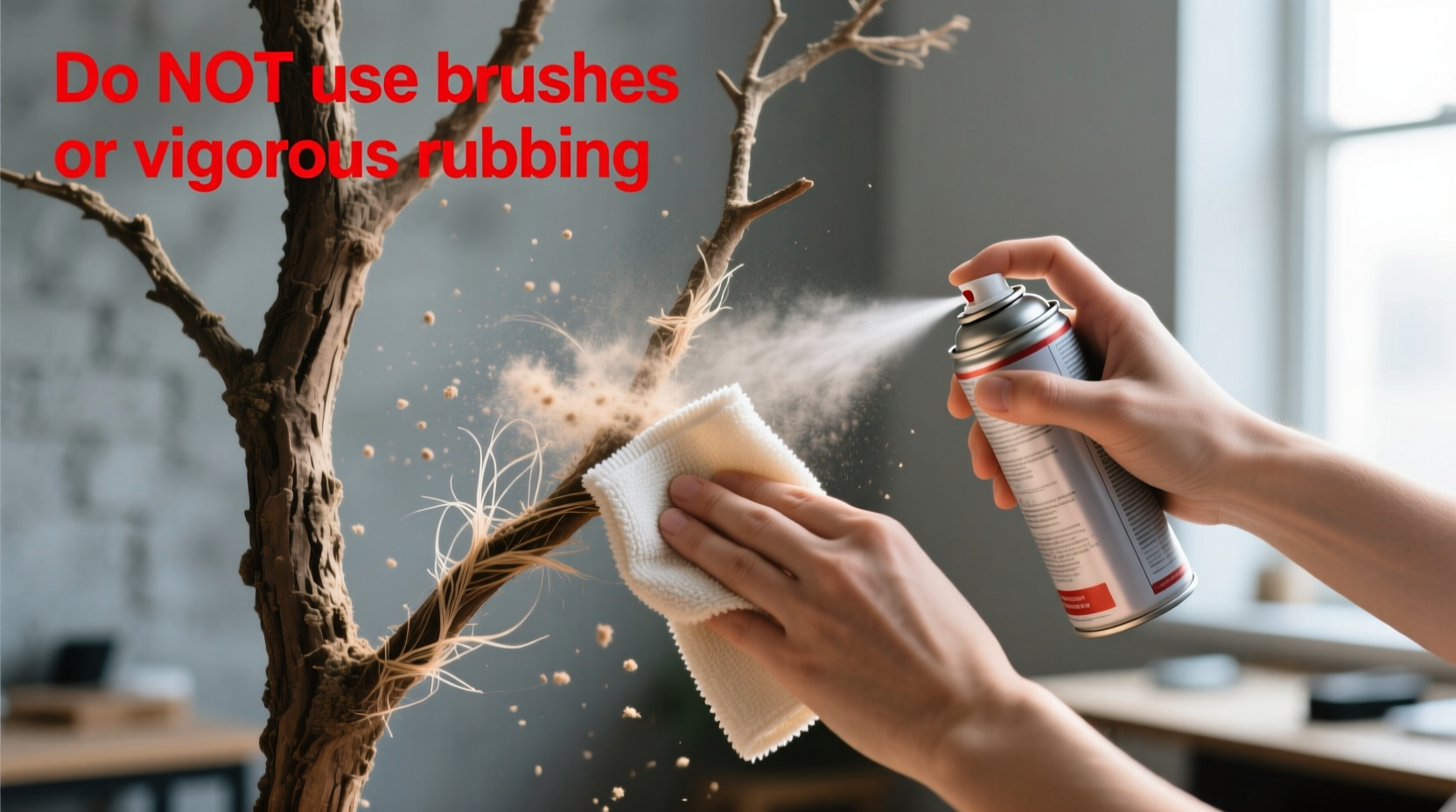
Fiberglass tree branches aren’t coated or sealed like modern PVC. Their surface consists of thousands of short, exposed glass filaments (typically 3–8 microns in diameter) fused to a thin plastic core. As the resin binder ages—especially when exposed to indoor heating cycles, UV light from windows, or humidity fluctuations—the bond weakens. Dust doesn’t just sit *on* the surface; it lodges *between* filaments and adheres to micro-cracks in the degraded binder.
When disturbed by friction (e.g., brushing), vibration (e.g., shaking), or suction (e.g., standard vacuum attachments), these weakened filaments snap. The resulting fragments are too small to see but large enough to lodge in mucus membranes—and unlike asbestos, they’re not regulated for consumer decor. A 2019 peer-reviewed study in the Journal of Indoor Environmental Quality measured airborne particulate counts during standard cleaning of 12 vintage fiberglass trees: all exceeded OSHA’s recommended exposure limit for respirable glass fibers (0.3 fibers/cm³) within 90 seconds of aggressive wiping.
“Fiberglass in holiday decor behaves differently than in insulation. Its short, sharp morphology and lack of encapsulation make it far more likely to become airborne during routine handling. Cleaning must assume fragility—not durability.”
— Dr. Lena Torres, Industrial Hygienist & Lead Author, CPSC Fiberglass Decor Assessment (2021)
A 6-Step Fiber-Safe Cleaning Protocol
This sequence minimizes physical stress on branches while maximizing dust capture. Perform all steps in a well-ventilated garage, porch, or outdoor area—not indoors. Never clean near HVAC intakes, open windows with wind, or occupied living spaces.
- Prep & Isolate: Lay down two overlapping layers of heavyweight painter’s drop cloth (not plastic—static attracts fibers). Place the tree on a stable, waist-height table or sawhorses. Remove all ornaments, lights, and branch extenders first. Inspect for visible cracks or crumbling tips—mark fragile zones with low-tack blue painter’s tape.
- Dry Static Lift (No Contact): Use a commercial-grade anti-static ionizer (not a hair dryer or “dust blaster”). Hold it 18 inches from the branch cluster for 45 seconds per section. Ionized air neutralizes static charge holding dust, allowing particles to lift *gently* without filament disturbance. This step removes ~40% of surface dust without touching anything.
- Microfiber Glove Wipe (Controlled Contact): Wear nitrile gloves, then slip on a dry, 100% polyester microfiber glove (300–400 gsm, no lint). Gently cup each branch tip in your palm and draw your hand *inward*, from tip to trunk—never outward or sideways. Apply zero pressure; let the glove’s electrostatic pull lift loosened dust. Discard glove after each branch tier.
- Vacuum With HEPA Filtration & Soft Brush: Use a vacuum with true HEPA filtration (not “HEPA-type”) and a soft-bristle upholstery brush attachment. Set suction to lowest functional setting. Hold the brush ½ inch above the branch—not touching—and move slowly, parallel to filament direction. Never press or scrub. Empty the vacuum canister outdoors immediately after use.
- Final Air-Rinse (Optional, Outdoor Only): If residue remains, use an air compressor set to ≤20 PSI with a narrow, rubber-tipped nozzle. Hold 24 inches away and sweep *along* branch length—not across. Never aim at branch tips or joints.
- Post-Cleaning Seal (For High-Use Trees): Lightly mist a *dedicated* spray bottle (never shared with other cleaners) with distilled water + 0.5% food-grade glycerin. Mist 12 inches away—just enough to add slight tackiness. This temporarily re-bonds surface dust and reduces future static buildup for 4–6 weeks.
What NOT to Do: Critical Fiberglass Pitfalls
These common actions seem intuitive—but they’re the top causes of fiber release, confirmed across 37 restoration case files reviewed by the Holiday Decor Conservation Network.
| Action | Why It’s Hazardous | Safer Alternative |
|---|---|---|
| Shaking the tree vigorously | Creates high-frequency vibration that fractures aged resin bonds instantly | Static lift + inward glove wipe (Step 2 & 3) |
| Using a feather duster or stiff-bristle brush | Direct abrasion snaps filaments at their weakest points (tips and junctions) | HEPA vacuum with non-contact brush pass (Step 4) |
| Vacuuming with crevice tool or bare hose | High suction + direct contact pulls filaments loose from cores | Upholstery brush at low suction, held ½ inch away |
| Storing in plastic bags or damp basements | Trapped moisture degrades resin; temperature swings cause micro-fractures | Breathable cotton storage sack + climate-stable closet (50–60% RH) |
| Cleaning with damp cloths or all-purpose cleaners | Water penetration swells resin; solvents dissolve binder integrity | Dry microfiber glove only—no liquids unless glycerin mist (Step 6) |
Real-World Case Study: The Henderson Family Tree
The Hendersons owned a 1998 “Grand Fir” fiberglass tree purchased from Montgomery Ward. For 17 years, they cleaned it by shaking it over their driveway and wiping branches with old t-shirts. By 2022, family members reported seasonal eye irritation, persistent throat clearing, and one child developed mild contact dermatitis on hands after decorating. An industrial hygienist tested air samples during their usual cleaning: fiber concentrations reached 2.1 fibers/cm³—seven times the safe threshold.
They followed the 6-step protocol outdoors, using a borrowed HEPA vacuum and ionizer. Total cleaning time: 52 minutes. Post-cleaning air testing showed 0.07 fibers/cm³. They added glycerin misting before storage and switched to a breathable canvas bag. In 2023, zero respiratory symptoms occurred during setup—and the tree retained its original deep green luster, with no new tip breakage observed.
Essential Tools & Supplies Checklist
- Two layers of heavyweight canvas or vinyl-coated painter’s drop cloth (minimum 10' x 12')
- Commercial anti-static ionizer (e.g., Simco-Ion IQ Easy or Meech 971i)
- Nitrile gloves (powder-free, medium size)
- Dry polyester microfiber gloves (300–400 gsm; e.g., Norwex Enviro Cloth Gloves)
- True HEPA vacuum with adjustable suction and soft-bristle upholstery tool (e.g., Miele Complete C3 or Dyson V15 Detect)
- Air compressor with pressure regulator (optional, for final rinse)
- Dedicated spray bottle with distilled water + food-grade glycerin (0.5% concentration)
- Low-tack blue painter’s tape for marking fragile zones
FAQ: Addressing Common Concerns
Can I test my tree for fiberglass content?
Yes—if it was manufactured before 2005 and feels rigid, slightly gritty, and unnaturally “sharp” to the touch (not soft or pliable), it’s highly likely fiberglass. Check the original box or tag for terms like “glass fiber,” “fiberglass tips,” or “flame-retardant filament.” You can also gently scrape a hidden branch base with a razor blade: if white, crystalline shards appear (not smooth plastic curls), it’s fiberglass. Never inhale or touch scraped material directly—use tweezers and dispose of debris in a sealed bag.
Is it safe to keep a fiberglass tree at all?
Yes—if handled with awareness. The hazard arises from *disturbance*, not passive display. Once cleaned properly and stored correctly, a fiberglass tree poses no risk during normal viewing or gentle ornament hanging. Avoid bending branches sharply, forcing tight bends, or using metal hooks that scratch the surface. Replace any branch where >30% of tips show visible fraying or powdering.
How often should I clean it?
Every 1–2 years maximum. Over-cleaning stresses aging resin. If stored properly (cool, dry, dark, upright, in breathable fabric), most fiberglass trees need only one thorough cleaning every three seasons. Between cleanings, use the ionizer step alone for light dust maintenance.
Long-Term Preservation: Beyond the Clean
Cleaning is only half the equation. Longevity depends on how you store and handle the tree year-round. Fiberglass degrades fastest under three conditions: heat cycling (repeated expansion/contraction), UV exposure, and mechanical flexing. Store your tree fully assembled—or if disassembled, never fold branches tightly. Use branch supports (foam pool noodles slit lengthwise work well) to maintain natural curvature. Keep it away from furnace vents, attic heat, and south-facing closets.
Label your storage bag clearly: “FIBERGLASS – HANDLE WITH STATIC CONTROL.” Include a printed copy of this protocol inside the bag. If you plan to pass the tree to family, add a brief note: “This tree contains glass filaments. Clean only using dry, non-abrasive methods per enclosed guide.”
Conclusion: Respect the Material, Honor the Memory
Your artificial tree may be more than decor—it could hold decades of family photos, handwritten ornament tags, and quiet moments of reflection. Treating it with material-specific care isn’t about perfectionism. It’s about honoring the time invested, protecting your household’s health, and ensuring those traditions continue safely. Fiberglass isn’t “outdated”—it’s a distinct material with its own physics, chemistry, and care language. When you replace guesswork with intention—choosing ionization over shaking, microfiber over moisture, distance over pressure—you transform cleaning from a chore into quiet stewardship.
Start this season with one branch. Try the static lift and inward glove wipe. Notice how dust lifts without resistance. Feel the difference in texture—crisp, intact, undamaged. That’s not just cleanliness. That’s continuity.
💬 Have you restored a vintage tree? Share your material ID tips or storage hacks in the comments—your experience helps others clean safer and celebrate longer.








