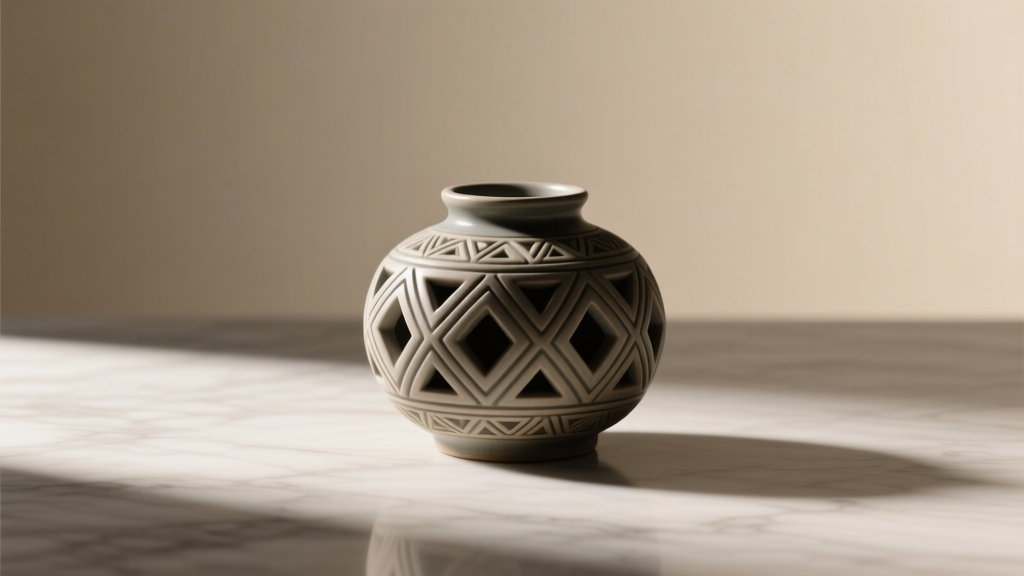
Selecting a pink ceramic pot goes far beyond aesthetics—even though the soft blush, coral, or rose hue can instantly elevate a windowsill, shelf, or patio. A poorly chosen pot may crack in winter frost, suffocate roots with inadequate drainage, or leach harmful substances into the soil. Conversely, a well-chosen pink ceramic pot supports plant health, complements interior design thoughtfully, and endures seasons of sun, rain, and repotting. This guide distills years of horticultural observation, studio pottery insights, and real-world grower experience into actionable criteria—not trends. We focus on what matters: structural integrity, functional design, material safety, and harmonious scale.
1. Prioritize Glaze Quality Over Color Intensity
The most common misconception is that vibrant pink equals premium quality. In reality, the glaze’s composition and firing process determine longevity, safety, and performance far more than its shade. High-quality ceramic glazes are food-safe (meaning non-toxic and lead-free), fully vitrified (glass-like and impermeable), and fired at cone 5–6 (approximately 2,200°F). These conditions ensure the glaze bonds permanently to the clay body—no chipping, no leaching, no fading under UV exposure.
Low-fire or decorative glazes—often used on mass-produced “pink pots” sold at big-box retailers—may contain cadmium or lead to achieve intense hues. When exposed to moisture and fertilizer salts, these glazes degrade over time, releasing trace metals into the soil. Worse, they’re prone to crazing: a network of fine cracks that trap algae, mineral deposits, and pathogens.
Tip: Tap the pot gently with your knuckle—if it rings with a clear, high-pitched tone, the clay is dense and well-fired. A dull thud suggests underfiring or air pockets in the body.Look for certification labels: “Dinnerware Safe,” “ASTM D4236 compliant,” or “Lead-Free Certified.” If purchasing online, verify whether the manufacturer discloses kiln temperature and glaze testing protocols—not just “handmade” or “artisanal” claims.
2. Verify Drainage Design—Not Just the Presence of Holes
A single ½-inch hole in the base is not sufficient. Effective drainage depends on three integrated features: hole size, number, placement, and internal slope. Premium pink ceramic pots include at least three evenly spaced drainage holes (⅜\"–½\" diameter) positioned slightly inward from the outer rim—this prevents water from pooling along the edge during heavy watering. Crucially, the interior base should slope gently toward the center, guiding excess water directly to the holes rather than allowing it to stagnate beneath the root ball.
Many pink pots marketed for succulents or herbs feature “self-watering” reservoirs—but these are rarely appropriate for true ceramic construction. Unglazed clay wicks moisture upward; adding a sealed reservoir creates a humid microclimate ideal for root rot, especially in cooler months. True ceramic drainage works *with* evaporation—not against it.
| Drainage Feature | What to Look For | Red Flag |
|---|---|---|
| Hole Count & Size | 3–5 holes, each ≥⅜\" diameter, centrally distributed | One small hole (<¼\"), or holes drilled post-firing (visible tool marks) |
| Base Profile | Gentle concave slope toward center; smooth, glazed interior floor | Flat or convex base; rough, unglazed underside where water pools |
| Foot Design | Elevated feet (≥¼\" height) to lift base off surface and maintain airflow | No feet—or plastic bumpers glued on after firing (prone to detachment) |
3. Assess Weight, Wall Thickness, and Frost Resistance
Ceramic pots vary dramatically in density—and weight is the most immediate indicator. A 10-inch pink pot made from stoneware clay and fired to maturity should weigh between 3.2–4.1 lbs. Lighter pots (under 2.8 lbs) often use porous earthenware or low-density slip-cast bodies—ideal for indoor décor but vulnerable outdoors. Heavier pots (>4.5 lbs) may signal excessive wall thickness, which reduces soil volume and impedes root aeration.
Optimal wall thickness balances strength and breathability: ⅜\"–½\" for pots up to 12 inches; ½\"–⅝\" for larger sizes. Thinner walls dry too quickly for moisture-loving plants; thicker walls retain cold longer in winter, increasing freeze-thaw stress.
Frost resistance is non-negotiable for outdoor use. Only fully vitrified stoneware or porcelain clays withstand repeated freezing cycles. Earthenware—common in budget pink pots—absorbs water like a sponge. When frozen, trapped moisture expands, causing hairline fractures that widen each season. There is no “frost-proof” coating or sealant that reliably fixes this flaw.
“Ceramic isn’t fragile—it’s unforgiving. A pot that survives one winter intact doesn’t guarantee resilience the next. Frost damage accumulates silently in the clay matrix until catastrophic failure occurs.” — Lena Torres, Studio Potter & Horticultural Collaborator, 18 years crafting plant vessels
4. Match Pot Size to Plant Physiology—Not Just Visual Proportion
Choosing a pot based solely on how “it looks with your sofa” risks chronic under- or over-potting. Roots need space to explore, but excessive volume invites fungal growth and inconsistent moisture distribution. The right size follows botanical logic:
- Succulents & cacti: Diameter = plant width at soil line; depth = 1.2× root length. Shallow, wide pots prevent stem rot.
- Foliage plants (e.g., pothos, ZZ): Choose a pot 1–2 inches wider than current root ball—never double the diameter.
- Flowering perennials (e.g., lavender, salvia): Depth > width. Roots grow downward first; shallow pots restrict anchorage and drought tolerance.
- Edibles (tomatoes, peppers): Minimum 5-gallon volume (14\" diameter × 12\" depth). Small pots heat rapidly, stressing roots and reducing fruit set.
Pink ceramic pots often come in standardized “designer” sizes (e.g., 6\", 8\", 10\")—but those numbers refer only to top diameter, not volume or depth. Always check manufacturer specs for internal dimensions and soil capacity (in quarts or liters). A 10-inch-wide pot that’s only 5 inches deep holds ~2.5 quarts; the same diameter at 9 inches deep holds ~6.8 quarts—a 170% difference in root zone.
5. Evaluate Long-Term Durability Through Real-World Use Cases
Here’s what happened to Maya, an urban balcony gardener in Portland, OR: She purchased six matte-finish blush pink ceramic pots labeled “outdoor safe” from a popular home goods brand. Within eight months, three cracked near the base during late-winter thaw. Two developed chalky white efflorescence (mineral salt buildup) that wouldn’t scrub off. One leaked steadily after repotting her fiddle-leaf fig—despite having visible drainage holes.
Root cause analysis revealed three failures: (1) The pots were earthenware, not stoneware; (2) Drainage holes were drilled *after* glazing, compromising structural integrity around the openings; (3) The matte glaze was intentionally left unvitrified to preserve texture—making it porous and susceptible to alkaline leaching from tap water.
Maya switched to hand-thrown stoneware pots from a Pacific Northwest ceramics studio. Same pink hue—achieved with iron oxide and manganese in the glaze—but fired to cone 6, with triple-drilled drainage and ⅜\" wall thickness. Two years later, all seven pots remain intact, with no fading, no efflorescence, and visibly healthier root systems across her collection.
Step-by-Step Selection Checklist
- Verify clay type: Confirm “stoneware” or “porcelain” (not “terracotta,” “earthenware,” or unspecified).
- Check firing certification: Look for cone rating (e.g., “Cone 6”) or “vitrified” in product specs.
- Inspect drainage: Count holes (3+), measure diameter (≥⅜\"), confirm interior slope and raised feet.
- Weigh & assess wall: Lift the pot—does it feel substantial but not excessively heavy? Run fingers along interior walls—smooth, consistent thickness?
- Review safety documentation: Does the seller provide lead/cadmium test reports or food-safe certification?
- Match dimensions to plant needs: Cross-reference internal depth/diameter with species-specific root requirements—not just aesthetics.
FAQ
Can I use a pink ceramic pot for orchids?
Yes—but only if it has exceptional drainage *and* is unglazed on the interior. Orchid bark media requires rapid drying between waterings. A fully glazed pink pot retains too much moisture unless you drill additional holes (not recommended, as it weakens structure) or use it strictly as a decorative cache pot around a plastic nursery pot with proper drainage.
Why does my pink pot fade after a few months outdoors?
Fading signals either UV degradation of low-fire glaze or chemical reaction with fertilizer salts. High-fire, iron-based pink glazes (like those using rutile or cobalt-manganese blends) resist fading for 5+ years. If fading occurs within 90 days, the glaze lacks full vitrification or contains organic colorants unsuited for exterior use.
Do I need to soak a new pink ceramic pot before first use?
No—for stoneware or porcelain, soaking is unnecessary and potentially harmful. Unlike terracotta, dense ceramic doesn’t absorb water. Soaking may introduce moisture into microscopic voids in underfired pieces, accelerating freeze-thaw damage later. Simply rinse with clean water and let air-dry.
Conclusion
A pink ceramic pot is more than decor—it’s an active participant in your plant’s ecosystem. Its thermal mass buffers soil temperature swings, its porosity regulates moisture exchange, and its stability anchors root architecture. Choosing wisely means looking past the Instagrammable hue and evaluating the kiln log, the clay body, the engineering of drainage, and the intention behind the craft. When you select a pot built to last—not just to trend—you invest in healthier plants, fewer replacements, and quieter daily joy in watching life thrive within thoughtful design.
Start today: pull out one of your existing pink pots. Tap it. Tip it to check the base slope. Measure its weight and wall thickness. Compare those observations to the criteria outlined here. Then, when you’re ready to expand your collection, prioritize studios and makers who publish technical data—not just lifestyle photography. Your plants will grow deeper, bloom brighter, and thank you in ways only healthy roots know how.
💬 Your experience matters. Have you found a pink ceramic pot that exceeded expectations—or one that failed quietly? Share your story, brand notes, and photos (if publishing elsewhere) in the comments. Let’s build a living database of what truly works—for plants, people, and time.








