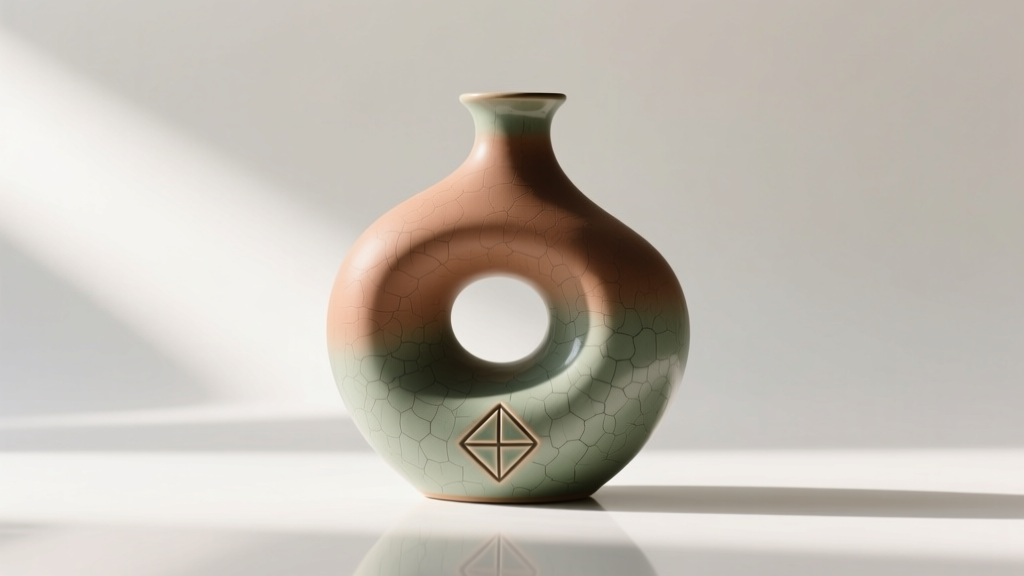
Mexican ceramic vases are more than decorative objects—they’re vessels of heritage, hand-formed by generations of artisans across regions like Talavera de la Reina (Puebla), Mata Ortiz (Chihuahua), and Tlaquepaque (Jalisco). Each piece carries distinct clay composition, firing technique, and symbolic motif. Yet today’s market is flooded with mass-produced imitations labeled “Mexican-style” but made overseas with leaded glazes, thin walls, and superficial decoration. Choosing wisely means understanding not just aesthetics—but geology, chemistry, ethics, and cultural stewardship. This guide distills decades of collector insight, studio visits, and ceramic conservation practice into actionable criteria you can apply before clicking “add to cart” or stepping into a gallery.
1. Verify Authenticity Through Origin & Certification
Authentic Mexican ceramic vases are defined by origin, material, and process—not just visual cues. The most rigorously protected designation is Talavera Poblana, a Denomination of Origin (DO) certified by Mexico’s Instituto Nacional del Derecho de Autor (INDAUTOR) and recognized by the World Intellectual Property Organization (WIPO). To bear the official Talavera seal, a vase must meet six non-negotiable requirements: it must be made in Puebla or Tlaxcala; use local white clay mixed with black sand from the Amozoc region; undergo two firings (first at 850°C, second at 1,050°C after glazing); feature hand-painted motifs using only eight traditional mineral pigments; pass structural and glaze-leach testing; and carry an embossed or stamped certification mark on its base.
Other regions lack formal DO status but maintain strong artisan cooperatives with traceable practices. In Mata Ortiz, for example, potters like Juan Quezada’s descendants still dig clay by hand from specific arroyos near the Casas Grandes riverbed, refining it through natural settling—not chemical processing. Their vases are unglazed, burnished with stones, and fired in open pits—yielding a distinctive matte, warm terracotta finish with subtle carbon trapping.
Tip: Flip the vase. If there’s no maker’s stamp, location inscription, or certification mark—and especially if the base is perfectly smooth and uniform—it’s almost certainly imported imitation.2. Assess Clay Body & Structural Integrity
The clay body determines durability, thermal stability, and water resistance—critical for a functional flower vase. Authentic Mexican ceramics use region-specific earthenware clays, each with unique mineral profiles. Puebla’s white clay contains high kaolin content, yielding fine-grained density and low porosity when properly fired. In contrast, Oaxacan barro negro (black clay) is rich in iron oxide and achieves its signature sheen through post-firing polishing—not glaze. Both respond poorly to sudden temperature shifts or freezing conditions, but for indoor floral use, their performance is exceptional—if fired correctly.
A well-made vase should feel substantial—not heavy, but grounded. Tap it gently with a fingernail: a clear, ringing tone indicates proper vitrification; a dull thud suggests underfiring or air pockets in the clay. Run your thumb along interior and exterior seams: handmade pieces may show subtle tool marks or slight asymmetry—evidence of wheel-throwing or coiling—but never cracks, bubbles, or warping. The foot rim should sit flat without rocking. Any wobble signals uneven drying or firing stress.
3. Evaluate Glaze Safety, Composition & Application
This is where many buyers unknowingly risk health and longevity. Traditional Mexican glazes historically used lead oxide to achieve luminous depth and flow—but modern regulations prohibit lead in functional ware. Authentic contemporary producers now use lead-free fritted glazes stabilized with zinc, boron, and silica. However, “lead-free” isn’t enough: look for independent lab verification. Reputable makers provide batch-tested certificates confirming leachability below FDA limits (≤0.1 ppm lead, ≤0.5 ppm cadmium in acidic solution).
Glaze application reveals craft level. Talavera vases use the trazado method: outlines drawn freehand in cobalt blue first, then filled with colored glazes applied within those boundaries. You’ll see slight color bleed at edges—a sign of handwork. Machine-printed outlines appear razor-sharp and unnaturally uniform. Matte glazes (common in Tonalá and San Bartolo Coyotepec) should feel velvety, not chalky; glossy glazes (like those in Guanajuato’s San Miguel de Allende studios) should reflect light evenly without pinholes or orange-peel texture.
| Glaze Type | Region Commonly Associated With | Key Visual & Tactile Cues | Risk Red Flag |
|---|---|---|---|
| Traditional Talavera | Puebla | High-gloss, jewel-toned, slightly raised relief at outline edges | Blue outlines that look digitally printed or lack cobalt depth |
| Barro Negro Burnished | Oaxaca | Deep metallic sheen, cool-to-touch surface, zero glaze layer | Shiny surface achieved with synthetic wax or polyurethane |
| Matte Terracotta | Mata Ortiz | Warm rust-to-chestnut hue, porous but sealed with natural beeswax | Uniform orange-red color lacking tonal variation |
| Crackle-Glazed Stoneware | Jalisco (Tlaquepaque) | Fine web-like fissures over deep cobalt or celadon, intentional not accidental | Large, jagged cracks suggesting structural failure |
4. Decode Motifs, Symbolism & Cultural Context
Mexican ceramic motifs are rarely decorative flourishes—they’re encoded narratives. A Talavera vase depicting hummingbirds amid marigolds isn’t just “pretty.” It references the Día de Muertos tradition, where hummingbirds symbolize souls returning; marigolds (cempasúchil) guide spirits with their scent and color. In Mata Ortiz work, geometric zigzags represent lightning or mountain ranges—direct echoes of ancient Paquimé pottery unearthed nearby. A vase showing intertwined serpents and corn stalks from Michoacán likely honors the Purépecha deity Curicaueri, associated with both fire and agricultural fertility.
Respectful appreciation means recognizing these layers. Avoid pieces that appropriate sacred symbols—like the Aztec calendar stone or Maya glyphs—used out of context as generic “ethnic patterns.” As master potter Josefina Aguilar of Atzompa, Oaxaca, explains:
“Every line I draw remembers my grandmother’s hands. When someone buys a vase with our flor de cempasúchil, they hold a living memory—not just a shape. That’s why we never mass-produce the same design twice.” — Josefina Aguilar, third-generation Atzompa ceramicist and UNESCO-recognized artisan
Look for subtle variations: a hummingbird’s wing angle differing between two vases, or marigold petals rendered with three strokes instead of four. These are signatures of intention—not inconsistency.
5. Practical Buying Checklist & Step-by-Step Evaluation
Before purchasing—whether online or in person—follow this field-tested sequence. It takes under 90 seconds but prevents costly missteps.
- Inspect the base: Look for hand-stamped maker’s mark, city of origin (e.g., “Puebla, Pue.”), and year. Absence doesn’t disqualify—but absence plus perfect symmetry does.
- Check weight distribution: Hold horizontally at mid-height. Does it balance evenly? A lopsided vase will tip with tall stems.
- Test interior smoothness: Run a fingertip inside the neck and base. No grit, sharp ridges, or pooling glaze (a sign of improper firing).
- Verify water retention: Fill halfway with room-temperature water. Wait 5 minutes. Wipe exterior dry, then check for dampness. Authentic low-porosity Talavera or properly burnished barro negro should show zero seepage.
- Review seller transparency: Does the listing name the artisan or cooperative? Provide firing temperature specs? Offer care instructions in Spanish and English? Vague terms like “handmade in Mexico” or “inspired by Talavera” are evasion tactics.
Mini Case Study: The Puebla Studio Visit That Changed a Collector’s Approach
In 2022, interior designer Lucia Mendoza commissioned a set of five vases from a Puebla workshop known for its cobalt-and-mustard Talavera. She specified identical dimensions and motifs for consistency in her client’s dining room. The vases arrived—beautiful, yes, but two leaked faint gray residue into water within hours. Alarmed, Lucia contacted the studio. They invited her to observe their next firing cycle. There, she saw how one kiln load included pieces from three different artists—each with subtly distinct clay blends and glaze thicknesses. The “leaking” vases came from a newer apprentice whose glaze application was 0.3mm thinner than standard, causing micro-fractures during cooling. The studio replaced them immediately—but also shared their internal quality log: every batch is tested for water absorption (max 0.8% for functional ware) and thermal shock resistance (survives 100°C-to-20°C immersion). Lucia now requests those logs for all future orders—and designs arrangements that accommodate slight height variations, celebrating individuality over sterile uniformity.
FAQ
Can I use Mexican ceramic vases for fresh-cut flowers long-term?
Yes—if certified food-safe and lead-free. Always rinse thoroughly before first use. Avoid placing in direct sunlight for extended periods (UV degrades some organic binders in matte finishes). Change water every 48 hours and clean with mild vinegar solution monthly to prevent mineral buildup in the interior.
Why do prices vary so drastically—from $25 to $450 for similar-looking vases?
Price reflects labor intensity, material sourcing, and certification costs. A $25 vase likely uses imported clay, machine-printed decals, and single-fire production. A $450 piece involves 12+ hours of hand-throwing, 3–4 days of natural drying, double-firing, and hand-painting with mineral pigments costing $120/ounce. The price difference is the difference between commodity and heirloom.
Are vintage Mexican vases safe for floral use?
Exercise caution. Pre-1990 Talavera often contains lead-based glazes. Even if intact, acidic flower water (especially with citrus or rosemary) can leach trace metals over time. Vintage pieces are best displayed empty or used for dried botanicals only. When in doubt, consult a certified ceramics conservator for XRF (X-ray fluorescence) testing.
Conclusion
Choosing the right Mexican ceramic flower vase isn’t about finding the “most colorful” or “largest” option—it’s about aligning your values with your vessel. It’s recognizing that the cobalt blue in a Puebla vase comes from mines worked since colonial times, that the burnish on an Oaxacan piece took 200 strokes with a quartz stone, that the crackle in a Jalisco glaze emerged from precise kiln-cooling curves passed down for four generations. Every authentic piece carries this lineage—not as nostalgia, but as active continuity. When you place cut peonies in a vase bearing a hand-stamped “Taller Familiar Sánchez, Puebla 2024,” you’re not just arranging flowers. You’re participating in a living craft economy, honoring material intelligence, and choosing beauty rooted in place and patience.
💬 Your choice matters. Share this guide with a friend planning a meaningful home accent—or tell us in the comments: Which Mexican ceramic region resonates most with your aesthetic? We’ll feature thoughtful reader insights in our next deep-dive on regional clay sourcing.








