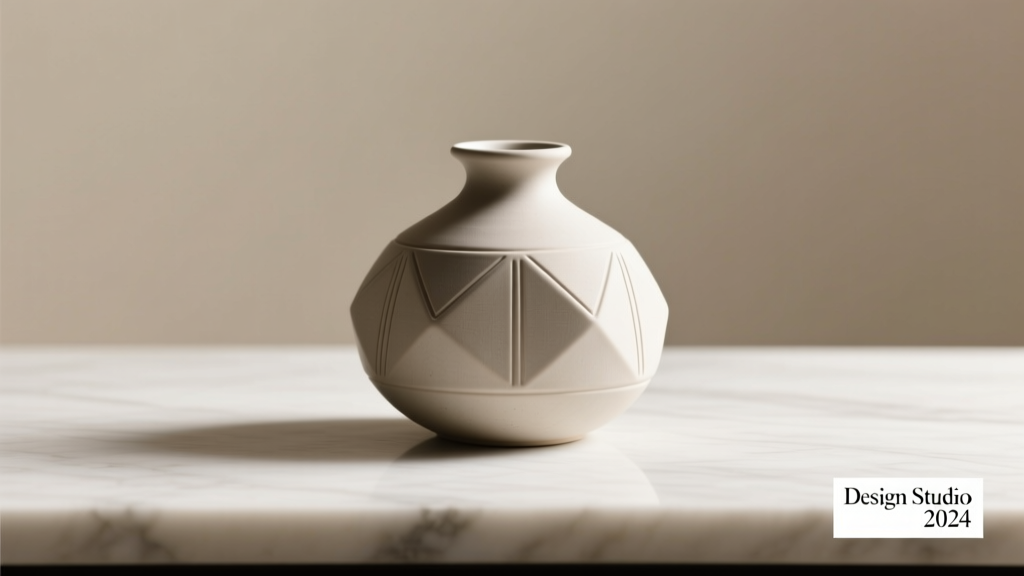
Large concrete vases have transformed from industrial afterthoughts into sought-after anchors for modern interiors and landscapes. Their raw texture, substantial presence, and quiet gravitas make them ideal for grounding minimalist living rooms, defining courtyard thresholds, or elevating commercial lobbies. Yet their appeal comes with real consequences: a poorly chosen concrete vase can crack in winter frost, topple under wind load, stain porous flooring, or clash tonally with your architectural palette. Unlike ceramic or fiberglass alternatives, concrete is unforgiving—it doesn’t flex, forgive, or disguise flaws. Choosing wisely isn’t about aesthetics alone; it’s about material science, structural foresight, and contextual harmony. This guide distills field-tested insights from landscape architects, interior stylists, and concrete fabricators to help you select a large concrete vase that performs as powerfully as it looks.
1. Understand What “Large” Really Means—and Why Weight Matters
“Large” in the concrete vase world typically refers to pieces over 24 inches tall and/or weighing more than 65 pounds. But size isn’t just dimensional—it’s gravitational. A 30-inch cylindrical vase cast at standard 2-inch wall thickness weighs approximately 185 pounds. At 36 inches with reinforced walls? Over 320 pounds. That mass dictates everything: installation logistics, floor loading capacity, wind resistance outdoors, and even thermal expansion behavior.
Weight stems directly from concrete density (typically 150 lb/ft³ for standard mixes) and wall thickness. Thinner walls reduce weight but increase fracture risk—especially at the base where torsional stress concentrates during transport or high winds. Reinforced vases use steel rebar or fiber mesh to distribute load, allowing thinner walls without sacrificing integrity. Unreinforced vases rely solely on mass for stability, making them prone to hairline cracks when subjected to freeze-thaw cycles or uneven settling.
Tip: Always ask for the exact weight and wall thickness—not just height and diameter. A 32-inch vase weighing under 140 lbs likely uses lightweight aggregate or excessive hollow space, compromising durability.2. Evaluate Structural Integrity Beyond Surface Finish
A smooth, sandblasted surface may look refined—but it tells you nothing about internal soundness. Concrete vases fail not from scratches, but from microfractures invisible to the eye: air pockets trapped during pouring, inconsistent curing, or inadequate vibration before setting. These flaws become stress concentrators, accelerating cracking under thermal cycling or impact.
Reputable manufacturers use low-water-ratio mixes (0.38–0.42 w/c ratio), high-strength Portland cement (Type I/II or blended with fly ash), and controlled 7-day steam or moisture-cured environments. These practices yield compressive strengths of 5,000–7,000 psi—critical for resisting ground settlement or lateral wind pressure. Lower-grade vases often cure in ambient air for 48 hours, resulting in surface hardness masking internal weakness. You’ll notice the difference within 12 months: subtle radial cracks near the base, efflorescence blooming along seams, or uneven coloration indicating inconsistent hydration.
“Concrete isn’t ‘set’ when it’s dry—it’s engineered. A vase cured too fast or with poor consolidation will fail predictably at the thinnest transition point: usually where the base flares upward.” — Lena Torres, Senior Fabricator, TerraForm Concrete Studios
3. Match Material Properties to Your Environment
Not all concrete is built for all places. Outdoor vases face UV degradation, freeze-thaw expansion, and alkaline leaching. Indoor vases contend with humidity fluctuations, floor protection needs, and aesthetic cohesion. The table below compares key performance factors by placement context:
| Property | Outdoor Use (Exposed) | Indoor Use (Climate-Controlled) | Transitional (Patio, Covered Porch) |
|---|---|---|---|
| Minimum Compressive Strength | 6,000 psi | 4,500 psi | 5,500 psi |
| Sealing Requirement | Mandatory penetrating silane/siloxane sealer (reapplied every 2 years) | Optional matte concrete sealer (for stain resistance only) | Recommended breathable sealer |
| Base Design Priority | Wide, weighted base + drainage holes | Non-scratch felt pads or recessed rubber grommets | Drainage + floor-protection hybrid |
| Risk of Efflorescence | High (requires low-alkali cement & proper curing) | Negligible | Moderate (manage with vapor-permeable sealers) |
Crucially, avoid “indoor-only” vases outdoors—even under cover. Their lower strength and lack of freeze-thaw additives invite spalling. Conversely, heavily sealed outdoor vases indoors trap moisture, encouraging mold growth beneath the vase and potentially damaging hardwood floors through prolonged damp contact.
4. Design Integration: Scale, Texture, and Architectural Dialogue
A large concrete vase doesn’t sit *in* a space—it negotiates *with* it. Its success hinges on three calibrated relationships: scale relative to surrounding architecture, texture contrast against adjacent materials, and tonal harmony with the broader palette.
Scale isn’t about filling voids—it’s about proportion. A 42-inch vase overwhelms a 7-foot ceiling but commands authority beside a 10-foot floor-to-ceiling window. As a rule: the vase’s height should be no less than ⅔ and no more than ¾ the height of its primary backdrop (e.g., a wall section, bookshelf, or façade). For outdoor use, base width should equal 30–40% of height to ensure visual stability and wind resistance.
Texture creates dialogue. Polished concrete reads cool and refined beside warm wood cladding but feels sterile next to rough-hewn stone. Raw trowel-finish concrete adds tactile warmth to crisp white stucco. Avoid matching textures—contrast invites intention. A honed, almost marble-like concrete vase gains depth beside nubby linen upholstery; a bush-hammered, deeply pitted surface grounds sleek glass railings.
Tone matters more than color. Concrete isn’t gray—it’s a spectrum: warm taupe (from iron-rich aggregates), cool graphite (from slag cement), or ivory (with white Portland and limestone fines). Test samples under your space’s actual lighting: north-facing rooms mute warmth; southern exposure intensifies yellow undertones. Never rely on website photos—they flatten reflectivity and hide subtle veining.
5. Real-World Selection Timeline: From Concept to Placement
Selecting a large concrete vase demands deliberate sequencing—not impulse. Follow this field-validated timeline:
- Week 1: Define Functional Non-Negotiables — Measure doorways, elevator cabs, and stairwell turns. Note floor material (concrete slab vs. engineered wood), HVAC vent locations (moisture exposure), and prevailing wind direction (outdoors). Document weight limits for balconies or mezzanines (most residential slabs support 40–50 psf; a 300-lb vase spreads load over ~2 sq ft = 150 psf—exceeding safe margins).
- Week 2: Source & Vet Fabricators — Prioritize makers who disclose mix design, curing method, and compressive test reports. Reject those offering “custom shapes” without engineering review. Request photos of vases installed 18+ months prior—look for consistent color, absence of cracking, and intact sealer sheen.
- Week 3: Physical Sample Evaluation — Inspect edge sharpness (should be crisp, not chipped), base flatness (place on level surface—no rocking), and underside finish (smooth, not pockmarked). Tap lightly with a coin: a clear, ringing tone indicates dense, well-vibrated concrete; a dull thud suggests internal voids.
- Week 4: Logistics & Installation Planning — Confirm delivery includes lift-gate service and pallet jack access. Schedule professional rigging for vases over 200 lbs. Never tilt or drag—concrete edges chip easily. Use plywood skids and moving blankets, not straps, which indent soft-cured surfaces.
- Week 5: Post-Placement Protocol — Wait 72 hours before planting or filling. For outdoor vases, apply sealer only after 28 days of full cure. Indoors, place on non-slip pads—not rugs—to prevent moisture trapping.
Mini Case Study: The Courtyard Vase That Saved a Renovation
When architect Marco Chen redesigned a 1920s Chicago courtyard, he specified a single 48-inch concrete vase as the sole vertical element—intended to echo the building’s original limestone pilasters. Initial quotes offered lightweight fiber-cement vases (120 lbs) promising “concrete look.” Chen insisted on true cast concrete. The selected piece weighed 410 lbs, used slag cement for reduced efflorescence, and featured a 4-inch tapered base for lateral stability.
During installation, contractors discovered the existing brick pavers had settled 1.5 inches over decades—creating a subtle slope. The lightweight alternatives would have required extensive sub-base reconstruction. The heavy, wide-based concrete vase naturally bridged the differential, its mass distributing evenly across the uneven surface. More critically, when an unseasonal freeze-thaw cycle hit two winters later, neighboring planters made of unreinforced concrete cracked along their bases. The vase remained flawless—its high-strength mix and proper curing absorbing thermal stress without fracturing. It didn’t just anchor the space visually—it solved an unseen structural challenge.
FAQ
Can I drill drainage holes into a pre-cast concrete vase?
No. Drilling introduces microfractures and compromises structural integrity, especially near the base where stress concentrates. Only use vases designed with integrated, properly sloped drainage channels. If drainage is essential outdoors, choose a vase with factory-installed weep holes—never retrofit.
How do I clean mineral deposits or rust stains from my concrete vase?
For efflorescence (white powdery residue): brush dry with stiff nylon brush, then rinse with clean water. Never use acid cleaners—they etch the surface and accelerate future leaching. For rust stains from metal stands or irrigation hardware: apply poultice of diatomaceous earth and hydrogen peroxide, cover with plastic for 24 hours, then wipe. Repeat if needed. Seal afterward to prevent recurrence.
Will my concrete vase lighten or darken over time?
Yes—but predictably. Unsealed concrete lightens slightly for 6–12 months as surface dust and curing compounds wear off, then stabilizes. Sealed vases retain original tone longer but develop a subtle patina from UV exposure and environmental particulates. This isn’t deterioration—it’s natural maturation, adding character. Avoid harsh pressure washing, which erodes the surface matrix and accelerates fading.
Conclusion
Choosing a large concrete vase is an act of material stewardship. It asks you to consider physics before fashion, longevity before trend, and context before composition. The right vase won’t shout—it will settle, steady, and silently elevate everything around it for decades. It will bear witness to seasons, absorb ambient light like aged stone, and grow more resonant with time. That kind of presence isn’t found in a quick online search. It’s earned through careful evaluation of weight, structure, environment, and intention. Don’t rush the process. Measure twice. Test samples in your actual light. Ask for test reports. Demand transparency on curing. Your space—and the vase itself—deserves that respect.
💬 Your experience matters. Have you installed a large concrete vase that exceeded expectations—or one that taught you a hard lesson? Share your insights in the comments to help others navigate this powerful, permanent choice.








