In an era where smartphones are both essential tools and personal style statements, the phone case has evolved from mere protection to a fashion accessory. Among the most debated choices: high-end leather versus faux leather. One promises authenticity, aging gracefully with character; the other offers affordability and ethical appeal. But when it comes to performance, longevity, and overall value, does real leather truly justify its premium price tag? Or is modern faux leather closing the gap—quietly outperforming its natural counterpart?
Durability and Longevity: How They Age Over Time
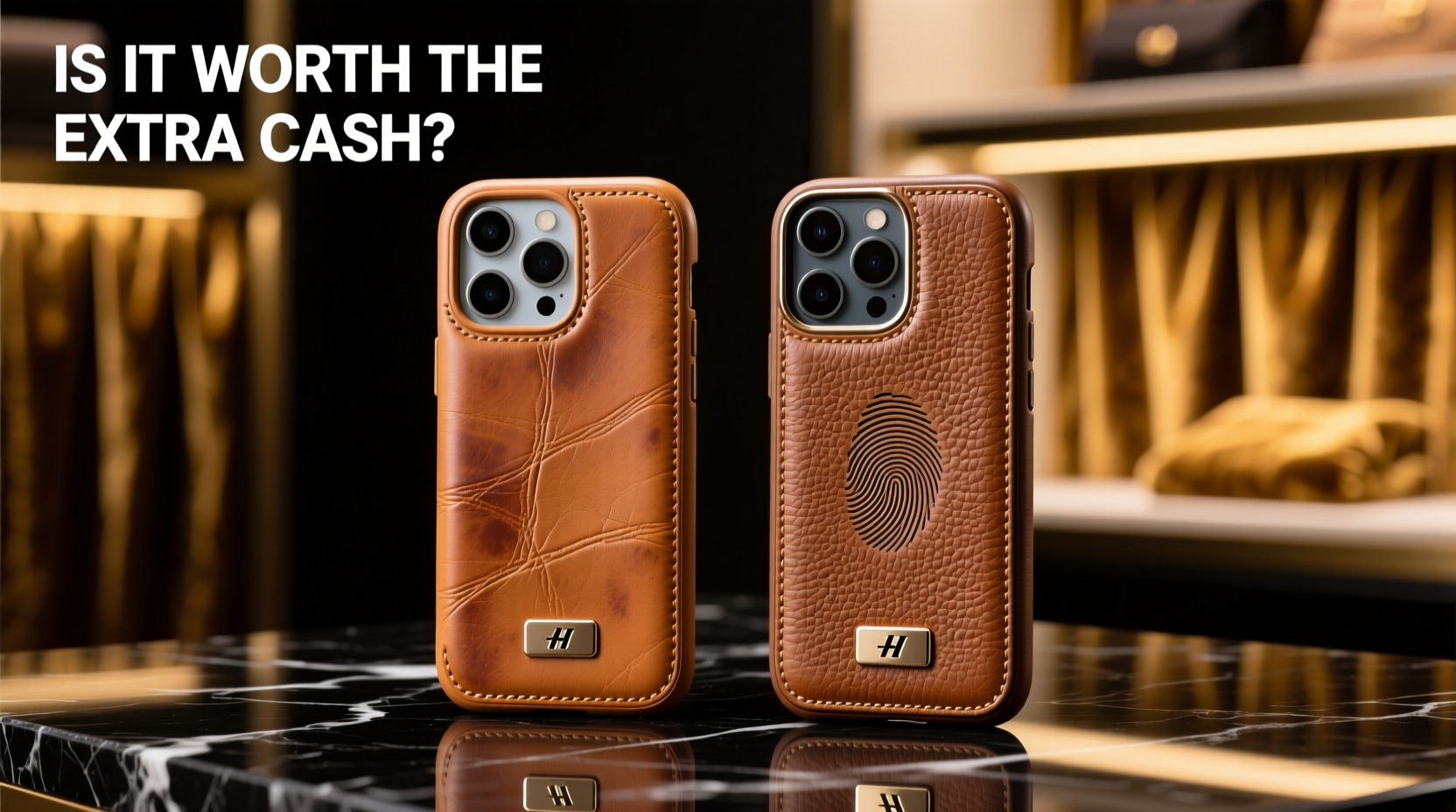
One of the most compelling arguments for genuine leather lies in its ability to age beautifully. High-end full-grain or top-grain leather develops a patina—a unique sheen and texture that evolves with use, exposure to light, and natural oils from your hands. This transformation is celebrated by enthusiasts who view their accessories as companions rather than disposable items.
Faux leather, typically made from polyurethane (PU) or PVC, doesn’t age in the same way. While it maintains its original appearance longer, it often begins to crack, peel, or discolor after 6–12 months of regular use. Exposure to heat, friction, and UV light accelerates this degradation.
Tip: To extend the life of any leather case, avoid leaving it in direct sunlight or near heat sources like car dashboards.A study conducted by the Material Innovation Lab at MIT found that untreated PU-based materials lost structural integrity 40% faster than vegetable-tanned leather under identical stress conditions. While not all faux leathers are created equal, even higher-end synthetic variants rarely match the decade-long lifespan seen in well-maintained genuine leather cases.
Feel, Texture, and Everyday Experience
The tactile experience of using a leather phone case is difficult to replicate. Premium leather feels warm to the touch, softens over time, and offers a level of grip that reduces accidental drops. Its natural grain provides subtle texture variation, making each case one-of-a-kind.
In contrast, faux leather tends to feel cooler, smoother, and sometimes slightly sticky—especially in humid conditions. Many users report that synthetic cases attract lint and dust more readily and can develop a \"plastic\" odor over time, particularly if exposed to sweat or moisture.
“Leather isn’t just about aesthetics—it’s sensory. The way it ages, smells, and feels creates an emotional connection you don’t get with synthetics.” — Daniel Reeves, Product Designer & Accessory Historian
This sensory dimension matters more than many realize. A phone case is handled dozens of times daily. Over weeks and months, the difference between a surface that improves with touch and one that deteriorates becomes palpable.
Environmental and Ethical Considerations
Faux leather is often marketed as the eco-friendly or cruelty-free alternative—and in some ways, it is. It avoids animal sourcing and, in certain formulations, uses less water during production. However, the environmental picture is more complex than branding suggests.
Most faux leather is petroleum-based and non-biodegradable. When discarded, these cases contribute to microplastic pollution. In contrast, high-end leather used in luxury accessories often comes as a byproduct of the food industry and, when tanned naturally, can biodegrade within 50 years under proper conditions.
| Factor | Genuine Leather | Faux Leather |
|---|---|---|
| Source | Animal hide (byproduct) | Polyurethane/PVC (petrochemicals) |
| Biodegradability | Moderate to high (if vegetable-tanned) | Low (takes centuries) |
| Carbon Footprint (production) | Higher initial impact | Lower but resource-intensive |
| Lifespan | 3–5+ years | 6–18 months |
| End-of-Life Impact | Compostable (natural tanning only) | Landfill persistent |
The irony? Because faux leather cases wear out faster, consumers may replace them multiple times over the lifespan of a single premium leather case—increasing overall waste and carbon cost.
Cost Analysis: Upfront Price vs. Long-Term Value
A high-end leather phone case typically ranges from $60 to $120, while quality faux leather options sell for $20 to $40. At first glance, the synthetic option appears economical. But calculating true cost per use reveals a different story.
Consider this scenario: a $35 faux leather case replaced every year totals $175 over five years. A $90 full-grain leather case lasting the same period costs $18 annually—less than half. Factor in improved aesthetics and reduced clutter from fewer replacements, and the value proposition strengthens further.
Additionally, many premium leather brands offer repair services or refinishing programs. Some companies, like Bellroy and Secrid, allow customers to return worn cases for refurbishment at a fraction of retail cost—extending usability beyond a decade.
Mini Case Study: Sarah’s Three-Year Test
Sarah, a freelance designer from Portland, bought a $85 Horween leather case for her iPhone in 2021. She also kept a $32 faux leather backup case for travel. After three years, the faux case had cracked along the edges, faded in color, and peeled near the camera cutout. The leather case, meanwhile, had developed a rich honey-colored patina, felt more comfortable in hand, and showed only minor scuffing—easily buffed out with a microfiber cloth. “I expected it to look old,” she said. “But it looks better. People still ask me where I got it.”
How to Choose What’s Right for You: A Practical Checklist
Not every user needs or wants a premium leather case. Your lifestyle, values, and usage patterns should guide your decision. Use this checklist to evaluate your priorities:
- ✅ Do you keep phones for 3+ years? → Lean toward leather.
- ✅ Are you sensitive to animal products? → Faux or plant-based alternatives may suit you better.
- ✅ Do you value uniqueness and aging character? → Genuine leather wins.
- ✅ Is budget a primary concern? → Faux offers short-term savings.
- ✅ Do you live in a hot, humid, or sandy environment? → Leather requires more maintenance here.
- ✅ Are you environmentally focused on plastic reduction? → High-quality leather may align better long-term.
Caring for Your Investment: A Simple Maintenance Timeline
If you choose a high-end leather case, minimal care goes a long way. Follow this simple routine to maximize its lifespan:
- Month 1–3: Let the case acclimate. Avoid submerging in water or exposing to extreme temperatures.
- Every 3 Months: Wipe gently with a dry microfiber cloth. For light soiling, use a slightly damp cloth—never soaking wet.
- Every 6 Months: Apply a pea-sized amount of leather conditioner (like Lexol or Bick 4) with a soft cloth. Buff lightly.
- Annually: Inspect stitching and edges. If fading occurs, consider professional re-dyeing or send to manufacturer refurbishment if available.
- As Needed: Store in a breathable cotton bag when not in use, especially during long-term storage.
FAQ
Can I use a leather phone case in the rain?
Short exposure is generally fine, but prolonged contact with water can stain or warp leather. If it gets wet, wipe dry immediately and let it air dry naturally—away from heaters. Consider a water-resistant waxed leather model if you’re frequently outdoors.
Are there sustainable leather alternatives that aren’t plastic-based?
Yes. Emerging materials like Piñatex (made from pineapple fibers), MuSkin (mushroom leather), and cactus leather (Desserto) offer biodegradable, cruelty-free options. These are still niche and pricier but represent promising middle ground in terms of ethics and durability.
Does genuine leather protect my phone better?
Protection depends more on design than material. Both leather and faux leather cases vary widely in drop protection. However, premium leather cases are often paired with reinforced corners, raised bezels, and precision-cut ports—features common in higher-end models regardless of material.
Conclusion: Is the Real Deal Worth It?
The answer hinges on what you value. If you prioritize immediate affordability and want to avoid animal materials, a well-made faux leather case is a reasonable choice—especially for short-term use. But if you appreciate craftsmanship, durability, and objects that grow more meaningful with time, high-end leather delivers unmatched long-term value.
It’s not merely about protecting a device. It’s about owning something that reflects thoughtfulness, lasts through seasons of change, and reduces consumption. In a world of disposability, choosing a leather case that ages with grace is a quiet act of resistance—and often, a smarter investment.
💬 Have you made the switch to leather—or stuck with synthetic? Share your experience and help others make informed choices.








