In a world of mass production and fast fashion, small accessories like leather keychains often go unnoticed—until you hold one that feels different. Some are stiff, uniform, and lifeless. Others are supple, textured, and carry a quiet sense of character. The difference often comes down to how they’re made: by machine or by hand. But does that justify the higher price tag on handmade leather keychains? For many consumers, the answer isn’t just about function—it’s about values, longevity, and personal connection.
This comparison goes beyond aesthetics. It touches on material quality, environmental impact, artisan livelihoods, and long-term value. Let’s explore what truly separates handmade from machine-made leather keychains—and whether the premium is justified.
Craftsmanship: The Heart of the Difference
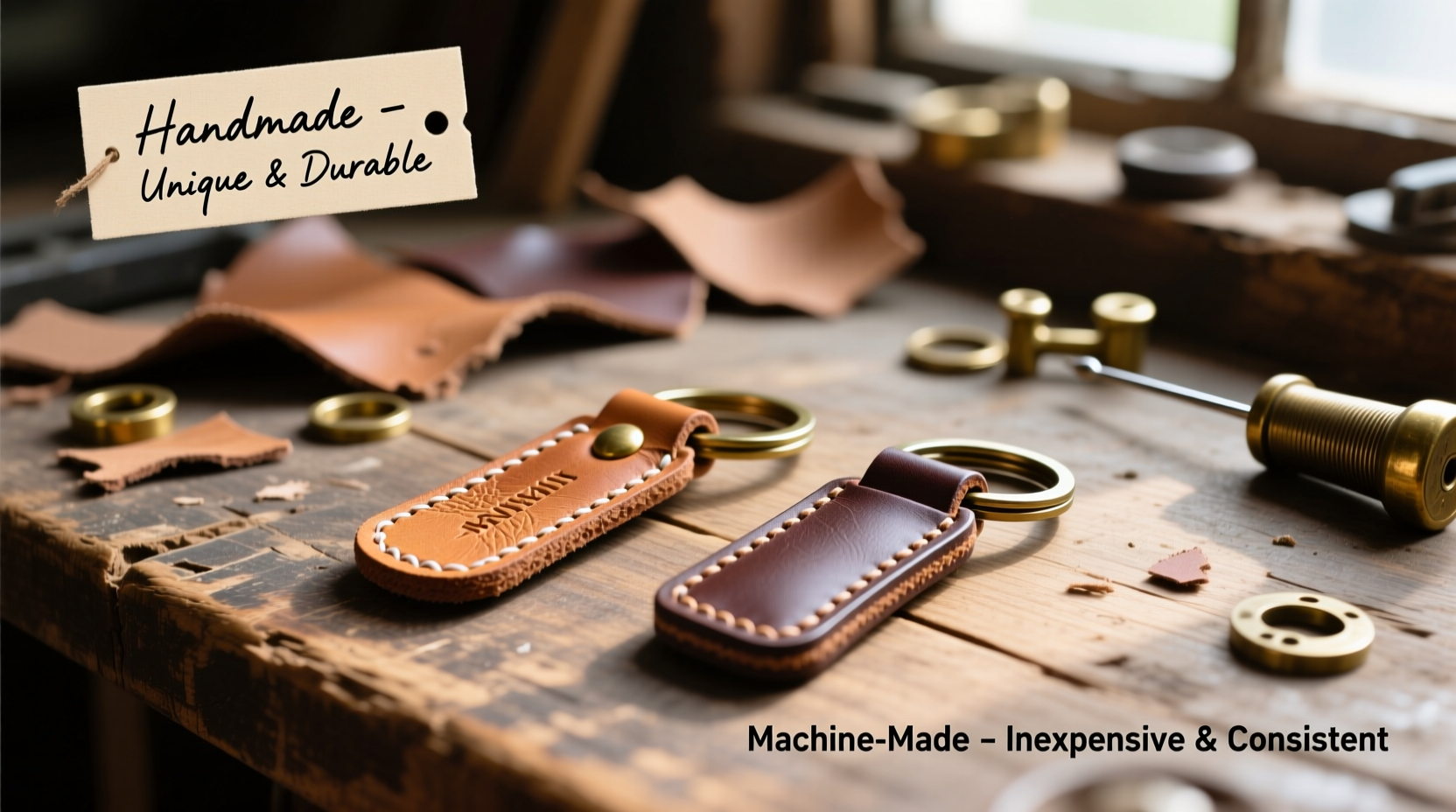
At its core, the distinction between handmade and machine-made leather keychains lies in craftsmanship. Handmade pieces are typically cut, skived, stitched, and finished by skilled artisans using traditional tools. Each stage involves attention to detail—a careful eye for grain alignment, precision in edge bevelling, and hand-stitching that can take minutes per seam. This process is slower, but it allows for customization, consistency checks, and subtle refinements that machines can’t replicate.
Machine-made keychains, on the other hand, are stamped, glued, and stitched rapidly using automated equipment. While efficient, this method often sacrifices nuance. Edges may be left rough or sealed with synthetic finishes. Stitching is usually done with industrial thread and machines, resulting in perfectly even but less durable seams. Glue is frequently used to secure layers, which can degrade over time.
“Hand-stitching isn’t just about tradition—it’s about tensile strength. A saddle stitch locks each loop so if one thread breaks, the rest stay intact.” — Daniel Reyes, Master Leatherworker, 15+ years in bespoke goods
Material Quality and Longevity
Not all leather is created equal, and this is where the production method often influences material choice. Handmade keychains are typically made from full-grain or top-grain vegetable-tanned leather—premium hides that age beautifully, develop a patina, and resist cracking. These leathers are thicker, more resilient, and sourced with care.
Machine-made versions often use corrected-grain or bonded leather—lower-tier materials that may look polished at first but wear poorly. Bonded leather, made from scraps mixed with polyurethane, can flake or peel within months. Even when real leather is used, the thinness and lack of structural reinforcement reduce lifespan.
Tip: Look for keychains labeled “vegetable-tanned” and “hand-stitched”—these are strong indicators of quality craftsmanship.Comparative Analysis: Handmade vs Machine-Made
| Feature | Handmade Leather Keychain | Machine-Made Leather Keychain |
|---|---|---|
| Production Time | 30–60 minutes per piece | Under 2 minutes per piece |
| Stitching Method | Hand saddle stitching (self-locking) | Mechanical stitching (single thread) |
| Leather Type | Full-grain or top-grain, veg-tan | Corrected grain, bonded, or split leather |
| Durability | 5+ years with proper care | 6–18 months average lifespan |
| Customization | Yes – initials, colors, shapes | Limited or none |
| Environmental Impact | Low waste, natural tanning | High energy use, chemical tanning |
| Price Range | $25–$60 | $5–$15 |
A Real-World Example: Two Years, Two Keychains
Consider Sarah, a graphic designer who bought two leather keychains at the same time: one handmade from a local artisan ($38), and one machine-made from an online retailer ($12). Both looked similar initially—dark brown, minimalist design, brass hardware.
After six months, the machine-made version began showing signs of wear. The edge finish chipped near the split ring, the glue holding the layers weakened, and the leather lost its luster. By month 14, the stitching unraveled, and the keychain split open.
The handmade version aged differently. The leather softened, developed a warm honey-colored patina, and the hand-stitching remained intact. After two years, it still functions flawlessly—and Sarah now considers it a keepsake, not just a tool.
This isn’t an isolated case. Many users report similar outcomes: machine-made accessories fail faster, while well-crafted handmade items improve with age.
Value Beyond Price: Ethics, Sustainability, and Sentiment
The cost difference isn’t just about labor—it reflects broader values. Buying handmade supports small artisans, preserves traditional techniques, and promotes ethical labor practices. Most handmade leather workers operate in small studios, sourcing materials responsibly and minimizing waste.
From a sustainability standpoint, vegetable-tanned leather decomposes more safely than chrome-tanned or synthetic alternatives common in mass production. Plus, longer-lasting products mean fewer replacements and less consumer waste.
There’s also emotional value. A handmade keychain often carries a story—the maker’s name, a batch number, or a personalized engraving. It becomes a daily companion, subtly reminding the owner of intentionality and care.
Tip: When buying handmade, ask about the tanning method and stitching technique. Transparency is a hallmark of reputable artisans.How to Choose Wisely: A Buyer’s Checklist
Before investing in a handmade leather keychain—or settling for a cheaper alternative—use this checklist to evaluate your options:
- ✅ Is the leather full-grain or top-grain? Avoid “genuine leather” labels—they often mean low-grade material.
- ✅ Is it hand-stitched or machine-stitched? Look for visible saddle stitching on both sides.
- ✅ Are the edges smooth and burnished, or rough and painted?
- ✅ Does the seller provide details about the tanning process? Veg-tan is preferable.
- ✅ Is the hardware solid brass or stainless steel, not cheap zinc alloy?
- ✅ Can you contact the maker directly? Personal communication adds trust.
- ✅ Does it feel substantial, not flimsy, when held?
FAQ: Common Questions About Leather Keychains
Are handmade leather keychains worth $40 when I can get one for $10?
It depends on your priorities. If you want something that lasts, ages well, and supports ethical production, yes—it’s worth it. The $10 version may save money upfront but will likely need replacing multiple times, costing more over five years.
Do handmade keychains require special maintenance?
Minimal care is needed. Wipe with a dry cloth monthly. Occasionally condition with a small amount of leather balm (like beeswax-based cream) to prevent drying. Avoid soaking in water.
Can machine-made leather ever be high quality?
Rarely, but possible. Some premium brands use machines for cutting but still hand-finish and stitch. However, most budget-friendly machine-made options prioritize speed over durability. Always check construction details.
Conclusion: Investing in Meaningful Craft
The question isn’t just whether handmade leather keychains are worth the extra money—it’s whether we value quality over convenience, longevity over disposability, and people over profit. A $35 handmade keychain isn’t merely an accessory; it’s a statement of intent. It says you care about how things are made, who makes them, and how long they last.
While machine-made keychains have their place—especially for temporary or promotional use—they rarely offer the lasting satisfaction of a well-crafted piece. Over time, the handmade option proves more economical, environmentally responsible, and emotionally resonant.
If you’ve been hesitating at the checkout, wondering if the upgrade is justified, consider this: you’ll handle this item every day. It jingles in your pocket, dangles from your bag, connects you to your keys—the tools of access and movement. Isn’t it worth making that small moment meaningful?
💬 Have a favorite handmade keychain or a story about a well-made accessory that lasted years? Share your experience in the comments—your insight could help others choose wisely.








