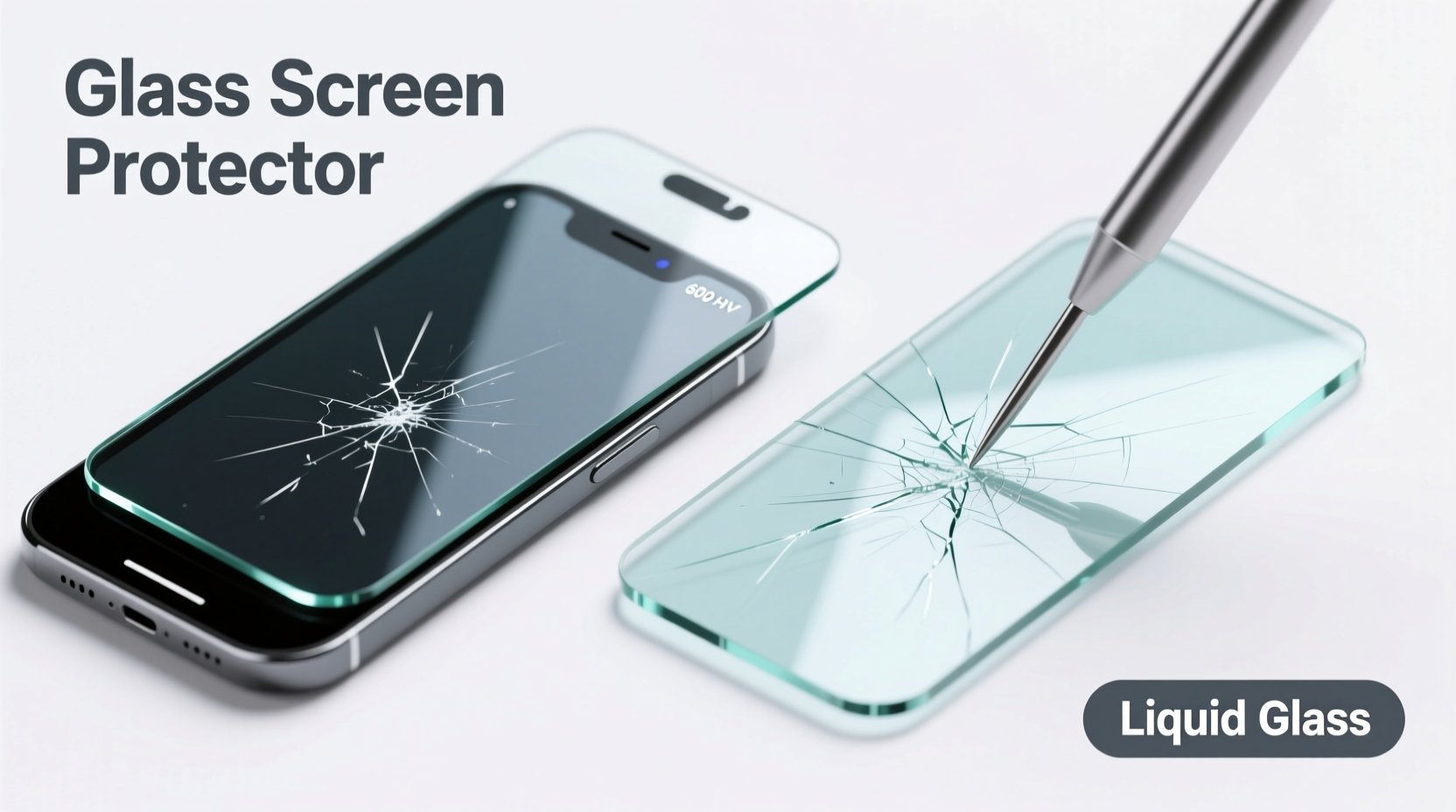
Smartphone screens are among the most vulnerable parts of modern devices. Despite advancements in display technology, even high-end phones remain susceptible to scratches from everyday exposure—keys, sand, coins, and rough surfaces can all compromise a pristine screen. To combat this, consumers have two primary options: traditional tempered glass screen protectors and liquid glass coatings. While both claim to offer protection, their mechanisms, durability, and scratch resistance vary significantly. Understanding these differences is essential for choosing the right defense for your device.
How Scratch Resistance Is Measured
Scratch resistance isn't just a marketing term—it's grounded in material science. The Mohs hardness scale is commonly used to evaluate how resistant a surface is to scratching. This scale ranges from 1 (softest, like talc) to 10 (hardest, diamond). Most smartphone glass, including Corning Gorilla Glass, sits between 6 and 7 on the Mohs scale. Materials with a higher rating can scratch those below them.
For screen protection, a product must either be harder than common abrasive particles (like quartz, rated at 7) or absorb impact without transferring force to the underlying screen. Tempered glass typically reaches a hardness of 9H on the pencil hardness scale—a standard often referenced in consumer electronics—which makes it highly resistant to everyday abrasives. Liquid glass, despite its name, doesn’t achieve the same structural hardness. Instead, it forms a thin, hydrophobic coating that fills microscopic pores on the screen surface.
“Physical barriers like tempered glass provide measurable scratch resistance, while liquid coatings improve surface smoothness and minor abrasion resilience but don’t replace a solid shield.” — Dr. Alan Zhou, Materials Scientist at Mobile Device Protection Lab
Tempered Glass Screen Protectors: Structure and Performance
Tempered glass screen protectors are made from chemically strengthened alkali-aluminosilicate glass. They are usually 0.3mm to 0.5mm thick and undergo a tempering process that increases tensile strength, making them more resistant to cracks and impacts. These protectors bond directly to the screen using an adhesive layer, forming a rigid, transparent barrier.
In terms of scratch resistance, tempered glass excels because it acts as a sacrificial layer. When exposed to keys, coins, or grit, the protector absorbs the damage instead of the original screen. Independent lab tests show that quality tempered glass can withstand up to 22 pounds of pressure before cracking and resist scratches from materials rated up to 6.5–7 on the Mohs scale—sometimes higher depending on the tempering process.
Tip: Always clean your screen thoroughly before applying a tempered glass protector to avoid dust bubbles and ensure maximum adhesion.The downside? Tempered glass adds slight thickness and may interfere with some cases or screen-readiness sensors. Additionally, if dropped improperly, it can crack—though this is by design, absorbing impact energy that would otherwise reach the phone’s actual display.
Liquid Glass Coatings: How They Work and Limitations
Liquid glass is not glass in the traditional sense. It’s a silica-based solution—often composed of SiO₂ (silicon dioxide)—that’s applied as a liquid and cures into a transparent, nano-thin coating (typically 100–500 nanometers thick). Once dried, it bonds at the molecular level with the screen’s surface, filling micro-gaps and creating a smoother, more water-repellent finish.
Manufacturers claim liquid glass offers “up to 9H hardness,” but this figure is misleading. Unlike solid tempered glass, liquid coatings cannot be tested using the same pencil hardness standards due to their extreme thinness. In reality, they offer limited scratch protection against very fine abrasives like cloth fibers or light fingernail contact, but fail when exposed to sand or metal objects.
A key limitation is depth. Because the coating is only a few hundred nanometers thick—thinner than a strand of human hair—it wears off over time with regular use. Daily friction from pockets, bags, and cleaning reduces its effectiveness within weeks or months. It does not prevent deep scratches or cracks; it merely slightly raises the threshold for micro-scratches.
Real-World Example: Commuter Phone Test
In a controlled test conducted by a third-party tech reviewer, two identical smartphones were subjected to identical daily routines over six weeks. One had a premium tempered glass protector; the other was treated only with a popular liquid glass spray. Both phones were carried in pockets with keys and loose change.
After four weeks, the liquid glass-treated phone showed visible fine scratches near the charging port and along the edges—areas frequently touched during plugging and unplugging. By week six, multiple micro-scratches were evident under direct light. The phone with the tempered glass protector had no scratches, though the protector itself showed minor wear on its surface. When intentionally scraped with a metal key, the liquid glass offered no resistance, while the tempered glass prevented any mark on the underlying screen.
Comparative Analysis: Key Differences in Scratch Resistance
| Feature | Tempered Glass Protector | Liquid Glass Coating |
|---|---|---|
| Thickness | 0.3–0.5 mm | 0.0001–0.0005 mm |
| Hardness Rating | Up to 9H (pencil scale) | Claimed 9H, but unverifiable due to thinness |
| Scratch Resistance | High – resists keys, sand, metal | Low to moderate – only resists light abrasion |
| Lifespan Under Use | 6–12 months (until cracked or replaced) | 4–8 weeks (gradual degradation) |
| Impact Absorption | Yes – absorbs shock through sacrificial cracking | No – provides no cushioning |
| Tactile Feel | Slightly thicker, but smooth | Nearly undetectable; feels like bare glass |
| Reapplication Needed? | No (unless damaged) | Yes – every few weeks for maintained effect |
This table highlights why tempered glass remains the superior choice for users prioritizing long-term scratch protection. Liquid glass may enhance water resistance and reduce fingerprint smudging, but it cannot match the physical durability of a solid barrier.
When Liquid Glass Might Be Useful
Despite its limitations in scratch resistance, liquid glass has niche applications. Users who prioritize a completely seamless feel—such as artists using styluses or gamers sensitive to screen texture—may appreciate the invisible nature of the coating. It also works well as a supplementary layer: applying liquid glass *under* a tempered protector can fill micro-imperfections and improve clarity, though this practice is uncommon.
Additionally, liquid glass can benefit devices with curved screens where traditional protectors struggle to adhere fully. However, even in these cases, the protection offered is minimal against actual scratching agents.
Tip: If using liquid glass, reapply every 4–6 weeks and avoid exposing the phone to abrasive environments immediately after application.Step-by-Step Guide: Maximizing Screen Protection
To get the best possible defense against scratches, follow this practical sequence:
- Assess your usage pattern: Do you carry your phone loosely with keys? Are you outdoors often? High-risk environments demand physical protection.
- Clean the screen thoroughly: Use alcohol wipes or a microfiber cloth to remove oils and debris before any application.
- Choose a high-quality tempered glass protector: Look for brands with 9H hardness ratings, oleophobic coating, and precise cutouts.
- Apply in a dust-free environment: Close windows, turn off fans, and use alignment trays for accurate placement.
- Press firmly from center outward: Ensure full adhesion and eliminate air bubbles.
- Optional: Apply liquid glass first (for enhanced clarity): Let it cure completely before adding the tempered glass layer.
- Maintain regularly: Clean the protector weekly with a soft cloth; replace if cracked or heavily scratched.
Expert Recommendations and Common Misconceptions
One widespread misconception is that “liquid glass hardens into real glass.” This is false. While the cured coating contains silicon dioxide—the same compound found in window glass—it lacks the crystalline structure and density of solid glass. As Dr. Elena Park from the Institute of Surface Engineering explains:
“Calling it ‘glass’ is a misnomer driven by marketing. It’s more accurate to call it a silica-based polymer coating. It improves surface properties but doesn’t function like a protective pane.” — Dr. Elena Park, Surface Chemistry Researcher
Experts consistently recommend tempered glass for users seeking reliable scratch protection. Liquid glass may complement a maintenance routine but should never be relied upon as the sole defense.
Frequently Asked Questions
Can liquid glass prevent screen scratches?
Liquid glass offers minimal scratch resistance. It may help against very light abrasions like fabric or fingernails, but it cannot stop scratches from sand, keys, or metal objects. For meaningful protection, a physical barrier like tempered glass is required.
Does tempered glass affect touch sensitivity?
High-quality tempered glass protectors do not impair touch sensitivity. Modern units use ultra-thin designs and advanced adhesives that maintain full responsiveness. Cheaper models may cause lag or reduced accuracy, so investing in reputable brands is advised.
Is it safe to use both liquid glass and a screen protector together?
Yes, though it’s rarely necessary. Applying liquid glass to the phone screen before installing a tempered protector can theoretically improve optical clarity by filling micro-pores. However, most premium protectors already include anti-reflective and oleophobic layers, making this step redundant for most users.
Final Verdict: Which Offers Better Scratch Resistance?
When it comes to resisting scratches, tempered glass screen protectors are objectively superior to liquid glass. Their physical thickness, verified hardness, and ability to act as a sacrificial layer make them the only true defense against daily wear and tear. Liquid glass, while innovative in concept, functions more as a surface treatment than a protective shield. It enhances water resistance and smoothness but fails under real-world scratching conditions.
If your priority is preserving your phone’s screen in pristine condition over months or years, especially if you’re active, travel frequently, or carry your phone in pockets with other items, a tempered glass protector is the clear choice. Liquid glass can serve as a supplementary feature for specific needs, but it should not be considered a standalone solution for scratch prevention.
🚀 Take action today: Invest in a high-quality tempered glass protector and apply it correctly. Your phone’s screen will stay scratch-free longer, maintaining resale value and visual clarity. Share your experience or ask questions in the comments below!








