
The German Striped Tomato is not just another backyard garden curiosity—it’s a flavor powerhouse that commands attention on both the vine and the plate. With its striking marbled skin, complex sweetness, and balanced acidity, this heirloom cultivar has earned a loyal following among chefs, home gardeners, and tomato connoisseurs. Unlike mass-market hybrids bred for uniformity and shelf life, the German Striped stands apart with character, depth, and an unmistakable presence in raw and cooked preparations. For those seeking a tomato that delivers more than visual appeal—offering a true taste of terroir and heritage—this variety answers the call.
Definition & Overview
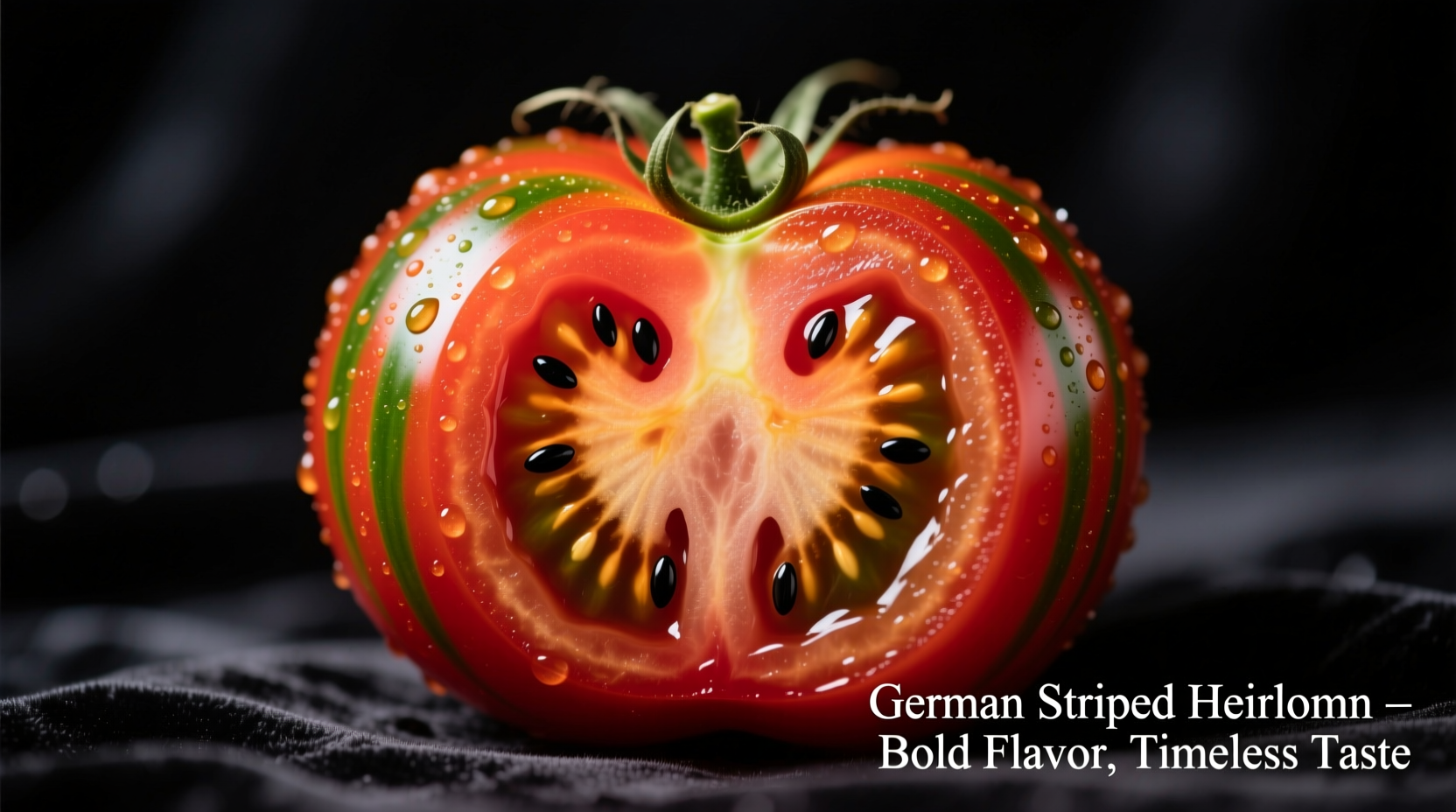
The German Striped Tomato (sometimes labeled *Tomate Bunte Stritze*, *Bunte Stritze*, or *German Pink Striped*) is an open-pollinated heirloom variety believed to have originated in Germany or Central Europe over a century ago. It belongs to the *Solanum lycopersicum* species and falls within the \"beefsteak\" category due to its large size, meaty texture, and layered internal structure. The fruit typically weighs between 10 and 16 ounces (300–450 grams), though some specimens exceed one pound under optimal growing conditions.
What immediately distinguishes the German Striped from other tomatoes is its dramatic coloration: golden-orange skin streaked with deep red or crimson marbling, often radiating from the blossom end like brushstrokes on canvas. This variegation isn't merely cosmetic—it reflects uneven lycopene distribution, which correlates with nuanced flavor development across different sectors of the fruit. Inside, the flesh ranges from amber to pinkish-red, interspersed with gel-filled seed cavities typical of beefsteaks but less watery than many commercial varieties.
Gardeners prize it not only for flavor but also for its relative disease resistance and productivity in temperate climates. While it performs best in long, warm summers, it can thrive in cooler zones with proper support and care. As an indeterminate vine, it continues producing fruit until frost, making it ideal for extended harvests. Its seeds are easily saved year-to-year, preserving genetic integrity and encouraging sustainable gardening practices.
Key Characteristics
| Attribute | Description |
|---|---|
| Flavor Profile | Richly sweet with pronounced acidity; hints of citrus, apricot, and earthy umami. Balanced complexity reminiscent of vintage European tomatoes. |
| Aroma | Intense, floral-tomato scent with green stem notes and a subtle musk when fully ripe. |
| Color & Appearance | Golden-orange base with irregular crimson striping; deeply lobed shoulders and slightly flattened globe shape. |
| Texture | Firm yet juicy; dense pericarp (outer flesh) with moderate locular gel. Less prone to splitting than other heirlooms. |
| Size | Large, averaging 4–6 inches in diameter; commonly 10–16 oz, occasionally larger. |
| Culinary Function | Versatile: excels in fresh applications but holds up well in roasting, grilling, and sauces. |
| Shelf Life | 3–5 days at room temperature; up to 7 days if stored stem-side down in a cool, dark place. Not recommended for refrigeration unless cut. |
| Seasonality | Late midseason to late season (typically August–October in the Northern Hemisphere). |
Practical Usage: How to Use German Striped Tomatoes in Cooking
The German Striped Tomato shines brightest when allowed to express its natural complexity without interference. Because of its high sugar-acid balance and aromatic depth, it performs exceptionally well in uncooked dishes where freshness is paramount. However, its structural integrity allows for controlled heat applications that enhance rather than diminish its qualities.
Best Fresh Applications
- Caprese Variations: Layer thick slices with burrata, fresh basil, aged balsamic, and flaky sea salt. The contrast between creamy cheese and the tomato’s bright tang creates a modern take on the classic.
- Tomato Toasts: Grill sourdough bread, rub with garlic, then top with sliced German Striped, olive oil, cracked pepper, and microgreens. Finish with a dusting of smoked paprika or Urfa biber for warmth.
- Salads: Combine wedges with cucumbers, red onion, feta, and oregano for a Greek-inspired salad. Alternatively, pair with peaches, arugula, and prosciutto for a summer panzanella.
- Salsas & Relishes: Dice finely with jalapeño, cilantro, lime juice, and red bell pepper for a vibrant pico de gallo. Its firmness prevents sogginess even after sitting for 30 minutes.
Cooked & Preserved Preparations
- Rustic Roasting: Halve tomatoes, drizzle with olive oil, sprinkle with thyme and crushed garlic, and roast at 325°F (160°C) for 60–75 minutes. The slow process concentrates flavors while retaining structure—ideal for topping crostini or folding into risotto.
- Grilled Entrées: Slice ¾-inch thick, brush with herb oil, and grill over medium heat for 3–4 minutes per side. Serve alongside grilled lamb chops or as part of a vegetable platter.
- Sauces & Coulis: Simmer peeled and seeded purée with shallots, bay leaf, and white wine for a refined sauce suitable for fish or poultry. Strain for silkiness or leave textured for pasta.
- Preservation: Though not ideal for whole-canning due to size and moisture content, it makes excellent tomato jam when cooked down with sugar, vinegar, and spices like clove and cinnamon.
Pro Tip: To maximize flavor extraction, allow German Striped Tomatoes to ripen fully on the vine and rest at room temperature for 12–24 hours post-harvest before using. Avoid washing until ready to use to prevent mold and extend shelf life.
Variants & Types
While the standard German Striped Tomato is the most widely recognized form, several closely related variants exist, each offering subtle differences in appearance, yield, or adaptability:
- German Striped (True Heirloom): The original open-pollinated strain passed through seed savers. Exhibits greatest variability in striping and size; preferred by purists for authentic flavor.
- Dwarf German Striped: A compact version developed for container gardening and small spaces. Retains much of the parent’s flavor but matures earlier and produces smaller fruit (6–8 oz).
- German Striped Micro-Tomato: A newer breeding project aiming to miniaturize the flavor profile into cherry-sized fruit. Still rare but available through specialty seed catalogs.
- Striped Cucumber Leaf Variant: Features the same fruit but grows on plants with recessive cucumber-shaped foliage—a trait associated with increased pest resistance and vigor in organic systems.
When selecting seeds, consider your climate and growing method. Gardeners in shorter-season regions may benefit from starting seeds indoors 6–8 weeks before the last frost and using black plastic mulch to warm soil. Those in humid areas should prioritize airflow and avoid overhead watering to reduce fungal pressure.
Comparison with Similar Ingredients
The German Striped Tomato is often mistaken for other bi-colored or “zebra” tomatoes. Understanding the distinctions ensures proper usage and sets accurate expectations.
| Tomato Variety | Color Pattern | Flavor Profile | Best Use | Key Difference |
|---|---|---|---|---|
| German Striped | Orange-gold base with red marbling | Balanced sweet-tart, complex, floral | All-purpose, especially fresh | Deeper umami, denser flesh |
| Green Zebra | Chartreuse with dark green stripes | Sharp, tangy, crisp | Raw salads, pickling | Higher acidity, firmer bite, used when underripe |
| Gold Medal | Uniform golden-yellow | Mildly sweet, low acid | Sweet applications, children’s meals | No striping, less complexity |
| Cherokee Purple | Deep dusky rose with green shoulders | Earthy, smoky, rich | Heirloom sandwiches, sauces | Less visual contrast, more mineral notes |
| Zapotec Ribbed | Pinkish-orange with prominent ridges | Sweet, tropical, juicy | Fresh eating, salsas | More ribbing, higher water content |
\"The German Striped is one of the few tomatoes that tastes as good as it looks. When I slice into one and see those red veins cutting through gold, I know I’m about to serve something special.\" — Elena Márquez, Chef de Cuisine, Hearth & Vine, Portland, OR
Practical Tips & FAQs
How do I know when a German Striped Tomato is ripe?
Look for full color development—golden base with vivid red streaks—and slight give when gently pressed near the stem. A fragrant aroma at the blossom end is a reliable indicator of peak ripeness. Avoid fruits with excessive cracking or soft spots.
Can I grow German Striped Tomatoes in containers?
Yes, but choose a pot at least 18 inches wide and 16 inches deep. Use a high-quality potting mix with compost and perlite. Provide a strong cage or stake, and rotate the container weekly for even sun exposure. Water consistently—containers dry out faster than garden beds.
Is it safe to can German Striped Tomatoes?
Whole canning is not recommended due to low acidity and high pH (around 4.6–4.8). However, you can safely preserve them in sauces or salsas by adding lemon juice or citric acid to lower the pH below 4.6. Always follow USDA guidelines for water bath or pressure canning.
What are common pests and diseases?
Like all tomatoes, German Stripes are susceptible to early blight, fusarium wilt, and hornworms. Prevent issues by rotating crops annually, spacing plants for airflow, and applying neem oil at first sign of infestation. Mulching helps prevent soil-borne pathogens from splashing onto leaves.
How should I store them?
Never refrigerate whole, uncut tomatoes—they lose flavor and develop mealy texture. Store at room temperature, away from direct sunlight, ideally stem-side down to reduce moisture loss. Once cut, wrap tightly and refrigerate for up to 3 days.
Are there nutritional benefits?
Yes. Rich in vitamin C, potassium, and antioxidants including lycopene and beta-carotene. The marbling indicates diverse pigment expression, which correlates with broader phytonutrient profiles compared to solid-color varieties.
Storage Checklist
- ✅ Store at 60–68°F (15–20°C)
- ✅ Keep stem scar facing down
- ✅ Use within 5 days for peak flavor
- ✅ Wrap cut surfaces in beeswax wrap or parchment
- ❌ Do not wash until ready to use
- ❌ Avoid ethylene-producing fruits (e.g., apples, bananas) unless accelerating ripening
Summary & Key Takeaways
The German Striped Tomato is more than an ornamental oddity—it is a testament to the enduring value of heirloom biodiversity in food culture. Its bold marbling, complex flavor, and culinary flexibility make it a standout choice for both gardeners and cooks who prioritize taste over transportability.
Key advantages include:
- A unique sweet-tart balance with floral and earthy undertones unmatched by hybrid varieties.
- Excellent performance in fresh dishes such as caprese, bruschetta, and salads, as well as roasted or preserved forms.
- High seed viability and adaptability across temperate climates, supporting sustainable home agriculture.
- Distinct visual identity that enhances plating and garnishing in professional kitchens.
- Greater nutrient diversity due to mixed pigmentation and open-pollinated genetics.
Whether you're cultivating your first heirloom garden or refining a seasonal menu, the German Striped Tomato offers a bridge between tradition and innovation. By choosing this variety, you’re not just growing or cooking a tomato—you’re participating in a living history of flavor, resilience, and craftsmanship.
Explore the depth of heritage produce—start with the German Striped Tomato and rediscover what a tomato can truly taste like.









