
When choosing winter boots, one of the most critical factors is the lining. It's not just about comfort—it's about survival in cold conditions. Two of the most common materials used for boot linings are fleece and wool. Both promise warmth, but they deliver it differently. Understanding how each performs under real-world conditions can help you make a smarter choice, especially if you're hiking in sub-zero temperatures, working outdoors, or simply trying to stay warm during a harsh winter commute.
Fleece and wool are both insulators, but their origins, structure, moisture management, and durability vary significantly. One isn't universally better than the other—context matters. This article breaks down the thermal performance, breathability, maintenance, and practical use cases of fleece and wool linings to answer the core question: which keeps your feet warmer?
How Insulation Works in Boots
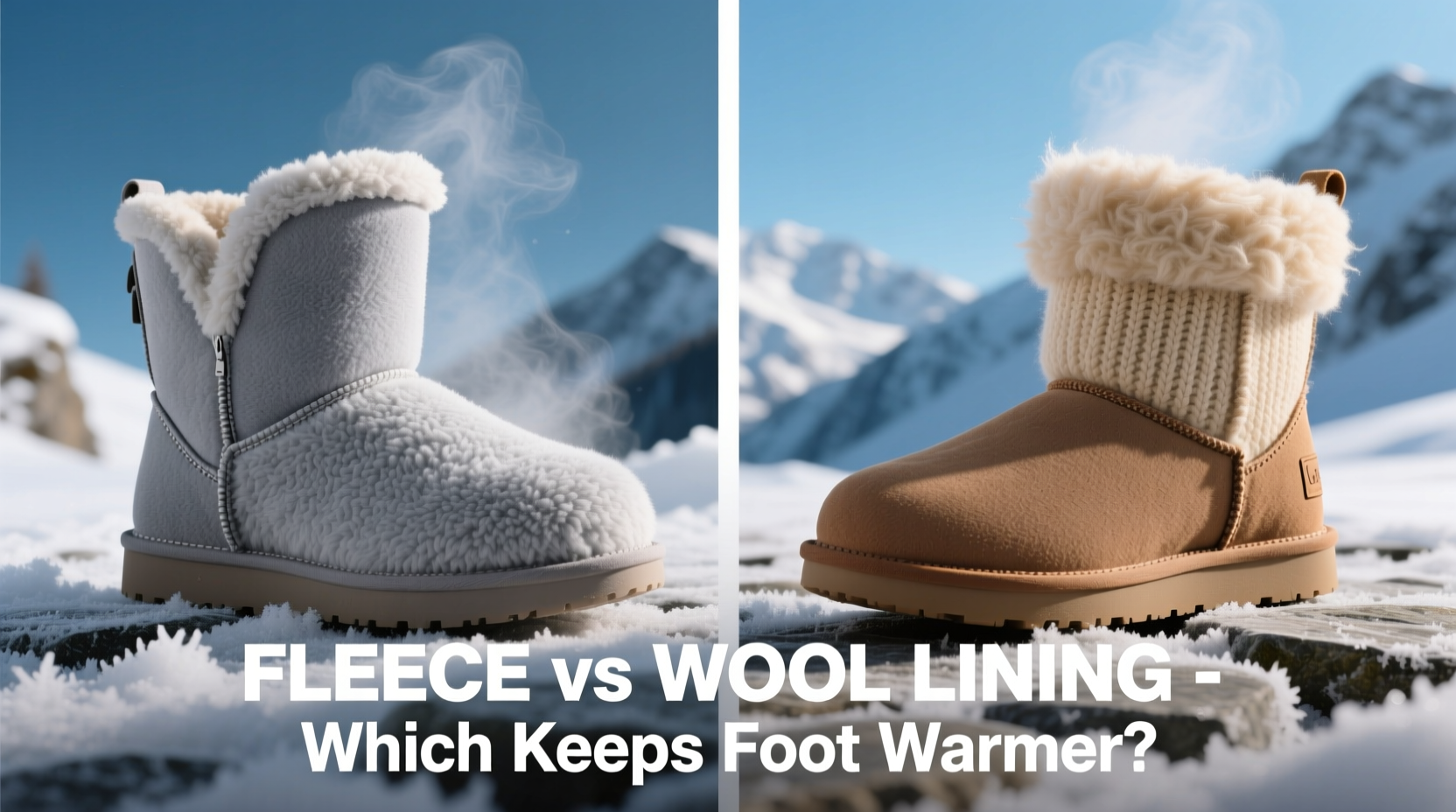
Before comparing materials, it’s essential to understand how insulation functions in footwear. Heat retention depends on three key factors: loft (the ability to trap air), moisture resistance, and breathability. Air is an excellent insulator, so materials that create tiny pockets of trapped air around the foot prevent heat from escaping. However, when moisture builds up—either from sweat or external dampness—the insulating properties degrade rapidly.
The ideal lining maintains a microclimate inside the boot: warm, dry, and breathable. Materials differ in how well they balance these needs. Fleece and wool take different approaches. Fleece is synthetic, engineered for lightweight warmth and quick drying. Wool, particularly merino, is a natural fiber with inherent temperature regulation and odor resistance.
Thermal Performance: Fleece vs Wool
At first glance, both materials feel soft and warm. But under stress—cold, wet conditions, or prolonged wear—their differences become apparent.
Fleece is made from polyester, typically derived from recycled plastic bottles. It has high loft-to-weight ratio, meaning it traps a lot of air without adding bulk. In dry conditions, fleece provides excellent initial warmth. It heats up quickly and feels cozy right out of the box. However, once wet—either from external water or foot sweat—its insulating power drops dramatically. Wet fleece conducts heat away from the body, potentially making feet colder than if no lining were present.
Wool, especially merino wool, retains up to 80% of its insulating capability even when wet. This is due to the crimped structure of wool fibers, which naturally trap air and resist compression. Wool also absorbs moisture vapor directly into the fiber (up to 30% of its weight) without feeling wet. As the moisture is absorbed, a small amount of heat is released through a process called heat of sorption, providing a slight warming effect during damp conditions.
Tip: If you sweat heavily or face wet environments, wool’s moisture-wicking ability gives it a clear edge over fleece.Moisture Management and Breathability
Sweaty feet aren’t just uncomfortable—they’re dangerous in cold weather. Moisture lowers skin temperature and increases the risk of frostbite. A good lining must move moisture away from the skin while resisting saturation.
Fleece wicks moisture well in light conditions but tends to hold onto it on the surface. Because it doesn’t absorb moisture into the fiber, sweat pools and evaporates slowly. In active scenarios like hiking or shoveling snow, this can lead to clamminess and chill.
Wool excels here. Its hygroscopic nature allows it to pull moisture vapor from the skin and disperse it across a larger surface area for faster evaporation. Additionally, wool resists bacterial growth, which means it stays odor-free longer—a major benefit for multi-day wear. Studies by the Textile Research Journal show that merino wool outperforms polyester-based fabrics in moisture vapor transmission by up to 40% under dynamic conditions.
“Wool’s ability to manage moisture passively makes it unmatched for extended cold-weather exposure.” — Dr. Lena Peterson, Textile Scientist, Nordic Institute of Cold Climate Research
Comparative Analysis: Fleece vs Wool Lining
| Feature | Fleece Lining | Wool Lining |
|---|---|---|
| Warmth (Dry Conditions) | High – excellent initial warmth | High – slightly slower to warm but more consistent |
| Warmth (Wet Conditions) | Poor – loses insulating ability when damp | Excellent – retains warmth even when wet |
| Moisture Wicking | Moderate – moves moisture but holds it on surface | Superior – absorbs vapor and releases heat |
| Breathability | Good – allows airflow | Excellent – dynamically regulates microclimate |
| Durability | Fair – prone to pilling and thinning over time | Very Good – resilient fibers resist breakdown |
| Odor Resistance | Poor – traps bacteria, develops smell quickly | Excellent – naturally antimicrobial |
| Weight & Bulk | Lightweight – low profile, easy to fit | Moderate – slightly thicker but compressible |
| Cost | Low to moderate | Moderate to high |
Real-World Scenario: Winter Hiking in the Rockies
Consider a hiker tackling a 10-mile trail in Colorado at 10°F (-12°C) with fresh snowfall. The route involves steep ascents that cause heavy sweating, followed by long descents where circulation slows and feet cool.
A boot with a fleece lining might feel cozy at the trailhead. But after 30 minutes of climbing, sweat accumulates inside the boot. During the descent, the damp fleece cools rapidly, drawing heat from the feet. By mile seven, the hiker experiences cold toes and discomfort.
In contrast, a wool-lined boot absorbs moisture vapor before it condenses. The wool continues to insulate despite humidity buildup. The hiker remains dry and warm throughout, with no sudden drop in foot temperature. Even if snow melts into the boot cuff, the wool maintains thermal protection far longer than fleece.
This example illustrates why outdoor professionals often choose wool—even when starting in dry, cold conditions. Predictable performance under variable stress is critical.
Care and Longevity
Proper care affects how long a lining retains its insulating properties. Fleece is easy to clean—machine washable and quick-drying—but degrades with repeated washing. Pilling, fiber breakdown, and reduced loft diminish its effectiveness over time.
Wool requires more careful handling. Most wool-lined boots should not be submerged or machine washed. Instead, spot cleaning and air drying are recommended. However, wool’s natural resilience means it lasts longer under proper care. High-quality wool linings in premium boots often remain effective for 5–7 years of seasonal use.
- Fleece: Best for occasional winter use, urban settings, or as a liner in dry climates.
- Wool: Ideal for frequent outdoor activity, extreme cold, or humid winter environments.
Step-by-Step: Choosing the Right Lining for Your Needs
- Assess your environment: Will you face wet snow, freezing rain, or dry cold? Wet conditions favor wool.
- Evaluate your activity level: High exertion = more sweat. Wool handles moisture better.
- Consider duration of wear: All-day wear demands odor resistance and sustained warmth—wool wins.
- Check boot compatibility: Some boots allow removable liners. Consider swapping in wool inserts if your current boots have fleece.
- Factor in budget: Fleece-lined boots are generally cheaper upfront, but wool may offer better long-term value due to durability.
Common Misconceptions About Warmth
Many people assume that thicker lining equals more warmth. While loft matters, material behavior under real conditions is more important. A thin layer of wool can outperform a thick fleece lining when moisture is present.
Another myth is that synthetic materials are always superior in performance gear. While synthetics like fleece are durable and affordable, natural fibers like wool offer biological advantages that engineering has yet to fully replicate—especially in passive thermal regulation.
Finally, some believe that any lined boot is sufficient for winter. But without proper moisture management, even the warmest-feeling boot can fail when conditions change. The key is consistency, not peak performance.
FAQ: Fleece vs Wool Lining
Can I wear fleece-lined boots in the rain?
Not ideally. Fleece loses insulating power when wet. If your boots lack a waterproof membrane, or if water seeps in, your feet will get cold quickly. For wet conditions, choose wool-lined or waterproof boots with moisture-wicking liners.
Is wool itchy in boots?
Modern wool linings, especially those using merino, are processed to be soft and non-irritating. Most users report no itchiness. Coarser wools may feel scratchy, but these are rarely used in quality footwear.
Which is better for people with cold feet?
Wool is generally better for individuals who suffer from poor circulation or chronically cold feet. Its ability to retain warmth when damp and provide consistent insulation makes it more reliable than fleece, which can create a false sense of warmth initially.
Final Verdict: Which Keeps Feet Warmer?
In direct comparison, wool lining keeps feet warmer than fleece in real-world winter conditions. While fleece offers strong performance in dry, low-moisture environments, it falters when exposed to sweat or dampness—common occurrences in winter footwear.
Wool’s natural ability to insulate when wet, regulate temperature, resist odor, and maintain structural integrity over time makes it the superior choice for anyone spending extended periods outdoors in cold weather. It adapts to changing conditions, whereas fleece does not.
That said, fleece still has its place. For short commutes, indoor-outdoor transitions, or mild winters, fleece-lined slippers or boots are comfortable, affordable, and functional. They’re also a good option for children’s boots, where cost and ease of care matter more than extreme performance.
Conclusion
When warmth is non-negotiable, wool lining outperforms fleece every time. It’s not just about how warm a material feels at rest—it’s about how it behaves under pressure. Whether you're trekking through snowstorms or enduring a brutal winter shift, your feet deserve insulation that works as hard as you do.
🚀 Ready to upgrade your winter footwear? Look for boots with genuine wool linings—especially merino—or consider adding wool insoles to your existing gear. Share your experience in the comments and help others stay warm this season.








