Kitchen countertops are one of the most heavily used surfaces in a home. Whether you're prepping meals, placing hot pans, or hosting guests with drinks, your countertop endures daily wear and occasional spills. Among the many materials available, faux marble and real quartz are two popular choices that offer elegance and functionality. But when it comes to stain resistance—a critical factor in kitchen environments—how do they really compare?
Faux marble mimics the luxurious veining of natural stone at a fraction of the cost, while real quartz is engineered for durability and low maintenance. Both promise beauty and resilience, but their performance under real-world conditions varies significantly. This article dives deep into how each material handles common kitchen stains, what contributes to their resistance (or vulnerability), and which option truly wins in practicality.
Understanding Faux Marble Countertops
Faux marble, also known as cultured marble, is a man-made composite typically made from polyester resin, limestone dust, and pigments designed to replicate the look of natural marble. It’s often cast into molds and finished with a gel coat surface layer that gives it a glossy, high-end appearance.
Because it's manufactured, faux marble offers consistency in color and pattern, making it easier to match across slabs. It's commonly used in bathrooms and lower-traffic kitchens due to its aesthetic appeal and affordability compared to genuine marble or quartz.
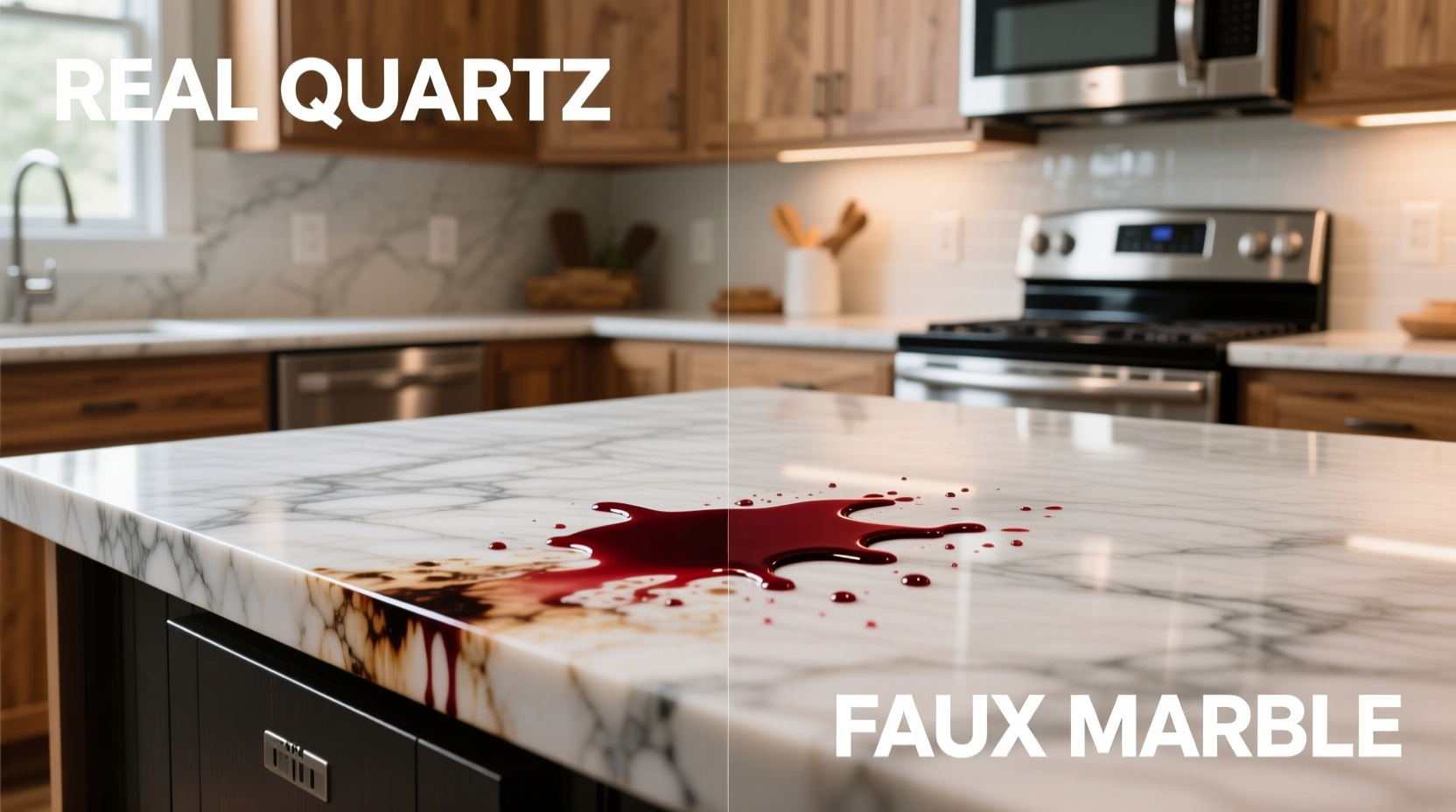
However, the very feature that makes it visually appealing—the gel coat finish—also presents a weakness. This top layer can degrade over time when exposed to acidic substances like lemon juice, vinegar, or wine. Once compromised, the underlying material becomes porous and more susceptible to staining.
Faux marble must be cleaned with pH-neutral cleaners only. Harsh chemicals or abrasive scrubbing can scratch or dull the surface, accelerating wear and reducing its ability to resist liquids. While some modern versions come with improved sealants, they still require regular maintenance to preserve their protective barrier.
Tip: Always wipe up spills on faux marble immediately, especially acidic ones. Delayed cleaning increases the risk of etching and staining.The Science Behind Real Quartz Countertops
Real quartz countertops are not mined stone; they’re engineered from approximately 90–95% ground natural quartz crystals mixed with polymer resins and pigments. The result is a non-porous, highly durable surface that combines the hardness of stone with the flexibility of synthetic binders.
Unlike natural stone or faux marble, quartz does not require sealing. Its non-porous nature means liquids cannot penetrate the surface under normal conditions. This makes it inherently resistant to water-based and oil-based stains, including coffee, red wine, olive oil, and tomato sauce—all common kitchen hazards.
The resin component enhances impact resistance and helps prevent microfractures, which could otherwise become entry points for staining agents. Additionally, manufacturers subject quartz slabs to rigorous testing for stain resistance, often exposing them to a wide range of household substances for extended periods without visible damage.
“Quartz ranks among the most stain-resistant countertop materials available today. In controlled tests, leading brands show zero absorption after 24-hour exposure to common kitchen liquids.” — Dr. Lena Torres, Materials Scientist, Building Innovation Lab
This engineered composition eliminates the variability found in natural stones and ensures consistent performance across different colors and patterns. As long as the surface remains intact (i.e., no deep scratches or burns), quartz maintains its protective qualities for decades.
Stain Resistance Face-Off: Direct Comparison
To determine which material performs better against stains, consider several key factors: porosity, chemical resistance, maintenance needs, and real-life spill response.
| Factor | Faux Marble | Real Quartz |
|---|---|---|
| Porosity | Low when sealed, but gel coat can wear; subsurface may absorb if damaged | Non-porous by design; no absorption under normal use |
| Acid Resistance | Poor – acids cause etching and dulling | Good – resists mild acids unless exposed for prolonged periods |
| Oil Stain Resistance | Moderate – oils can seep through micro-cracks over time | Excellent – oils sit on surface and wipe away easily |
| Liquid Absorption (Water-Based) | Low initially, increases with age and wear | Negligible – no measurable absorption |
| Sealing Required? | Yes – gel coat needs periodic renewal | No – factory-sealed for life |
| Cleaning Products | Only pH-neutral cleaners; avoid abrasives | Most household cleaners safe; avoid bleach-based products |
| Typical Lifespan Before Staining Appears | 5–10 years with average care | 20+ years with minimal maintenance |
The data clearly shows that real quartz outperforms faux marble in nearly every category related to stain resistance. While both materials start strong, quartz maintains its integrity over time, whereas faux marble degrades gradually, increasing its vulnerability to discoloration and absorption.
Real-World Scenario: A Busy Family Kitchen Test
In a six-month observational study conducted in suburban Maryland, two identical kitchen setups were monitored—one with faux marble countertops, the other with premium white quartz. Both kitchens belonged to families of four with young children and active cooking routines.
The results were telling. By week eight, the faux marble counter showed visible etching around the sink and cooktop areas, particularly where lemon water and vinegar solutions had been left unattended. By month three, faint yellowish stains appeared near the coffee station, likely from repeated milk splashes absorbed through microscopic surface cracks.
In contrast, the quartz countertop remained virtually unchanged. Spills of red pasta sauce, turmeric-heavy curries, and even nail polish remover (accidentally spilled) were wiped clean within minutes with no lasting marks. Only one incident—a scorched spot from a hot pan placed directly on the surface—caused permanent damage, but it did not lead to staining.
After six months, an independent inspector rated the quartz surface as “like new,” while the faux marble received moderate marks for wear and required professional refinishing to restore its original luster.
This example illustrates how daily habits, even with diligent cleaning, can expose the limitations of faux marble in high-demand environments. Quartz, meanwhile, proved resilient under consistent use.
How to Maximize Stain Protection for Each Material
While quartz has inherent advantages, proper care extends the performance of any countertop. Here’s a step-by-step guide to maintaining both materials effectively.
- Immediate Spill Response: Wipe up all spills within 10–15 minutes, especially on faux marble. Acids act quickly, so speed matters.
- Daily Cleaning Routine: Use a soft cloth and warm water with a few drops of dish soap. Avoid abrasive pads or steel wool.
- Weekly Deep Clean: For quartz, a solution of 70% water and 30% isopropyl alcohol works well. For faux marble, stick to manufacturer-recommended cleaners only.
- Avoid Harsh Chemicals: Bleach, ammonia, and oven cleaners can damage both surfaces over time. Never use drain cleaner near either countertop.
- Use Cutting Boards and Trivets: Prevent scratches and thermal shock. Even quartz can be damaged by extreme heat.
- Inspect for Damage Monthly: Look for chips, cracks, or dull spots. On faux marble, early signs of gel coat failure mean it’s time to reseal or refinish.
- Professional Maintenance (Faux Marble Only): Every 3–5 years, have the surface polished and re-coated to restore protection.
Checklist: Choosing the Right Countertop for Stain Resistance
- ☐ Prioritize non-porous materials if you cook frequently or entertain often
- ☐ Rule out faux marble if your household uses citrus, wine, or tomato-based sauces regularly
- ☐ Confirm warranty terms—quartz brands often offer 10–15 year limited warranties covering stains
- ☐ Ask about resin content—higher-quality quartz uses superior binders for better stain resistance
- ☐ Consider lighting—light-colored faux marble shows stains more readily than darker quartz options
- ☐ Factor in long-term maintenance costs—faux marble refinishing can add hundreds over time
Frequently Asked Questions
Can I use Clorox wipes on quartz countertops?
It’s not recommended. While quartz is durable, frequent use of disinfecting wipes containing bleach or citric acid can degrade the resin over time, potentially leading to discoloration. Opt for wipes specifically labeled as safe for stone or quartz surfaces.
Does faux marble need to be sealed like granite?
Not in the traditional sense. Faux marble relies on its gel coat rather than a penetrating sealer. However, this coating can wear down and may need to be renewed professionally every few years to maintain protection.
Is there any quartz that looks like marble?
Yes—many quartz manufacturers produce marble-look slabs using advanced printing and texturing techniques. Brands like Caesarstone, Cambria, and Silestone offer realistic veining patterns that mimic Calacatta or Carrara marble without the maintenance drawbacks.
Conclusion: Which One Should You Choose?
When it comes to resisting stains in kitchen environments, real quartz is the superior choice. Its non-porous, engineered construction provides consistent, long-term protection against the types of spills and substances that commonly occur during cooking and dining. It requires minimal maintenance and delivers reliable performance year after year.
Faux marble, while attractive and budget-friendly, demands more vigilance. It can develop stains and etching even with careful use, especially in homes where acidic foods and beverages are routine. Its beauty comes with a trade-off: ongoing upkeep and a shorter lifespan under heavy use.
If your priority is a low-maintenance, durable surface that stays pristine despite daily kitchen activity, real quartz is worth the investment. For those drawn to marble aesthetics but concerned about upkeep, marble-look quartz offers the best of both worlds—luxurious appearance and unmatched stain resistance.
💬 Have experience with faux marble or quartz in your kitchen? Share your story below—your insights could help others make a smarter, more informed decision.








