Leather shoes are an investment in both style and durability. Whether they’re polished oxfords, sleek loafers, or rugged boots, maintaining their appearance is essential. One of the most common—and frustrating—issues shoe owners face is grease stains. These can come from cooking oil, machinery, food spills, or even hand lotions. Grease penetrates leather’s porous surface, leaving behind unsightly marks that dull the finish if not treated properly. The key is acting quickly and using the right method to avoid damaging the material. Unlike fabric, leather reacts poorly to water-heavy or chemical-laden cleaners. Incorrect cleaning can lead to discoloration, cracking, or permanent texture changes.
This guide outlines proven, gentle techniques to lift grease from leather shoes while preserving their integrity. From household staples like cornstarch to specialized leather conditioners, each method is designed to be effective yet non-abrasive. You’ll also learn what to avoid, how to test solutions safely, and how to restore shine after treatment.
Understanding Leather and Grease Interaction
Leather is a natural material made from tanned animal hide. Even when finished with protective coatings, it retains some porosity, allowing substances like oils and grease to seep in over time. Once absorbed, grease breaks down the fats within the leather fibers, weakening the structure and attracting more dirt. This creates a cycle where the stain darkens and spreads if left untreated.
There are two main types of leather: full-grain and corrected grain. Full-grain, being the most durable and breathable, responds better to careful cleaning. Corrected grain, which has been sanded and coated, may be more vulnerable to solvents. Suede and nubuck require entirely different approaches due to their textured surfaces and lack of protective topcoat.
The success of grease removal depends on three factors: timing, technique, and product compatibility. Immediate action prevents deep penetration. Gentle absorption methods work best initially, followed by conditioning to replenish lost oils. Harsh scrubbing or alcohol-based cleaners strip natural moisture and cause irreversible dryness.
“Grease doesn’t just sit on the surface—it migrates. The longer you wait, the harder it becomes to reverse the damage.” — Daniel Reeves, Master Cobbler & Leather Restoration Specialist
Step-by-Step Guide to Removing Grease Stains Safely
Follow this structured process to treat grease stains effectively while minimizing risk to your shoes:
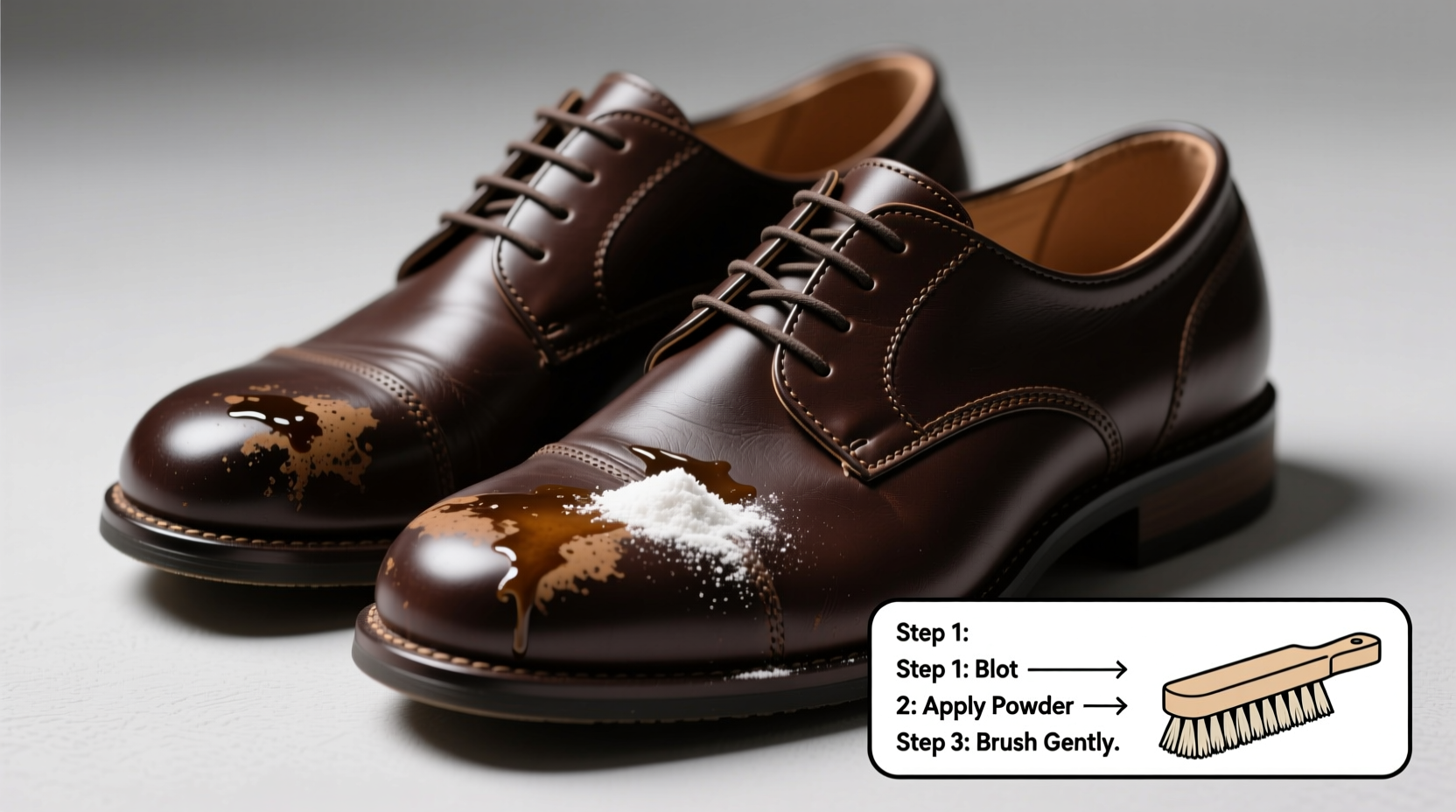
- Blot Excess Grease: Use a clean, dry paper towel to gently absorb any visible grease on the surface. Do not rub—press lightly to lift without spreading the stain.
- Apply an Absorbent Powder: Sprinkle cornstarch, talcum powder, or baking soda liberally over the stain. These powders draw out oil through capillary action. Let sit for at least 4–6 hours, preferably overnight.
- Brush Off Residue: Using a soft-bristled brush (like a toothbrush), gently remove the powder. Avoid aggressive brushing, especially on delicate finishes.
- Evaluate the Stain: If the mark remains, proceed to a mild cleaning solution. Always test first on a hidden area such as the heel counter or inside tongue.
- Clean with a Damp Cloth and Mild Soap: Mix a few drops of pH-neutral soap (like saddle soap or baby shampoo) with distilled water. Dampen a microfiber cloth—never soaking wet—and wipe the stained area in circular motions.
- Dry Naturally: Allow shoes to air-dry at room temperature, away from direct heat or sunlight. Stuffing them with paper helps maintain shape and absorbs internal moisture.
- Condition the Leather: After drying, apply a small amount of leather conditioner to restore suppleness and prevent cracking.
- Buff for Shine: Once fully dry and conditioned, use a soft cloth to buff the surface and revive luster.
Do’s and Don’ts: What Works and What Harms Leather
| Do’s | Don’ts |
|---|---|
| Use cornstarch or talc to absorb fresh grease | Apply water directly to the stain |
| Test cleaning products on inconspicuous areas | Use acetone, nail polish remover, or bleach |
| Clean with a slightly damp microfiber cloth | Scrub aggressively with stiff brushes |
| Condition leather after cleaning | Expose shoes to direct sunlight while drying |
| Store shoes in breathable cotton bags | Use kitchen degreasers or dish soap regularly |
Alternative Methods for Stubborn Stains
If the initial powder treatment doesn’t fully remove the stain, consider these additional options:
- Vinegar and Linseed Oil Solution: Mix equal parts white vinegar and linseed oil. Apply sparingly with a cotton ball, then wipe clean after 5 minutes. Vinegar cuts grease while linseed oil conditions. Best for older, set-in stains on full-grain leather.
- Isopropyl Alcohol (Diluted): For minor greasy residues, mix 1 part 70% isopropyl alcohol with 3 parts water. Dab on a cotton swab and test first. Not recommended for suede or dyed leathers.
- Commercial Leather Cleaners: Choose products labeled “oil and grease remover” and specifically formulated for leather. Brands like Lexol, Bickmore, and Chamberlain’s offer targeted solutions that balance cleaning power with material safety.
Avoid home remedies involving milk, mayonnaise, or petroleum jelly—these introduce additional fats that worsen the problem over time.
Real Example: Recovering a Work Boot After a Kitchen Spill
Mark, a line cook, spilled olive oil on his favorite pair of brown leather work boots during service. He didn’t notice until hours later, when the stain had darkened and spread slightly along a seam. That night, he sprinkled cornstarch over the affected area and let it sit overnight. The next morning, he brushed off the powder and saw a significant reduction in the stain. He then used a drop of baby shampoo on a damp cloth to gently wipe the area, dried the boots slowly near a fan (not a heater), and applied a leather conditioner. Within two days, the boot looked nearly new. Mark now keeps a travel-sized leather cleaner in his locker and treats spills immediately.
Essential Care Checklist for Grease-Prone Environments
If you frequently handle oils or work in greasy environments, follow this preventive checklist:
- ✅ Apply a leather protector spray every 4–6 weeks
- ✅ Carry a microfiber cloth for immediate blotting
- ✅ Store spare shoes in breathable containers at work
- ✅ Rotate footwear to allow thorough drying between uses
- ✅ Inspect shoes weekly for early signs of staining
- ✅ Keep cornstarch or talc in your bag for emergency absorption
Frequently Asked Questions
Can I use dish soap to clean grease off leather shoes?
Only in extreme moderation and with caution. Dish soaps like Dawn are powerful degreasers but contain surfactants that strip natural oils from leather. If used, dilute one drop in a cup of water, apply with a barely damp cloth, and rinse immediately with a clean, water-dampened cloth. Always follow with a conditioner.
What should I do if the color fades after cleaning?
Fading often results from over-wetting or using harsh chemicals. First, ensure the shoe is completely dry. Then, use a leather color restorer or cream matching the original shade. Apply in thin layers, buffing between coats. For valuable or antique shoes, consult a professional restorer.
Is it safe to use cornstarch on colored leather?
Yes. Cornstarch is inert and non-abrasive, making it safe for most leather colors. However, always perform a spot test in a hidden area first, especially on vibrant or vintage dyes, to rule out any unexpected reactions.
Protect Your Investment with Smart Habits
Leather shoes deserve more than reactive cleaning—they thrive on consistent care. Removing grease promptly prevents long-term damage and preserves both appearance and structural integrity. The methods outlined here prioritize gentleness and effectiveness, ensuring your shoes remain wearable and elegant for years. Prevention, timely intervention, and proper conditioning form the foundation of lasting leather maintenance.
💬 Have a grease stain success story or a trusted trick? Share your experience in the comments and help others protect their favorite pairs!








