Handcrafted accessories carry a personal touch that mass-produced items rarely replicate. Among the most elegant and expressive forms of handmade jewelry is the leather flower key ring—a fusion of texture, durability, and artistry. These miniature floral creations, hand-cut and shaped from genuine or faux leather, serve as both functional tools and wearable art. Whether you're making them for yourself, as thoughtful gifts, or to sell at craft fairs, mastering the art of leather flower key rings opens up a world of creative expression. This guide walks through every stage of the process, from selecting materials to assembling your final piece, ensuring professional results even for beginners.
Selecting the Right Materials
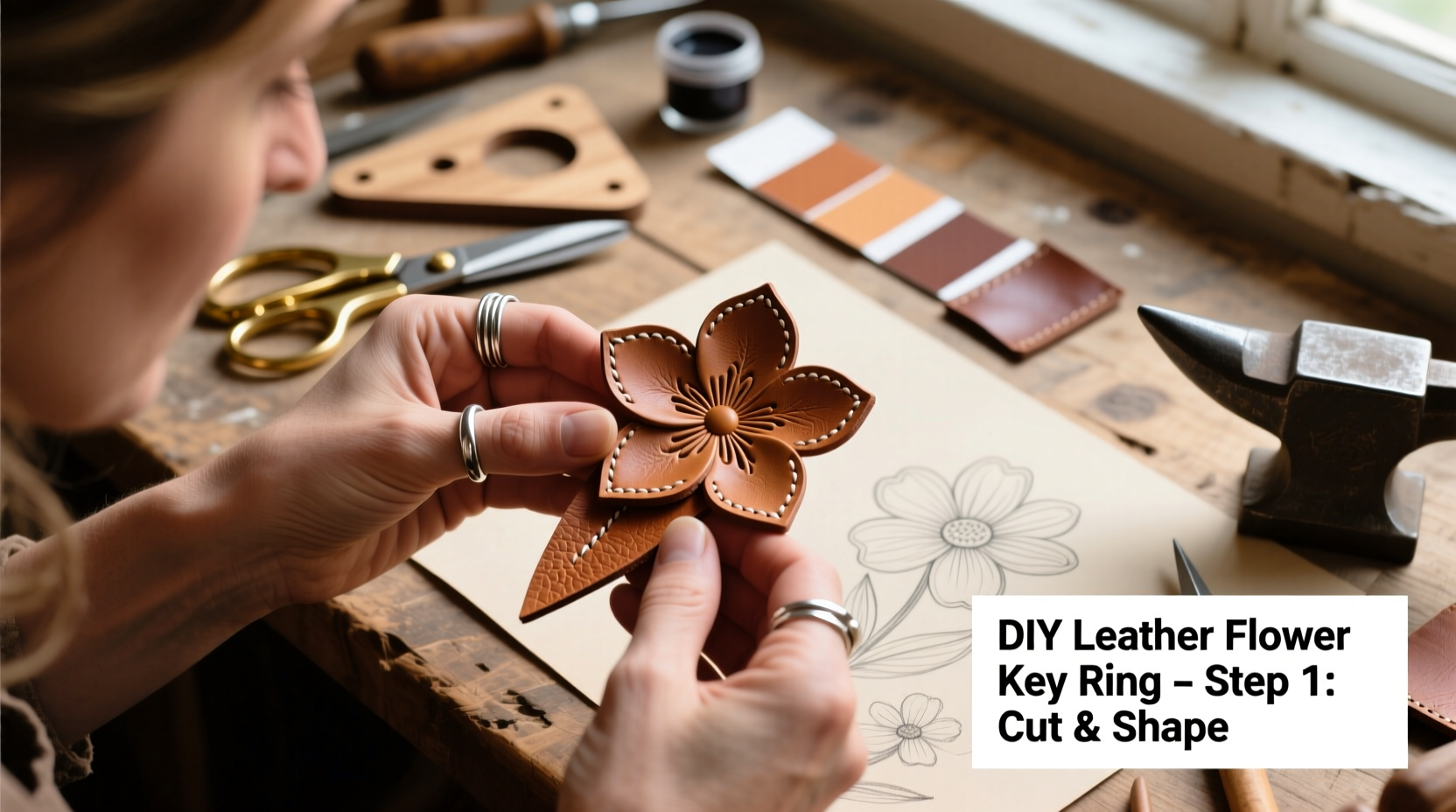
The foundation of any successful leather craft project lies in choosing appropriate materials. For leather flower key rings, the type of leather, backing, and hardware all influence the look, feel, and longevity of the finished product.
Genuine vegetable-tanned leather is ideal for its firmness and ability to hold shape. It ranges from 2–4 oz in weight (0.8–1.6 mm thick), making it sturdy enough to maintain petal structure without being too rigid to cut. Faux leather or craft foam can be used for practice or vegan alternatives, though they may lack the refined texture and aging characteristics of real leather.
| Material | Best Use Case | Pros | Cons |
|---|---|---|---|
| Vegetable-Tanned Leather | Durable, long-lasting flowers | Natural finish, ages beautifully, holds shape | Requires conditioning, higher cost |
| Faux Leather | Beginner practice, budget projects | Inexpensive, consistent color, easy to cut | Lacks breathability, prone to peeling |
| Craft Foam | Kids’ crafts or prototypes | Lightweight, colorful, no tools needed | Not durable, not suitable for long-term use |
Additional supplies include round-hole punches, fine scissors or precision knives, leather glue (such as contact cement or E6000), waxed thread or embroidery floss for stitching (optional), and metal key rings or lobster clasps. Consider using a wooden or self-healing cutting mat to protect surfaces during shaping.
Tip: Pre-dye your leather pieces before assembly if you want multi-tonal effects—layering light and dark petals adds depth.Designing Your Leather Flower
Leather flowers mimic real blooms through layered petals, but their construction is more structured. Start by deciding on the flower type: roses, daisies, peonies, and ranunculus are popular due to their layered appearances. Each requires a different number of petals and shaping techniques.
Create templates from cardstock or print digital ones scaled to size (typically 1.5–3 cm in diameter). Trace each petal onto the leather’s flesh side—the softer inner layer—to hide markings after shaping. Cut out multiple layers: outer petals should be slightly larger and more curled than inner ones for realism.
To shape petals, gently burnish the edges over a rounded tool like a stylus, spoon handle, or dowel. This softens the fibers and creates natural curves. Work from the base toward the tip, applying light pressure. For roses, roll the longest petal tightly from one edge to form the center bud, then layer progressively shorter petals around it, securing each with a dab of glue.
“Leather responds like skin—it remembers pressure. Shape slowly, and let the material guide the form.” — Lena Torres, Artisan Leather Crafter
Step-by-Step Assembly Process
Follow this sequence to assemble a classic five-petal leather daisy key ring:
- Cut 5 large outer petals and 5 smaller inner petals using your template. Slightly vary sizes for organic appeal.
- Shape each petal by rubbing the edges over a stylus to create gentle curls.
- Arrange the first layer of large petals in a circular pattern, overlapping slightly at the base. Secure with a small drop of leather glue at the center.
- Add the inner layer of smaller petals atop the first, rotating their position so they sit between the lower gaps.
- Create the center by gluing a small leather dot or coiled strip in the middle. Alternatively, embed a tiny bead or rivet for contrast.
- Allow drying for 15–20 minutes under light weight to ensure flat attachment.
- Attach a jump ring to the back using a strong adhesive or by stitching through the base with waxed thread.
- Secure the key ring or lobster clasp to the jump ring.
For added dimension, consider mixing leather colors—ivory outer petals with a deep burgundy center evoke a sunset effect. Textured leather, such as tooled or embossed pieces, enhances visual interest without extra effort.
Finishing and Care Tips
Once assembled, inspect the base for excess glue and trim any frayed edges with precision scissors. To protect the leather and enrich the color, apply a light coat of leather conditioner or beeswax balm. Avoid silicone-based polishes, which can degrade adhesives over time.
Store completed key rings in breathable fabric pouches to prevent dust accumulation and moisture buildup. If the item will be used daily, reinforce stress points—especially where the jump ring meets the flower—with a second layer of glue or micro-stitching.
Tip: Lightly sand the back of the flower base before gluing the jump ring to improve adhesion.Mini Case Study: From Hobby to Handmade Business
Sophie Nguyen, a graphic designer from Portland, began making leather flower key rings as a weekend hobby. After gifting a set to coworkers, she received requests to purchase them. She started small—crafting 10 pieces a week using offcuts from a local upholstery shop. Within six months, she launched an Etsy store specializing in customizable designs: birth month flowers, monogrammed centers, and seasonal palettes.
Her attention to detail—like using antique brass findings and including care cards—earned glowing reviews. By year-end, her monthly revenue exceeded $1,200. “People don’t just buy a key ring,” she says. “They’re buying a story, a memory. A rose in their mother’s favorite shade means more than any store-bought accessory.”
Frequently Asked Questions
Can I wash a leather flower key ring?
No, submerging leather in water can cause warping, discoloration, and glue failure. Clean gently with a dry or slightly damp cloth. Avoid alcohol-based cleaners.
How long do handmade leather flowers last?
With proper care, they can last several years. Exposure to sunlight, moisture, and friction shortens lifespan. Regular conditioning extends durability.
Are these safe for children to use?
Yes, provided all small components (like beads or rivets) are securely attached and the key ring has a secure clasp. Supervise young children to prevent choking hazards.
Creative Variations and Customization Ideas
Once you’ve mastered the basics, experiment with advanced techniques:
- Layered Color Palettes: Combine ombre shades for gradient effects.
- Mixed Media: Add silk centers, metallic leaf accents, or resin dewdrops.
- Themed Sets: Design seasonal collections—pumpkin-spice tones for fall, pastels for spring.
- Personalized Touches: Engrave initials on the key ring or use leather stamps for patterns.
Consider offering kits with pre-cut petals and instructions—ideal for workshops or bridal party favors.
Checklist: Crafting Your First Leather Flower Key Ring
- ☑ Gather materials: leather, scissors, glue, key rings, shaping tools
- ☑ Choose flower design and print/cut template
- ☑ Trace and cut petal shapes from leather
- ☑ Shape edges using a dowel or stylus
- ☑ Assemble petals in layers, gluing at the base
- ☑ Add center detail (dot, bead, coil)
- ☑ Attach jump ring and key chain
- ☑ Condition and inspect for durability
Conclusion
Creating DIY leather flower key rings blends craftsmanship with storytelling. Each piece reflects intention—from the curve of a petal to the choice of hue—and becomes more than a tool for holding keys. It becomes a keepsake, a conversation starter, a token of thoughtfulness. With accessible materials and patient technique, anyone can produce accessories that rival boutique quality. The beauty of this craft lies not just in the result, but in the quiet focus it demands and the joy it brings when gifted or worn.
💬 Start your first leather flower today. Share your creations online, teach a friend, or turn your passion into a purpose. The smallest bloom can grow into something extraordinary.








