Choosing the right bra isn’t just about aesthetics—it’s a decision that impacts daily comfort, posture, and confidence. As intimate apparel evolves, two styles have emerged as frontrunners in the quest for balance between ease and structure: cotton bralettes and molded cup bras. While both promise breathability and wearability, they serve different needs and body types. Understanding their construction, materials, and functional benefits helps you make an informed choice—especially if you're seeking comfort without compromising on support.
Understanding the Basics: What Are Cotton Bralettes and Molded Cups?
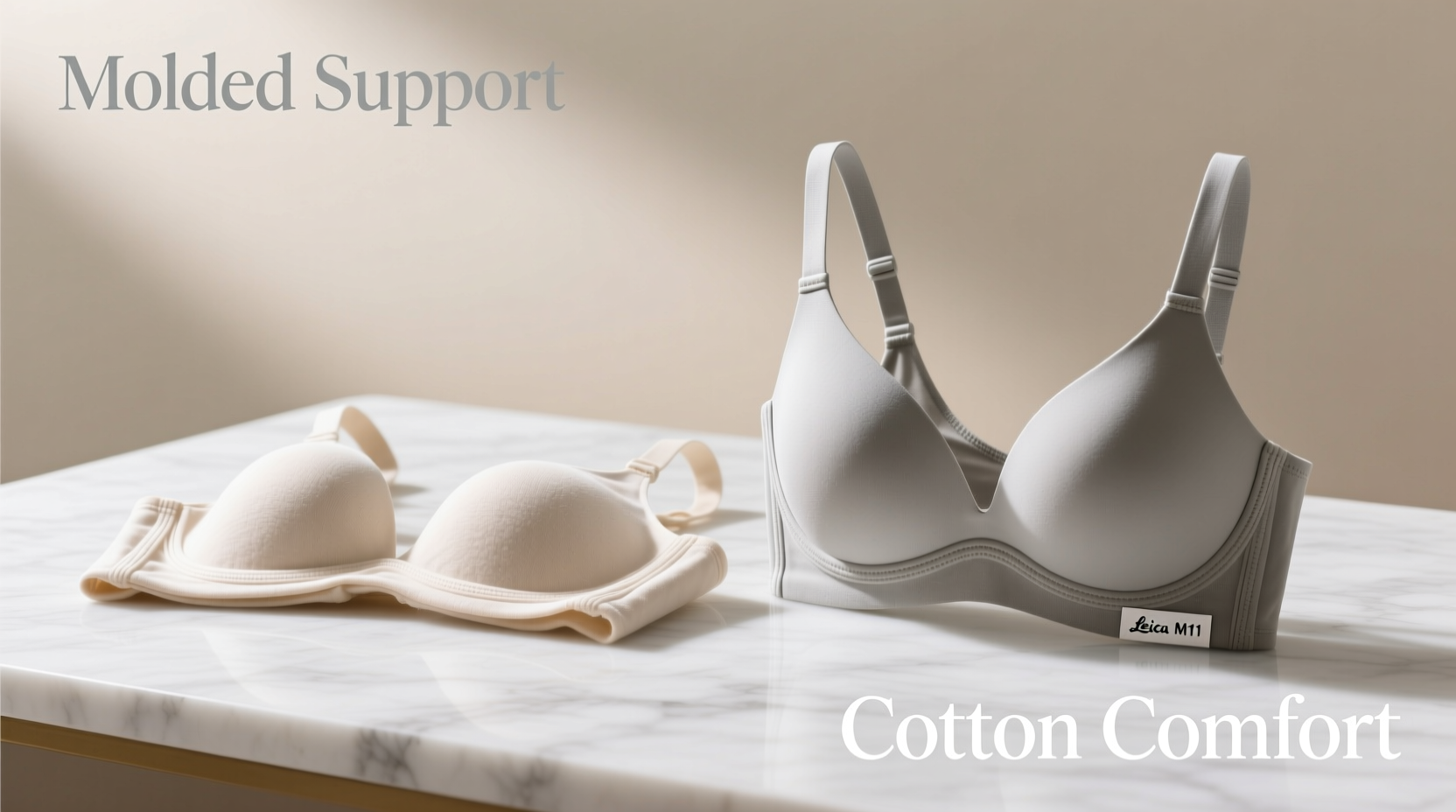
A cotton bralette is typically an unlined, wireless undergarment made from soft, breathable fabrics like organic cotton, modal, or cotton blends. It often features delicate lace trim, adjustable straps, and a relaxed fit. Designed with minimal structure, it prioritizes skin-friendly comfort and freedom of movement, making it ideal for casual wear, lounging, or light activity.
In contrast, a molded cup bra uses pre-formed, seamless cups—usually made from foam or microfiber—that maintain their shape regardless of movement. These bras are commonly found in t-shirt styles, push-up variants, or full-coverage designs. The molded structure smooths the silhouette under clothing and provides consistent shaping, often including light to moderate support through encapsulation or compression.
The core difference lies in design philosophy: bralettes embrace natural form; molded cups aim to shape and refine it.
Fabric & Breathability: How Material Impacts Comfort
Cotton bralettes win hands-down when it comes to breathability. Natural cotton fibers allow air circulation, wick moisture away from the skin, and reduce irritation—critical for sensitive skin or humid climates. Because they lack padding and linings, cotton bralettes let the body breathe freely throughout the day.
Molded cups, however, are typically constructed from synthetic materials like polyester-spandex blends or foam laminates. While modern versions incorporate moisture-wicking treatments and mesh panels, they still trap more heat than cotton. That said, many high-end molded bras now include perforated foam or ventilated side bands to improve airflow, narrowing the comfort gap.
Tip: If you live in a hot or humid environment, opt for cotton bralettes during summer months or for extended wear at home.Support Level: Defining What \"Support\" Really Means
Support in bras isn't one-size-fits-all. For smaller busts (A–C cups), a well-constructed cotton bralette can offer adequate lift and containment through wide bands, padded straps, and U-back or racerback designs. However, larger busts often require more anchoring—something most traditional bralettes struggle to deliver due to their lack of underwire and structured cups.
Molded cup bras, by design, provide uniform uplift and forward projection. Their seamless cups distribute breast weight evenly across the chest wall, reducing strain on shoulders and back. Many include side boning, reinforced wings, or convertible straps to enhance stability during physical activity or long workdays.
“Support isn’t just about holding up tissue—it’s about alignment, muscle engagement, and minimizing discomfort over time.” — Dr. Lena Patel, Postural Health Specialist
For those with fuller figures, molded cups generally outperform bralettes in preventing sagging, shoulder grooving, and postural fatigue—even if cotton feels initially softer against the skin.
Comparative Analysis: Key Differences at a Glance
| Feature | Cotton Bralette | Molded Cup Bra |
|---|---|---|
| Material | Natural cotton, modal, bamboo blends | Polyester, spandex, foam, microfiber |
| Structure | Wireless, unlined, minimal shaping | Pre-shaped cups, often lightly lined |
| Breathability | High – ideal for sensitive skin | Moderate – varies by brand and ventilation |
| Support Level | Light – best for A–C cups | Light to medium – suitable for C–D+ cups |
| Best For | Lounging, sleepwear, casual outfits | T-shirts, fitted tops, office wear |
| Wash Care | Hand wash recommended; prone to stretching | Machine washable (in garment bag); retains shape |
| Durability | 6–12 months with regular use | 12–18+ months depending on quality |
When to Choose Which: Matching Style to Lifestyle
Your daily routine should guide your bra selection. Consider these scenarios:
- Working from home or relaxing: A cotton bralette offers unmatched comfort for low-movement days. Its soft band and absence of seams prevent chafing during prolonged sitting or napping.
- Office wear under blouses: Molded cup bras create a smooth, polished look under thin fabrics. They eliminate nipple show-through while maintaining shape all day.
- Exercise or errands: Neither option is ideal for high-impact workouts, but for walking or yoga, a supportive bralette with racerback design may suffice. For jogging or gym sessions, consider transitioning to a sports bra even if wearing a molded style otherwise.
- Sensitive skin conditions: Dermatologists often recommend cotton-based garments for individuals prone to intertrigo, eczema, or allergic reactions to synthetic dyes.
Real-World Example: Sarah’s Transition From Bralettes to Hybrid Support
Sarah, a graphic designer in her early 30s, wore cotton bralettes exclusively for years, drawn to their eco-friendly branding and cozy feel. But after switching to a hybrid remote-office schedule, she noticed increased back tension and slouching during video meetings. Her D-cup size wasn’t being adequately supported, leading to poor posture and neck pain.
She consulted a certified fitter who introduced her to “supportive seamless” molded bras—specifically designed with cotton-lined backs and memory-foam cups. These combined breathability with gentle shaping. Within weeks, Sarah reported improved spinal alignment and greater confidence in tailored shirts. She now alternates between cotton bralettes at home and lightweight molded styles for public outings.
Her experience underscores a growing trend: consumers don’t need to choose strictly between comfort and support—they can find middle ground through innovative design.
Emerging Trends: The Rise of the Hybrid Bra
The line between bralettes and molded bras is blurring. Brands like ThirdLove, Parade, and Knix have launched hybrid models that merge cotton-like softness with engineered support. Features include:
- Organic cotton exterior with recycled foam cups
- Seamless molding technology for invisible wear
- Eco-conscious elastane bands that retain shape
- Adjustable straps and multi-hook closures for customized fit
These hybrids cater to women who want the ethical appeal of natural fibers without sacrificing functionality. One popular model uses biodegradable TENCEL™ fabric with internal sling construction—a hidden layer that lifts and cradles without wires.
“We’re seeing demand shift toward ‘invisible support’—bras that feel like second skin but perform like structured lingerie.” — Marcus Lin, Product Director at EverHold Lingerie
Step-by-Step Guide: How to Choose the Right Option for You
- Assess your daily activities: Do you spend most of your time seated? On your feet? Exercising? High-motion days favor molded support.
- Know your size accurately: Measure yourself professionally or use a reliable online tool. Many assume they’re smaller than they actually are, leading to poor fit choices.
- Test the stretch: Pull gently on the band of a bralette. If it extends beyond 25% of its length, it may lose support quickly.
- Check cup integrity: Press into a molded cup. It should rebound fully within seconds, indicating good foam retention.
- Try it under real clothing: Wear the bra under a tight white tee. Look for wrinkling (indicates poor fit) or visible seams.
- Evaluate end-of-day comfort: Wear each type for a full day. Note any red marks, digging, or shifting—these signal inadequate support or sizing issues.
Frequently Asked Questions
Can I wear a cotton bralette every day?
Yes, especially if you have a smaller bust and lead a low-impact lifestyle. However, frequent washing weakens cotton fibers over time. Limit daily wear to 8–10 hours and rotate multiple pieces to preserve elasticity.
Do molded cup bras cause sweating?
Some do, particularly budget models with non-breathable foam. Look for bras labeled “ventilated,” “perforated cups,” or “moisture-wicking.” Higher-end brands integrate air-grid lining or laser-cut edges to enhance airflow without sacrificing smoothness.
Are cotton bralettes suitable for larger busts?
Traditional cotton bralettes rarely offer enough support for DD+ sizes. However, newer “structured bralettes” with wider bands, triple hook-and-eye closures, and internal slings can accommodate fuller chests. Always prioritize fit over style trends.
Final Checklist Before You Buy
- ✅ Measured myself recently and know my correct size
- ✅ Determined primary use case (home, work, exercise)
- ✅ Checked fabric composition for breathability and durability
- ✅ Verified return policy in case of fit issues
- ✅ Compared multiple brands—not just price, but customer reviews on longevity
- ✅ Tried the bra under actual outfit conditions (e.g., tight top, arm movements)
Conclusion: Comfort and Support Aren’t Mutually Exclusive
The debate between cotton bralettes and molded cups isn’t about declaring a winner—it’s about matching function to individual needs. Cotton bralettes excel in softness and breathability, offering liberation from rigid understructures. Molded cups provide consistency, smoothing, and dependable support, especially under professional attire or for fuller busts.
The future of intimate apparel lies not in choosing one over the other, but in understanding when each serves you best—and embracing hybrid innovations that bridge the gap. Whether you value sustainability, anatomical comfort, or aesthetic polish, there’s a solution that aligns with your lifestyle.
🚀 Ready to upgrade your lingerie drawer? Start by trying one cotton bralette and one seamless molded bra in your correct size. Wear each for three full days, then reflect: Which left you feeling more confident, comfortable, and supported? Share your findings with others navigating the same journey.








