
In a world increasingly aware of single-use waste, many people are turning to compostable plates as a greener alternative to traditional paper or plastic disposables. At first glance, compostable options seem like a clear win—made from plants, they break down naturally, right? But the reality is more complex. When compared to paper plates, which have been around for decades, do compostable plates actually reduce environmental harm? Or are we being misled by eco-friendly packaging and marketing claims?
The answer depends on several factors: how the plates are made, how they’re disposed of, and what happens after use. This article dives deep into the lifecycle of both compostable and paper plates, comparing their environmental footprints across production, usage, and end-of-life scenarios. The goal isn’t to declare a perfect winner but to equip you with the knowledge to make informed choices based on your lifestyle and local infrastructure.
Understanding the Materials: What Are Compostable and Paper Plates Made Of?
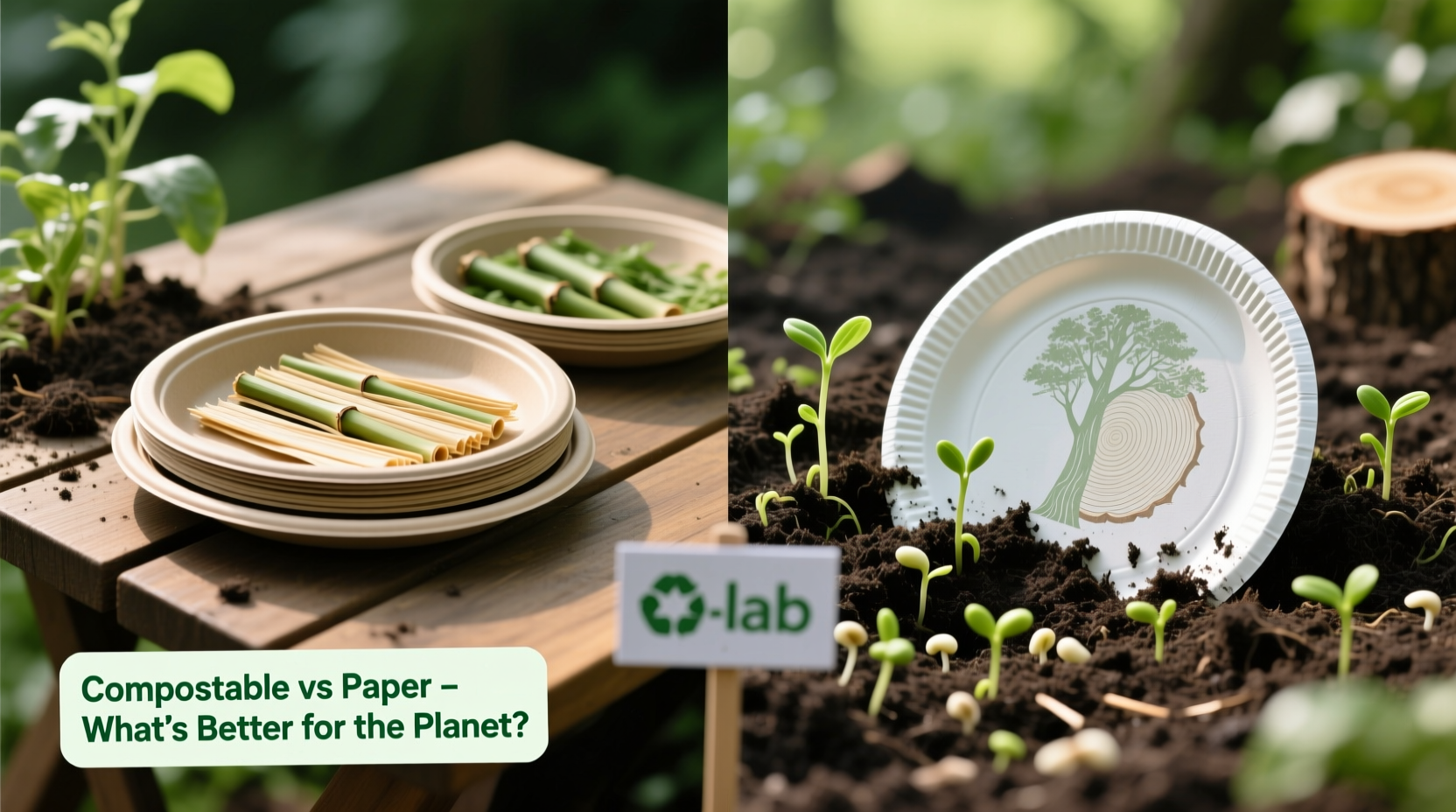
Paper plates are typically made from wood pulp, often sourced from softwood trees like pine or spruce. Most are coated with a thin layer of polyethylene (plastic) or wax to improve water resistance and durability. Even uncoated versions may contain additives to enhance strength. While paper is biodegradable in theory, the presence of coatings can significantly hinder decomposition and contaminate recycling streams.
Compostable plates, on the other hand, are usually made from plant-based materials such as cornstarch (PLA), sugarcane bagasse, bamboo, or palm leaves. These materials are designed to decompose under specific industrial composting conditions—high heat, moisture, and microbial activity. Unlike regular biodegradation, composting aims to return organic matter to soil without leaving toxic residues.
It’s crucial to distinguish between “biodegradable” and “compostable.” All compostable items are biodegradable, but not all biodegradable items are compostable. Biodegradable simply means something breaks down over time, possibly into microplastics or harmful byproducts. Compostable products must meet strict standards (like ASTM D6400 or EN 13432) to ensure they fully decompose into nutrient-rich compost within a defined timeframe.
Tip: Look for certifications like “BPI Certified” or “OK Compost” when buying compostable plates—these verify that the product meets international compostability standards.Lifecycle Comparison: Production, Use, and Disposal
To assess environmental impact, we need to evaluate each plate type across its entire lifecycle: raw material extraction, manufacturing, transportation, consumer use, and disposal.
Raw Material & Manufacturing Impact
Paper plates rely on forestry resources. While some come from sustainably managed forests (FSC-certified), others contribute to deforestation and habitat loss. Manufacturing involves pulping, bleaching, and drying—processes that consume significant energy and water. If the plates are plastic-coated, fossil fuel derivatives are involved, increasing their carbon footprint.
Compostable plates often use agricultural byproducts (e.g., bagasse from sugarcane) or fast-growing crops (e.g., bamboo). These require less land conversion than timber harvesting and can utilize waste streams. However, growing corn for PLA raises concerns about monoculture farming, pesticide use, and competition with food crops. Energy inputs vary: industrial fermentation and polymerization for PLA are energy-intensive, though renewable energy can offset this.
Transportation & Carbon Emissions
Both types are lightweight, reducing transport emissions. However, most compostable materials are currently produced in limited facilities, often concentrated in North America and Europe. If sourced globally, long-distance shipping can negate some environmental benefits. Paper plates, being widely manufactured, may have shorter supply chains depending on region.
End-of-Life Scenarios: Where It Really Matters
This is where the biggest differences emerge. In an ideal world, compostable plates go to industrial composting facilities and turn into soil enhancer. But in reality, only about 25% of U.S. households have access to curbside compost pickup, and contamination from non-compostable waste often leads to rejection at facilities.
If compostable plates end up in landfills—which is common—they may not decompose due to lack of oxygen. Instead, they can emit methane, a potent greenhouse gas, just like food waste. Worse, if mixed with recyclable paper, they can contaminate entire batches, leading to more waste.
Paper plates face similar issues. Uncoated versions can technically be composted at home or industrially, but most consumers don’t separate them properly. Plastic-coated paper plates cannot be recycled and often end up in landfills, where they degrade slowly, leaching microplastics over time.
“Material choice matters, but disposal infrastructure matters more. A compostable plate in a landfill is no better than plastic.” — Dr. Lena Torres, Environmental Scientist, UC Berkeley Waste Research Lab
Comparative Analysis: Key Differences at a Glance
| Factor | Paper Plates | Compostable Plates |
|---|---|---|
| Primary Material | Wood pulp (often with plastic/wax coating) | Cornstarch (PLA), bagasse, bamboo, palm leaf |
| Biodegradable? | Partially (uncoated yes; coated no) | Yes, under proper conditions |
| Recyclable? | Rarely (due to grease and coatings) | No (contaminates recycling) |
| Compostable? | Only uncoated, in industrial systems | Yes, in industrial composting only |
| Home Compostable? | Sometimes (if uncoated) | Depends on material (palm leaf = yes; PLA = no) |
| Landfill Impact | Slow degradation, microplastics if coated | Methane emissions if anaerobic |
| Carbon Footprint (Production) | Moderate to high | Low to moderate (varies by feedstock) |
Real-World Example: A Community Festival’s Dilemma
A small-town summer festival switched from plastic to compostable plates two years ago, aiming to reduce waste. Volunteers were trained, compost bins were labeled, and signage encouraged proper disposal. Yet, post-event audits revealed that over 60% of compostable plates ended up in landfills due to cross-contamination with trash and lack of local processing capacity.
Last year, organizers piloted a hybrid model: reusable dishware for sit-down areas and uncoated paper plates for takeout zones. They partnered with a nearby farm to compost organic waste, including the paper plates. Surprisingly, overall waste dropped by 40%, and cleanup crews reported fewer sorting errors.
The lesson? Infrastructure and behavior matter more than material alone. Without accessible composting, even the most sustainable product fails to deliver on its promise.
Actionable Checklist: Choosing the Right Plate for Your Needs
Whether you're hosting a backyard BBQ or managing event logistics, here’s how to minimize environmental impact:
- Evaluate your disposal options: Do you have access to industrial composting? If not, compostable plates may not be the best choice.
- Check plate composition: Avoid anything with plastic or wax coatings. Look for BPI or TÜV Austria certifications.
- Consider reusables first: For planned events, reusable plates washed with efficient dishwashers often have the lowest lifetime impact.
- Choose uncoated paper if composting isn’t available: These can sometimes be home-composted or safely discarded with yard waste.
- Train guests or staff: Clear labeling and bin placement reduce contamination.
- Buy local when possible: Reduces transportation emissions and supports regional sustainability efforts.
FAQ: Common Questions About Compostable and Paper Plates
Can I compost compostable plates at home?
It depends on the material. Palm leaf and bamboo plates often break down in home compost systems. However, PLA (cornstarch) plates require industrial conditions—high heat (above 140°F) and controlled humidity—to decompose properly. In a cold backyard pile, PLA can persist for years.
Are paper plates recyclable?
Generally, no. Food residue and plastic coatings make most paper plates unsuitable for recycling. Even uncoated plates are rarely accepted because they’re contaminated during use. Always check with your local recycler, but assume they belong in trash or compost if certified.
Which has a lower carbon footprint overall?
Studies show compostable plates made from agricultural residues (like bagasse) can have up to 30% lower greenhouse gas emissions than virgin paper plates, especially when composted correctly. However, if either ends up in a landfill, the advantage disappears. Reusable dishes still outperform both when used multiple times.
Step-by-Step Guide: How to Responsibly Use Disposables
If you must use disposable plates, follow this sequence to minimize harm:
- Assess necessity: Can you use reusable dishware instead? Even renting plates reduces waste.
- Research local waste systems: Contact your municipality to learn if compostable disposables are accepted.
- Select the right product: Choose uncoated paper or home-compostable materials if industrial composting isn’t available.
- Prepare disposal stations: Set up clearly marked bins for compost, trash, and recycling. Include visual guides.
- Educate users: Announce disposal instructions before and during the event.
- Monitor and adjust: After the event, review contamination rates and update your approach next time.
“The most sustainable plate is the one already in your cupboard.” — Zero Waste Alliance, 2023 Report on Single-Use Alternatives
Conclusion: Rethinking the “Greener” Choice
Compostable plates aren’t inherently better for the planet than paper—they’re just different. Their environmental benefit hinges on proper disposal, which remains out of reach for most communities. Meanwhile, paper plates, especially those with plastic linings, continue to contribute to pollution and resource depletion.
The deeper issue is our reliance on disposables. Until composting infrastructure expands and public awareness improves, the best environmental choice often lies in reusables. When disposables are unavoidable, opt for uncoated paper or genuinely compostable options—and ensure they’re handled correctly.
True sustainability isn’t about swapping one single-use item for another. It’s about shifting habits, supporting systemic change, and demanding better solutions from manufacturers and municipalities alike.
🚀 Ready to reduce your waste footprint? Start by auditing your next event’s disposables. Share this article to help others make informed choices—and consider switching to reusables where possible. Small changes, multiplied, create real impact.








