Many home cooks reach for a jar labeled “chili powder” assuming it’s interchangeable with fresh or dried chili peppers. The confusion is understandable—both contribute heat and color to food—but they are not the same. Understanding the distinction between chili peppers and chili powder is essential for controlling flavor, spice level, and authenticity in dishes ranging from Tex-Mex chili con carne to Indian curries. Misusing one for the other can lead to unexpected bitterness, diluted heat, or missing layers of complexity. Clarifying this common misconception empowers cooks to make informed choices, elevate their seasoning game, and avoid culinary missteps.
Definition & Overview
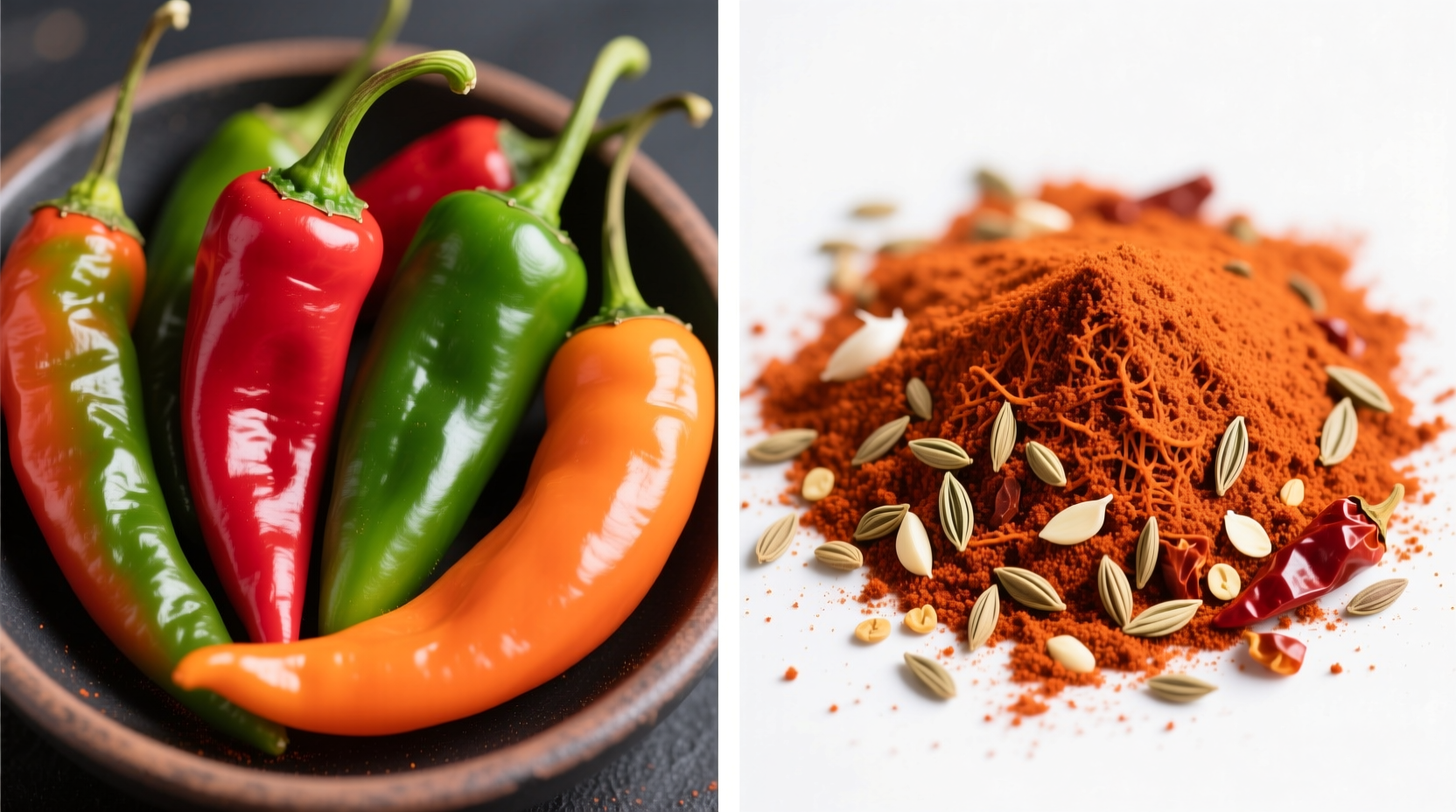
Chili peppers are the raw botanical ingredient—fruiting bodies of plants in the Capsicum genus. They grow on shrubs and vary widely in size, color, shape, and pungency. Common examples include jalapeños, serranos, habaneros, and cayenne peppers. Fresh chili peppers deliver bright, vegetal notes with varying degrees of heat, measured on the Scoville scale. When dried, they retain much of their capsaicin (the compound responsible for spiciness) and develop deeper, smokier flavors.
Chili powder, by contrast, is typically a **processed spice blend**, not a single-ground ingredient. In the United States, “chili powder” most often refers to a mixture containing ground dried chilies, cumin, garlic powder, oregano, and sometimes salt or fillers. It functions as a convenient all-in-one seasoning for dishes like chili, stews, and taco meat. Outside the U.S., particularly in Europe or South Asia, “chili powder” may refer to pure ground chili—such as ground Kashmiri or arbol chilies—without added spices.
This fundamental difference—one being a whole or dried fruit, the other usually a formulated blend—explains why substituting one for the other without adjustment alters both taste and texture.
Key Characteristics
| Characteristic | Chili Peppers (Fresh/Dried) | Chili Powder (U.S. Style Blend) |
|---|---|---|
| Composition | Whole or dried fruit of Capsicum plants | Mixture: ground chilies + cumin, garlic, oregano, etc. |
| Flavor Profile | Bright, grassy (fresh); smoky, earthy (dried) | Earthy, warm, slightly sweet, with herbal notes |
| Heat Level | Varies widely (e.g., jalapeño: 2,500–8,000 SHU; habanero: 100,000–350,000 SHU) | Moderate (typically 1,000–3,000 SHU), mellowed by other ingredients |
| Color | Red, green, yellow, purple depending on variety and ripeness | Uniform brick-red to deep rust |
| Culinary Function | Heat source, flavor accent, textural element (when fresh) | All-in-one seasoning base for savory dishes |
| Shelf Life | Fresh: 1–3 weeks; Dried: 6–12 months | 6–12 months (loses potency over time) |
Practical Usage: How to Use Each
Using Fresh Chili Peppers:
Fresh chilies are ideal when you want crisp texture and vibrant heat. Slice jalapeños for nachos, mince serranos into salsa verde, or roast poblanos for chiles rellenos. Remove seeds and membranes to reduce heat. Always wash hands after handling and avoid touching eyes—capsaicin is oil-soluble and persistent.
Dried Whole Chilies:
Rehydrate dried chilies (like ancho, guajillo, or pasilla) by soaking in hot water for 15–20 minutes. Blend into smooth pastes for mole, adobo, or enchilada sauce. Toasting them lightly before soaking enhances depth and reduces bitterness.
Ground Single-Chili Varieties:
Pure ground cayenne, Aleppo, or chipotle powder adds targeted heat and flavor without extra seasonings. Use in rubs, marinades, or spice blends where control is key. For example, a pinch of ground chipotle imparts smokiness to barbecue sauce without introducing cumin or garlic.
U.S.-Style Chili Powder (Blend):
Best used as a foundational seasoning in slow-cooked dishes. Combine with onions, garlic, and tomatoes for classic American chili. Because it already contains cumin and oregano, adding more of those spices separately may result in imbalance. A standard ratio: 1 to 2 tablespoons per pound of meat.
Pro Tip: When a recipe calls for \"chili powder\" and you're unsure of context, check the origin. American recipes likely mean the seasoned blend; Indian or Middle Eastern recipes probably expect pure ground chili. When in doubt, read labels carefully or opt for whole dried chilies to maintain control over flavor.
Variants & Types
Not all chili powders are created equal. Recognizing the different forms available helps prevent substitution errors.
1. U.S. Commercial Chili Powder (Seasoned Blend)
- Examples: McCormick, Badia, generic supermarket brands
- Contains: Ground chilies (often cayenne-based), cumin, garlic powder, oregano, sometimes salt or flour
- Best for: One-step seasoning of chili, sloppy joes, taco filling
2. Pure Ground Chili (Single-Origin)
- Examples: Ground ancho, ground guajillo, cayenne pepper, Kashmiri red chili powder
- Contains: Only dried, ground chili peppers
- Best for: Authentic Latin American, Indian, or Middle Eastern dishes where flavor clarity matters
3. Regional Blends Masquerading as \"Chili Powder\"
- Example: Indian \"lal mirch powder\" — usually pure ground red chili, but strength varies by region (e.g., Guntur vs. Byadgi)
- Note: Kashmiri chili powder offers rich color and mild heat; suitable for tandoori dishes
4. Specialty Processed Powders
- Smoked Paprika (Pimentón): Made from smoked, dried red peppers; ranges from sweet (dulce) to hot (picante)
- Chipotle Powder: Smoked and dried jalapeños; intense smokiness with medium heat
- Aleppo Pepper: Cracked or coarsely ground Syrian chili; fruity, moderately spicy, with a hint of saltiness
Choosing the right type depends on whether you need complexity (use a blend) or precision (use pure ground chili).
Comparison with Similar Ingredients
Several spices are frequently mistaken for chili peppers or chili powder. Knowing the distinctions prevents kitchen mishaps.
| Ingredient | How It Differs | When to Use Instead |
|---|---|---|
| Paprika | Made from mild bell peppers or sweet chilies; little to no heat. Smoked version (pimentón) adds depth without spice. | For color and sweetness in goulash, deviled eggs, or rubs where heat isn’t desired. |
| Cayenne Pepper | A specific type of chili powder—pure ground dried cayenne pepper. Hotter than most U.S. chili powders. | When you need clean, sharp heat without cumin or garlic notes. |
| Crushed Red Pepper Flakes | Coarsely ground dried chilies (often cayenne/marshall mix); includes seeds and skins for texture and variable heat. | For pizza, pasta, or sautéed vegetables where texture and visual appeal matter. |
| Chili Paste (e.g., sambal oelek) | Fresh or fermented chili puree with vinegar; higher moisture content and brighter heat. | Asian stir-fries, dipping sauces, or marinades needing wet heat. |
“Many Americans think ‘chili powder’ is just ground-up peppers, but it’s really a shortcut seasoning. If you want authentic Mexican flavor, start with real dried chilies. The depth is unmatched.”
— Chef Roberto Santibañez, James Beard-nominated Mexican cuisine expert
Practical Tips & FAQs
Can I substitute fresh chili peppers for chili powder?
Yes, but adjust accordingly. One medium fresh jalapeño roughly equals ½ teaspoon of U.S.-style chili powder in heat, but lacks the cumin and oregano. To replicate the full profile, add ¼ tsp cumin and a pinch of dried oregano per pepper.
Is chili powder the same as cayenne pepper?
No. Cayenne pepper is a single-ingredient, high-heat ground chili. Most U.S. chili powders contain cayenne as a base but dilute it with other spices, making them milder and more complex in flavor.
How do I store chili peppers and powder?
- Fresh chilies: Store in a paper bag in the crisper drawer for up to 3 weeks.
- Dried chilies: Keep in an airtight container away from light and heat; use within 6–12 months.
- Chili powder (blend or pure): Store in a cool, dark cupboard. Label with purchase date. Discard if aroma fades or color dulls.
What’s the best chili powder for homemade chili?
For traditional Texas-style chili, use pure ground ancho or New Mexico chili for depth, then add cumin and oregano separately. For quicker weeknight versions, a quality U.S. chili powder blend works fine—just avoid oversalting, as many blends contain sodium.
Are there low-sodium alternatives to commercial chili powder?
Yes. Make your own blend: combine 2 tbsp pure ground chili (e.g., ancho), 1 tsp ground cumin, ½ tsp garlic powder, ¼ tsp dried oregano, and a pinch of black pepper. Store in a jar for up to 3 months.
Why does my chili taste bitter when I use chili powder?
Bitterness often comes from overheating the spice. Never add chili powder directly to a hot pan without fat. Instead, bloom it: cook in oil or broth over medium heat for 30–60 seconds to release flavors and eliminate raw notes. Also, old or low-quality blends may contain fillers that burn easily.
Can I make chili powder from fresh chilies?
Yes, but not directly. First, dry the chilies completely—either in a dehydrator, oven at lowest setting, or air-dry in a well-ventilated space. Once brittle, remove stems and seeds, then grind in a spice mill or clean coffee grinder. Sift if needed for consistency.
Storage Checklist:
✓ Label containers with contents and date
✓ Use amber glass jars to block light
✓ Keep away from stove (heat degrades volatile oils)
✓ Refresh spices every 6–12 months for peak potency
Summary & Key Takeaways
Chili peppers and chili powder are fundamentally different: one is a botanical ingredient, the other typically a seasoned blend. Confusing them leads to imbalanced dishes, incorrect heat levels, and lost authenticity. Recognize that “chili powder” means different things in different contexts—always check labels or recipe origins.
Use fresh or dried chili peppers when you want control over heat, texture, and flavor purity. Opt for U.S.-style chili powder blends when convenience is the priority and complementary spices like cumin are welcome. For best results, consider making your own custom chili powder blend tailored to your taste and dietary needs.
Understanding these distinctions transforms how you approach seasoning. Whether crafting a slow-simmered mole or a quick weeknight chili, choosing the right form of chili elevates your cooking from generic to exceptional.
Next Step: Try making your own chili powder blend using dried ancho and guajillo chilies, toasted and ground with cumin and Mexican oregano. Compare it side-by-side with store-bought versions in your favorite stew—you’ll taste the difference.









