
When it comes to non-stick cookware, two materials dominate the market: ceramic and Teflon. Both promise easy food release, minimal oil use, and effortless cleanup. But when cooking at high temperatures—like searing steak or stir-frying vegetables—the question of safety becomes critical. At what point does convenience compromise health? Understanding the differences between ceramic and Teflon coatings, especially under high heat, is essential for making a safe, informed decision in your kitchen.
The core concern lies in chemical stability. Teflon, a brand name for polytetrafluoroethylene (PTFE), has been widely used since the 1940s. Ceramic coatings, introduced as a “greener” alternative in the early 2000s, are made from inorganic minerals applied via sol-gel technology. While both are marketed as non-toxic under normal use, their behavior changes dramatically when exposed to elevated temperatures—a common occurrence in everyday cooking.
Understanding Teflon: Performance and Risks at High Heat
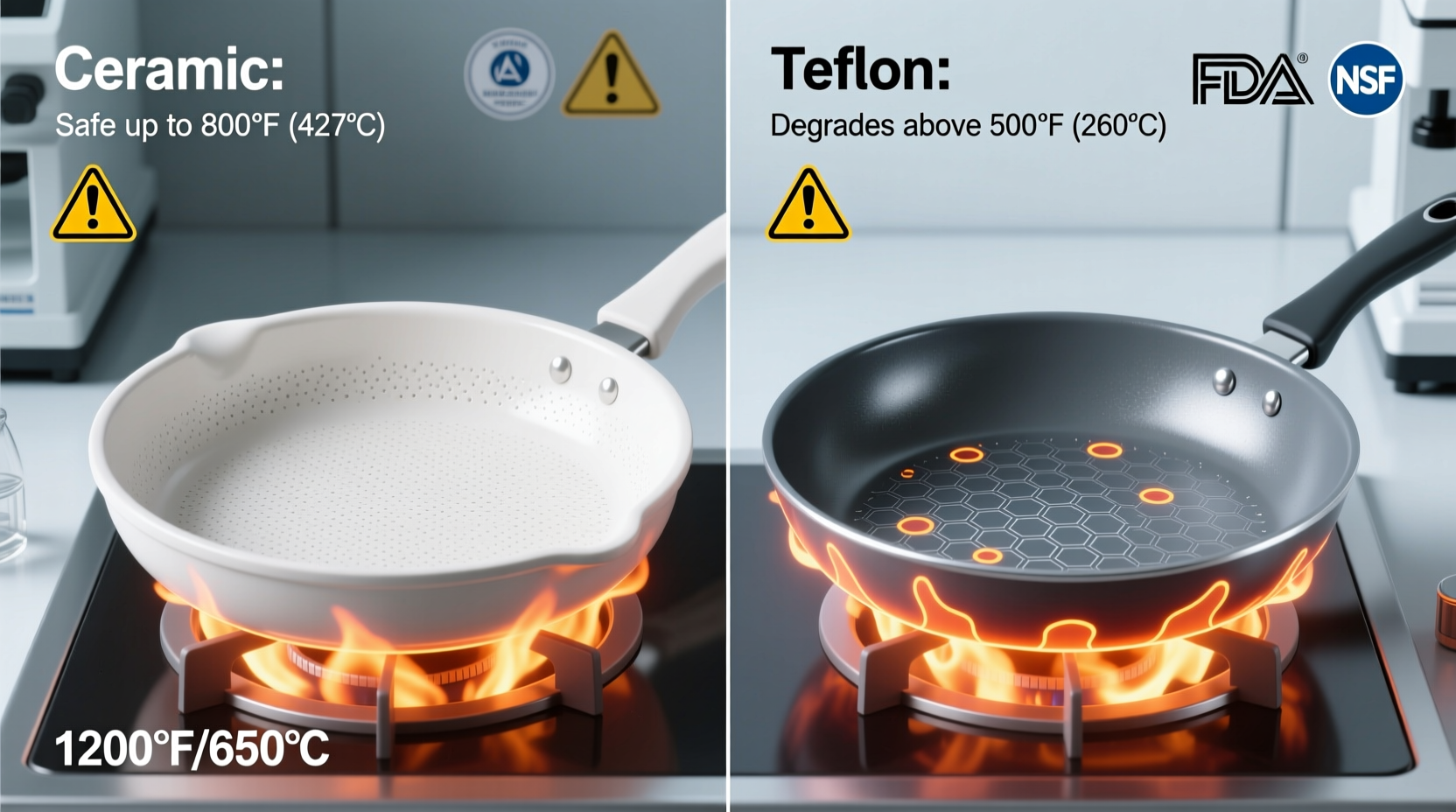
Teflon-coated pans are known for their exceptional non-stick properties. The PTFE layer provides a slick surface that resists food adhesion better than most alternatives. However, this material begins to degrade at around 500°F (260°C). Once that threshold is crossed, PTFE emits toxic fumes, including perfluoroisobutylene (PFIB), a compound hazardous to humans and lethal to birds.
In enclosed kitchens, especially without proper ventilation, these fumes can lead to polymer fume fever—a temporary but unpleasant condition with flu-like symptoms such as chills, headache, and fever. While not typically life-threatening in healthy adults, repeated exposure raises long-term health concerns due to the presence of per- and polyfluoroalkyl substances (PFAS), some of which have been linked to thyroid disease, liver damage, and certain cancers.
“PTFE is stable under normal cooking conditions, but exceeding 500°F turns a safe coating into a source of airborne toxins.” — Dr. Laura Chen, Environmental Toxicologist, University of Michigan
Modern Teflon products no longer contain PFOA (perfluorooctanoic acid), a carcinogenic processing agent phased out by 2015 in the U.S. This improvement has reduced risk, but thermal degradation remains a real danger when pans are overheated—especially on induction stoves or unattended burners.
Tip: Never leave an empty Teflon pan on a hot stove. Even a few minutes of dry heating can exceed safe temperature limits.Ceramic Coatings: The Safer Alternative?
Ceramic non-stick coatings are made from silicon-based sol-gel solutions, hardened into a glass-like finish through high-temperature curing. They contain no PFAS, making them appealing to health-conscious consumers. Most ceramic pans are marketed as safe up to 800°F (427°C), significantly higher than Teflon’s limit.
This thermal resilience means ceramic cookware can handle searing, broiling, and even oven use without releasing harmful fumes. Additionally, ceramic is inert—it doesn’t react with acidic foods like tomatoes or vinegar, preserving both flavor and coating integrity.
However, ceramic isn’t without drawbacks. Its primary weakness is durability. While thermally stable, the coating tends to wear faster than PTFE, especially when scratched by metal utensils or cleaned with abrasive pads. After six months to a year of regular use, many users report diminished non-stick performance.
Another consideration is transparency in labeling. Not all “ceramic” coatings are created equal. Some brands blend ceramic with synthetic polymers to enhance slickness, potentially reintroducing chemicals that degrade under heat. Always check whether the product is 100% ceramic and free from PFAS.
Direct Comparison: Ceramic vs Teflon at High Temperatures
| Feature | Ceramic Coating | Teflon (PTFE) Coating |
|---|---|---|
| Max Safe Temperature | Up to 800°F (427°C) | Up to 500°F (260°C) |
| Chemical Emissions When Overheated | Negligible (inert materials) | Toxic fumes (PFIB, HF) |
| PFAS-Free | Yes (if 100% ceramic) | No (PTFE is a PFAS) |
| Durability | Moderate (scratches easily) | High (resists wear better) |
| Oven-Safe | Yes (most models) | Limited (check manufacturer specs) |
| Eco-Friendliness | Higher (no bioaccumulative chemicals) | Lower (PFAS persistence in environment) |
| Initial Non-Stick Performance | Good | Excellent |
The table illustrates a clear trade-off: ceramic wins in safety and environmental impact, while Teflon leads in performance and longevity. For those who frequently cook at high heat—such as home chefs using cast iron-level techniques—ceramic offers peace of mind. But if you prioritize ease of use over time, Teflon may still appeal, provided you avoid overheating.
Real-World Scenario: A Kitchen Test Case
Consider Maria, a home cook in Denver who loves making fajitas. She uses high heat to char bell peppers and sear skirt steak, often preheating her pan for several minutes before adding ingredients. Initially, she used a popular Teflon skillet. After noticing a faint chemical smell during heating and her pet parakeet falling ill, she consulted a veterinarian who suspected polymer fume exposure.
Maria switched to a 100% ceramic-coated pan labeled PFAS-free. Though she had to adjust by using slightly more oil and avoiding metal tongs, she found the pan handled her high-heat needs safely—even under the broiler. After ten months, the non-stick quality declined, but she accepted this as a reasonable trade-off for health and safety.
Her experience reflects a growing trend: consumers prioritizing long-term well-being over short-term convenience. It also highlights the importance of matching cookware to cooking style.
How to Use Non-Stick Cookware Safely at High Heat: A Step-by-Step Guide
Regardless of coating type, safe practices minimize risks. Follow this sequence to protect yourself and extend pan life:
- Choose the Right Pan for the Task: Reserve non-stick cookware for medium-heat cooking like eggs, pancakes, and delicate fish. For searing or charring, consider clad stainless steel or seasoned carbon steel instead.
- Preheat on Low to Medium: Never crank the burner to high when preheating a non-stick pan. Start at medium and increase only if necessary.
- Use Visual Cues, Not Guesswork: Add a few drops of water to test heat level. If they dance and evaporate quickly (Leidenfrost effect), the pan is hot enough—no need to go hotter.
- Avoid Empty Heating: Never leave a non-stick pan unattended on a hot stove. Even 2–3 minutes without oil or food can trigger off-gassing in Teflon.
- Use Proper Utensils: Stick to wood, silicone, or nylon tools. Metal scratches compromise coatings and accelerate degradation.
- Ensure Ventilation: Turn on your range hood or open windows. Good airflow reduces concentration of any potential emissions.
- Replace When Worn: If the coating is peeling, flaking, or deeply scratched, retire the pan. Ingesting coating particles is not recommended, regardless of material.
Checklist: Choosing Safer High-Heat Non-Stick Cookware
- ✅ Confirm the coating is PFAS-free (look for third-party certifications like Greenguard or MADE SAFE)
- ✅ Check maximum temperature rating (aim for at least 450°F for safety buffer)
- ✅ Prefer ceramic if you regularly cook above 400°F
- ✅ Avoid non-stick for broiling unless explicitly labeled oven-safe
- ✅ Choose reinforced ceramic for better durability
- ✅ Read ingredient disclosures—some “ceramic” brands still use synthetic binders
- ✅ Prioritize reputable brands with transparent sourcing (e.g., GreenPan, Xtrema, Caraway)
Frequently Asked Questions
Can I use Teflon pans on induction stoves?
Yes, if the base is magnetic. However, induction heats pans rapidly and evenly, increasing the risk of overheating. Use only at medium settings and never preheat empty. Monitor closely, especially with older Teflon pans.
Is ceramic really non-toxic when heated?
High-quality, 100% ceramic coatings are inert and do not emit toxic fumes, even at high temperatures. However, verify that the product contains no hidden PFAS or PTFE blends. Look for independent lab testing results if available.
Why do ceramic pans lose their non-stick quality so quickly?
The sol-gel coating is thinner and softer than PTFE. Repeated use with sharp utensils, abrasive cleaners, or stacking in storage causes micro-scratches that degrade performance. Hand washing and soft sponges help prolong life.
Expert Insight: The Bigger Picture on Cookware Safety
“The shift toward ceramic reflects a broader awareness: we’re no longer willing to trade health for convenience. But true safety isn’t just about the coating—it’s about how we use it.” — Dr. Arjun Patel, Materials Scientist, Consumer Safety Institute
Dr. Patel emphasizes that no non-stick surface is designed for prolonged high-heat use. Even ceramic should be seen as a tool for specific tasks—not a universal replacement for traditional cookware. The safest kitchen combines multiple materials: stainless steel for browning, cast iron for searing, and high-quality non-stick only when necessary.
Conclusion: Making the Healthiest Choice for Your Cooking Style
So, which is safer for high heat: ceramic or Teflon? The answer hinges on temperature and usage. For cooking above 500°F, ceramic is unequivocally safer. It withstands heat without releasing toxic fumes and avoids the persistent chemicals associated with PFAS. However, its shorter lifespan means more frequent replacement—raising cost and environmental considerations.
Teflon remains effective and durable under moderate conditions but poses real risks when overheated. If you choose Teflon, strict adherence to low-and-medium heat is non-negotiable. For high-heat enthusiasts, the wisest path is to reserve non-stick pans for gentle cooking and rely on metal-based cookware for searing and charring.
Ultimately, safety starts with awareness. By understanding the limitations of each material and adjusting habits accordingly, you can enjoy both convenience and confidence in your kitchen. The best cookware isn’t defined by marketing claims—it’s defined by how well it serves your health, your cooking, and your peace of mind.
💬 Have you switched from Teflon to ceramic? What was your experience with high-heat cooking? Share your story in the comments and help others make informed, safer choices.








