When it comes to choosing the right frying pan, one of the most pressing concerns for health-conscious home cooks is safety—especially when cooking at high temperatures. The debate between ceramic and traditional non-stick (PTFE-based) pans has intensified over the past decade as consumers become more aware of chemical exposure in the kitchen. While both promise easy food release and low-oil cooking, their behavior under high heat raises important questions about fumes, degradation, and long-term safety.
Understanding the science behind these coatings—and how they respond when seared, sautéed, or left on a hot burner—is essential for making an informed decision. This article breaks down the key differences between ceramic and conventional non-stick pans, evaluates their performance under high heat, and answers whether ceramic is truly the safer option.
Understanding Non-Stick Coatings: PTFE vs Ceramic
Before comparing safety, it’s crucial to understand what each type of coating is made from and how it functions.
Traditional non-stick pans typically use polytetrafluoroethylene (PTFE), commonly known by the brand name Teflon™. PTFE is a synthetic fluoropolymer that creates an extremely slick surface, preventing food from sticking. It's been widely used since the 1940s and remains popular due to its effectiveness and affordability.
Ceramic non-stick pans, on the other hand, are coated with a sol-gel silica-based material derived from sand. This inorganic coating is often marketed as “PFOA-free,” “PTFE-free,” and “toxin-free,” appealing to those seeking cleaner cookware options. Unlike PTFE, ceramic coatings do not contain fluorinated chemicals, which contributes to their reputation as a healthier alternative.
Tip: Always check labels carefully—some \"ceramic\" pans may still include small amounts of synthetic polymers or hybrid coatings.The Role of PFOA and Modern Manufacturing
A major concern historically associated with PTFE pans was the use of perfluorooctanoic acid (PFOA), a processing agent linked to cancer and environmental contamination. However, since 2013, PFOA has been phased out of U.S. and EU manufacturing. Most reputable brands now produce PTFE pans without PFOA, significantly reducing this risk.
That said, while PFOA is no longer used, PTFE itself can still emit harmful fumes when overheated—a critical factor when considering high-heat cooking.
High Heat Performance: When Temperature Matters
The real test for any non-stick pan is how it behaves when pushed to higher temperatures—common in techniques like searing steak, stir-frying, or preheating an empty pan.
PTFE (Traditional Non-Stick) and Thermal Breakdown
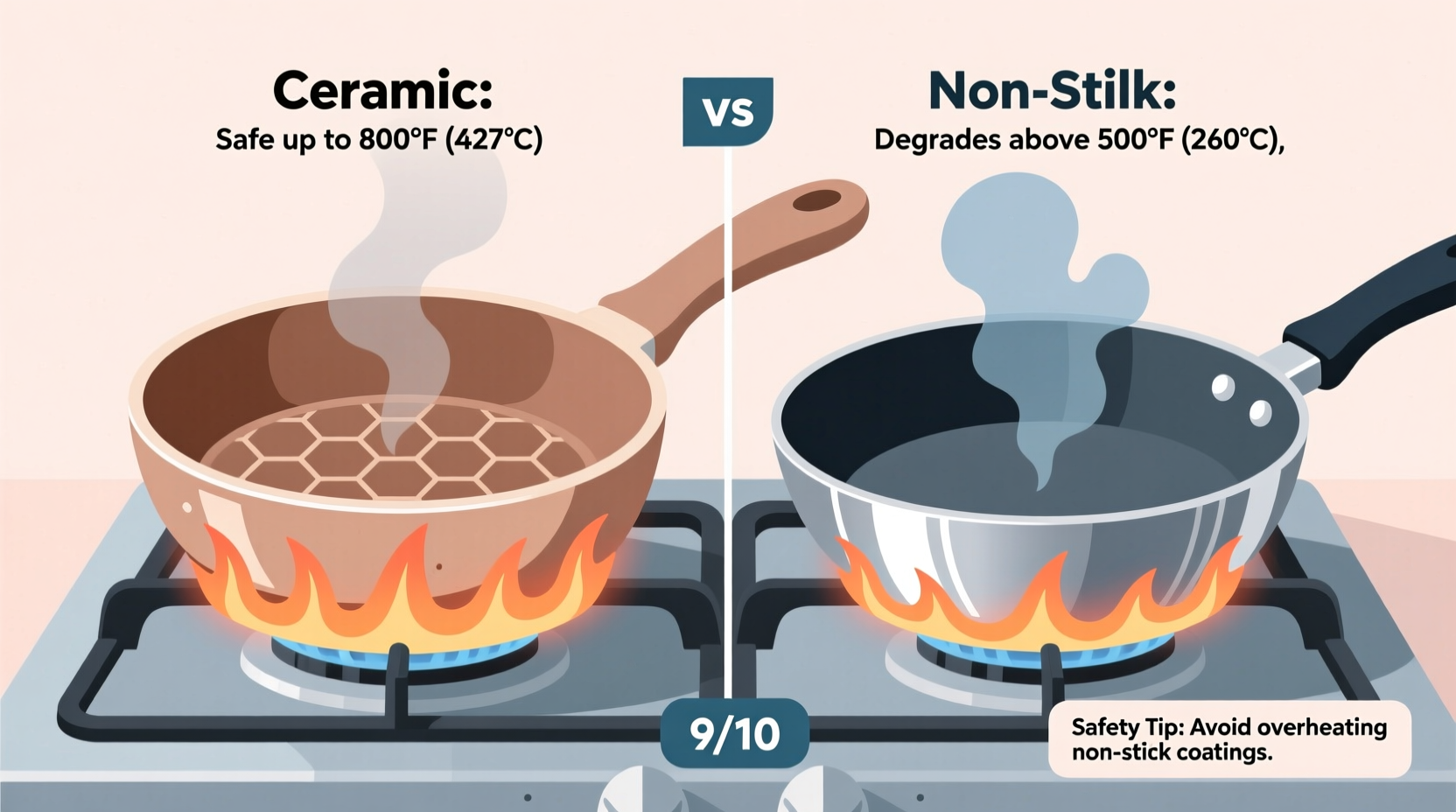
PTFE begins to degrade at around 500°F (260°C). Once this threshold is crossed, it can release toxic fumes, including perfluoroisobutylene (PFIB) and other fluorinated compounds. These fumes have been shown to cause polymer fume fever in humans—a temporary flu-like condition—and are lethal to birds, even in small quantities.
Because many stovetop cooking methods exceed this temperature—especially gas burners or broiling—it's possible to unintentionally overheat a PTFE-coated pan. Even brief exposure to excessive heat can damage the coating permanently, leading to flaking and increased chemical leaching risk.
Ceramic Coatings Under High Heat
Ceramic coatings generally withstand higher temperatures than PTFE, often rated up to 850°F (450°C) or more depending on the brand. Because they’re made from inorganic materials, they don’t emit toxic fumes when heated, even if accidentally overheated.
This makes ceramic inherently safer in scenarios where temperature control is difficult—such as induction cooktops with rapid heating or distracted cooking. However, while ceramic resists fuming better, it may suffer from reduced durability under repeated thermal stress, particularly with sudden temperature changes (thermal shock).
“From a toxicology standpoint, ceramic coatings eliminate the risk of fluoropolymer off-gassing, which is a significant advantage when cooking at elevated temperatures.” — Dr. Lena Torres, Environmental Health Scientist, University of Colorado School of Public Health
Safety Comparison: Chemical Exposure and Long-Term Use
Beyond immediate fume risks, long-term safety depends on coating stability, potential leaching, and physical degradation over time.
| Factor | PTFE Non-Stick | Ceramic Non-Stick |
|---|---|---|
| Max Safe Temperature | ~500°F (260°C) | Up to 850°F (450°C) |
| Toxic Fumes When Overheated? | Yes – releases hazardous fluorinated gases | No – no known toxic emissions |
| PFOA Used? | No (in modern pans) | No |
| Coating Longevity | Moderate (2–5 years with care) | Shorter (often 1–3 years) |
| Scratch Resistance | Low – degrades faster with metal utensils | Very Low – prone to wear and etching |
| Chemical Leaching Risk | Low under normal use; increases if scratched or overheated | Minimal – but some lower-quality ceramics may contain heavy metals |
While ceramic wins in terms of thermal safety and absence of fluorinated chemicals, its shorter lifespan means replacement frequency increases, potentially offsetting environmental benefits. Additionally, some budget ceramic pans have raised concerns about trace heavy metals like lead or cadmium in the glaze—though reputable brands adhere to FDA and California Prop 65 standards.
Tip: Look for third-party certifications such as LFGB (Germany), FDA compliance, or Greenguard Gold to ensure your ceramic pan doesn't contain harmful contaminants.Durability and Practical Considerations
Safety isn’t just about chemistry—it also involves how well a pan holds up in daily use.
PTFE-coated pans, while sensitive to heat, tend to maintain their non-stick properties longer than ceramic if properly cared for. Using wooden or silicone utensils, avoiding stacking, and hand-washing can extend their life significantly.
Ceramic pans, despite their high heat tolerance, are notoriously less durable. The coating can wear down within months, especially with frequent use or abrasive cleaning. Once the surface is compromised, food sticks more easily, and cleaning becomes harder—defeating the purpose of non-stick functionality.
Real Example: A Home Cook’s Experience
Jessica M., a meal-prep enthusiast from Portland, switched to ceramic pans two years ago after reading about PTFE fumes. “I love that I can crank the heat without worrying about my parakeet,” she says. “But honestly, the pans started losing their slickness after six months. Now I have to use more oil, and scrambled eggs stick unless I’m extra careful.”
She eventually returned to a high-quality PTFE pan—but only after learning proper usage guidelines. “Now I never go above medium-high, never leave it empty on the burner, and always use silicone tools. It works great and feels safe as long as I follow the rules.”
This illustrates a common trade-off: ceramic offers peace of mind regarding fumes but often falls short on longevity. Meanwhile, PTFE requires stricter handling but delivers consistent performance over time.
How to Use Non-Stick Pans Safely at High Heat: A Step-by-Step Guide
Regardless of coating type, safe high-heat use depends on habits and awareness. Follow this practical sequence to minimize risks:
- Choose the right pan for the task: Avoid using any non-stick pan for broiling, grilling, or high-temperature searing (above 450°F). Reserve them for eggs, pancakes, delicate fish, and light sautéing.
- Preheat on low to medium heat only: Never preheat an empty non-stick pan on high. The surface heats faster than the base, increasing the risk of exceeding safe temperatures before you even add food.
- Use visual and sensory cues: If you notice smoke, a burning smell, or discoloration on the pan, turn off the heat immediately. This indicates the coating is breaking down.
- Opt for gas stove users: Gas flames can create uneven hot spots. Keep the flame contained within the pan’s base and avoid letting it lick up the sides.
- Switch to oven-safe alternatives when needed: For recipes requiring oven finishing (like frittatas), transfer food to a stainless steel or cast iron skillet rather than risking thermal damage to the coating.
FAQ: Common Questions About Ceramic and Non-Stick Safety
Can I use ceramic pans on induction cooktops?
Yes, most ceramic-coated pans are compatible with induction stoves, provided they have a magnetic base (usually made of aluminum or steel with a ferromagnetic layer). Always verify compatibility with the manufacturer’s label.
Do ceramic pans contain Teflon?
No, true ceramic coatings do not contain PTFE (Teflon). However, some products labeled as “ceramic” may use hybrid coatings that blend ceramic particles with PTFE. Read ingredient disclosures carefully and look for “100% ceramic” or “PTFE-free” claims from trusted brands.
Are scratched non-stick pans dangerous?
Minor scratches aren’t immediately hazardous, but they compromise the coating’s integrity. In PTFE pans, deep scratches can expose underlying metal and increase flaking, which may lead to ingestion of small particles. While ingesting small amounts of PTFE is generally considered low-risk by the FDA, it’s best to replace heavily damaged pans. For ceramic, scratches accelerate wear and reduce non-stick performance, though health risks remain low.
Final Verdict: Is Ceramic Actually Safer for High Heat?
Yes—ceramic is objectively safer than traditional PTFE non-stick pans when exposed to high heat. Its ability to withstand temperatures beyond 800°F without emitting toxic fumes gives it a clear advantage in thermal safety. For households with birds, children, or individuals concerned about indoor air quality, ceramic provides meaningful reassurance.
However, “safer” doesn’t mean “better overall.” Ceramic coatings degrade faster, require more careful maintenance, and may need replacing every 1–3 years. They also vary widely in quality—budget options may lack rigorous safety testing.
Meanwhile, modern PTFE pans made without PFOA are safe under normal cooking conditions. As long as temperatures stay below 500°F and the pan isn’t overheated or damaged, the health risks are minimal. With responsible use, PTFE remains a reliable, long-lasting choice.
The safest approach may be strategic: reserve non-stick pans—whether ceramic or PTFE—for low-to-medium heat tasks, and rely on stainless steel, cast iron, or carbon steel for high-heat cooking. This way, you get the convenience of non-stick where it’s needed most, without pushing materials beyond their limits.
Recommended Checklist Before Buying
- ✅ Confirm the pan is labeled PFOA-free and PTFE-free (for ceramic) or PFOA-free (for traditional non-stick)
- ✅ Check maximum temperature rating and avoid exceeding it
- ✅ Look for third-party safety certifications (e.g., LFGB, FDA, Greenguard)
- ✅ Choose pans with sturdy construction and even heat distribution
- ✅ Commit to using non-metal utensils and hand-washing to extend lifespan
- ✅ Avoid using any non-stick pan for searing, broiling, or extended dry heating









