Cat chin acne is a surprisingly common skin condition that affects feline companions across all breeds and ages. Often appearing as small black dots or red bumps along the chin, it can range from mild to severe if left unmanaged. While hormonal imbalances and poor grooming habits can contribute, one often-overlooked factor is the type of food and water bowl used daily. Many pet owners don’t realize that their cat’s feeding dish could be aggravating or even causing acne flare-ups. Among the most debated options are ceramic and stainless steel bowls. Each has its advantages and drawbacks, but when it comes to preventing chin acne, one material clearly stands out.
Understanding Cat Chin Acne: Causes and Triggers
Cat chin acne develops when hair follicles on the chin become clogged with oils (sebum), dirt, or bacteria. The result is comedones—those telltale blackheads—or in more serious cases, inflamed pustules and infections. While not usually life-threatening, chronic acne can cause discomfort, lead to secondary infections, and require veterinary treatment.
The root causes are multifactorial:
- Seborrhea oleosa: Overproduction of sebum by sebaceous glands, especially around the chin where these glands are concentrated.
- Poor hygiene: Residual food, moisture, and bacteria accumulating on the chin after eating.
- Stress or weakened immunity: Can reduce a cat's ability to fight off bacterial overgrowth.
- Bowl material: Porous or rough surfaces harbor bacteria and may irritate sensitive skin.
One of the most preventable contributors is the feeding bowl itself. Plastic bowls have long been known to exacerbate acne due to micro-scratches that trap bacteria, but the debate continues between ceramic and stainless steel alternatives.
Tip: Wipe your cat’s chin gently with a damp cloth after meals to remove food residue and oils, especially if they’re prone to acne.Comparing Ceramic and Stainless Steel Bowls
When choosing between ceramic and stainless steel, it’s essential to evaluate each based on hygiene, durability, ease of cleaning, and potential for irritation.
Stainless Steel Bowls: The Gold Standard for Hygiene
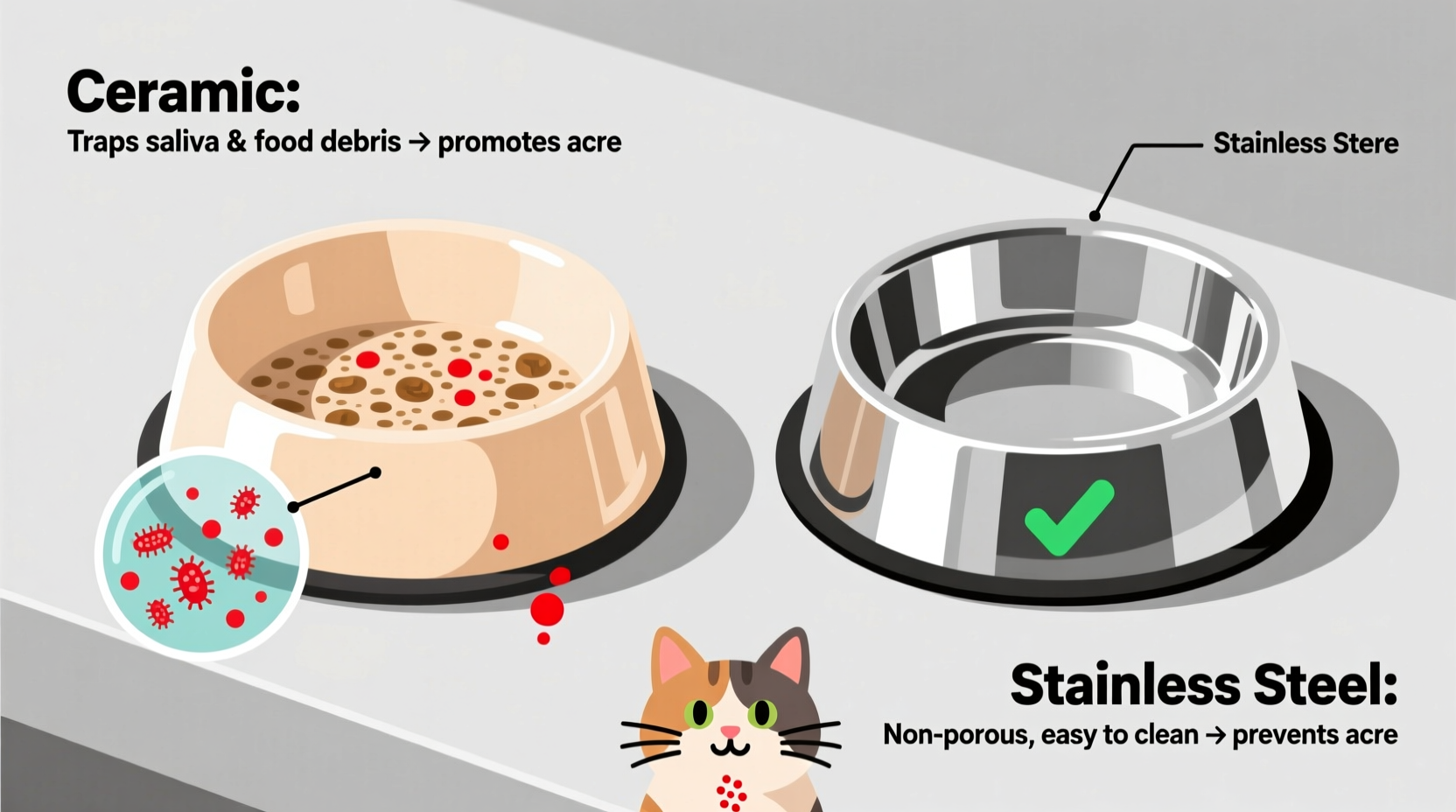
Stainless steel is widely recommended by veterinarians for cat feeding dishes. It is non-porous, meaning bacteria cannot penetrate the surface. Even with frequent use, high-quality stainless steel resists scratches and maintains a smooth finish, minimizing places where biofilm can accumulate.
Additionally, stainless steel is naturally resistant to rust, corrosion, and staining. Most are dishwasher-safe, ensuring thorough sanitization. Because it doesn’t leach chemicals or absorb odors, it keeps food fresher and safer between meals.
One concern some owners raise is noise—metal bowls can clatter when pushed across hard floors. However, many modern designs include rubber bases to prevent sliding and reduce sound.
Ceramic Bowls: Aesthetic Appeal with Hidden Risks
Ceramic bowls are popular for their weight, stability, and decorative appeal. They sit firmly without tipping, which is ideal for messy eaters. However, their glaze can develop tiny cracks or chips over time, creating microscopic crevices where bacteria thrive.
Even if the surface appears smooth, an old or low-quality ceramic bowl may harbor Pseudomonas or E. coli, especially if washed manually with abrasive sponges. Unless the glaze is 100% intact and food-grade certified, the porous clay body underneath can absorb moisture and contaminants.
Another issue is variability in manufacturing. Not all ceramic bowls are created equal—some imported brands may contain lead or other toxins in the glaze, posing health risks beyond acne. Always choose ceramics labeled “lead-free” and intended for food use.
“From a dermatological standpoint, stainless steel is the safest choice for cats with chin acne. Its non-porous nature prevents bacterial colonization that can worsen follicular inflammation.” — Dr. Laura Simmons, DVM, Feline Dermatology Specialist
Material Comparison Table: Ceramic vs Stainless Steel
| Feature | Ceramic Bowl | Stainless Steel Bowl |
|---|---|---|
| Non-porous? | Only if glaze is fully intact | Yes, inherently non-porous |
| Bacteria resistance | Moderate (risk increases with wear) | High |
| Durability | Fragile; can chip or crack | Highly durable |
| Ease of cleaning | Dishwasher-safe only if undamaged | Easy; dishwasher-safe and scratch-resistant |
| Risk of chemical leaching | Possible (if low-quality glaze) | None |
| Chin contact safety | Risky if chipped or scratched | Very safe |
Step-by-Step Guide to Reducing Chin Acne Through Bowl Management
Changing your cat’s bowl is just the beginning. To truly prevent and manage chin acne, follow this vet-approved routine:
- Replace plastic bowls immediately. Even if they look clean, micro-scratches make them breeding grounds for bacteria.
- Select a high-quality stainless steel bowl. Look for 18/10 or 304-grade stainless steel with a wide, shallow design to prevent whisker stress.
- Wash daily with hot, soapy water. Use a soft sponge—never steel wool—and rinse thoroughly.
- Dishwasher weekly. Run the bowl through a full dishwasher cycle at least once a week for deep sanitization.
- Inspect regularly. Check for dents, deep scratches, or rust (rare but possible with low-grade metal).
- Use separate bowls for food and water. Moisture buildup in food bowls encourages bacterial growth.
- Monitor your cat’s chin. Clean gently with a cotton pad dipped in warm water if blackheads appear.
- Consult your vet if acne persists. Severe cases may require medicated wipes or oral antibiotics.
Real-Life Example: Bella’s Chin Acne Turnaround
Bella, a 3-year-old domestic shorthair, had recurring chin acne for months. Her owner, Sarah, cleaned the bowls daily and wiped Bella’s chin after eating, yet the blackheads kept returning. A visit to the vet revealed no underlying illness, but the veterinarian asked about feeding equipment.
Sarah was using a hand-painted ceramic bowl she loved for its appearance. Upon inspection, the vet noticed fine crazing in the glaze—tiny cracks invisible to the naked eye but perfect for trapping bacteria. Sarah switched to a simple, dishwasher-safe stainless steel bowl the same day.
Within two weeks, Bella’s chin showed noticeable improvement. After a month, the acne had cleared completely. Sarah now uses only stainless steel and washes it daily. “I never thought the bowl was the problem,” she said. “It’s amazing how such a small change made such a big difference.”
Checklist: Choosing the Best Bowl for Your Cat’s Skin Health
- ☐ Avoid plastic at all costs
- ☐ Choose stainless steel over ceramic when possible
- ☐ Ensure the stainless steel is food-grade (304 or 18/10)
- ☐ Opt for a wide, shallow design to protect whiskers
- ☐ Prefer models with a non-slip base
- ☐ Confirm ceramic bowls are lead-free and fully glazed (if used)
- ☐ Replace any bowl with visible cracks, chips, or deep scratches
- ☐ Wash daily and sanitize weekly
- ☐ Monitor your cat’s chin weekly for early signs of acne
- ☐ Schedule a vet check if acne doesn’t improve in 2–3 weeks
Frequently Asked Questions
Can I still use a ceramic bowl if it’s high-quality?
You can, but with caution. Only use ceramic bowls that are explicitly labeled food-safe, lead-free, and fully glazed. Inspect them monthly for any signs of cracking or wear. Once damage occurs, bacteria can infiltrate, making them unsafe. For cats already prone to chin acne, stainless steel remains the safer long-term option.
Does the shape of the bowl matter for acne prevention?
Yes. Deep, narrow bowls force cats to bury their chin and whiskers into the sides, increasing friction and trapping food against the skin. This promotes oil buildup and irritation. A wide, shallow bowl allows the cat to eat without facial contact, reducing the risk of follicle blockage. Stainless steel bowls often come in whisker-friendly designs that support both comfort and hygiene.
How often should I replace my cat’s bowl?
There’s no fixed timeline, but inspect your bowl monthly. Replace stainless steel if it becomes deeply scratched or dented. Replace ceramic bowls at the first sign of glaze damage, chipping, or staining. Even with careful use, consider replacing feeding bowls every 1–2 years as a preventive measure.
Conclusion: Prioritizing Health Over Aesthetics
When it comes to preventing cat chin acne, the choice between ceramic and stainless steel isn’t just about preference—it’s a matter of health. While ceramic bowls may look elegant on a kitchen counter, their inherent vulnerabilities make them a risky choice for cats with sensitive skin or existing acne issues. Stainless steel, on the other hand, offers unmatched hygiene, durability, and safety.
The best care starts with the basics. By switching to a high-quality stainless steel bowl, maintaining a consistent cleaning routine, and staying alert to early warning signs, you can significantly reduce your cat’s risk of developing or redeveloping chin acne.
🚀 Take action today: Examine your cat’s current bowl. If it’s plastic or damaged ceramic, replace it with a food-grade stainless steel alternative. Your cat’s skin—and overall well-being—will thank you.