
Mosquitoes are more than just a seasonal nuisance—they're vectors for diseases like dengue, Zika, West Nile virus, and malaria. As awareness of chemical exposure grows, many people are turning to natural alternatives like essential oils for mosquito protection. But how do these plant-based solutions stack up against conventional chemical repellents such as DEET or picaridin? This article examines the scientific evidence, duration of protection, safety profiles, and practical considerations to answer whether essential oils can truly outperform or even match synthetic sprays.
How Mosquito Repellents Work: The Science Behind Protection
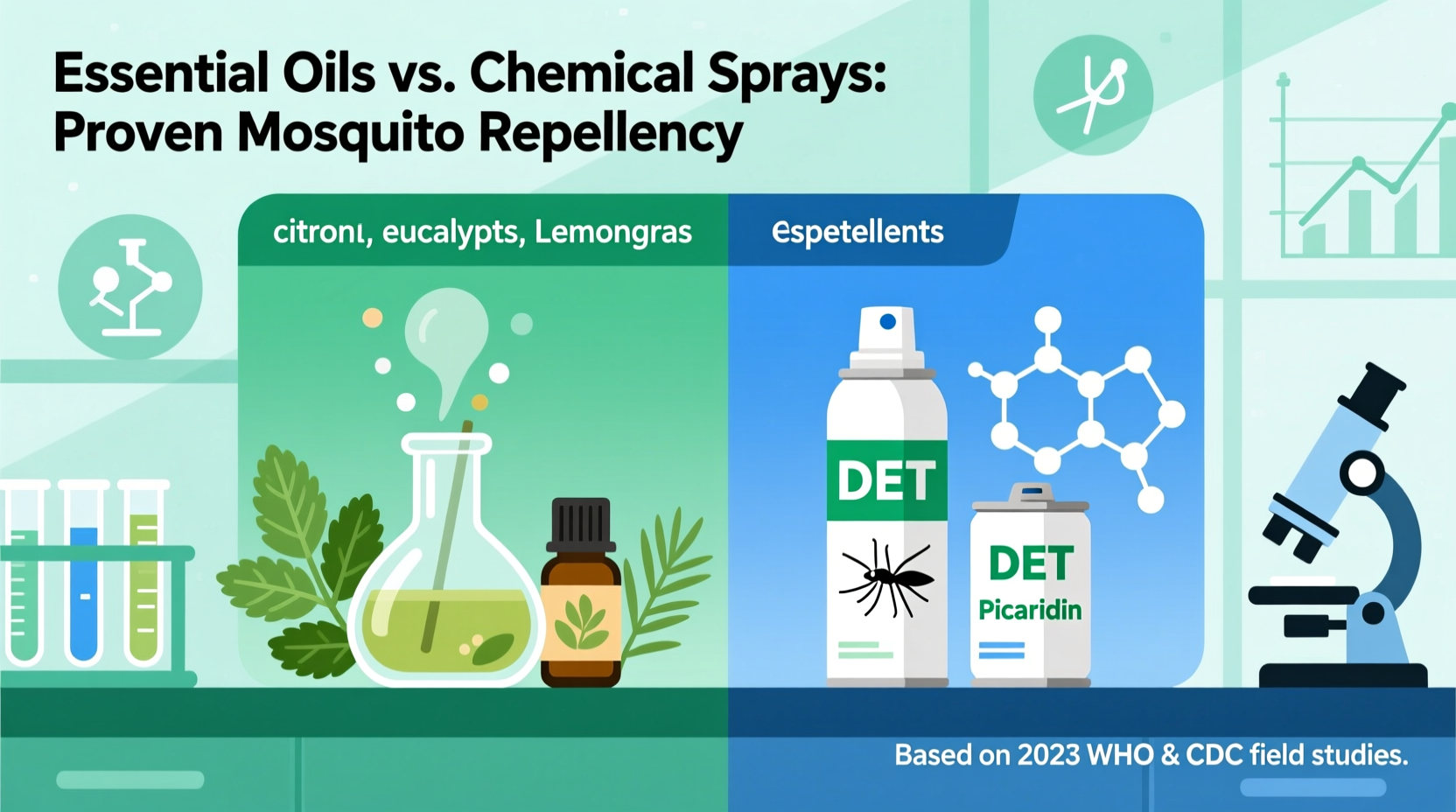
All effective mosquito repellents function by masking human scent cues—such as carbon dioxide, lactic acid, and body heat—that attract mosquitoes. Chemical repellents interfere with the insect’s olfactory receptors, making it difficult for them to locate a host. DEET, developed by the U.S. Army in the 1940s, remains one of the most studied and widely used active ingredients. It is known to confuse mosquitoes’ sense of smell rather than repelling them outright.
Essential oils, on the other hand, rely on volatile organic compounds (VOCs) found in plants. Many of these compounds—like citronellal, eucalyptol, and linalool—have demonstrated insect-repellent properties in controlled environments. However, their mode of action tends to be more transient due to rapid evaporation and lower dermal persistence compared to synthetic chemicals.
“While some essential oils show promising repellency, their short-lived efficacy means they require frequent reapplication—often every 20 to 60 minutes—to remain effective.” — Dr. James Logan, Head of Disease Control, London School of Hygiene & Tropical Medicine
Scientific Evidence: Essential Oils vs. Chemical Sprays
Numerous studies have evaluated essential oils for mosquito repellency. A 2021 meta-analysis published in Parasites & Vectors reviewed over 50 clinical trials comparing plant-based repellents with synthetic ones. Key findings include:
- Citronella oil provides only 20–30 minutes of protection under field conditions.
- Lemon eucalyptus oil (specifically PMD, its active compound) offers up to 6 hours of protection when properly formulated—a rare exception among natural options.
- Peppermint, lavender, tea tree, and clove oils show moderate repellency but lack consistency across mosquito species.
- DEET at 20–30% concentration consistently delivers 5–8 hours of protection.
- Picaridin performs similarly to DEET with less odor and skin irritation.
In head-to-head comparisons, only a few essential oil formulations come close to matching low-concentration DEET. For example, a University of Guelph study found that a 10% lemon eucalyptus oil formulation provided 95% protection for 3 hours—comparable to 15% DEET—but required reapplication afterward.
Tip: Look for products containing synthesized PMD (para-menthane-3,8-diol), derived from lemon eucalyptus—it's EPA-approved and one of the few natural options with long-lasting efficacy.Comparative Effectiveness Table: Duration and Active Ingredients
| Repellent Type | Active Ingredient | Concentration | Avg. Protection Time | EPA Registered? |
|---|---|---|---|---|
| Synthetic | DEET | 25% | 6–8 hours | Yes |
| Synthetic | Picaridin | 20% | 5–7 hours | Yes |
| Natural | Lemon Eucalyptus (PMD) | 30% | 6 hours | Yes |
| Natural | Citronella Oil | 10% | 20–30 minutes | No (as standalone) |
| Natural | Peppermint + Geranium Blend | 15% each | 1–1.5 hours | No |
| Synthetic | IR3535 | 20% | 4–6 hours | Yes |
The data clearly shows that while certain essential oil derivatives (like PMD) meet regulatory standards, most pure essential oils fall short in both duration and reliability when compared to registered chemical repellents.
Real-World Case: Hiking in the Florida Everglades
Consider Sarah, an outdoor educator leading student groups through the Florida Everglades—an area with high mosquito activity and documented cases of Eastern equine encephalitis. On one trip, she opted for a homemade spray using equal parts witch hazel, citronella, lavender, and peppermint oils. Within 40 minutes of application, several students began reporting bites. By the two-hour mark, nearly everyone had been bitten multiple times.
The following week, she switched to a commercial picaridin-based spray. Students applied it once before the hike and remained bite-free for over six hours, despite similar environmental conditions. Sarah noted, “The difference was night and day. I still use essential oils at home around the patio, but for real protection in high-risk areas, I won’t risk natural-only solutions anymore.”
This scenario reflects a broader trend: essential oils may suffice in low-exposure settings, but fail under sustained or high-threat conditions.
Safety and Skin Compatibility: Natural Doesn’t Always Mean Safer
One common misconception is that because essential oils are “natural,” they are inherently safer than chemicals. This isn’t always true. Undiluted essential oils can cause skin irritation, photosensitivity, or allergic reactions. For instance, citrus oils like bergamot contain furanocoumarins that increase UV sensitivity, raising the risk of phytophotodermatitis.
In contrast, DEET and picaridin have well-documented safety profiles when used as directed. The CDC and WHO endorse DEET for adults and children over two months old. While concerns about neurotoxicity exist at extremely high doses, typical use presents minimal risk.
Moreover, improper dilution of essential oils—especially in DIY blends—can lead to adverse effects. A 2020 report from the American Association of Poison Control Centers recorded over 12,000 cases involving essential oil exposures, many due to misuse in homemade repellents.
“Natural products aren’t automatically safe. Some essential oils are potent allergens or sensitizers. Consumers should treat them with the same caution as any bioactive substance.” — Dr. Jane Lee, Dermatotoxicologist, University of California, San Diego
Step-by-Step Guide: Choosing the Right Repellent for Your Needs
Selecting between essential oils and chemical sprays depends on context, duration of exposure, and personal health factors. Follow this decision-making process:
- Assess your environment: Are you in a backyard or a tropical region with disease-carrying mosquitoes? High-risk zones demand proven protection.
- Determine exposure duration: Short evening outings may allow for essential oil use; all-day hikes require longer-lasting solutions.
- Check ingredient labels: If using essential oils, prefer those with standardized extracts like PMD (oil of lemon eucalyptus).
- Test for skin sensitivity: Apply a small amount to your inner forearm and wait 24 hours before full use.
- Combine methods if needed: Use permethrin-treated clothing with a reliable repellent for maximum defense.
- Reapply diligently: Essential oils need reapplication every 30–60 minutes; synthetics typically last 5+ hours.
When Essential Oils Make Sense—and When They Don’t
Essential oils have a legitimate place in mosquito management, particularly in low-risk situations. They work well as:
- Aromatic diffusers for patios or outdoor dining areas.
- Short-duration personal sprays during twilight hours in temperate climates.
- Complementary tools alongside fans or screens to reduce local mosquito presence.
However, they are not recommended for:
- Travel to regions with mosquito-borne diseases (e.g., Southeast Asia, sub-Saharan Africa).
- Extended outdoor activities in humid, wooded, or marshy areas.
- Individuals with sensitive skin or allergies to plant compounds.
- Situations where consistent, hands-free protection is critical.
For these scenarios, EPA-registered repellents containing DEET, picaridin, IR3535, or PMD are the gold standard.
Frequently Asked Questions
Are essential oil repellents effective against all mosquito species?
No. Different mosquito species respond differently to scents. For example, Aedes aegypti (which spreads dengue) is strongly repelled by citronella in lab tests, but Anopheles gambiae (a malaria vector) shows much lower sensitivity. Synthetic repellents tend to offer broader-spectrum protection.
Can I make my own effective essential oil mosquito spray?
You can create a spray with temporary effect, but achieving lasting protection is difficult without precise formulation and stabilizing agents. Most DIY recipes lose potency within 30 minutes. For reliable results, use commercially prepared, EPA-registered natural repellents like those containing oil of lemon eucalyptus (PMD).
Is there a natural alternative that works as well as DEET?
Yes—PMD (para-menthane-3,8-diol), derived from the lemon eucalyptus tree, is the only plant-based repellent recognized by the CDC as being as effective as low-concentration DEET. It’s important to note that \"pure\" essential oils without isolated PMD are significantly less effective.
Final Verdict: Proven Results Favor Chemical Sprays—With Exceptions
The evidence is clear: for consistent, long-lasting, and scientifically validated mosquito protection, chemical sprays like DEET and picaridin outperform most essential oils. Independent studies, real-world testing, and public health guidelines consistently support their superior efficacy and safety profile when used correctly.
That said, essential oils—particularly those standardized to contain PMD—can be viable options in specific contexts. They offer a pleasant scent, fewer concerns about chemical residues, and are favored by individuals seeking to minimize synthetic exposure. However, their limitations in duration and reliability mean they should not be relied upon in high-risk environments.
The choice ultimately hinges on balancing personal preference with practical necessity. If you’re gardening for an hour at dusk, a well-formulated essential oil blend may suffice. But if you’re camping in a region with Zika or hiking through wetlands, proven protection matters more than philosophy.
💬 Have you tried switching from chemical to natural repellents? What worked—or didn’t work—for you? Share your experience below and help others make informed decisions about staying bite-free.








