When it comes to choosing a keychain, most people don’t think beyond function. But for those who value craftsmanship, longevity, and personal style, the choice between braided leather and paracord keychains is more than aesthetic—it’s a decision rooted in material science, wear patterns, and daily use. Both options have passionate followings, but which truly stands the test of time and taste?
This isn’t just about holding keys. It’s about what you carry with you every day—literally and symbolically. Braided leather exudes timeless elegance; paracord promises rugged resilience. But how do they hold up after months or years of constant handling, exposure to the elements, and everyday abuse?
Durability Face-Off: Longevity Under Real-World Conditions
Durability is often mistaken for toughness alone. True longevity combines resistance to abrasion, moisture, UV exposure, and structural fatigue. Let’s break down how each material performs.
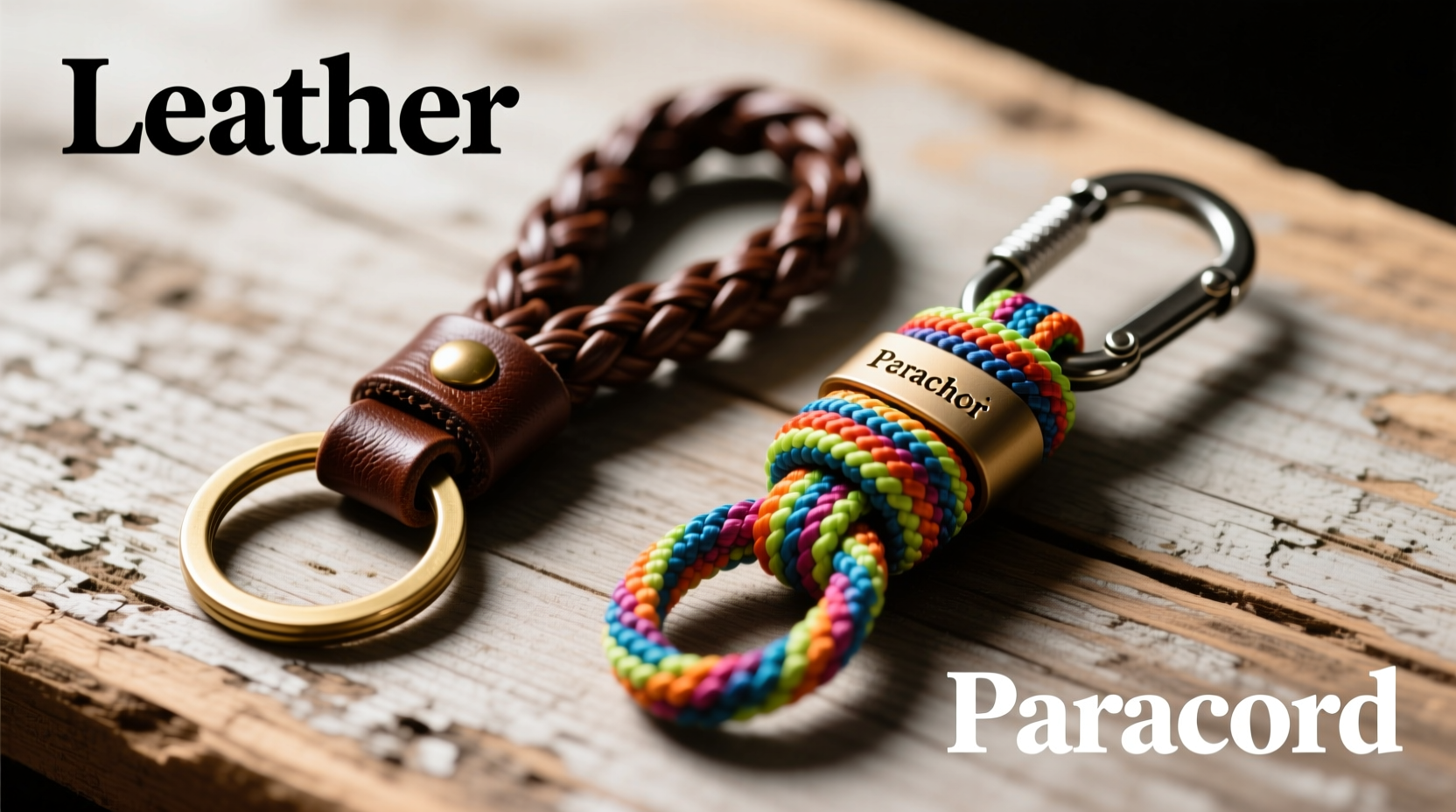
Braided leather, typically made from full-grain or top-grain cowhide, is tightly woven into intricate knots or braids. When properly conditioned, leather resists fraying and maintains tensile strength. However, untreated leather absorbs water, leading to stiffness, cracking, or mold over time. Exposure to sunlight accelerates fading and drying. That said, high-quality vegetable-tanned leather develops a rich patina—evidence of use, not failure.
Paracord (parachute cord), originally designed for military parachute suspension lines, is constructed from nylon with a seven-strand inner core and a tightly braided outer sheath. It’s inherently water-resistant, UV-stable, and highly abrasion-tolerant. Paracord won’t rot, stretch excessively, or degrade under typical urban conditions. Even when nicked or scraped, the braid holds together due to its multi-layer construction.
Tip: For maximum lifespan, avoid leaving any keychain—leather or paracord—exposed to rain or direct sun for prolonged periods.Aesthetic Appeal: Style Evolution Over Time
Appearance matters—not because vanity drives the decision, but because objects we carry reflect our values. A well-made keychain should look good at purchase and improve with age.
Braided leather ages like fine furniture. With regular use and occasional conditioning, it darkens slightly, softens to the touch, and acquires subtle scuffs that tell a story. Each braid pattern—whether fishtail, diamond, or Turk’s head—adds visual texture. When paired with brass or stainless steel hardware, leather keychains project sophistication and artisanal care.
Paracord, by contrast, starts bright and bold. Available in dozens of colors and camo patterns, it appeals to outdoor enthusiasts, preppers, and tactical gear lovers. While it doesn’t develop a “patina” in the traditional sense, it retains color well and shows minimal wear unless subjected to extreme friction. Some users find the synthetic look less refined next to a luxury wallet or watch, though custom weaves can elevate its appearance significantly.
“Leather tells time through touch. Paracord defies time through resilience.” — Marcus Reed, Artisan Leatherworker & Founder of Forge & Thread Co.
Comparative Breakdown: Key Factors Side-by-Side
| Factor | Braided Leather | Paracord |
|---|---|---|
| Material Base | Animal hide (usually cowhide) | Nylon (synthetic) |
| Water Resistance | Low (unless treated) | High |
| UV Degradation | Moderate to high | Low |
| Tensile Strength | High (varies by cut and braid) | Very high (~550 lbs rated) |
| Aesthetic Development | Develops warm patina | Minimal change; retains original look |
| Maintenance Needs | Regular conditioning required | Virtually none |
| Average Lifespan (with care) | 5–10 years | 10+ years |
Maintenance Requirements: Effort Versus Reward
Longevity isn’t just about inherent material properties—it’s also shaped by upkeep. The best product fails without proper care.
Leather demands attention. Every 3–6 months, apply a light coat of leather conditioner to prevent drying. Avoid soaking it in water; if it gets wet, blot dry and air out naturally. Never use heat to speed drying—it causes cracking. Store in a breathable cloth bag when not in use for extended periods.
Paracord needs almost no maintenance. If dirty, wash with mild soap and water, then air dry. Its synthetic fibers resist mildew and staining. Unlike leather, it won’t absorb odors easily. However, frayed ends can be sealed with a quick touch of a lighter flame—carefully—to prevent unraveling.
Tip: Use beeswax on leather braids occasionally to enhance water resistance and add subtle shine.Real-World Example: Two Years in Daily Use
Consider two professionals: Elena, a designer who carries a hand-braided leather keychain, and Jordan, an EMT who uses a military-grade paracord key fob.
Elena’s leather piece started stiff but softened within weeks. After two years, it has deepened in color, fits comfortably in her palm, and complements her minimalist style. She oils it twice a year and stores it indoors. No structural issues—only character.
Jordan’s paracord keychain has survived drops on concrete, exposure to blood and disinfectants, and months clipped to a damp duty belt. It still looks nearly new. Once, he unraveled a few inches to tie a temporary strap for a broken radio mount—a bonus utility leather can’t offer.
Both remain fully functional. But their paths diverge: Elena values beauty born of use; Jordan trusts reliability above all.
Which One Should You Choose? A Practical Checklist
Still undecided? Ask yourself these questions:
- Do I prioritize classic style over utility? → Lean toward leather.
- Am I frequently outdoors, in wet or rough environments? → Paracord is safer.
- Will I remember to maintain it regularly? → If not, skip leather.
- Do I want something that could double as emergency cordage? → Only paracord offers this.
- Is this part of a curated collection or daily carry set? → Match the keychain to your other accessories.
Frequently Asked Questions
Can paracord really last longer than leather?
Yes, in terms of raw durability. Paracord resists environmental damage better and requires no conditioning. While high-end leather can last decades with meticulous care, paracord achieves similar or longer service life with minimal effort.
Does braided leather look cheap over time?
Not if it’s well-made. Low-quality bonded leather may peel or fray. But full-grain braided leather ages gracefully, gaining character without looking worn out. Poor maintenance—not poor design—is usually to blame for deterioration.
Can I combine both materials in one keychain?
Absolutely. Many artisans create hybrid designs—leather cores with paracord wraps, or dual-loop systems that blend aesthetics and function. These offer the best of both worlds but require careful construction to avoid weak junctions.
Final Verdict: Function Meets Philosophy
If longevity were the only factor, paracord wins. Its resistance to water, UV, and physical stress makes it nearly indestructible under normal conditions. Ten-year-old paracord keychains often look as fresh as the day they were made.
But “better” depends on context. If presence, tactility, and evolving beauty matter—if you see your carry items as extensions of identity—then braided leather offers unmatched appeal. It’s not weaker; it’s different. It rewards attention and ages with dignity.
In the end, the choice reflects lifestyle. The adventurer, mechanic, or first-responder will favor paracord. The craftsman, creative professional, or classic dresser may lean toward leather.
💬 What’s on your keyring? Share your experience—have you switched from leather to paracord or vice versa? Your insight could help others make a lasting choice.








