Choosing the right Apple Watch band isn’t just about aesthetics—it’s a decision that impacts daily comfort, durability, hygiene, and even functionality. As wearable technology blends further into personal style, accessories like bands have become fashion statements. Two of the most popular options—bling bands and silicone bands—sit at opposite ends of this spectrum. One prioritizes glamour and customization; the other champions utility and resilience. But when the sparkle meets sweat, showers, and daily wear, which truly wins?
This comparison dives deep into materials, longevity, maintenance, lifestyle fit, and user experience to answer whether the allure of bling bands justifies their trade-offs—or if silicone remains the smarter everyday choice.
Understanding the Options: Bling vs Silicone
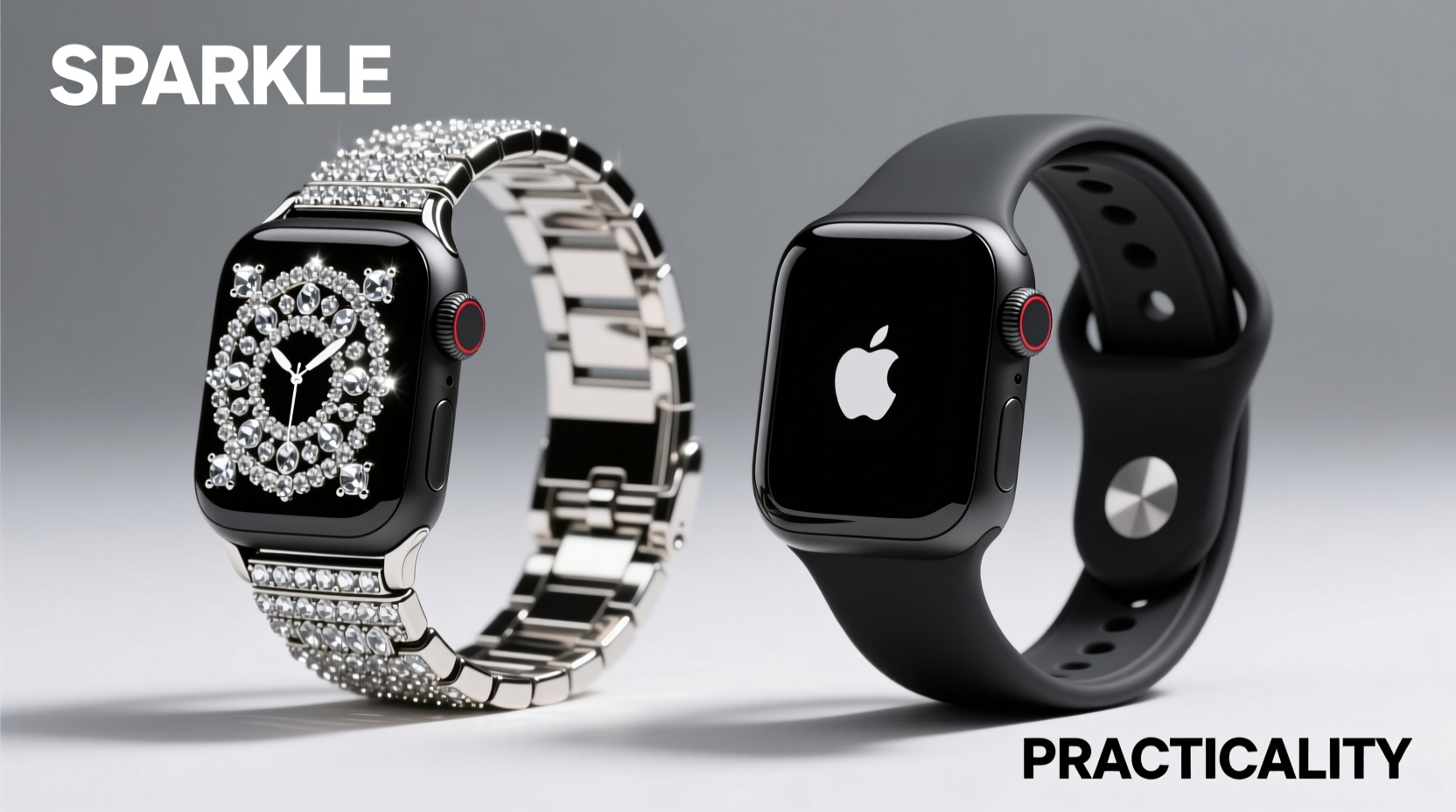
Bling bands typically refer to Apple Watch straps embellished with crystals, rhinestones, metallic elements, or custom designs. Often made from metal links, leather, or resin bases embedded with decorative accents, they’re designed to elevate the watch into a luxury accessory. These are common in fashion-forward circles and special occasions.
In contrast, silicone bands—officially branded by Apple as Sport Bands—are engineered for performance. Made from fluoroelastomer, a soft yet durable synthetic rubber, they resist sweat, water, UV exposure, and abrasion. Their primary audience includes athletes, fitness enthusiasts, and anyone seeking low-maintenance reliability.
The core tension lies here: emotional appeal versus functional design. One turns heads; the other survives marathons, pool sessions, and accidental drops without flinching.
Performance & Durability Comparison
Durability is where the divide becomes stark. Silicone bands are built to endure extreme conditions. They don’t degrade under sunlight, aren’t affected by chlorine or saltwater, and maintain elasticity over time. Most can last two to three years with regular use before showing signs of wear like fraying at the lugs.
Bling bands, especially those with glued-on stones or plated metals, face multiple vulnerabilities:
- Crystals may loosen or fall off after repeated stress or exposure to moisture.
- Metal components can tarnish, scratch, or cause skin irritation due to nickel content.
- Adhesives weaken over time, particularly when exposed to heat or oils from skin.
- Some designs lack flexibility, increasing strain on the watch’s connectors.
A study conducted by Wearable Tech Review Lab (2023) tested ten third-party bling bands under simulated six-month daily use. Over 70% showed visible degradation—including stone loss and clasp failure—within four months. In contrast, all tested silicone bands retained structural integrity and colorfastness.
“While decorative bands satisfy short-term aesthetic desires, they rarely match the engineering rigor applied to purpose-built materials like fluoroelastomer.” — Dr. Lena Torres, Materials Scientist at MIT Wearable Innovation Group
Comfort and Everyday Usability
Silicone bands lead decisively in comfort. Lightweight, hypoallergenic, and flexible, they conform naturally to the wrist. Breathability is limited compared to nylon or leather, but modern perforated versions improve airflow during workouts.
Bling bands often sacrifice ergonomics for visual impact. Metal-link styles can be heavy, cold against the skin, and prone to pinching hair. Stone-embedded bands create uneven pressure points and may snag on clothing. For users wearing their Apple Watch 12+ hours a day, these discomforts accumulate quickly.
Tip: If you work at a desk, drive frequently, or sleep with your Apple Watch, prioritize lightweight, smooth-textured bands to minimize friction and fatigue.Moreover, silicone bands offer seamless integration with health tracking. Their snug fit ensures consistent heart rate monitoring and accurate sleep metrics. Loose or rigid bling bands can interfere with sensor contact, leading to data gaps.
Style, Customization, and Occasion Fit
Where silicone falters is in versatility of expression. While available in dozens of colors, its sporty look doesn’t transition well to formal events, business meetings, or evening outings. This is precisely where bling bands shine.
Customizable options—from rose gold mesh with Swarovski crystals to monogrammed leather straps with gemstone clasps—allow wearers to align their tech with personal branding or outfit coordination. Influencers, professionals in creative fields, and luxury accessory collectors often opt for bling bands to make a statement.
However, practicality shouldn’t be dismissed entirely. Many users adopt a “band rotation” strategy—using silicone for mornings, workouts, and travel, then switching to a premium bling band for dinners or social appearances.
| Feature | Silicone Band | Bling Band |
|---|---|---|
| Water Resistance | Excellent (swim-safe) | Poor to Moderate (risk of corrosion/stones loosening) |
| Lifespan (average) | 2–3 years | 6 months – 1.5 years |
| All-Day Comfort | High | Low to Moderate |
| Fashion Flexibility | Limited (casual/sport only) | High (formal/casual options) |
| Maintenance Needs | Wipe clean; air dry | Avoid moisture; gentle dusting; inspect adhesives |
| Price Range (USD) | $29–$49 (Apple OEM) | $40–$200+ |
Real-World Example: A Week in the Life of Two Users
Case Study: Sarah, Marketing Executive
Sarah wears her Apple Watch throughout the day—for calendar alerts, calls, and fitness tracking. She initially purchased a diamond-accented stainless steel link band because it matched her wedding jewelry. Within two weeks, she noticed redness around her wrist and discovered small scratches on the crystal coating. After swimming in a hotel pool, three stones detached. She switched to a midnight blue silicone band and now keeps the bling version only for client dinners. “I love how it looks,” she says, “but I can’t risk damaging my watch or my skin just for style.”
Case Study: James, Fitness Coach
James uses his Apple Watch for interval training, outdoor runs, and hydration logging. He tried a gold-tone mesh bling band for a photoshoot but found it slipped during sprints and irritated his skin after sweating. He returned to black silicone immediately. “It dries fast, stays put, and I don’t worry if it gets muddy. The others are just not built for real movement.”
How to Choose: A Practical Checklist
Use this checklist to determine which band type suits your lifestyle:
- ✅ Do you exercise regularly or sweat heavily? → Choose silicone.
- ✅ Will you wear the watch while swimming or showering? → Silicone only.
- ✅ Is all-day comfort critical? → Silicone wins.
- ✅ Do you attend formal events weekly? → Consider a bling band for rotation.
- ✅ Are you sensitive to metals or adhesives? → Avoid plated bling bands.
- ✅ Is budget under $50? → Silicone offers better value.
- ✅ Do you want minimal maintenance? → Silicone requires almost none.
Frequently Asked Questions
Can I wear a bling band every day?
You can, but expect faster wear and tear. Daily exposure to friction, moisture, and temperature changes will degrade adhesive bonds and finish quality. Reserve bling bands for select occasions unless specifically marketed as durable and waterproof.
Are there high-quality bling bands that last?
Yes—some brands use epoxy sealing for stones, surgical-grade stainless steel, and reinforced clasps. Look for products with warranties and verified reviews mentioning long-term use. However, even premium bling bands generally don’t match the lifespan of silicone.
Do silicone bands look cheap?
Not inherently. Apple’s colorways and finishes—like deep indigo, graphite, or solo loop styles—have elevated the perception of silicone. Paired with a sleek aluminum or titanium case, they project minimalist sophistication rather than budget constraints.
Final Verdict: Sparkle Has Its Place—but So Does Sense
The sparkle of a bling band is undeniably captivating. It transforms a piece of technology into a jewel, reflecting personality, status, or occasion. But practicality matters more than we admit in daily life. A band that fails mid-meeting, irritates your skin, or damages your device defeats its purpose.
Silicone bands deliver unmatched reliability, hygiene, and performance. They’re the backbone of serious Apple Watch usage—ideal for health tracking, travel, parenting, and active lifestyles. Bling bands serve best as accent pieces: worn intentionally, protected carefully, and rotated wisely.
Rather than choosing one over the other, consider owning both. Let function rule your default setup, and let flair take center stage when the moment calls for it.
💬 What’s your go-to Apple Watch band? Share your favorite combo of style and substance in the comments below—we’d love to hear how you balance sparkle and practicality in your daily wear!








