Every morning, millions of people pick up a small object that most never think twice about—their toothbrush. Yet this simple tool plays a surprisingly large role in the global plastic waste crisis. With over 3.5 billion plastic toothbrushes discarded annually in the United States alone—enough to circle the Earth four times—consumers are increasingly turning to alternatives like bamboo toothbrushes. But does switching from plastic to bamboo truly make an environmental difference, or is it just another feel-good trend with minimal impact?
The answer isn’t as straightforward as marketing campaigns suggest. While bamboo toothbrushes offer clear advantages in biodegradability and raw material sourcing, their overall environmental footprint depends on factors like production methods, transportation, bristle composition, and consumer behavior. To understand which option genuinely benefits the planet, we need to examine the full lifecycle of both types—from manufacturing to disposal.
Material Sourcing: Renewable vs Fossil-Based
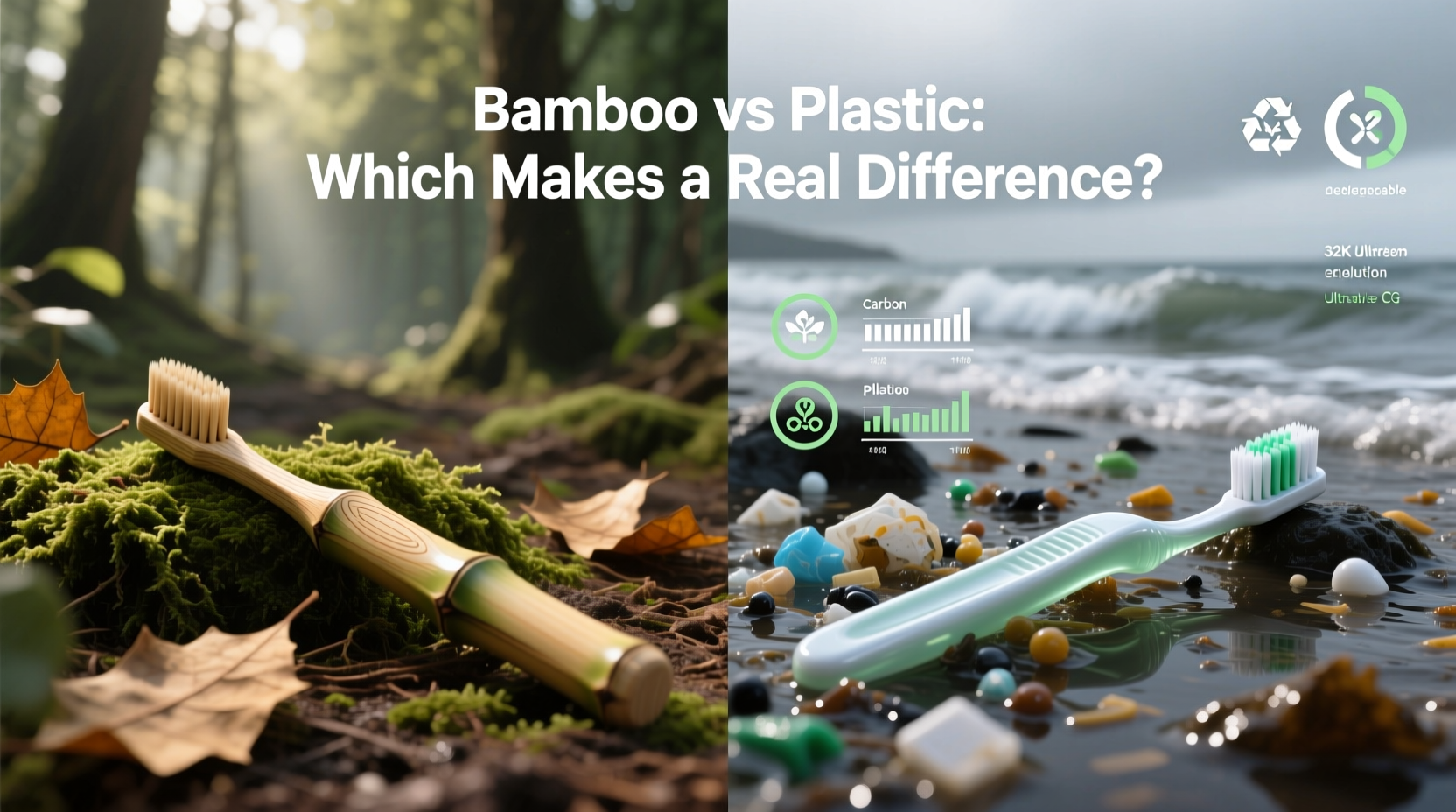
The first major distinction lies in where each toothbrush begins. Conventional plastic toothbrushes are typically made from polypropylene or nylon, derived from petroleum—a non-renewable resource extracted through environmentally damaging processes. The refining and processing of these plastics release greenhouse gases and contribute to long-term pollution.
In contrast, bamboo toothbrush handles are crafted from moso bamboo, one of the fastest-growing plants on Earth. Moso bamboo can grow up to 91 cm (3 feet) per day and requires no irrigation, pesticides, or fertilizers. It regenerates from its root system after harvesting, eliminating the need for replanting. This rapid renewability gives bamboo a significant edge in sustainable sourcing.
“Bamboo’s growth rate and low input requirements make it one of the most sustainable biomaterials available today.” — Dr. Lin Mei, Environmental Scientist, Institute for Sustainable Materials
However, not all bamboo is sourced responsibly. Some manufacturers harvest bamboo from ecologically sensitive areas or use unsustainable farming practices. Certifications like FSC (Forest Stewardship Council) or OEKO-TEX can help verify ethical sourcing, but they’re not universally applied in the bamboo toothbrush market.
Tip: Look for bamboo toothbrushes with third-party sustainability certifications to ensure responsible sourcing.Lifecycle Analysis: From Factory to Landfill
A true environmental assessment must go beyond materials and consider the entire product lifecycle: manufacturing, distribution, usage, and end-of-life.
Manufacturing Energy and Emissions
Plastic toothbrushes require high-energy molding processes, often powered by fossil fuels. The extrusion and shaping of nylon bristles also generate emissions. Most plastic brushes are manufactured in Asia and shipped globally, adding to their carbon footprint.
Bamboo toothbrushes generally require less energy during production. The natural strength and rigidity of bamboo reduce the need for chemical treatments or complex machinery. However, some brands apply lacquers or dyes to enhance appearance, which can offset these gains. Additionally, while bamboo grows quickly, cutting, shaping, sanding, and packaging still consume resources.
Transportation Impact
Many bamboo toothbrushes are also produced in China or Southeast Asia, meaning they travel similar distances as plastic versions. If both products ship from the same region to Europe or North America, the transportation emissions may be nearly identical. Local production would reduce this impact, but few domestic bamboo brush manufacturers exist at scale.
Usage Phase
Both types last about three months under normal use. Neither offers a significant advantage here, though some users report bamboo handles can degrade faster in humid environments if not dried properly.
End-of-Life Disposal
This is where the most dramatic difference emerges. Plastic toothbrushes do not biodegrade. They fragment into microplastics over decades, polluting oceans and entering food chains. Less than 0.01% are recycled due to mixed materials (handle + bristles), contamination, and lack of infrastructure.
Bamboo handles, when separated from bristles, can fully compost in soil within six months under ideal conditions. Industrial composting accelerates this process. However, the bristles remain a challenge—most bamboo brushes still use nylon-6 or BPA-free nylon, which are not biodegradable. A few brands now offer plant-based bristles (e.g., castor bean oil), but these are not yet widely adopted or easily separable.
Comparative Environmental Impact Table
| Factor | Plastic Toothbrush | Bamboo Toothbrush |
|---|---|---|
| Raw Material Source | Petroleum (non-renewable) | Moso bamboo (renewable) |
| Production Energy | High (molding, extrusion) | Moderate (manual shaping) |
| Transportation Footprint | High (global shipping) | High (similar origins) |
| Biodegradability | No (breaks into microplastics) | Handle: Yes; Bristles: Usually No |
| Recyclability | Very low (mixed materials) | Low (bristles must be removed) |
| Average Lifespan | 3 months | 3 months |
| Estimated Annual Waste (US) | ~3.5 billion units | Growing, but still minor share |
Real-World Example: One Town’s Switch to Bamboo Brushes
In 2021, the coastal town of Mendocino, California launched a community initiative called “Brush Green.” Residents were offered discounted bamboo toothbrushes and educational workshops on proper disposal. Over two years, the program distributed 12,000 bamboo brushes and collected data on waste reduction.
Local waste audits showed a 7% drop in non-recyclable bathroom waste at the transfer station. More importantly, post-program surveys revealed that 68% of participants began examining other single-use plastics in their homes—triggering broader behavioral changes. While the direct impact of 12,000 brushes was modest, the ripple effect was significant.
One participant, Maria T., shared: “I didn’t think a little brush could matter. But once I started composting the handle and recycling the bristles, I realized how much waste I’d ignored. Now I carry a metal straw and refill my shampoo bottles too.”
This case illustrates a key truth: individual actions gain power when they shift mindsets. The bamboo toothbrush wasn’t a magic solution—but it served as a tangible entry point into sustainable living.
Are Bamboo Toothbrushes Always Better?
Not automatically. Their environmental benefit hinges on several conditions:
- Bristle type: Nylon bristles defeat the purpose of a compostable handle. Opt for brushes with clearly labeled bio-based bristles or those designed for easy removal.
- Proper disposal: Throwing a bamboo brush into a landfill negates its biodegradability. Anaerobic conditions prevent decomposition and may produce methane.
- Consumer longevity: If users replace bamboo brushes more frequently due to warping or mold, the advantage diminishes.
- Greenwashing: Some brands exaggerate claims like “100% biodegradable” when only the handle qualifies.
Moreover, scaling bamboo production without oversight risks monoculture farming, biodiversity loss, and soil depletion—issues already observed in parts of southern China where demand has surged.
Step-by-Step Guide: How to Maximize Your Toothbrush’s Eco-Impact
Whether you choose bamboo or stick with plastic temporarily, follow this timeline to minimize harm:
- Week 1: Research Brands
Select a toothbrush with transparent sourcing, recyclable or bio-based bristles, and minimal packaging. - Day of Purchase: Check Components
Ensure bristles can be removed (often with pliers) before composting the handle. - Daily Use: Store Properly
Keep your brush in a dry, ventilated area to prevent bacterial growth and handle degradation. - After 3 Months: Remove Bristles
Use needle-nose pliers to pull out the nylon bundle. Recycle with hard plastics if facilities allow. - Dispose of Handle Sustainably
Compost at home (if uncontaminated) or send to an industrial composter. Never landfill. - Reflect and Scale
Consider other dental products: Are your floss containers plastic? Is your toothpaste in recyclable tubes?
Checklist: Choosing a Truly Sustainable Toothbrush
- �� Handle made from certified sustainable bamboo
- ✅ Bristles labeled as bio-based (e.g., castor bean) or easily removable
- ✅ Minimal, plastic-free packaging (cardboard preferred)
- ✅ Transparent supply chain and manufacturing location
- ✅ No toxic dyes, varnishes, or chemical treatments
- ✅ End-of-life instructions provided by brand
Frequently Asked Questions
Can I compost a bamboo toothbrush whole?
No. While the handle will break down, the nylon bristles will not. They must be removed first using pliers or tweezers. Once separated, the bristles should be recycled or disposed of as non-biodegradable waste.
Do bamboo toothbrushes clean as well as plastic ones?
Yes. The cleaning effectiveness depends on bristle arrangement and stiffness, not the handle material. Most bamboo brushes use the same ADA-approved bristle patterns as conventional models.
What if I don’t have access to composting?
If industrial composting isn’t available, consider mailing the handle to a specialized composting service, or store used handles until you can dispose of them properly. As a last resort, some municipalities accept bamboo in yard waste programs—check locally.
Conclusion: Small Change, Big Ripple
The question isn’t whether one bamboo toothbrush saves the planet—it won’t. But when millions make the switch, supported by proper disposal and conscious consumption, the collective impact becomes undeniable. More importantly, such choices reshape habits and raise awareness about the hidden costs of everyday items.
Bamboo toothbrushes aren’t a perfect solution, but they represent progress. They challenge the norm of disposability and open conversations about circular design, material innovation, and personal responsibility. In a world drowning in plastic, sometimes the most powerful act is choosing differently—even in small ways.
The real environmental difference isn’t just in the brush itself, but in what it inspires next.
💬 Ready to make the switch? Share your experience with bamboo toothbrushes or tips for reducing bathroom waste in the comments below. Let’s build a cleaner future—one brush at a time.








