
When preparing raw meat in the kitchen, the choice of cutting board can significantly impact food safety. Many home cooks assume plastic is the cleanest option, but natural materials like wood and bamboo are increasingly popular. The real question isn't just durability or aesthetics—it's about sanitation. Which material resists bacterial contamination better when slicing chicken, beef, or pork? The answer isn't as straightforward as it seems, but science and expert testing provide clear guidance.
Both bamboo and hardwood cutting boards have unique properties that affect how they harbor bacteria, absorb moisture, and respond to cleaning. While both are porous to some degree, their structure, density, and maintenance requirements influence hygiene differently. Understanding these differences helps prevent cross-contamination and supports safer meal preparation.
Understanding Bacterial Contamination on Cutting Boards
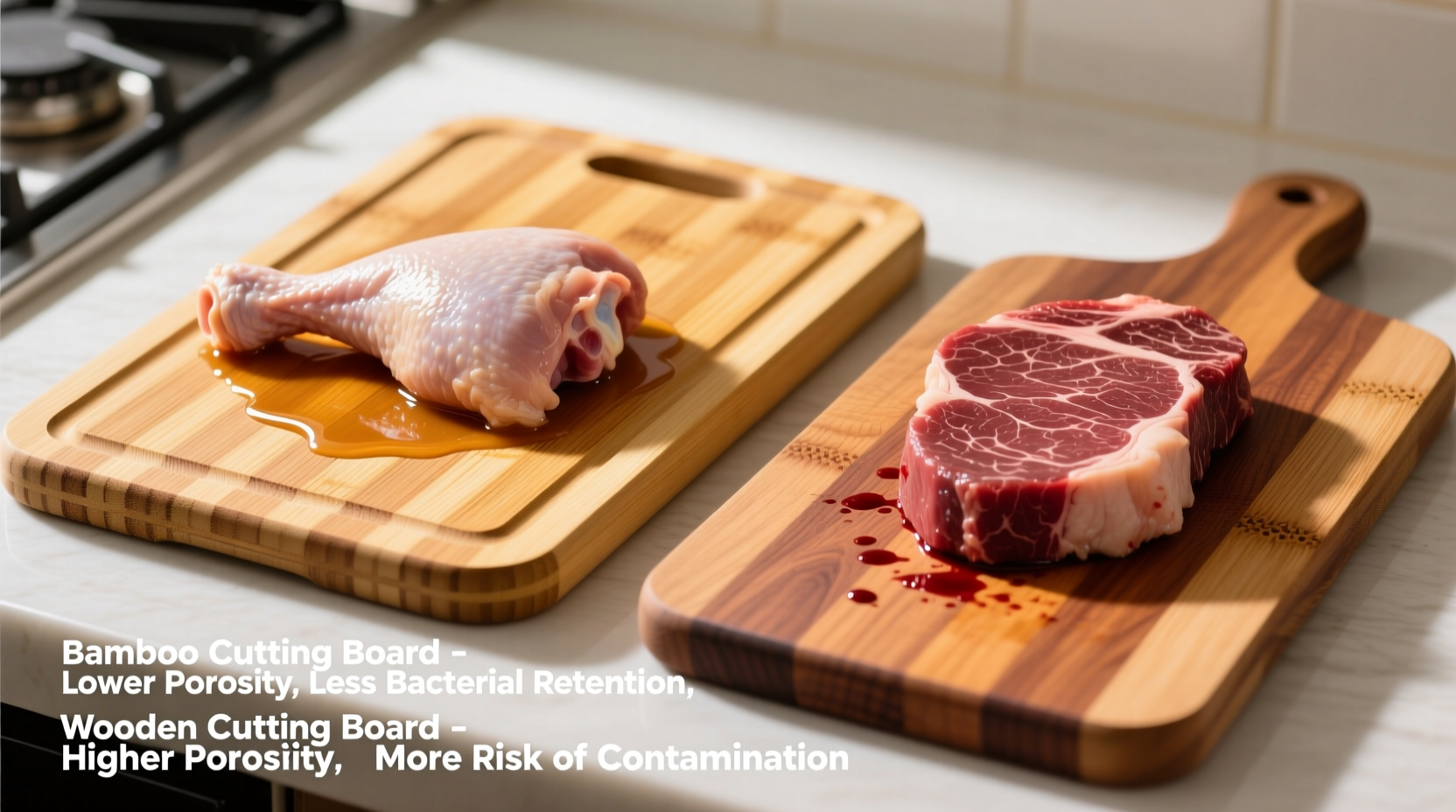
Raw meat—especially poultry—is a common carrier of harmful bacteria such as Salmonella, E. coli, and Listeria. When meat juices seep into microscopic grooves on a cutting surface, pathogens can survive even after wiping. This makes the porosity and surface integrity of a cutting board critical factors in food safety.
Contrary to popular belief, research has shown that wood and bamboo may actually be more resistant to bacterial growth than plastic under certain conditions. A landmark study by the University of Wisconsin-Madison found that wooden boards, despite being porous, tend to \"self-clean\" to some extent: bacteria that enter the wood fibers often die due to lack of moisture and nutrients.
“Wood has natural antimicrobial properties. Once bacteria penetrate the surface, many don’t survive beyond a few hours.” — Dr. Dean Cliver, Professor Emeritus of Food Safety, UC Davis School of Veterinary Medicine
This doesn’t mean wood is foolproof. Deep knife scars, improper drying, or infrequent cleaning can still create breeding grounds for pathogens. The key lies not only in the material but also in how well it’s maintained.
Bamboo vs. Wood: Structural Differences That Matter
Though often grouped together, bamboo and traditional hardwoods (like maple, walnut, or cherry) differ fundamentally in composition and performance.
- Bamboo is a grass, not a tree. It’s compressed into dense slabs using adhesives, creating a hard, smooth surface.
- Hardwood comes from slow-growing trees and is typically end-grain or edge-grain constructed, offering resilience and self-healing qualities.
Bamboo’s high density makes it less likely to show knife marks quickly, but its manufacturing process introduces variables. Most commercial bamboo boards use formaldehyde-based glues to bind strips together. These adhesives can degrade over time, especially with repeated wetting, potentially creating micro-gaps where bacteria hide.
In contrast, solid hardwood boards—particularly those made from hard maple—are prized for their tight grain and ability to close around knife edges. End-grain construction, where wood fibers stand upright, allows the board to absorb impact without splitting, reducing surface damage that could trap contaminants.
Tip: Avoid bamboo boards labeled “laminated” or “engineered” if you prioritize food safety—they may contain questionable binders.Sanitation Face-Off: How Bamboo and Wood Handle Raw Meat
To determine which material is more sanitary, consider three criteria: porosity, bacterial retention, and ease of cleaning.
| Factor | Bamboo | Hardwood (e.g., Maple) |
|---|---|---|
| Porosity | Low surface porosity; tightly compressed fibers | Moderate; but deep penetration leads to bacterial die-off |
| Bacterial Survival | Can persist in glue lines if damaged | Bacteria often die within hours inside wood |
| Cleaning Efficiency | Resists warping but sensitive to prolonged soaking | Requires hand washing and oiling; warps if soaked |
| Kitchen Safety (Raw Meat) | Good initially, degrades over time with cracks | Excellent with proper care and maintenance |
Bamboo performs well in early stages—its smooth surface resists initial absorption of meat juices. However, once knife cuts accumulate or glue seams weaken, it becomes harder to sanitize thoroughly. Unlike solid wood, bamboo cannot be sanded down multiple times without exposing underlying layers or adhesive residues.
Hardwood, while requiring more attention, offers long-term reliability. Its natural hygroscopic nature draws moisture—and any microbes—into the core, where oxygen and nutrient limitations kill them off. This phenomenon, known as the “wound response,” is unique to natural wood and contributes to its surprising sanitation advantage.
Real-World Example: A Home Kitchen Test
Sarah, a home cook in Portland, used both a bamboo and a hard maple board side by side for six months while preparing weekly meals involving raw chicken. She followed standard cleaning practices: rinsing with hot water, mild soap, and air-drying upright.
After three months, she noticed small dark spots along knife grooves on the bamboo board—signs of trapped moisture and possible mold. The maple board showed visible knife marks but no discoloration. At the six-month mark, an at-home ATP swab test (used to detect organic residue) revealed higher microbial activity on the bamboo surface, particularly in worn areas.
She sanded the maple board lightly and re-oiled it, restoring its surface. The bamboo board, however, had begun to delaminate at one corner and was retired. Her experience reflects a common trend: bamboo starts strong but may degrade faster under heavy use, compromising hygiene.
Best Practices for Sanitizing Natural Cutting Boards
No matter the material, proper maintenance is essential when handling raw meat. Follow this step-by-step routine after each use:
- Scrape and rinse: Remove food debris with a bench scraper, then rinse under hot running water.
- Wash with soap: Use a soft sponge and dish soap. Avoid soaking either bamboo or wood.
- Sanitize: Apply a solution of 1 tablespoon white vinegar or hydrogen peroxide per cup of water. Let sit 5 minutes.
- Rinse and dry: Rinse again and towel-dry immediately. Stand upright to ensure full airflow.
- Deep clean weekly: Sprinkle coarse salt, rub with half a lemon, then rinse. This removes odors and disinfects naturally.
- Oil monthly (wood only): Use food-grade mineral oil to condition hardwood and prevent cracking.
Checklist: Choosing a Sanitary Board for Raw Meat
- ✅ Made from solid, non-laminated material
- ✅ Tight grain or end-grain construction
- ✅ Free from chemical adhesives or formaldehyde
- ✅ Smooth surface with minimal seams
- ✅ Sized appropriately for your prep space
- ✅ Easy to store vertically for drying
- ✅ Comes with care instructions
When shopping, look for certifications like FDA compliance or FSC (Forest Stewardship Council) labeling, which indicate responsible sourcing and safety standards. For maximum hygiene, consider having separate boards for meats, vegetables, and breads—color-coded or labeled to avoid confusion.
Frequently Asked Questions
Can I use bleach to sanitize my wooden cutting board?
A diluted bleach solution (1 teaspoon of unscented chlorine bleach per quart of water) can be used occasionally for disinfection. Apply, wait 5 minutes, then rinse thoroughly and dry. Do not use frequently, as bleach can degrade wood fibers over time.
Is bamboo more eco-friendly than wood?
Bamboo grows rapidly and is renewable, making it environmentally appealing. However, transportation emissions and chemical binders used in processing can offset its sustainability benefits. Locally sourced hardwood from responsibly managed forests may have a lower overall environmental impact.
How often should I replace my cutting board?
Replace any board—bamboo or wood—when it develops deep grooves, cracks, warping, or persistent odors that won’t wash out. With proper care, a quality hardwood board can last 5–10 years. Bamboo boards typically last 2–5 years depending on use.
The Verdict: Which Is More Sanitary?
For handling raw meat, **hardwood cutting boards—specifically those made from hard maple with end-grain construction—are more sanitary than bamboo in the long run**, provided they are properly maintained.
Bamboo offers an attractive, durable surface initially and performs well for light-duty tasks. But its reliance on adhesives and vulnerability to delamination over time reduce its hygiene reliability, especially under frequent exposure to raw meat juices and repeated washing.
Hardwood, while requiring more diligent care, leverages natural biological advantages. Its ability to draw in and neutralize bacteria, combined with the possibility of rejuvenation through sanding and oiling, makes it a superior choice for serious food preparation.
The bottom line: sanitation isn’t just about the material—it’s about consistency in cleaning, storage, and upkeep. A neglected hardwood board can become a hazard, while a well-maintained bamboo one can serve safely for years. But given equal care, wood outperforms bamboo in both safety and longevity.
Final Recommendations for Safe Food Handling
Ultimately, the safest kitchen isn’t defined by a single tool but by habits. Whether you choose bamboo or wood, follow these principles:
- Always wash hands and surfaces before and after handling raw meat.
- Use separate boards for different food categories to prevent cross-contamination.
- Dry boards completely after washing—moisture is the enemy of sanitation.
- Inspect regularly for wear and address damage early.
- Invest in quality. A well-made board pays off in safety and durability.
“The best cutting board is the one you’re willing to care for properly. No material is inherently ‘safe’ without good habits.” — Dr. Benjamin Chapman, Food Safety Specialist, North Carolina State University🚀 Ready to upgrade your kitchen safety? Assess your current cutting board today—check for cracks, odors, and wear. If it’s past its prime, consider switching to a high-quality hardwood board and start a consistent maintenance routine. Share your experience or ask questions in the comments below to help others make informed choices!









