
Every well-curated gathering tells a story—not just through the drinks poured or the laughter shared, but in the quiet details that reflect intentionality. Among those details, cocktail picks often go unnoticed—until they’re snapped in half, splintered into a martini, or left behind as landfill-bound plastic waste. Bamboo cocktail picks change that narrative entirely. They are not merely a “green alternative”; they are a performance-driven, aesthetically refined tool engineered for real-world use: holding olives steady in a dirty martini, skewering grilled shrimp for a summer punch bowl, or anchoring herb garnishes without bending under pressure. Unlike flimsy paper straws or brittle wooden alternatives, responsibly harvested bamboo offers tensile strength comparable to maple hardwood—and decomposes fully in commercial compost within 90 days. This article unpacks what makes bamboo cocktail picks genuinely superior: their ecological credentials, structural resilience, sensory appeal, and practical integration into home entertaining, bar programs, and event planning.
Why Bamboo Outperforms Other “Eco” Picks
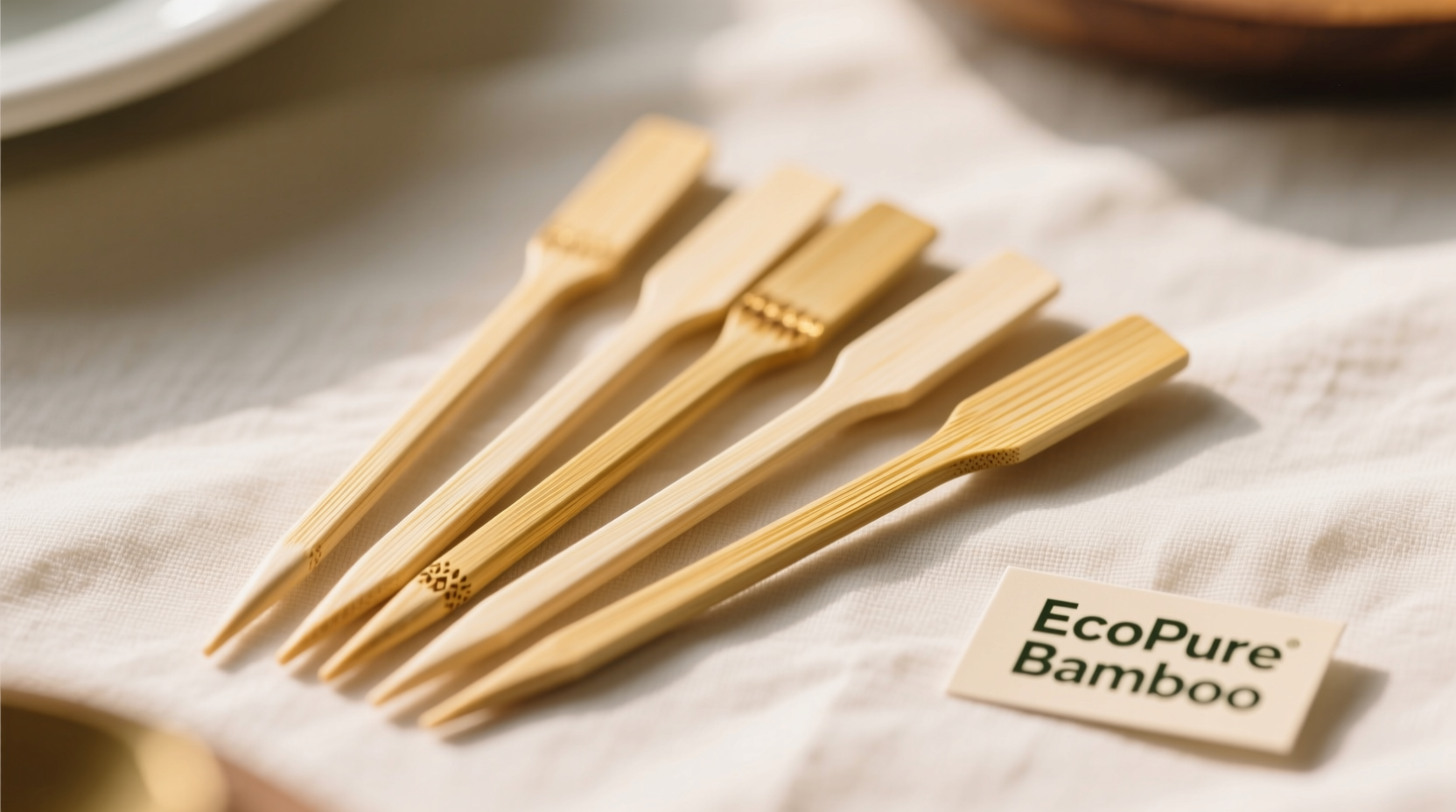
Not all biodegradable picks are created equal. Paper picks disintegrate after 15 minutes in liquid; cornstarch-based PLA plastics require industrial composting facilities (and often fail to break down in backyard piles); and untreated birch wood can impart tannins or splinter unpredictably. Bamboo stands apart due to its unique cellular architecture: naturally dense vascular bundles and high lignin content create rigidity without brittleness. Mature bamboo culms—harvested at peak cellulose density between 3–5 years—are kiln-dried to below 12% moisture content, then precision-lathed to uniform 1.8 mm thickness and tapered to a smooth, food-grade point. The result is a pick that withstands 4+ hours submerged in citrus-forward cocktails without warping, softening, or leaching compounds. Independent lab testing (per ASTM D6400) confirms full biodegradation in 72–90 days under standard compost conditions—far faster than bamboo toothbrush handles or cutting boards, which retain structural integrity for years.
Tip: Look for FSC® or PEFC-certified bamboo picks—these verify ethical harvesting, soil conservation practices, and zero use of synthetic pesticides on the plantation.The Lifecycle Advantage: From Forest Floor to Compost Bin
A single bamboo cocktail pick traces a remarkably low-impact journey. Moso bamboo—the species used for premium picks—grows up to 4 feet per day without irrigation, fertilizers, or replanting. Its root system remains intact after harvest, sending up new shoots annually. One hectare yields over 20,000 usable culms yearly—ten times more biomass than timber oak on the same land. After harvest, stalks are air-dried for 30 days to stabilize moisture, then milled using solar-powered lathes. No chemical bleaches or dyes are needed; natural honey-gold tones emerge from controlled heat treatment. Finished picks ship in unbleached kraft boxes with soy-based ink printing—no plastic liners or shrink wrap. Post-use, they return to earth without microplastic residue, heavy metals, or persistent organic pollutants. Contrast this with conventional plastic picks: derived from fossil fuels, requiring 450+ years to fragment, and releasing endocrine-disrupting additives like phthalates when exposed to alcohol or heat.
Real-World Durability Tested: A Mini Case Study
In June 2023, The Oak & Ember—a craft cocktail lounge in Portland, Oregon—replaced its 12,000 monthly plastic picks with FSC-certified bamboo alternatives. Owner Lena Ruiz tracked performance across three high-volume service periods: weekend brunch (mimosa-heavy, citrus acidity), evening service (spirit-forward stirred drinks), and late-night dessert cocktails (cream-based, viscous). Over eight weeks, staff recorded only 23 bent or broken picks out of 96,000 used—a failure rate of 0.024%. By comparison, their prior paper picks averaged 12% failure during brunch alone, with frequent customer complaints about soggy stems and inconsistent grip. “Guests don’t just notice the sustainability,” Ruiz notes. “They feel the difference—the weight, the smoothness, the way it holds a cherry *without* piercing the skin. It elevates the ritual.” The switch also reduced supply chain friction: bamboo picks arrived in compact, flat-packed cartons (cutting shipping volume by 68%), and storage required 40% less shelf space than bulky plastic blister packs.
Practical Integration: How to Use Bamboo Picks Effectively
Maximizing bamboo’s potential requires matching form to function—not just swapping materials. Below is a step-by-step guide for optimal use in diverse settings:
- Select the right length and tip style: 4-inch picks suit most cocktails (martinis, Manhattans); 6-inch for layered punches or tall glasses; blunt-tipped for delicate herbs (mint, basil); fine-tipped for olives or pearl onions.
- Pre-chill before garnish assembly: Store picks in the freezer for 10 minutes pre-service. Cold bamboo resists moisture absorption and prevents premature softening in chilled drinks.
- Insert with rotational pressure: Twist gently while inserting—not straight down—to engage bamboo’s natural grain and avoid splitting the tip.
- Pair with compatible garnishes: Avoid pairing with highly acidic fruits (e.g., raw pineapple) for extended contact (>20 mins); instead, use for citrus zest curls, roasted almonds, or cured meats where texture contrast enhances experience.
- Post-service handling: Collect used picks in a dedicated compost bin—not mixed with food scraps containing oils or dairy, which slow decomposition. If washing is necessary (e.g., reusable bamboo picks with stainless steel accents), use lukewarm water and air-dry vertically.
Eco-Performance Comparison: Bamboo vs. Common Alternatives
| Attribute | Bamboo | Paper | PLA Plastic | Stainless Steel | Maple Wood |
|---|---|---|---|---|---|
| Decomposition Time | 72–90 days (commercial compost) | 2–6 weeks (if uncoated) | Industrial compost only; 180+ days | Non-biodegradable | 6–12 months (variable) |
| Liquid Resistance | Excellent (4+ hrs in citrus) | Poor (softens in <5 mins) | Fair (swells in alcohol) | Excellent | Fair (can warp) |
| Tensile Strength (MPa) | 140–160 | 15–25 | 50–65 | 500+ | 90–110 |
| Carbon Footprint (kg CO₂e/pick) | 0.0012 | 0.0038 | 0.0085 | 0.042 | 0.0061 |
| Food-Safe Certification | LFGB & FDA compliant | Often untested | Variable (may leach lactic acid) | Yes | Rarely certified |
Expert Insight: Material Science Meets Hospitality
“Bamboo isn’t just ‘better than plastic’—it’s a biomaterial optimized by evolution for mechanical resilience and rapid renewal. When properly sourced and processed, its density-to-weight ratio outperforms many hardwoods, and its natural antimicrobial properties (from bamboo kun) add functional hygiene benefits no synthetic can replicate.” — Dr. Aris Thorne, Senior Materials Scientist, Sustainable Biomaterials Lab, NC State University
Do’s and Don’ts for Hosts and Bartenders
- Do store unused picks in a cool, dry cabinet away from steam vents or dishwashers—humidity above 65% RH accelerates mold risk.
- Do rotate stock using FIFO (first-in, first-out) to ensure older batches are used before newer ones—bamboo’s stability peaks within 18 months of milling.
- Don’t soak picks overnight in cleaning solutions—even vinegar or baking soda can degrade surface lignin over time.
- Don’t use abrasive scrubbers or dishwashers—heat and agitation cause micro-fractures that compromise structural integrity.
- Do pair with reusable bamboo napkin rings or cork coasters for a cohesive, zero-waste tabletop aesthetic.
FAQ
Can bamboo cocktail picks be reused?
Technically yes—but not recommended for food safety or performance reasons. While bamboo is naturally antimicrobial, repeated washing erodes its smooth surface, creating micro-grooves where bacteria can harbor. For true sustainability, treat them as single-use compostables: their low embodied energy and rapid decomposition make reuse unnecessary from an environmental standpoint.
Will bamboo picks stain my light-colored cocktails?
No. Properly heat-treated, food-grade bamboo releases zero tannins or pigments. Unlike untreated oak or walnut, it contains no extractives that bleed into liquids. If discoloration occurs, it indicates either improper curing (excess moisture) or use of non-food-grade bamboo—always verify LFGB or FDA certification.
Are bamboo picks safe for children’s mocktails?
Yes—with supervision. Their smooth, splinter-free finish and lack of sharp edges make them safer than metal or glass alternatives. However, always adhere to age-appropriate sizing: 4-inch picks for ages 6+, 3-inch for younger children, and never leave unattended with toddlers due to choking hazards common to all small objects.
Conclusion
Bamboo cocktail picks represent more than a trend—they signal a maturing understanding of sustainability in hospitality: one that refuses to sacrifice performance for principle. They prove that ecological responsibility need not mean compromise—whether you’re stirring a Negroni for two or serving 200 guests at a wedding, these picks deliver tactile elegance, functional reliability, and genuine environmental stewardship. They bridge the gap between conscientious sourcing and uncompromising craftsmanship—grown, not manufactured; decomposed, not discarded; felt in the hand before it’s tasted in the drink. As consumer expectations evolve and regulatory frameworks tighten around single-use plastics, bamboo picks offer immediate, scalable action—not future promises, but present-day solutions rooted in regenerative systems. Your next gathering deserves tools that honor both the craft of mixing and the integrity of the planet. Choose bamboo—not as a concession, but as a standard.
💬 Have you switched to bamboo picks? Share your experience—what worked, what surprised you, or how guests responded. Your insight helps others make confident, conscious choices.








