Silk scarves have long danced between timeless elegance and fleeting trend. Once the signature accessory of mid-century Hollywood icons and European aristocrats, they faded into vintage nostalgia during the minimalism wave of the 2010s. But as 2025 unfolds, a quiet revolution is taking place on city sidewalks from Tokyo to Milan: silk scarves are reappearing—not tucked neatly into handbags, but boldly tied around necks, wrists, belts, and even bike handles. The evidence is undeniable. Street style photographers are capturing more silk than ever before, luxury labels are reviving archival prints, and Gen Z influencers are pairing vintage Hermès with oversized denim jackets. This isn’t just a nostalgic echo—it’s a full-scale reclamation of an undervalued classic.
The Return of Quiet Luxury and Tactile Elegance
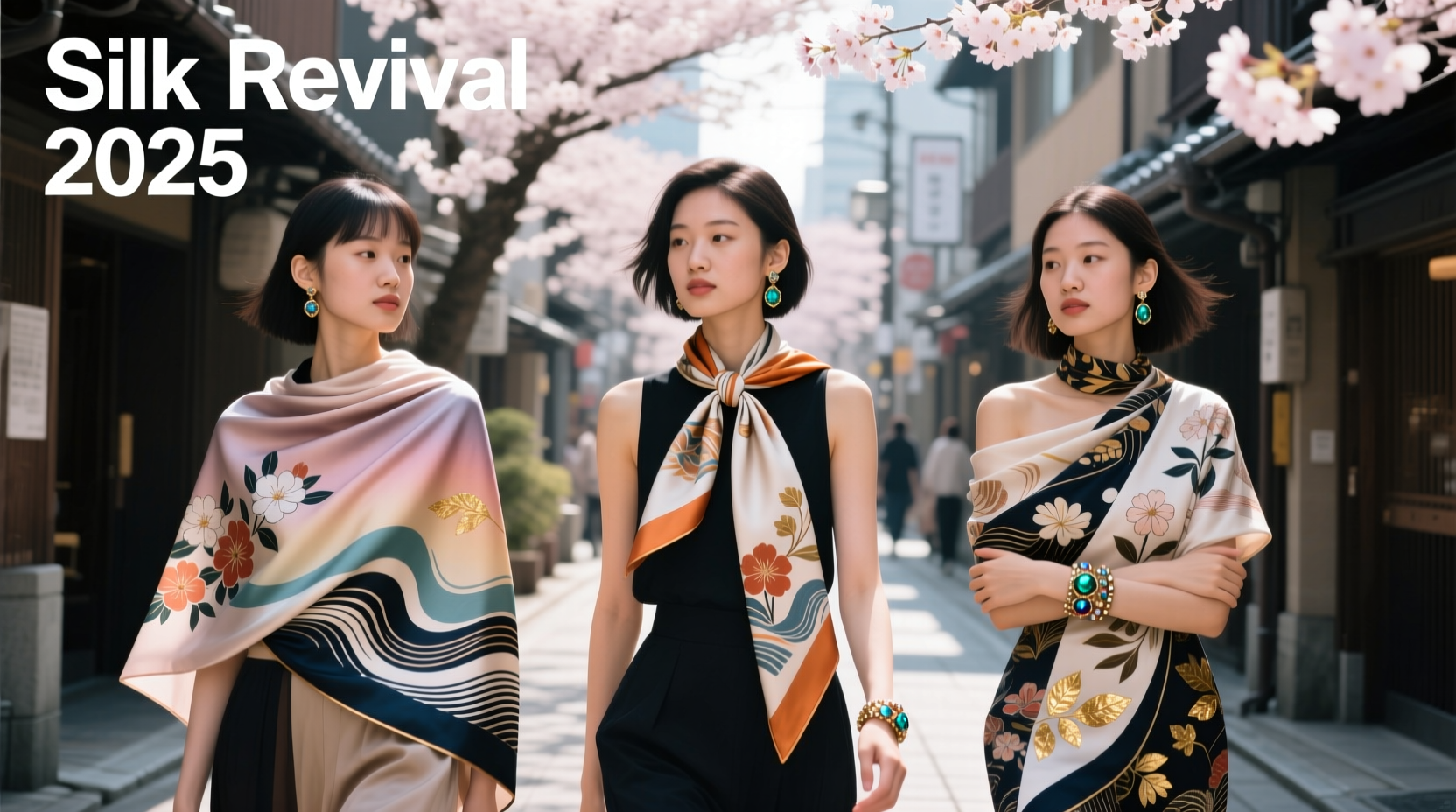
In a cultural shift away from logo-heavy branding, consumers are embracing what fashion insiders call “quiet luxury”—subtle sophistication rooted in material quality and craftsmanship. Silk, with its luminous sheen, whisper-light drape, and natural temperature regulation, fits perfectly within this ethos. Unlike synthetic alternatives, real silk feels alive against the skin, responding to movement and light in ways that elevate even the most casual outfit.
Fashion historian Dr. Lila Moreau notes, “We’re seeing a renewed appreciation for tactile experiences after years of athleisure dominance. People want to feel their clothes again. Silk scarves offer sensory richness without excess.”
This tactile revival coincides with growing consumer awareness about sustainable consumption. A single high-quality silk scarf can last decades when cared for properly, making it a responsible alternative to fast-fashion accessories. As resale platforms like Vestiaire Collective report rising demand for vintage silk pieces—especially those with unique hand-rolled hems and limited-edition patterns—the message is clear: people aren’t just buying scarves; they’re investing in heirlooms.
“Silk scarves represent a return to intentionality. They’re not worn out of obligation—they’re chosen. That makes them powerful.” — Rafael Chen, Senior Editor at *Urban Style Weekly*
How Street Style Has Reimagined the Silk Scarf
Gone are the days when silk scarves were reserved for garden parties or formal events. In 2025, they’ve been reinvented through unexpected styling techniques that align with contemporary urban aesthetics. Designers and wearers alike are treating the scarf as a modular design element rather than a fixed accessory.
- Neckwear Rebellion: Instead of the classic knot, look for asymmetric drapes, double-loop chokers, or loosely knotted styles that leave one end trailing down the back.
- Belt Integration: Looping a narrow silk scarf through belt loops adds color and texture without bulk—ideal for minimalist silhouettes.
- Bag Hardware Upgrade: Tying a scarf around a tote handle or crossbody strap instantly personalizes a neutral bag.
- Wrist & Hair Accents: Thin scarves doubled as bracelets or woven into braids reflect a DIY sensibility popularized by Parisian and Seoul-based stylists.
- Outerwear Layering: Placing a large square scarf under a trench coat collar creates subtle contrast while adding warmth.
The key innovation lies in proportion and placement. Oversized scarves (90x90 cm or larger) dominate men’s and gender-fluid looks, often worn like shawls over tailored coats. Meanwhile, micro-scarves—barely wider than ribbons—are gaining traction among avant-garde communities, used more as decorative details than functional items.
Tip: To avoid looking costumey, balance a bold silk scarf with otherwise simple clothing—a plain white tee, black trousers, or raw denim works best.Designer Influence and Retail Trends in 2025
Runway data from Spring/Summer 2025 shows a marked increase in silk scarf usage across major fashion capitals. At Milan Fashion Week, Prada sent models down the catwalk with scarves tied around their foreheads like modern-day laurels. In Paris, Dior revived its iconic Oblique print in lightweight silk twill, offering both full-size squares and compact versions meant for wristwear. Even streetwear giants like A-Cold-Wall* incorporated silk panels into technical jackets, blurring the line between utility and ornamentation.
Retail analytics support this shift. According to WGSN’s 2025 Q1 report, searches for “vintage silk scarf” rose 73% year-over-year, while sales of new silk accessories increased by 41% across European and North American markets. Department stores like Selfridges and Le Bon Marché have dedicated entire seasonal pop-ups to “The New Silk,” featuring collaborations between heritage mills and emerging artists.
| Brand | 2025 Silk Scarf Innovation | Target Audience |
|---|---|---|
| Hermès | Recycled silk capsule collection using pre-consumer waste | Eco-conscious luxury buyers |
| Stella McCartney | Vegan silk alternative with biodegradable backing | Sustainable fashion advocates |
| Comme des Garçons | Deconstructed scarves with raw edges and patchwork prints | Avant-garde collectors |
| Zara | Mass-market silk-blend squares under $30 | Young trend adopters |
The democratization of silk is perhaps the most significant development. While once seen as elitist due to price and association with old money, affordable blends and rental services (like By Rotation’s scarf subscription tier) have made the trend accessible. Still, purists argue that only 100% mulberry silk delivers the true aesthetic and functional benefits—from UV protection to breathability.
Real-World Styling: A Mini Case Study
Take Sofia Reyes, a 28-year-old graphic designer based in Berlin. Until early 2025, she viewed silk scarves as relics passed down from her grandmother—beautiful but impractical. After attending a local fashion workshop titled “Accessories as Armor,” she began experimenting.
Her first breakthrough came when she tied a faded floral scarf (circa 1972, inherited) around the strap of her leather satchel. The response on Instagram was immediate. Encouraged, she started layering: wrapping a navy polka-dot square around her neck beneath an unstructured blazer, then later adopting the “wrist corsage” trend by securing a slim red scarf around her left wrist like a ribbon.
Today, Sofia owns seven silk scarves—three vintage, four new—and uses them to signal mood: deep burgundy for confidence, pastel stripes for playfulness, monochrome abstracts for creative days. “It’s like wearing a piece of art you can move with,” she says. “I don’t feel dressed without one now.”
Her experience reflects a broader behavioral shift: scarves are no longer add-ons but central components of personal identity expression in daily dressing.
How to Wear a Silk Scarf in 2025: A Step-by-Step Guide
Whether you're new to silk or rediscovering a forgotten piece, here’s how to integrate it into modern street style with authenticity and flair.
- Choose Your Base Outfit: Start with a neutral foundation—jeans and a t-shirt, a trench coat, or a minimalist dress. Let the scarf be the focal point.
- Select the Right Size: For versatility, go with a 90x90 cm square. Smaller sizes work for hair or wrist accents; larger ones (110x110 cm) suit shoulder draping.
- Pick a Knot Style:
- Parisian Loop: Fold into a triangle, drape around neck, tie ends loosely at front.
- Single Twist: Fold into a band, twist once, pull ends through for a soft knot.
- Headband Wrap: Fold lengthwise, place at crown, tie behind head with ends tucked or flowing.
- Integrate Into Layers: Place under a jacket collar, loop through a belt, or attach to a bag clasp with a discreet clip.
- Adjust for Movement: Ensure the scarf stays secure during walking or biking. Use a small dot of fabric-safe adhesive if needed (test first).
- Balance Proportions: If wearing wide-leg pants, keep the scarf close to the body. With fitted tops, allow more volume in the drape.
What to Avoid: Silk Scarf Do’s and Don’ts
| Do | Don't |
|---|---|
| Store flat or rolled to prevent creasing | Fold sharply—this can weaken fibers over time |
| Pair with denim, leather, or wool for contrast | Match too closely with another patterned item |
| Use vintage pieces for unique character | Expose to direct sunlight for long periods |
| Layer with other textures (knits, mesh) | Machine wash or tumble dry |
| Re-style seasonally—switch knots and placements | Iron directly on print or sheen |
Frequently Asked Questions
Can I wear a silk scarf in summer without overheating?
Absolutely. Despite common misconception, silk is thermoregulatory. It wicks moisture and allows airflow, making it cooler than cotton in humid conditions. Opt for lightweight habotai or chiffon weaves for maximum comfort.
Are silk scarves still considered professional in office settings?
Yes, particularly in industries valuing individuality—design, media, fashion, and tech. A well-placed scarf can convey attention to detail and cultural fluency. Stick to muted tones or classic motifs like paisley or geometric repeats in corporate environments.
How do I authenticate a vintage silk scarf?
Check for hallmarks: hand-rolled hems, brand stamps on corners, consistent dye saturation, and weight (real silk has heft). Reputable resellers provide provenance; when buying privately, request macro photos of stitching and labels. When in doubt, consult a textile conservator.
Final Checklist: Building Your 2025 Silk Scarf Wardrobe
Before investing, use this checklist to ensure your selections align with current trends and personal needs:
- ☐ Own at least one 100% mulberry silk scarf for durability and drape
- ☐ Include one neutral-toned piece (black, navy, beige) for versatility
- ☐ Add one bold print or color for statement moments
- ☐ Try at least two non-traditional styling methods (e.g., wrist, bag, belt)
- ☐ Learn one hand-cleaning technique to preserve quality
- ☐ Explore secondhand or rental options to reduce environmental impact
Conclusion: Why Now Is the Time to Embrace the Silk Revival
The return of the silk scarf in 2025 is more than a trend—it’s a cultural recalibration. In an age of digital overload and disposable fashion, silk offers something rare: permanence, beauty, and agency. It invites touch, encourages slowness, and rewards care. Whether you’re draping it over your shoulders on a spring morning or tying it around your bike handle as a nod to retro cycling culture, the silk scarf has reclaimed its place not as a relic, but as a relevant, expressive tool of modern dressing.
Designers, influencers, and everyday wearers are proving that elegance doesn’t have to be formal—and heritage doesn’t mean outdated. The silk scarf, once dismissed as passé, now moves through cities like a quiet pulse of individuality. Its comeback isn’t loud, but it’s undeniable.
💬 Ready to join the silk resurgence? Dig out that old scarf from your drawer, try a new knot, and share your street style moment online. Tag it #SilkIn2025 and become part of the movement reshaping fashion—one drape at a time.








