
For home bakers and professional chefs alike, the question isn’t just about convenience—it’s about consistency, cost, and environmental impact. Silicone baking mats and parchment paper have both earned their place on countertops worldwide, but which one delivers better long-term value? While both promise non-stick performance and even baking, they differ significantly in durability, heat resistance, cleanup, and ecological footprint. Understanding these differences helps you make a smarter choice based on your cooking habits, budget, and values.
Performance: Non-Stick Ability and Heat Distribution
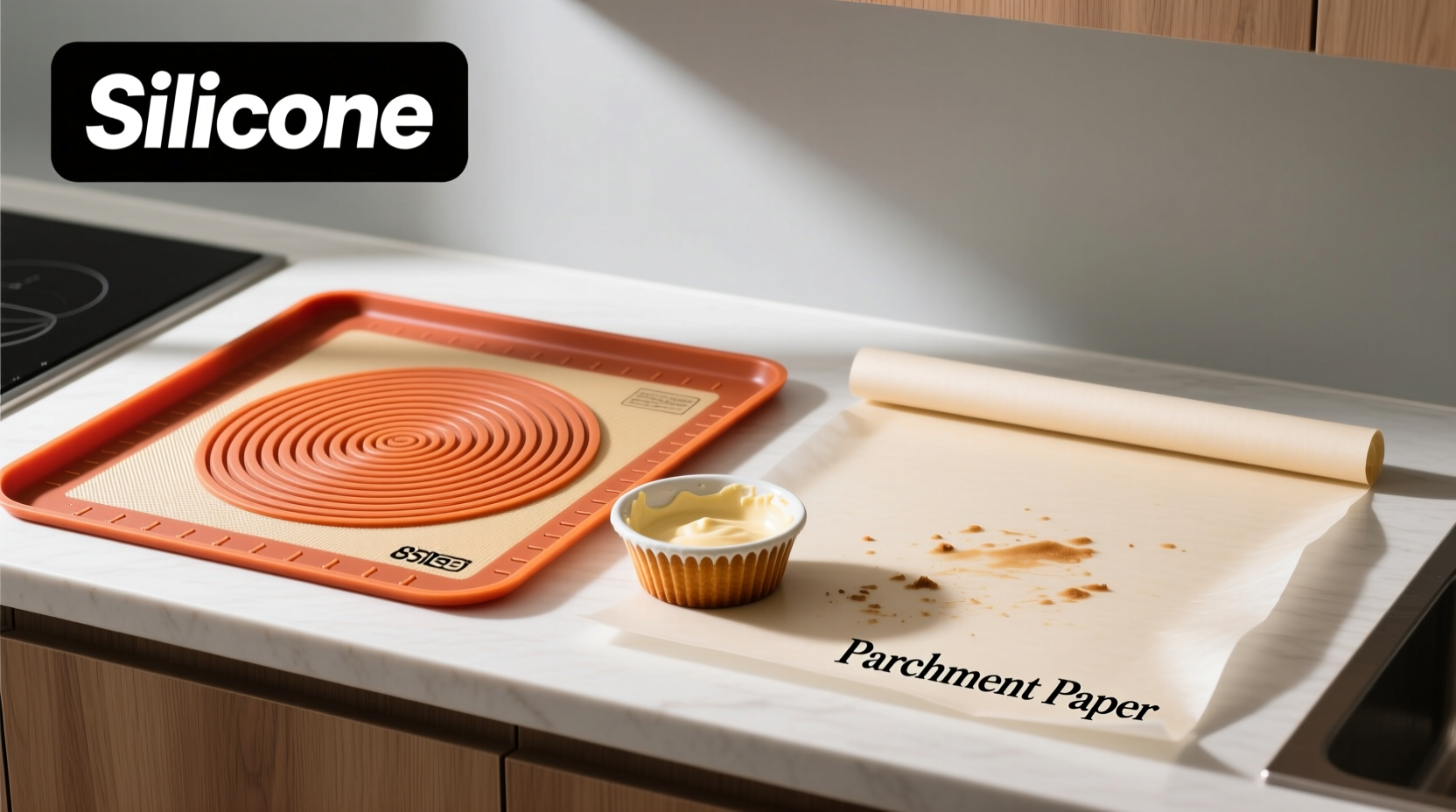
At the heart of any baking surface is its ability to prevent sticking and promote even browning. Both silicone mats and parchment paper perform well in this area, but their mechanisms differ.
Silicone baking mats are made from food-grade platinum-cure silicone bonded to a fiberglass mesh. This construction provides a naturally non-stick surface that requires little to no greasing. They distribute heat evenly across the surface, reducing hot spots and promoting uniform baking—especially beneficial for delicate items like macarons or thin cookies.
Parchment paper, typically coated with silicone (ironically), also offers excellent release properties. However, it lacks the structural integrity of a mat. Over time, especially at higher temperatures, parchment can curl or shift, potentially affecting airflow and browning. It’s also more prone to tearing when handling sticky doughs or sharp utensils.
Tip: For ultra-sticky recipes like caramel or honey-based pastries, silicone mats often outperform parchment due to superior grip and stability.In blind tests conducted by culinary schools, silicone mats consistently produced flatter, more uniformly baked cookies compared to parchment, where slight warping led to uneven bottoms. However, parchment remains ideal for tasks requiring disposability—like lining cake pans or wrapping fish for en papillote—where reusability isn’t practical.
Cost Analysis: Upfront vs. Long-Term Value
The financial implications of choosing between these two options go beyond sticker price. Parchment paper is inexpensive per roll—typically $3–$7—but must be replaced frequently. A single sheet is usually discarded after one use, though some reuse it if lightly used and undamaged.
In contrast, a high-quality silicone baking mat costs between $12 and $25 but can last up to 2,000 uses when properly cared for. That longevity translates to pennies per use over time. For frequent bakers, the break-even point often arrives within three months of regular oven use.
“Over a year, switching from parchment to silicone saved my bakery over $200 in supplies alone.” — Carlos Mendez, Pastry Chef & Owner, Flour & Flame Bakery
Still, initial investment matters. Home cooks who bake only occasionally may not recoup the cost quickly enough to justify the purchase. For them, parchment remains a cost-effective, low-commitment option.
Environmental Impact and Sustainability
With growing awareness around single-use waste, sustainability plays an increasingly important role in kitchen decisions. Parchment paper, while biodegradable and compostable in many cases, contributes to ongoing paper consumption and landfill volume. Even unbleached parchment generates waste with every use.
Silicone mats, being reusable thousands of times, drastically reduce material turnover. Platinum-cure silicone is inert, non-toxic, and does not leach chemicals under normal baking conditions. At end-of-life, most municipal recycling programs don’t accept silicone, but specialized recyclers do process it into industrial materials like playground surfaces or floor tiles.
However, the production of silicone involves energy-intensive processes and petrochemical inputs. While less wasteful over time, it's not without environmental cost. The key advantage lies in lifespan: one mat replaces hundreds of parchment sheets.
Do’s and Don’ts for Eco-Friendly Baking
| Action | Recommended? | Why |
|---|---|---|
| Reuse parchment once if clean | Yes | Reduces waste without risk |
| Compost bleached parchment | No | Bleaching agents may contain toxins |
| Wash silicone mats with abrasive pads | No | Can damage non-stick surface |
| Use silicone mats above 480°F | No | Risk of warping or fumes |
| Donate old mats to cooking schools | Yes | Extends lifecycle before disposal |
Practical Use Cases: When to Choose Which
No single solution fits all scenarios. The best choice depends on what you're baking and how you work in the kitchen.
- Silicone mats shine when rolling out dough, baking multiple batches of cookies, roasting vegetables, or using convection ovens where airflow matters. Their flat profile stays put, and cleanup is often as simple as wiping or rinsing.
- Parchment excels in disposable applications: lining loaf pans, wrapping foods for steaming, creating piping cones, or separating layers of frozen items. It’s also easier to cut to custom shapes.
A hybrid approach is common among experienced bakers: using silicone for sheet pan work and reserving parchment for specialty tasks. This maximizes efficiency without sacrificing flexibility.
Mini Case Study: Weekly Meal Prep in a Busy Household
Jamila Thompson, a working mother of three in Portland, switched to silicone mats six months ago after realizing she was going through nearly two rolls of parchment per month. “I was constantly running out, and the mess from torn sheets frustrated me,” she said. Now, she uses two large silicone mats for weekly vegetable roasting and cookie batches. She stores them rolled in a drawer and wipes them down after each use. “Even my kids know not to use metal spatulas on them. We’ve saved money and reduced trash.”
She still keeps parchment on hand for baking cakes and freezing individual portions of meatballs. “It’s not an either-or decision anymore. I use each where it makes the most sense.”
Care and Maintenance: Extending Lifespan
Proper care determines how long a silicone mat lasts. Unlike parchment, which is designed for one-time use, silicone requires attention to preserve its integrity.
- Cool completely before removing from the pan. Sudden temperature shifts can cause warping.
- Hand wash with mild dish soap and warm water. Avoid steel wool or harsh scrubbers.
- Air dry flat or hang to prevent creasing.
- Store flat or rolled, never folded, to avoid permanent creases that trap residue.
- Deep clean monthly with a paste of baking soda and water for stubborn stains.
Never cut directly on a silicone mat—even a small nick can harbor bacteria and compromise structural strength. If discoloration occurs, soaking in diluted vinegar (1:3 ratio) for 30 minutes can help restore appearance, though staining doesn’t affect safety or performance.
Tip: Label your mats with tape or a marker if you designate specific ones for sweet vs. savory foods.Common Misconceptions Debunked
Several myths persist about both products. Addressing them clarifies real-world usability.
- Misconception: “Silicone mats emit harmful fumes.”
Truth: Food-grade silicone is stable up to 480°F (250°C). Beyond that, degradation may occur, but under normal baking conditions, no toxic off-gassing happens.
- Misconception: “Parchment paper is always compostable.”
Truth: Only unbleached, untreated parchment qualifies. Bleached versions may contain dioxins, and silicone-coated parchment (common in rolls) is not compostable.
- Misconception: “Silicone mats replace all need for parchment.”
Truth: They’re not interchangeable in every case. Delicate pastries that require lifting mid-bake or dishes cooked en papillote still benefit from parchment’s disposability and pliability.
Expert Recommendations and Industry Trends
Professional kitchens are increasingly adopting silicone mats for consistency and labor savings. In commercial settings, reducing prep time and minimizing waste are critical. A single mat can remain on a sheet pan for weeks, wiped between uses, eliminating the need to line pans repeatedly.
“Once our team tried silicone mats, we never went back. The precision in baking textures, combined with reduced supply costs, made it a no-brainer.” — Chef Lena Park, Culinary Director at Brioche & Co.
That said, top chefs emphasize quality. Not all silicone mats are created equal. Lower-cost versions may yellow faster, lack proper certification, or use cheaper fillers that degrade over time. Look for FDA-approved, BPA-free, and LFGB-certified (German standard) labels to ensure safety and durability.
Frequently Asked Questions
Can I use silicone baking mats on the grill or under the broiler?
No. Direct flame or intense radiant heat from a broiler exceeds safe temperature limits and can damage the mat. Use parchment or foil instead for broiling tasks.
Is parchment paper safer than silicone?
Both are safe when used correctly. High-quality silicone mats made with platinum curing are chemically inert. Parchment is safe unless overheated (above 420°F), where it may darken or ignite. Always check manufacturer guidelines.
Do silicone mats affect baking time?
Not significantly. Some users report slightly longer browning times due to even heat distribution, but adjustments are minimal—usually 1–2 minutes. No recipe overhaul is needed.
Checklist: Choosing the Right Option for Your Kitchen
- ✅ Assess your baking frequency: Daily or weekly? Opt for silicone.
- ✅ Consider storage space: Mats require flat or rolled storage; parchment needs shelf room.
- ✅ Evaluate cleanup preferences: Do you hate scrubbing pans? Silicone reduces residue buildup.
- ✅ Think about eco-goals: Prioritize reusables if reducing waste is important.
- ✅ Check oven temperature habits: If you regularly exceed 450°F, monitor mat ratings closely.
- ✅ Budget for long-term: Calculate annual parchment costs before deciding.
Conclusion: Making the Smart Choice for Your Kitchen
The answer to whether silicone baking mats are truly better than parchment paper isn’t absolute—it depends on your priorities. For consistent performance, cost savings over time, and environmental responsibility, silicone mats hold a clear edge. They deliver professional results, simplify cleanup, and reduce reliance on disposable products. Yet, parchment paper retains irreplaceable utility in specific contexts: intricate preparations, single-use linings, and situations where customization is key.
The smartest kitchens don’t choose one over the other—they leverage both. Start with one high-quality silicone mat for everyday baking tasks. Keep a roll of unbleached parchment for specialty uses. Over time, observe how each performs in your routine. Adjust accordingly.
🚀 Ready to optimize your baking setup? Try a silicone mat on your next batch of cookies and track the difference in browning, cleanup, and waste. Share your experience with others looking to make the switch!








