In recent years, ceramic-coated pans have surged in popularity as a “healthier” alternative to traditional non-stick cookware. Marketed as toxin-free, PFOA- and PTFE-free, and environmentally friendly, they’ve become a staple in kitchens aiming for cleaner, more sustainable living. But behind the glossy ads and eco-friendly branding lies a growing concern: are these pans genuinely safe, or are we falling for clever greenwashing?
To answer this, we need to look beyond the packaging. This article examines the materials, manufacturing processes, durability, and regulatory oversight of ceramic-coated cookware. It also evaluates whether their health claims hold up under scientific scrutiny — and what consumers should really know before making the switch.
What Are Ceramic-Coated Pans Made Of?
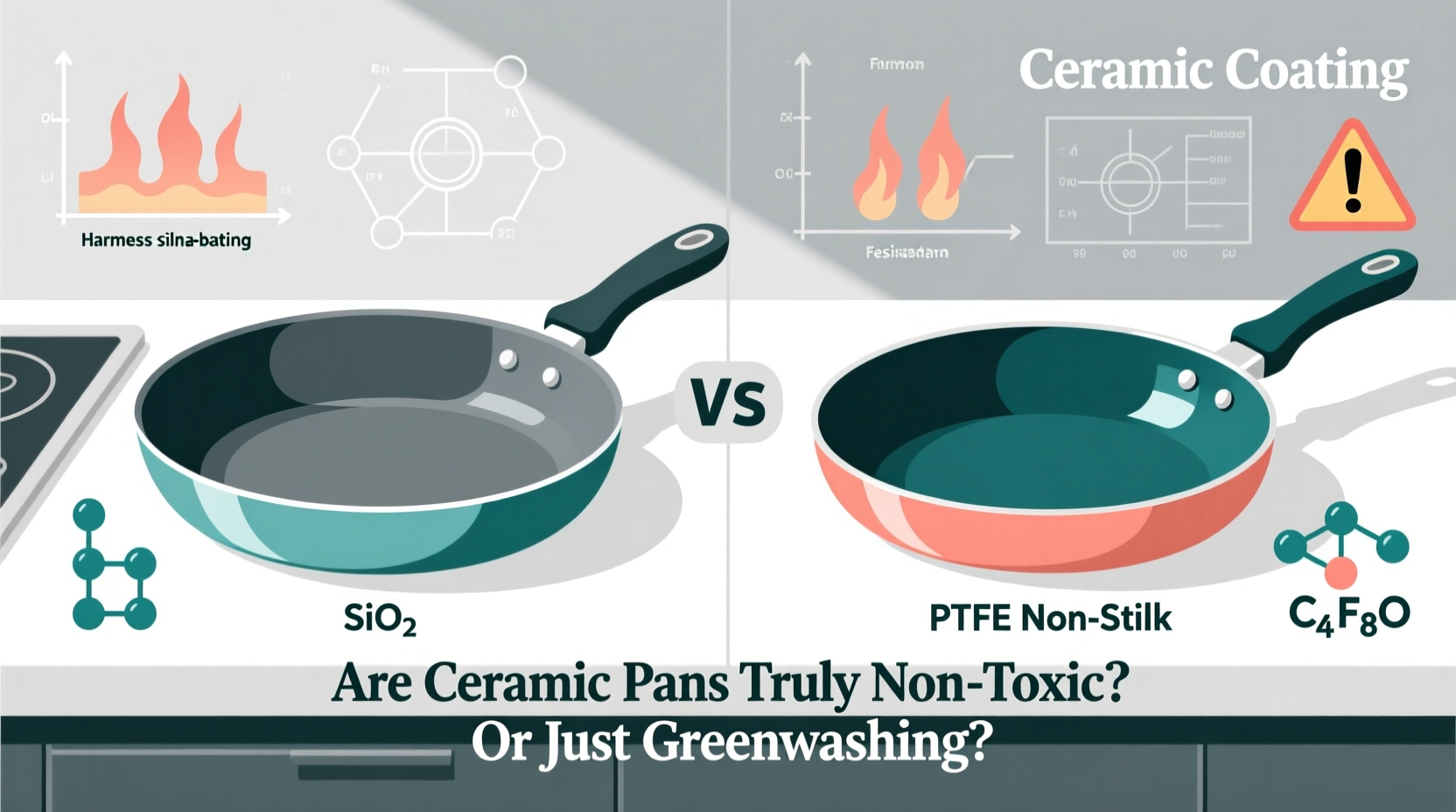
Ceramic-coated pans are typically made from aluminum or aluminum alloy bases, over which a sol-gel coating is applied. This coating consists of silica (derived from sand) suspended in a liquid solution that hardens when baked at high temperatures. The result is a smooth, non-stick surface that doesn’t rely on synthetic polymers like polytetrafluoroethylene (PTFE), commonly known as Teflon.
The absence of PTFE and perfluorooctanoic acid (PFOA) — chemicals linked to environmental persistence and potential health risks — is one of the main selling points. However, “ceramic” in this context is not the same as 100% ceramic cookware (like those made entirely from clay). Instead, it’s a thin layer of inorganic material bonded to metal.
“Ceramic coatings offer a viable alternative to PFAS-based non-sticks, but their long-term safety depends heavily on formulation and use conditions.” — Dr. Lena Torres, Materials Toxicologist at the Environmental Health Institute
Green Claims vs. Reality: Is It Really Non-Toxic?
Manufacturers often label ceramic-coated pans as “non-toxic,” “eco-friendly,” and “free from harmful chemicals.” While technically accurate in some cases, these labels can be misleading without context.
For instance, while most reputable brands do avoid PTFE and PFOA, the full chemical composition of the coating is rarely disclosed. Some lower-cost models may include undisclosed stabilizers, binders, or nanoparticles (such as titanium dioxide or zirconium oxide) to enhance durability or sheen. These additives haven’t been studied extensively for long-term exposure risks, especially when heated repeatedly.
A 2020 study published in *Environmental Science & Technology* found that certain ceramic coatings released small amounts of volatile organic compounds (VOCs) when heated above 350°C (662°F), though levels were below immediate toxicity thresholds. Still, frequent exposure to low-level off-gassing remains a concern for indoor air quality, particularly in poorly ventilated kitchens.
Tip: Avoid preheating empty ceramic-coated pans or using them at high heat. Most manufacturers recommend medium or low temperatures to preserve coating integrity and minimize emissions.Durability and Degradation: When Safety Falters Over Time
One of the biggest criticisms of ceramic-coated pans is their limited lifespan. Unlike cast iron or stainless steel, these coatings degrade with regular use — especially when exposed to metal utensils, abrasive cleaners, or thermal shock.
As the coating wears, two issues arise:
- Exposure of the underlying metal: Once the ceramic layer chips, the aluminum base becomes exposed. While aluminum itself isn’t acutely toxic, there is ongoing debate about its potential neurotoxic effects when ingested in large quantities over time. Acidic foods (like tomatoes or vinegar-based sauces) can accelerate leaching if the pan is damaged.
- Unknown breakdown products: As the coating degrades, microscopic particles may flake into food. The health implications of ingesting these nanoscale fragments are not well understood, and regulatory agencies currently lack standardized testing protocols for such scenarios.
Most ceramic-coated pans last between 1–3 years under moderate use — significantly shorter than well-maintained stainless steel or carbon steel alternatives. This raises sustainability concerns: frequent replacement increases waste and undermines the “eco-friendly” narrative.
Comparison: Ceramic Coating vs. Other Non-Stick Options
| Feature | Ceramic Coated | PTFE (Teflon) | Cast Iron (Seasoned) | Stainless Steel |
|---|---|---|---|---|
| Non-Toxic When Intact? | Generally yes | Yes, below 260°C | Yes | Yes |
| Releases Toxins at High Heat? | Possible VOCs above 350°C | Yes (PFAS fumes above 260°C) | No | No |
| Durability | Low (1–3 years) | Moderate (2–5 years) | High (decades) | Very High |
| Eco-Friendliness | Mixed (short life cycle) | Poor (PFAS pollution) | High | High |
| Maintenance | Low (but fragile) | Low | Moderate | Moderate |
Regulatory Gaps and Greenwashing Tactics
The term “non-toxic” is largely unregulated in consumer cookware marketing. In the U.S., the Food and Drug Administration (FDA) oversees food-contact materials, but it does not require pre-market approval for most cookware coatings. Manufacturers self-certify compliance with FDA guidelines, which state that materials must not migrate into food in harmful amounts under normal use.
This creates a loophole: a pan may meet current standards while still releasing trace chemicals that haven’t been fully evaluated for chronic exposure. Moreover, terms like “green,” “natural,” or “eco-safe” carry no legal definition, allowing brands to leverage emotional appeal without substantiated proof.
Some companies exploit this ambiguity by highlighting one positive attribute — like being PFOA-free — while omitting information about other potentially problematic ingredients. This selective transparency is a hallmark of greenwashing.
Real Example: The Case of a Popular Brand Recall
In 2021, a widely advertised ceramic-coated cookware line was voluntarily recalled after independent lab tests revealed detectable levels of lead and cadmium in the glaze — heavy metals banned in children’s products but less strictly regulated in cookware. Though the levels were below FDA action thresholds, public outcry followed, especially since the brand had prominently marketed its products as “safe for families” and “100% non-toxic.”
This incident underscored a critical gap: even products sold by major retailers aren’t always independently verified. Consumers often assume safety based on branding rather than third-party certification.
How to Choose Truly Safer Cookware: A Practical Checklist
If you’re considering ceramic-coated pans — or reevaluating your current set — here’s how to make a more informed, health-conscious decision:
- ✅ Look for third-party certifications like OEKO-TEX®, GREENGUARD, or California Proposition 65 compliance.
- ✅ Avoid pans labeled “ceramic-infused” or “ceramic-reinforced” — these may still contain PTFE.
- ✅ Check for a transparent ingredient list; reputable brands disclose coating components.
- ✅ Opt for thicker coatings and heavier bases, which tend to last longer and resist warping.
- ✅ Use wooden, silicone, or nylon utensils to prevent scratching.
- ✅ Never heat an empty pan; thermal stress accelerates coating breakdown.
- ✅ Replace the pan immediately if chipping, discoloration, or sticking occurs.
Step-by-Step Guide to Extending Pan Life and Safety
- Wash before first use: Rinse with warm water and mild soap to remove any manufacturing residues.
- Preheat gently: Always use low to medium heat. Never preheat on high.
- Use appropriate oils: Cooking sprays can leave residue that builds up and burns; opt for avocado or olive oil applied with a cloth.
- Clean carefully: Use soft sponges and non-abrasive cleaners. Avoid steel wool or dishwasher use unless explicitly approved.
- Store safely: Stack with protective liners or hang individually to prevent scratches.
- Monitor condition: Inspect monthly for signs of wear. If the surface looks dull or patchy, consider retiring it.
Frequently Asked Questions
Can ceramic-coated pans cause cancer?
There is no direct evidence linking properly used ceramic-coated pans to cancer. Unlike older Teflon pans that released carcinogenic PFOA during manufacturing, modern ceramic coatings do not contain this chemical. However, overheating any non-stick surface can produce fumes or breakdown products whose long-term effects are not fully known. Using pans within recommended temperature limits minimizes risk.
Are all ceramic pans the same?
No. Quality varies significantly between brands. Premium lines often use multi-layer coatings and undergo stricter safety testing, while budget options may cut corners on materials and durability. Price isn’t always indicative of safety, but extremely cheap sets are more likely to contain undisclosed additives or thinner coatings prone to rapid degradation.
What’s the safest cookware overall?
From a toxicity standpoint, the safest options are:
- Plain cast iron – durable, naturally non-stick when seasoned, and adds dietary iron.
- Stainless steel – inert, long-lasting, and resistant to corrosion.
- 100% ceramic cookware – made entirely from natural clay, though heavier and more fragile.
Conclusion: Making Informed Choices Beyond the Hype
Ceramic-coated pans aren’t inherently dangerous, nor are they universally “green.” They represent a transitional technology — an improvement over PFAS-laden Teflon in some ways, but not a perfect solution. Their safety hinges on responsible manufacturing, honest labeling, and mindful use.
Calling them “non-toxic” without qualification oversimplifies a complex issue. True safety comes not from marketing buzzwords, but from transparency, durability, and alignment with real-world cooking habits.
🚀 Take action today: Audit your kitchen for worn non-stick pans, research brands with verified safety data, and prioritize longevity over convenience. Share this knowledge with others to help cut through the noise of greenwashing and build healthier, more sustainable homes.








