In recent years, bamboo towels have surged in popularity across eco-conscious households. Marketed as softer, more sustainable, and even more absorbent than traditional cotton, they promise a greener way to dry hands and faces without sacrificing performance. But with so many bold claims, it's fair to ask: Are bamboo towels truly superior, or is this just another case of greenwashing—environmental marketing that exaggerates benefits while masking drawbacks?
This article examines the science behind absorbency, compares bamboo and cotton at the fiber level, evaluates environmental impacts, and reviews real-world user experiences. The goal is not to vilify either material but to offer a balanced, evidence-based assessment so you can make an informed decision.
The Science of Absorbency: What Makes a Towel Soak Up Water?
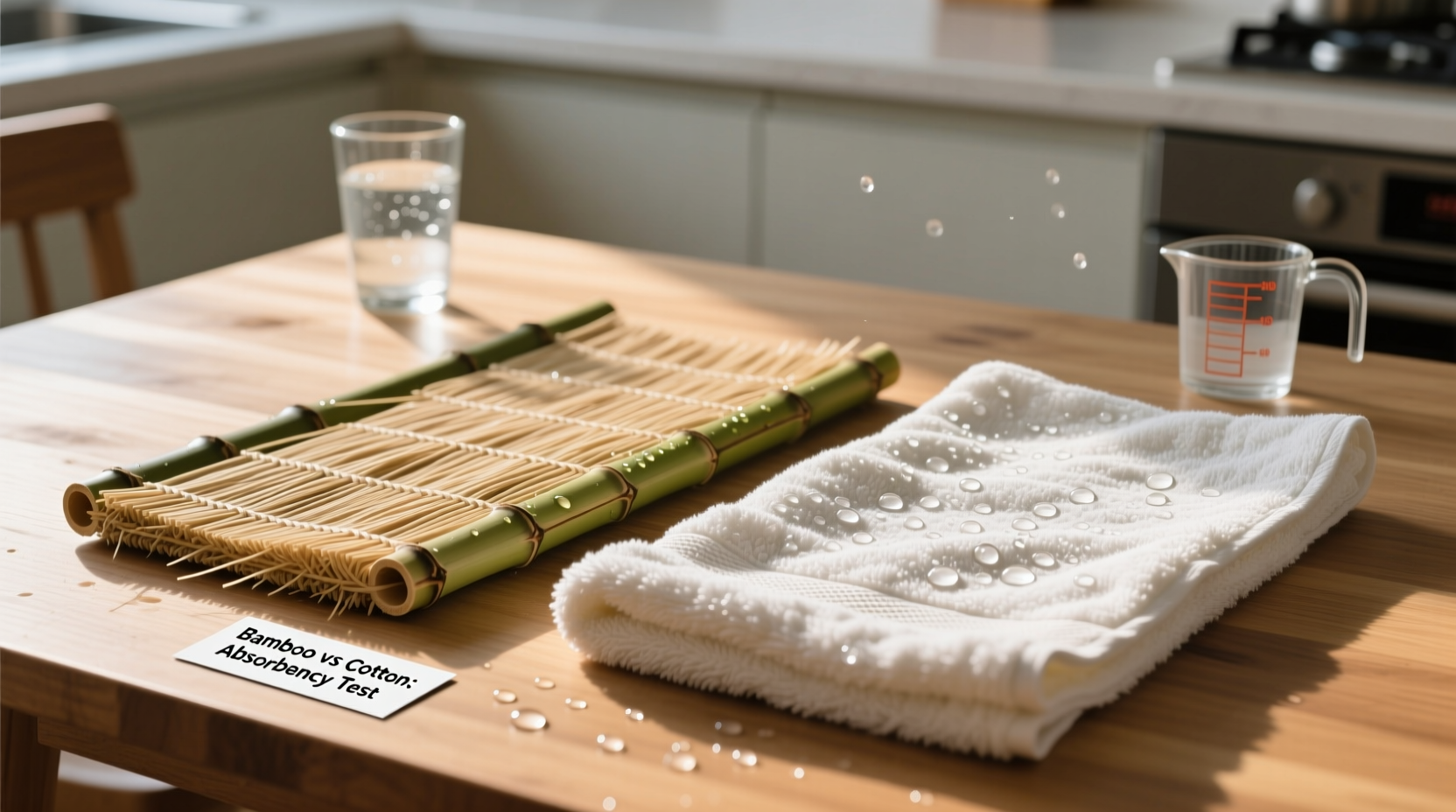
A towel’s ability to absorb water depends on several factors: fiber structure, surface area, capillary action, and fabric density. Natural fibers like cotton and bamboo are hydrophilic, meaning they attract water molecules. However, their molecular composition and physical structure influence how effectively they do so.
Cotton fibers are primarily composed of cellulose, arranged in a twisted ribbon-like form. This structure creates microscopic gaps that trap moisture through capillary action. High-quality cotton towels, especially those made from long-staple varieties like Egyptian or Pima, are tightly woven to maximize surface contact and retention.
Bamboo, when processed into viscose rayon (the most common form used in towels), undergoes chemical treatment to extract cellulose from the plant. The resulting fibers are smooth, round, and highly porous. Studies suggest that bamboo viscose can absorb up to 50% more moisture than cotton by weight, thanks to its micro-gaps and hollow fiber structure.
“Bamboo’s natural porosity gives it an edge in initial water uptake, but durability and long-term performance matter just as much.” — Dr. Lena Torres, Textile Materials Researcher, University of Vermont
However, absorbency isn’t solely about raw capacity. How quickly a towel dries *after* use, how it feels against the skin, and how well it retains softness over time also define its practical value.
Material Showdown: Bamboo vs. Cotton
To understand whether bamboo towels outperform cotton, let’s compare them across key categories:
| Feature | Bamboo (Viscose) | Cotton |
|---|---|---|
| Absorbency | Higher initial absorption; holds ~50% more moisture by weight | Good absorption; varies by weave and staple length |
| Softness | Naturally silky; comparable to cashmere | Softer with long-staple varieties; can feel coarse if low quality |
| Durability | Less durable; weakens with repeated washing | Highly durable; withstands frequent laundering |
| Drying Time | Slower drying due to high moisture retention | Faster drying, especially in lightweight weaves |
| Environmental Impact | Fast-growing plant, but processing often involves chemicals | Water-intensive crop; pesticides common unless organic |
| Cost | Generally more expensive | Wider price range; budget to premium options |
While bamboo wins on paper for absorbency and softness, cotton holds strong in durability and cost-effectiveness. The trade-offs depend on your priorities: immediate comfort and eco-image versus longevity and practicality.
Is Bamboo Really Sustainable—or Just Greenwashed?
The environmental argument for bamboo is compelling at first glance. Bamboo is one of the fastest-growing plants on Earth, requiring no irrigation, pesticides, or fertilizers. It regenerates from its roots, making harvesting non-destructive. On these grounds, it’s frequently labeled “eco-friendly” or “sustainable.”
But the reality is more complex. Most bamboo towels aren’t made from mechanically processed bamboo fiber (which preserves eco-benefits) but from bamboo viscose or rayon. This involves dissolving raw bamboo pulp in harsh chemicals like sodium hydroxide and carbon disulfide, then extruding it into fibers. If not properly managed, this process releases toxic byproducts and poses health risks to workers.
Furthermore, only a small fraction of bamboo textiles are certified under standards like OEKO-TEX® or FSC. Without certification, “bamboo” may simply be a marketing label for chemically intensive rayon with minimal traceability.
Tip: Look for labels like \"OEKO-TEX® certified\" or \"closed-loop production\" to ensure safer, more sustainable bamboo textiles.By contrast, organic cotton—while requiring more land and water—uses fewer synthetic inputs and avoids hazardous solvents. When grown responsibly, it supports biodiversity and soil health. Certifications like GOTS (Global Organic Textile Standard) ensure both ecological and ethical compliance.
So yes, some bamboo marketing crosses into greenwashing territory. Claiming a product is “natural” because it starts with a fast-growing plant ignores the industrial transformation it undergoes. True sustainability requires transparency across the entire supply chain—not just the source material.
Real-World Performance: A Mini Case Study
Sarah M., a sustainability consultant in Portland, switched to bamboo towels two years ago after reading about their absorbency and softness. She replaced her family’s cotton bath linens with a set of bamboo-blend towels, hoping to reduce laundry frequency and improve comfort.
“At first, I was amazed,” she said. “They felt luxurious and soaked up water incredibly fast. I could dry off with just one towel, whereas before I’d need two.”
But after ten months of regular washing, she noticed a decline. “The towels started thinning out, especially around the edges. They didn’t feel as plush anymore. One even tore during machine drying.”
She resumed using high-thread-count organic cotton towels and found they lasted longer and maintained performance. “I still think bamboo has potential,” she added, “but for everyday use, durability matters as much as softness.”
Sarah’s experience reflects a common pattern: bamboo excels in initial luxury and absorption but may fall short in long-term resilience, especially under heavy household use.
How to Choose Wisely: A Practical Checklist
Whether you lean toward bamboo, cotton, or a blend, here’s how to make a smart, informed choice:
- Check the fiber content: Is it 100% bamboo viscose, a blend, or mechanically processed bamboo linen?
- Look for certifications: GOTS, OEKO-TEX®, FSC, or USDA Organic indicate higher environmental and safety standards.
- Evaluate construction: Tight loops, double-stitched hems, and heavier GSM (grams per square meter) mean better durability.
- Consider care requirements: Bamboo often requires gentle washing and air drying to preserve integrity.
- Weigh usage needs: For kids or frequent gym use, cotton’s toughness may outweigh bamboo’s softness.
- Assess total lifecycle: How long will it last? How many washes before it degrades? Factor in replacement frequency.
Step-by-Step Guide: Testing Towel Absorbency at Home
You don’t need a lab to compare towels. Try this simple test to see which material works best for you:
- Prepare samples: Use clean, unused towels of similar size—one bamboo, one cotton.
- Weigh dry: Record each towel’s dry weight using a kitchen scale.
- Submerge: Fully immerse each towel in room-temperature water for 30 seconds.
- Drip dry: Hang each vertically for exactly one minute to allow excess water to drain.
- Weigh wet: Measure the weight again immediately.
- Calculate absorption: Subtract dry weight from wet weight. Divide by dry weight to get absorption ratio.
Example: A 100g cotton towel absorbs 300g of water → 3:1 absorption ratio. A 100g bamboo towel absorbs 450g → 4.5:1 ratio. The higher the number, the more absorbent.
Repeat after 10 and 20 washes to assess performance degradation. This method reveals not just initial absorbency but long-term reliability.
FAQ: Common Questions About Bamboo and Cotton Towels
Can bamboo towels be truly eco-friendly?
Yes—but only under strict conditions. Mechanically processed bamboo (rare in towels) is sustainable. Chemically processed bamboo viscose can be eco-friendly if produced in a closed-loop system that recycles solvents. Look for third-party certifications to verify claims.
Do bamboo towels lose absorbency faster than cotton?
Often, yes. While bamboo starts more absorbent, repeated washing can degrade its fibers faster than cotton. Over time, cotton maintains consistency better, especially high-quality varieties with tight weaves.
Are bamboo-cotton blends a good compromise?
They can be. A 70/30 bamboo-cotton blend offers enhanced softness and quicker drying than pure bamboo, with improved durability. These hybrids balance performance and longevity, making them ideal for daily use.
Conclusion: Beyond the Hype, Toward Informed Choice
The question isn’t whether bamboo towels are universally better than cotton—it’s whether they’re better for you. Their superior initial absorbency and silky texture make them excellent for sensitive skin or luxury settings. But their environmental credentials hinge on transparent manufacturing, not just the origin of the plant.
Cotton, especially organic and long-staple varieties, remains a durable, reliable option with a lower chemical footprint in production—though it demands more resources to grow. Neither material is perfect, but both can coexist in a thoughtful home.
Instead of chasing trends or slogans like “eco-luxury,” focus on verified facts: certifications, fiber composition, construction quality, and personal usage patterns. The most sustainable towel isn’t necessarily the greenest on the shelf—it’s the one that lasts longest, performs best, and aligns with your values.
🚀 Ready to upgrade your bathroom linens? Audit your current towels, run a simple absorbency test, and choose based on evidence—not marketing. Share your findings with others to cut through the noise and build a more honest conversation about sustainable living.








