When it comes to achieving long, elegant nails without waiting months for natural growth, artificial enhancements are a popular solution. Acrylic nail tips and gel extensions dominate the market, each offering distinct advantages in strength, appearance, and longevity. But which option truly lasts longer while causing the least harm to your natural nails? The answer isn’t straightforward—it depends on application technique, aftercare, lifestyle, and individual nail biology. This comprehensive guide breaks down both options, compares their real-world performance, and offers expert-backed strategies to extend wear time without compromising nail health.
Durability Compared: How Long Do They Actually Last?
The lifespan of artificial nails hinges on multiple factors: product quality, technician skill, daily activities, and how well you maintain them. That said, general trends emerge when comparing acrylic nail tips and gel extensions.
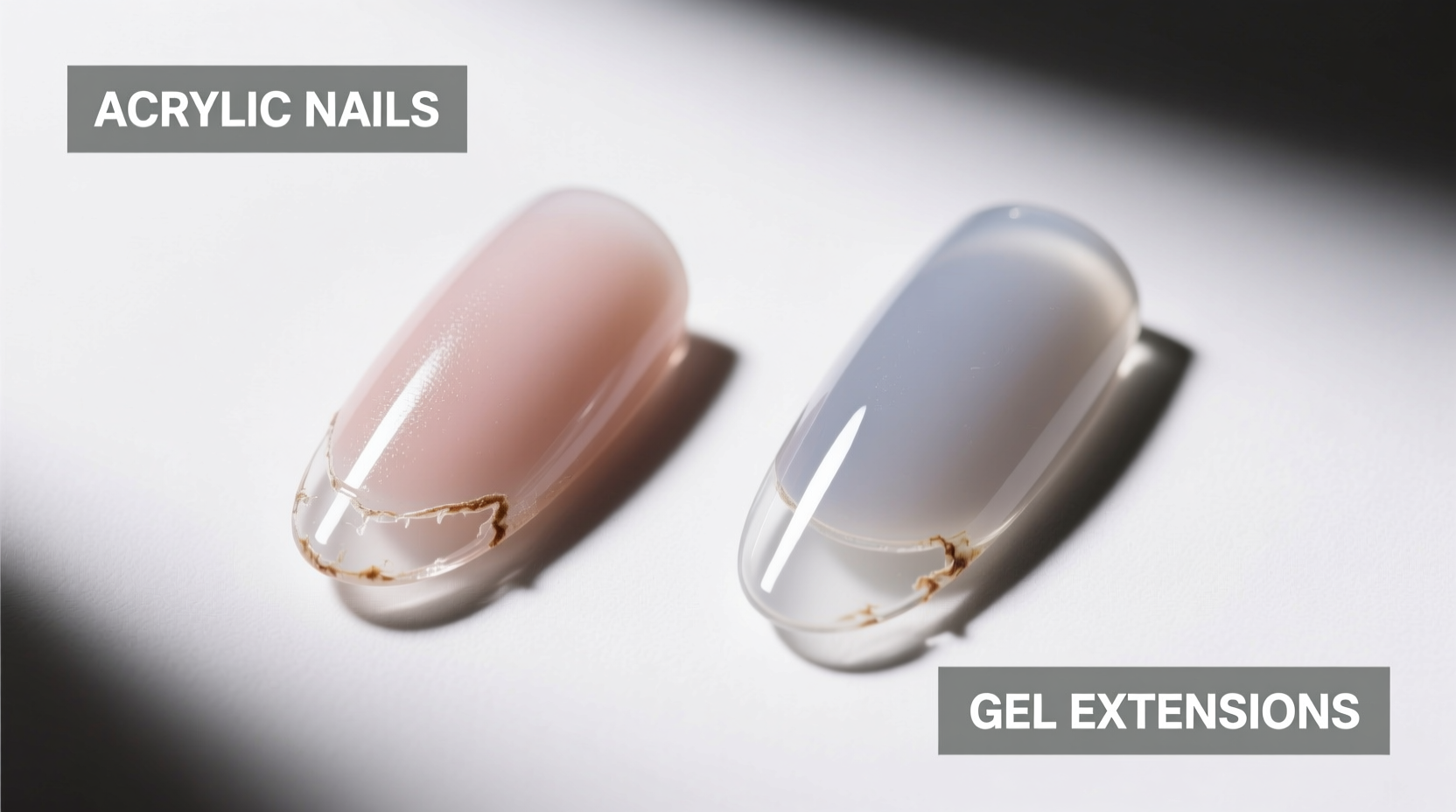
Acrylic nail tips are pre-made plastic or fiberglass caps glued onto the natural nail, then sealed and shaped with liquid monomer and acrylic powder. This creates a hard, resilient surface resistant to chipping and breakage. With proper care, acrylic tips can last 2–3 weeks before visible regrowth or lifting occurs. However, because they're bonded at the tip edge and reinforced over the nail bed, they’re more prone to water infiltration if the seal fails—especially near the cuticle or sides.
Gel extensions, on the other hand, are built directly onto the nail using UV-cured gel resin, either freehand or over forms. The result is a seamless, flexible structure that mimics the elasticity of natural keratin. Gel resins polymerize under UV/LED light, creating a durable yet slightly pliable finish. Most clients report 3–4 weeks of wear before needing a fill, thanks to better adhesion along the entire nail plate and less shrinkage during curing.
Tip: Avoid prolonged exposure to hot water and harsh chemicals like acetone or dish soap—both can weaken the bond of any enhancement, regardless of type.Nail Health Impact: Which Causes Less Damage?
Longevity means little if the cost is weakened, thinning natural nails. Both systems have risks, but the degree of damage often lies in preparation, removal, and frequency of use—not the material itself.
Acrylics tend to get a bad reputation due to aggressive filing during prep. Many technicians remove the natural nail’s protective top layer to improve adhesion, leaving the nail vulnerable. Over time, this can lead to brittleness and peeling. Additionally, improper removal—such as prying or excessive soaking—can strip layers from the nail bed.
Gel extensions generally involve less filing. Because the gel bonds well to clean, lightly buffed surfaces, many techs preserve more of the natural nail structure. The flexibility of cured gel also reduces stress on the nail during bending or impact, lowering the risk of cracking or lifting. When removed correctly—soaked gently with acetone over cotton wraps—gel tends to leave the nail in better condition than acrylics.
“Gel extensions, when applied properly, distribute stress more evenly across the nail plate. This makes them less likely to cause micro-trauma compared to rigid acrylic builds.” — Dr. Lena Torres, Dermatologist & Nail Health Specialist
Comparison Table: Acrylic Tips vs Gel Extensions
| Feature | Acrylic Nail Tips | Gel Extensions |
|---|---|---|
| Average Lifespan | 2–3 weeks | 3–4 weeks |
| Durability | High – very chip-resistant | Moderate to high – flexible, less brittle |
| Application Time | Faster (15–20 mins) | Slower (30–45 mins) |
| Nail Prep Required | Heavy buffing common | Light buffing, minimal filing |
| Flexibility | Rigid – may snap under pressure | Slightly flexible – absorbs impact |
| Removal Process | Soak-off or clip; higher risk of damage if rushed | Soak-off only; gentler on natural nail |
| Odor During Application | Strong chemical smell | Minimal odor |
| Best For | Short-term wear, budget-conscious clients | Long-term wear, sensitive or weak nails |
Real-World Case: Sarah’s Experience After Switching Systems
Sarah, a 32-year-old office manager and frequent hand-washer due to hygiene protocols, had worn acrylic tips for five years. She loved the instant length and strength but noticed her natural nails became increasingly thin and layered, often splitting after removal. At her nail tech’s suggestion, she switched to gel extensions.
Initially skeptical about the higher price and longer appointment time, Sarah found the results surprising. Her first set lasted nearly four weeks with only minor lifting at one corner—far better than the two-week maximum she’d previously managed. More importantly, after three fills, her natural nails showed signs of recovery: less peeling, improved texture, and no post-removal weakness.
She attributes the difference not just to the material, but to the technician’s approach: “My new tech barely filed my nails. She cleaned and dehydrated them instead. And when I finally took the gels off, she soaked them for 15 minutes—no scraping. My nails looked healthier than they had in years.”
Step-by-Step Guide to Maximizing Longevity & Minimizing Damage
No artificial nail will last indefinitely, but smart habits can stretch wear time and protect your natural nails. Follow this sequence whether you choose acrylic tips or gel extensions.
- Choose a Skilled Technician
Look for certifications in both acrylic and gel systems. Observe their workspace: cleanliness, tool sterilization, and attention to prep matter more than speed. - Prep Without Over-Filing
Your natural nail should be cleaned, dehydrated, and lightly roughened—not sanded down. Excessive filing increases vulnerability to moisture and trauma. - Ensure Proper Seal at Cuticle and Sides
Lifting usually starts at the edges. Ask your tech to cap the free edge completely and seal the sidewalls to prevent water ingress. - Maintain Weekly Care at Home
Apply cuticle oil daily (jojoba or vitamin E) to keep the nail bed hydrated. Dry, cracked skin pulls on the nail, increasing lift risk. - Wear Gloves for Wet Work
Household cleaning, dishwashing, or swimming exposes nails to water and chemicals. Wear nitrile gloves to limit swelling and weakening of the adhesive bond. - Schedule Timely Fills
Don’t wait until nails are half-grown out. Schedule fills every 2.5–3 weeks for acrylics, 3–3.5 weeks for gels. Delaying invites lifting and uneven stress. - Remove Correctly—Never Pick or Pry
If your set lifts or chips, book a professional removal. DIY removal with clippers or metal tools can tear the nail plate.
Checklist: Choosing the Right Option for Your Lifestyle
- ✅ Do you wash your hands frequently or do dishes by hand? → Choose gel extensions for better moisture resistance.
- ✅ Are you prone to nail biting or picking? → Acrylic tips offer a stronger barrier but require vigilance to avoid self-damage.
- ✅ Do you work with your hands (e.g., healthcare, childcare, construction)? → Consider shorter lengths and rounded shapes regardless of material to reduce snagging.
- ✅ Have you experienced thinning or peeling nails after previous sets? → Opt for gels with minimal prep and allow healing time between sets.
- ✅ Are you on a tight budget or schedule? → Acrylic tips are faster and often cheaper per session.
- ✅ Do you want a natural-looking finish? → Gel extensions blend seamlessly and reflect light like real nails.
Frequently Asked Questions
Can I switch between acrylic tips and gel extensions?
Yes, but allow your natural nails to recover between services if possible. Alternating too quickly without proper conditioning can lead to cumulative damage. Always inform your technician of your recent nail history so they can adjust prep accordingly.
Do gel extensions yellow over time?
High-quality gels resist yellowing, but cheap formulations or excessive UV exposure (like tanning beds) can cause discoloration. Top coats with UV inhibitors help prevent this. Avoid smoking while wearing gel nails, as nicotine residue can also stain the surface.
Which is easier to maintain at home?
Gel extensions typically require less touch-up because they grow out more smoothly and resist chipping. Acrylic tips may need spot repairs if the glue seal fails at the tip. However, both benefit equally from moisturizing routines and protective gloves.
Final Verdict: Which Lasts Longer with Minimal Damage?
Based on durability, wear time, and nail health outcomes, **gel extensions hold a clear advantage** for most users seeking long-lasting results with minimal damage. Their superior adhesion, flexibility, and gentler application process contribute to fewer lifts, reduced trauma, and healthier regrowth. While acrylic nail tips offer affordability and speed, they come with higher risks of over-filing, rigidity-related breakage, and post-removal sensitivity.
That said, the best choice depends on execution. A poorly applied gel set can fail within days, while a skilled technician can make acrylic tips last cleanly for three weeks. Ultimately, prioritize craftsmanship over material. Look for a licensed, detail-oriented nail professional who listens to your goals and adapts their method to your natural nail condition.
And remember: even the strongest extension is only as good as the care behind it. Hydration, protection, and timely maintenance are non-negotiable for lasting results—regardless of what’s on your fingertips.
💬 Have experience with both acrylic tips and gel extensions? Share your story in the comments—your insights could help others choose the right path for healthy, beautiful nails.








