
During the summer months, many homeowners notice their garages transforming into sweltering spaces—sometimes exceeding 120°F (49°C). This heat buildup isn’t just uncomfortable; it can damage tools, degrade vehicles, increase cooling costs for adjacent living areas, and even pose safety risks. Understanding the science behind garage overheating and implementing smart ventilation strategies is essential for maintaining a usable, energy-efficient space year-round.
The root of the problem lies in passive solar gain, poor airflow, and inadequate insulation. Unlike conditioned living spaces, most garages are designed with function over climate control, often leaving them vulnerable to extreme temperatures. However, with targeted improvements, you can significantly reduce internal heat and improve air quality—without breaking the bank.
Why Garages Overheat in Summer
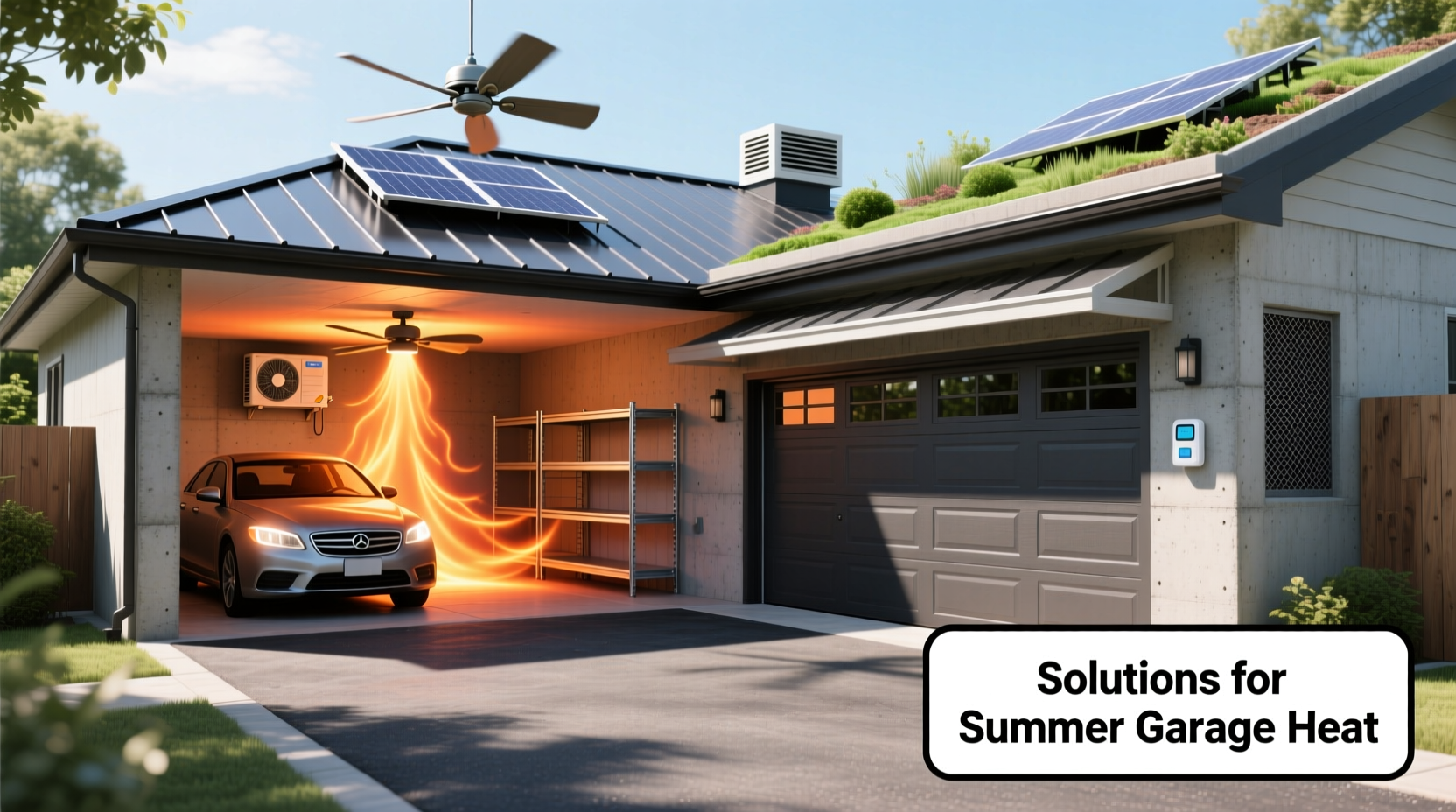
A garage becomes a heat trap due to several interrelated factors. First, solar radiation heats the roof and walls, especially if they're dark-colored or poorly insulated. As sunlight strikes these surfaces, thermal energy transfers inward, raising ambient temperature throughout the day.
Second, most garages lack sufficient ventilation. Without proper intake and exhaust pathways, hot air remains stagnant. Since warm air rises, it accumulates at the ceiling level, creating a temperature gradient where the upper half of the garage may be 30–50°F hotter than floor level.
Third, attached garages act as thermal bridges to the home. Heat radiating from stored vehicles, power tools, or HVAC systems adds to the load. When this hot air seeps into connected living spaces through shared walls or doors, indoor cooling demands spike, increasing energy bills.
Tip: Even a closed garage door doesn't prevent radiant heat transfer—surface color and insulation matter more than enclosure.Key Ventilation Principles for Effective Cooling
Ventilation works by replacing hot, stale air with cooler outside air through natural or mechanical means. The goal isn’t necessarily to match outdoor temperatures but to eliminate trapped heat and maintain airflow that prevents extreme spikes.
Two core principles guide successful garage ventilation: cross-ventilation and stack effect. Cross-ventilation occurs when air enters on one side of the structure and exits on the opposite, creating consistent horizontal flow. The stack effect leverages convection—hot air rises and escapes through high vents, pulling in cooler air from lower openings.
To maximize both, consider placement, vent size, and external conditions. For example, placing intake vents low on the north-facing wall and exhaust vents high on the south or east side aligns with typical wind patterns and solar exposure in many climates.
“Passive ventilation, when properly designed, can reduce peak garage temperatures by up to 30 degrees without using any electricity.” — Dr. Alan Reeves, Building Science Engineer
Top Ventilation Solutions for Hot Garages
Not all garages require the same approach. The ideal solution depends on size, location, use, and budget. Below are five proven methods ranked by effectiveness and practicality.
1. Ridge and Soffit Vents (Passive Roof Ventilation)
If your garage has a pitched roof, installing continuous ridge vents along the peak combined with soffit vents under the eaves creates an efficient passive system. As hot air rises, it naturally exits through the ridge, drawing in cooler air from the soffits. This setup requires no power and operates silently.
Ensure there’s a clear airflow path from soffit to ridge. Insulation should not block soffit vents, and baffles may be needed to maintain clearance.
2. Gable Vents
Mounted on the triangular ends of a sloped roof, gable vents promote cross-ventilation when placed on opposite sides. They work best in combination with other intake sources like door gaps or low wall vents. Motorized versions with thermostats offer enhanced control.
3. Solar-Powered Attic Fans
These fans mount on the roof or gable wall and run on integrated photovoltaic panels. They activate automatically when internal temperatures rise, expelling hot air efficiently without adding to your electric bill. A single fan can move 800–1,500 cubic feet of air per minute (CFM), making them ideal for medium to large garages.
Tip: Position solar fans near the roof’s highest point to maximize hot air extraction.4. Powered Exhaust Fans
Electric-powered exhaust fans offer strong, reliable airflow. Mounted high on a wall or roof, they can be wired to a thermostat or humidistat to run only when needed. While they consume electricity, models with variable speeds and timers provide good energy efficiency.
Pair with open windows or dedicated intake vents to avoid negative pressure issues.
5. Garage Door Vents and Cracks Management
While some airflow through door gaps is inevitable, uncontrolled leakage contributes to dust, pests, and inconsistent temperatures. Instead of sealing completely, install adjustable louvered vents near the top and bottom of the garage door or side walls. These allow manual control over airflow while keeping debris out.
Step-by-Step Guide to Improving Garage Ventilation
Follow this six-step process to assess and upgrade your garage’s ventilation system:
- Evaluate current conditions: Measure peak summer temperatures at different heights using a digital thermometer. Note any signs of moisture, mold, or fumes.
- Inspect existing vents: Check for blockages in soffits, gables, or roof vents. Clean debris and ensure unrestricted airflow.
- Seal air leaks around ducts and doors: Use weatherstripping on the interior door to the house and seal gaps in utility penetrations to prevent heat transfer indoors.
- Add intake and exhaust points: Install soffit vents if missing, and add a ridge vent or powered fan based on your roof type.
- Install a thermostat-controlled fan: Choose a solar or electric model rated for your garage’s volume (calculate cubic footage: length × width × height).
- Monitor and adjust: After installation, track temperature changes over several days. Adjust fan settings or add supplementary vents if needed.
Do’s and Don’ts of Garage Ventilation
| Do’s | Don’ts |
|---|---|
| Use light-colored roofing materials to reflect sunlight | Paint your garage roof black or dark brown |
| Install insulation in walls and ceiling (R-10 to R-19 recommended) | Ignore insulation thinking ventilation alone is enough |
| Combine passive and active ventilation for best results | Run exhaust fans without providing adequate intake air |
| Clean vents and fans seasonally to maintain performance | Forget maintenance until problems arise |
| Use solar-powered fans to reduce energy use | Install oversized electric fans without timers or thermostats |
Real-World Example: Cooling a Detached Workshop Garage
Tom, a woodworker in central Texas, struggled with his 24’x24’ detached garage reaching 130°F during July afternoons. His tools were warping, finishes wouldn’t cure properly, and entering the space was unbearable.
He began by sealing gaps around the service door and adding R-13 fiberglass batts to the ceiling. Next, he installed continuous soffit vents and a metal ridge vent. To boost airflow, he mounted a solar-powered attic fan on the south-facing roof slope.
Within a week, peak temperatures dropped to 98°F. Tom reported improved tool longevity, better paint drying times, and comfort while working midday. His total investment was $480, mostly DIY labor.
“Before the upgrades, I avoided the garage after 10 a.m. Now I can work comfortably until 4 p.m.—that’s six extra productive hours a week.” — Tom Reynolds, DIY Enthusiast
Additional Strategies to Complement Ventilation
Ventilation is powerful, but pairing it with other measures amplifies results:
- Apply reflective roof coating: White elastomeric coatings can reflect up to 85% of solar radiation, reducing roof surface temperature by 50–60°F.
- Install radiant barriers: Foil-faced barriers in the attic reflect heat back toward the roof, minimizing downward radiation.
- Use portable fans inside: Circulate air at workbench level to enhance perceived comfort, even if ambient temps remain high.
- Limit heat-generating activities during peak sun: Postpone car engine runs, welding, or compressor use to early morning or evening.
- Plant shade trees or install awnings: Strategic landscaping reduces direct solar exposure on walls and windows.
Frequently Asked Questions
Can I vent my garage into the house attic?
No. Connecting garage ventilation to the home’s attic is dangerous and violates building codes in most regions. Garages contain pollutants like carbon monoxide, fumes from solvents, and combustion particles that must be expelled directly outdoors.
How much ventilation area do I need?
Building codes typically require 1 square foot of net free ventilating area for every 150 square feet of garage floor space. Half should be located in the upper portion (within 3 feet of the ridge), and half in lower areas for balanced airflow.
Is it worth insulating an unheated garage?
Yes. Insulation slows heat transfer in summer and retains warmth in winter. It stabilizes temperatures, protects stored items, and reduces strain on adjacent living spaces. Ceiling insulation is especially cost-effective.
Action Plan Checklist
Use this checklist to implement a complete garage cooling strategy:
- ☐ Measure current peak garage temperature
- ☐ Inspect and clean existing vents
- ☐ Seal air leaks between garage and house
- ☐ Add soffit and/or ridge vents if applicable
- ☐ Install a solar-powered or thermostat-controlled exhaust fan
- ☐ Apply reflective roof coating or install radiant barrier
- ☐ Add adjustable intake vents for balanced airflow
- ☐ Schedule seasonal maintenance (clean fans, check seals)
Conclusion: Take Control of Your Garage Climate
A hot garage doesn’t have to be an unavoidable summer nuisance. By understanding heat dynamics and applying practical ventilation solutions, you can transform your garage into a safer, more comfortable, and functional space. Whether you’re storing vehicles, running a workshop, or using it for storage, temperature control enhances usability and protects your investments.
Start with low-cost improvements like sealing leaks and adding vents, then scale up to powered systems as needed. The benefits extend beyond comfort—they include energy savings, longer equipment life, and improved indoor air quality in your home.
🚀 Ready to cool down your garage? Begin with one improvement this weekend—install a fan, clean your vents, or add insulation. Share your progress or questions in the comments below and help others beat the heat!