A keychain is more than just a tool for holding keys. For centuries, humans have carried small objects imbued with meaning—amulets, tokens, relics—that serve as anchors in times of uncertainty. Today, one of the most accessible and overlooked vessels for such symbolism is the humble keychain. When intentionally chosen and mindfully used, it can become a personal talisman: a physical reminder of your values, intentions, or inner strength. This guide explores how to transform an everyday object into a conduit for focus, resilience, and self-awareness.
The Psychology of Personal Objects
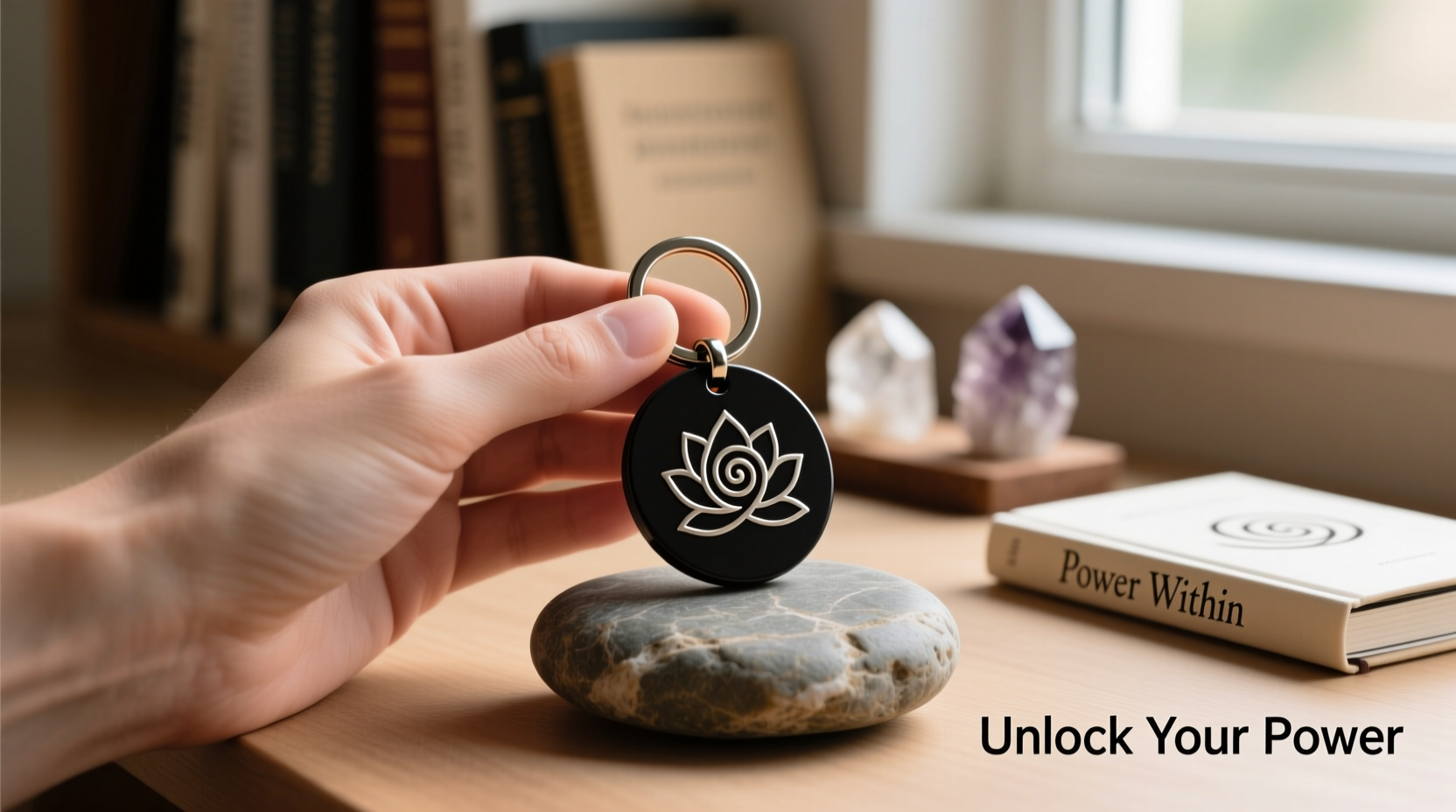
Objects gain emotional weight through association. A worn photograph, a gifted bracelet, or even a ticket stub from a life-changing event—these items trigger memory, emotion, and identity. Psychologists refer to this phenomenon as “material anchoring,” where physical items act as external storage for internal states. A keychain, by virtue of its constant presence in daily life, is uniquely positioned to serve this role.
Unlike jewelry or wallets, which may be removed or set aside, a keychain stays with you—from home to work, car to café. Its tactile accessibility makes it ideal for grounding techniques, mindfulness cues, or intention reinforcement. The key is not in the object itself, but in the conscious meaning you assign to it.
“Objects become meaningful when we invest them with attention. A talisman isn’t magical because of what it is, but because of what we remember when we touch it.” — Dr. Lena Patel, Cognitive Anthropologist
Choosing Your Talisman: Symbolism Over Superstition
Selecting a keychain as a talisman doesn’t require mystical beliefs. It’s about choosing something that resonates with your current journey—be it courage, clarity, connection, or calm. The item should reflect an aspect of who you are or who you’re becoming.
Consider materials and symbols thoughtfully:
- Metal charms (e.g., compass, anchor, tree) suggest direction, stability, or growth.
- Natural elements like wood or stone connect to grounding and authenticity.
- Inscribed words or initials offer direct affirmation (“Breathe,” “Courage,” a loved one’s name).
- Repurposed items—a gear from a broken watch, a shard of sea glass—carry narrative weight.
Activating Your Keychain: A Step-by-Step Ritual
Turning a keychain into a talisman requires intentional activation. This isn’t about ritual for ritual’s sake—it’s about creating a mental contract with yourself. Follow these steps to establish its significance:
- Select the object during a quiet moment. Let intuition guide you rather than aesthetics alone.
- Hold it in both hands and reflect: What quality do I want to embody? What reminder do I need most?
- Speak your intention aloud or write it down. Example: “This reminds me to stay present when I feel overwhelmed.”
- Touch it deliberately each time you use your keys for the first week. Reinforce the association.
- Revisit monthly. Does it still resonate? Has your focus shifted?
This process embeds the keychain into your behavioral rhythm. Each time you reach for your keys, you’re prompted—subtly but consistently—to reconnect with your purpose.
Practical Applications in Daily Life
A well-chosen talisman functions as a micro-tool for emotional regulation and motivation. Here’s how it can serve real-world needs:
| Situation | Talisman Use | Intentional Prompt |
|---|---|---|
| Before a difficult conversation | Feel the charm in your pocket | “I speak with honesty and compassion.” |
| Feeling scattered or anxious | Run fingers over the texture | “I am here. I am grounded.” |
| Starting a new project | Attach a symbol of creativity | “Begin with curiosity, not pressure.” |
| Grieving or missing someone | Carry a small token they gave you | “Their love still guides me.” |
The power lies not in passive possession, but in active engagement. Like a meditation bell or a journal prompt, the keychain becomes a cue for presence.
Mini Case Study: From Doubt to Confidence
Ravi, a junior software developer, struggled with imposter syndrome during team meetings. He chose a small metal phoenix charm for his keychain after reading about rebirth and resilience. Each morning, he held it while repeating, “I grow through challenge.” Initially skeptical, he began noticing the habit: reaching for his keys before a meeting, feeling the raised wings under his thumb. Within six weeks, he volunteered to lead a sprint review—his first. “It wasn’t magic,” he said later. “But it reminded me I wasn’t the same person I was three months ago.”
Do’s and Don’ts of Talisman Use
To maintain the integrity and effectiveness of your keychain talisman, follow these guidelines:
| Do’s | Don’ts |
|---|---|
| Choose something with personal resonance | Don’t pick based on trends or others’ opinions |
| Use touch as a mindfulness trigger | Don’t treat it as a lucky charm without action |
| Replace it when its meaning fades | Don’t hoard multiple talismans without purpose |
| Pair it with a breath or affirmation | Don’t expect it to solve problems passively |
Building a Sustainable Practice: A 30-Day Integration Plan
For lasting impact, integrate your talisman into daily routines. This timeline helps solidify the habit:
- Day 1–3: Choose and activate your keychain with a clear intention.
- Day 4–7: Touch it each time you unlock a door or start your car. Pair with one deep breath.
- Day 8–14: Add a silent affirmation: “I am focused,” “I am enough,” etc.
- Day 15–21: Notice moments when you instinctively reach for it. Journal one insight.
- Day 22–30: Assess its relevance. Adjust or reaffirm your intention.
This gradual layering turns a simple gesture into a durable practice.
Frequently Asked Questions
Can any keychain become a talisman?
Yes, provided you consciously assign meaning to it. Even a plain metal ring can serve as a talisman if it’s linked to a specific intention or memory. The object is secondary to the awareness it supports.
What if I lose my talisman keychain?
Losing it doesn’t break its effect. The real transformation happens internally. You may choose to replace it, but the greater sign is that the value has already been absorbed. As one user reflected: “I missed the charm, but I didn’t miss the confidence it helped build.”
Is this just psychological placebo?
If by “placebo” you mean a belief that produces real change, then yes—and that’s powerful. The mind influences behavior. Tools like talismans leverage cognitive conditioning to support growth. They’re not replacements for action, but allies in consistency.
Final Thoughts: Carry Your Power With You
You don’t need a shrine or a secret ritual to access inner strength. Sometimes, it hangs quietly on your belt loop or rests in your pocket, waiting to be noticed. A keychain talisman works because it meets you where you are—amid commutes, chores, and conversations—offering a split-second return to center.
The true power isn’t unlocked through mysticism, but through repetition, reflection, and resolve. Every time you touch that small object with purpose, you reaffirm who you are and who you’re striving to become. That’s not superstition. That’s self-leadership in motion.
💬 What object could you turn into a daily reminder of your strength? Share your story or intention in the comments—inspire others to carry meaning, not just keys.