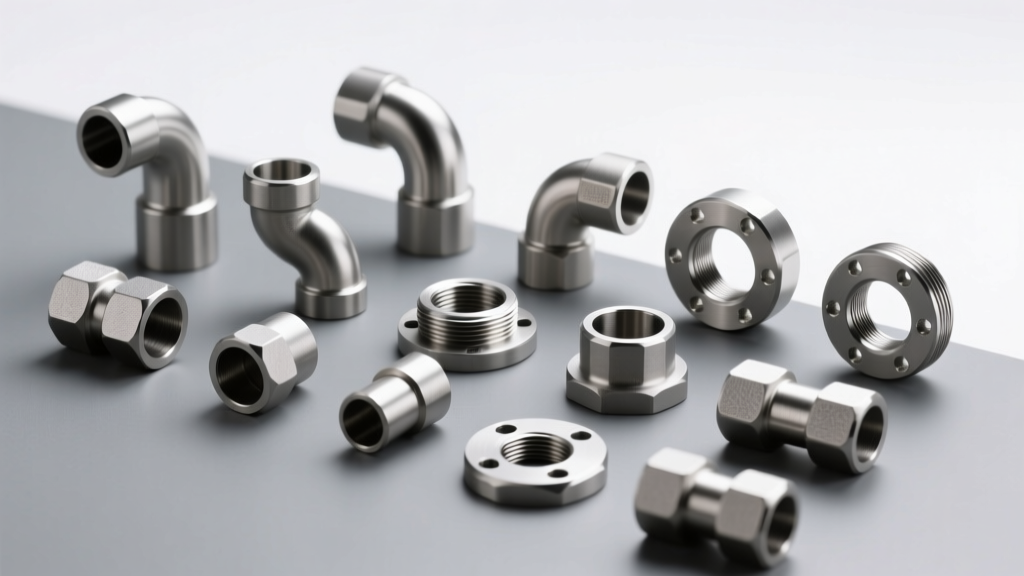
Materials Used for Turning Custom Parts
Turning custom parts requires carefully selected materials that balance machinability, structural integrity, and suitability for end-use applications. The right material enhances performance, extends service life, and ensures cost-effective production. CNC turning operations benefit from materials that can be precisely shaped while maintaining dimensional stability and surface finish.
The following materials are widely used in custom turning due to their unique properties, industry-specific advantages, and compatibility with precision machining processes.
Aluminium Alloys
Lightweight and corrosion-resistant, aluminium alloys are among the most popular choices for turned components requiring high strength-to-weight ratios.
Advantages
- Excellent machinability and fast cutting speeds
- High corrosion resistance
- Good thermal and electrical conductivity
- Ideal for complex, intricate geometries
- Low density reduces part weight significantly
Limitations
- Lower strength compared to steel
- Can gall or stick during machining without proper lubrication
- Less suitable for high-load or high-temperature environments
Common Grades: 6061 (general-purpose), 7075 (high-strength aerospace), 2024 (structural)
Best for: Aerospace fittings, automotive components, heat sinks, electronic enclosures
Stainless Steel
Renowned for durability and resistance to rust and extreme conditions, stainless steel is ideal for demanding environments where hygiene and strength are critical.
Advantages
- Superior corrosion and heat resistance
- High tensile strength and toughness
- Hygienic surface—easy to clean and sterilize
- Excellent for long-term reliability
Limitations
- Work-hardens during machining, increasing tool wear
- Requires slower cutting speeds and rigid setups
- Higher tooling and processing costs
Common Grades: 304 (general corrosion resistance), 316 (marine/chemical), 17-4 PH (high strength)
Best for: Medical devices, food processing equipment, marine hardware, chemical valves
Brass
A copper-zinc alloy prized for its machinability, electrical properties, and aesthetic appeal, brass is a top choice for precision turned parts.
Advantages
- Outstanding machinability—produces clean chips
- Natural corrosion resistance, especially in water environments
- Good electrical and thermal conductivity
- No sparking—safe in explosive environments
- Pleasant gold-like finish, often used decoratively
Limitations
- Softer than steel—less wear-resistant
- Higher material cost compared to some steels
- Can dezincify in aggressive water conditions
Common Grades: C360 (free-machining), C260 (cartridge brass), C464 (naval brass)
Best for: Plumbing fittings, electrical terminals, instrument parts, decorative hardware
Titanium
A high-performance metal with an exceptional strength-to-density ratio and outstanding resistance to fatigue and corrosion.
Advantages
- Extremely strong yet lightweight
- Excellent resistance to corrosion, including saltwater
- Biocompatible—ideal for medical implants
- Performs well at elevated temperatures
Limitations
- Very difficult to machine—low thermal conductivity causes heat buildup
- Requires specialized tooling and cooling techniques
- High raw material and production costs
Common Grades: Grade 5 (Ti-6Al-4V), Grade 2 (commercially pure), Grade 9 (weldable)
Best for: Aerospace components, surgical implants, racing parts, chemical processing
Plastics
Engineering thermoplastics are increasingly used in turning operations due to their versatility, low weight, and resistance to chemicals and corrosion.
Advantages
- Lightweight and non-corrosive
- Good electrical insulation properties
- Low friction and wear resistance (in some grades)
- Cost-effective for high-volume production
- Easy to machine with minimal tool wear
Limitations
- Limited strength and temperature resistance
- Can deform under load or heat (creep)
- Some plastics are flammable or sensitive to UV
Common Types: ABS (impact-resistant), Polycarbonate (transparent/strong), PEEK (high-temp/chemical resistance), Nylon (wear-resistant)
Best for: Insulators, consumer product housings, gears, medical components, chemical seals
Carbon Steel
A versatile and economical material offering high strength and good machinability, especially in low- and medium-carbon variants.
Advantages
- High strength and hardness (especially when heat-treated)
- Good machinability with proper tooling
- Widely available and cost-effective
- Excellent for load-bearing and structural parts
Limitations
- Prone to rust without coating or plating
- Heavier than aluminium or plastics
- May require post-machining treatments (e.g., tempering)
Common Grades: 1018 (low carbon), 1045 (medium carbon), 4140 (alloy steel, heat-treatable)
Best for: Shafts, bolts, gears, industrial machinery, tooling components
| Material | Machinability | Strength | Corrosion Resistance | Typical Applications |
|---|---|---|---|---|
| Aluminium Alloys | Excellent | Medium | High | Aerospace, electronics, automotive |
| Stainless Steel | Fair | Very High | Excellent | Medical, food, marine, chemical |
| Brass | Excellent | Low-Medium | High | Plumbing, electrical, decorative |
| Titanium | Poor | Very High | Excellent | Aerospace, medical, performance |
| Plastics | Very Good | Low | High | Insulators, casings, consumer goods |
| Carbon Steel | Good | High | Low | Industrial, structural, mechanical |
Expert Tip: When turning stainless steel or titanium, use rigid setups, sharp carbide tools, and consistent coolant flow to minimize work hardening and tool wear. For aluminium, avoid built-up edge by using high-speed cutting with proper lubrication.
Uses of Turning Custom Parts Across Key Industries
Custom turned parts are essential components in modern manufacturing, offering unmatched precision, consistency, and adaptability. Created through lathe machining processes, these parts are engineered to meet exact dimensional and functional requirements. Their ability to be tailored for specific applications makes them indispensable across a wide range of high-performance industries—from automotive and aerospace to medical devices and telecommunications.
Industry-Specific Applications of Custom Turned Parts
Automotive Industry
In the automotive sector, custom turned parts play a critical role in enhancing vehicle performance, safety, and fuel efficiency. Components such as axles, drive shafts, engine valves, transmission gears, and steering rods are routinely manufactured using precision turning techniques.
These parts must meet tight tolerances to ensure seamless integration within complex mechanical systems. By optimizing material use and geometric accuracy, custom turning contributes to smoother engine operation, reduced friction, and improved longevity of vehicle components. This enables automakers to meet rigorous emissions standards and deliver high-performance vehicles that consumers demand.
Aerospace Applications
Precision is non-negotiable in aerospace engineering, where even microscopic deviations can lead to catastrophic outcomes. Custom turned parts are widely used in aircraft engines, landing gear systems, hydraulic controls, and structural brackets.
Machined from high-strength alloys like titanium, Inconel, or aluminum, these components are designed to be both lightweight and extremely durable. They must withstand extreme temperatures, pressure fluctuations, and intense mechanical stress. The customization process ensures compliance with strict regulatory standards (e.g., AS9100) and supports innovations in aerodynamics and fuel efficiency, making them vital to the safety and performance of modern aircraft.
Medical Devices
The medical field relies heavily on custom turned parts for life-critical applications. Surgical instruments, orthopedic implants (such as bone screws and joint stems), catheter components, and diagnostic imaging equipment all depend on precision-machined elements.
Accuracy at the micron level is essential to ensure biocompatibility, proper fit, and long-term reliability inside the human body. Materials like stainless steel, titanium, and medical-grade plastics are commonly used due to their corrosion resistance and sterilization compatibility. Custom turning enables the production of patient-specific implants and minimally invasive tools, directly contributing to improved surgical outcomes, faster recovery times, and enhanced patient care.
Industrial Machinery
Across manufacturing and heavy industry, custom turned components form the backbone of reliable and efficient operations. Gears, pulleys, spindles, bushings, and pump shafts are frequently customized to match the unique demands of industrial equipment.
Tailoring these parts to specific load, speed, and environmental conditions reduces wear, vibration, and energy consumption. This not only extends the service life of machinery but also minimizes unplanned downtime and maintenance costs. In automated production lines, even slight improvements in component precision can significantly boost throughput and product quality, making custom turning a key enabler of industrial productivity.
Electronics and Telecommunications
As electronic devices become smaller and more powerful, the demand for miniaturized, high-precision turned parts has surged. Connectors, shielding housings, heat sinks, antenna components, and sensor mounts are often produced using CNC turning for exact dimensional control.
These parts must ensure reliable electrical conductivity, signal integrity, and thermal management while fitting into compact spaces. Custom turning allows manufacturers to rapidly prototype and produce components that meet evolving technological standards—from 5G infrastructure to wearable tech and IoT devices. The ability to work with conductive and non-conductive materials alike makes this process ideal for the fast-paced electronics industry.
Emerging and Niche Applications
Beyond traditional sectors, custom turned parts are increasingly used in renewable energy systems (e.g., wind turbine sensors), robotics (actuator shafts, joint pins), defense technology (guidance systems, firearm components), and scientific instrumentation (vacuum chambers, optical mounts).
In each case, the need for reliability under extreme conditions drives the demand for custom solutions. As innovation accelerates, the versatility of turning processes—especially when combined with multi-axis CNC technology and advanced metrology—ensures that custom parts will continue to support cutting-edge developments across science and engineering.
| Industry | Common Turned Parts | Key Requirements |
|---|---|---|
| Automotive | Axles, gears, valves, shafts | High durability, thermal resistance, precise fit |
| Aerospace | Landing gear pins, engine spindles, brackets | Lightweight, strength-to-weight ratio, fatigue resistance |
| Medical | Implants, surgical tools, cannulas | Micron-level accuracy, biocompatibility, corrosion resistance |
| Industrial | Pulleys, bushings, pump components | Wear resistance, load capacity, dimensional stability |
| Electronics | Connectors, housings, heat dissipation parts | Miniaturization, conductivity, EMI shielding |
Why Custom Turning Matters
Important: Selecting the right machining partner is crucial for achieving optimal results. Ensure your manufacturer uses certified processes, up-to-date CNC equipment, and rigorous quality control (e.g., ISO 9001). Poorly machined parts—even with minor deviations—can compromise system performance, safety, and compliance. Investing in high-quality custom turning today prevents costly failures tomorrow.
Customization Options for Turning Custom Parts
Selecting the right customization options for turned parts is essential to ensure optimal performance, longevity, and compatibility with your application. Whether you're producing prototypes, precision components, or large-scale production runs, understanding the available customization choices enables you to tailor parts to exact functional, environmental, and aesthetic requirements.
Material Selection
The choice of material is one of the most critical decisions in custom turning, directly influencing strength, weight, corrosion resistance, thermal stability, and machinability. Modern CNC turning supports a wide array of metals and alloys, each suited to specific operational demands.
- Aluminum: Lightweight and corrosion-resistant, ideal for aerospace, automotive, and consumer electronics. Easily machined with excellent strength-to-weight ratio.
- Brass: Offers superior electrical conductivity and aesthetic appeal; commonly used in plumbing, electrical connectors, and decorative hardware.
- Stainless Steel: High resistance to rust and extreme temperatures. Grades like 304 and 316 are widely used in medical, food processing, and marine environments.
- Titanium: Exceptional strength-to-density ratio and biocompatibility. Preferred in aerospace, defense, and medical implant applications despite higher machining costs.
Key consideration: Match material properties to operating conditions such as load, temperature, and exposure to chemicals or moisture.
Dimensional Precision & Tolerances
Precision in diameter, length, concentricity, and geometric tolerances ensures seamless integration into complex assemblies. Advanced CNC lathes achieve micron-level accuracy, maintaining consistency across production batches.
- Standard tolerances typically range from ±0.005" to ±0.001", depending on part complexity and size.
- Tight-tolerance machining (±0.0002") is achievable for high-performance applications like hydraulic systems or instrumentation.
- Geometric tolerancing (e.g., runout, cylindricity) ensures dynamic balance and smooth rotation in shafts and spindles.
- First-article inspection (FAI) and CMM (Coordinate Measuring Machine) reports verify dimensional compliance.
Pro tip: Clearly specify GD&T (Geometric Dimensioning and Tolerancing) on technical drawings to avoid fitment issues.
Surface Finish & Treatments
The surface finish affects not only the appearance but also functional performance, including friction, wear resistance, and sealing capabilities. Various post-machining treatments enhance durability and environmental resistance.
- Anodizing (Aluminum): Increases surface hardness and corrosion resistance; available in clear, black, or colored finishes.
- Plating (Zinc, Nickel, Chrome): Improves wear resistance and appearance; chrome plating is common for high-gloss, durable surfaces.
- Polishing: Achieves smooth, reflective finishes for decorative or low-friction applications.
- Sandblasting/Matte Finishes: Provides uniform texture and reduces glare; ideal for ergonomic or aesthetic components.
- Passivation (Stainless Steel): Removes free iron and enhances natural oxide layer for improved corrosion resistance.
Critical factor: Surface roughness (Ra value) should align with functional needs—e.g., Ra 0.8 µm for sealing surfaces, Ra 3.2 µm for general use.
Functional Features & Machining Capabilities
Custom turned parts can integrate complex features directly during the CNC turning process, reducing the need for secondary operations and improving overall accuracy.
- Threads: Internal (tapped) or external (rolled/cut) threads in metric or imperial standards (e.g., M6, 1/4"-20 UNC).
- Holes & Bore Features: Drilled, reamed, or counterbored holes for pins, fasteners, or fluid flow.
- Keyways & Splines: Essential for torque transmission in shafts and couplings.
- Undercuts & Grooves: Used for O-rings, retaining rings, or relief features.
- Multi-axis Milling: Modern CNC turning centers with live tooling can mill flats, slots, or cross-holes in a single setup.
Time-saving advantage: Combining turning and milling operations reduces lead time and improves alignment accuracy.
Batch Size & Scalability
Custom turning services offer flexibility in production volume, making them suitable for both prototyping and mass production. CNC automation enables efficient scaling without sacrificing quality.
- Prototypes (1–10 pcs): Ideal for design validation, testing, and investor demonstrations. Often delivered in 3–7 days.
- Small Batches (10–500 pcs): Suitable for low-volume manufacturing, specialized equipment, or niche markets.
- High-Volume Production (500+ pcs): Supported by automated bar feeding, robotic loading, and statistical process control (SPC) for consistent quality.
- Scalable tooling and programming allow quick transitions from prototype to full production.
Smart choice: Use prototype runs to validate design before committing to large orders.
Quality Assurance & Documentation
Ensuring reliability and traceability is crucial, especially in regulated industries like medical, aerospace, or automotive.
- Material certifications (e.g., Mill Test Reports) verify alloy composition and compliance.
- Inspection reports (First Article, PPAP, FAI) confirm conformance to specifications.
- Batch traceability allows tracking of components from raw material to final product.
- ISO 9001-certified manufacturers follow strict quality management protocols.
- Non-destructive testing (NDT) options available for critical applications.
Professional recommendation: Request full documentation for mission-critical or regulated applications.
Expert Insight: When designing custom turned parts, collaborate early with your manufacturer to optimize for manufacturability (DFM). Simple adjustments—like standardizing thread sizes, minimizing tight tolerances, or selecting readily available materials—can significantly reduce costs and lead times without compromising performance.
| Customization Option | Typical Choices | Impact on Performance | Common Applications |
|---|---|---|---|
| Material Selection | Aluminum, Brass, SS, Titanium | Durability, Weight, Corrosion Resistance | Aerospace, Medical, Automotive |
| Dimensional Tolerance | ±0.001" to ±0.0002" | Fit, Function, Assembly Precision | Hydraulics, Instruments, Robotics |
| Surface Finish | Anodizing, Plating, Polishing | Wear Resistance, Aesthetics, Friction | Consumer Goods, Industrial Equipment |
| Functional Features | Threads, Holes, Keyways, Grooves | Mechanical Integration, Torque Transfer | Machinery, Fasteners, Transmission Parts |
| Production Volume | Prototype to Mass Production | Cost Efficiency, Lead Time, Scalability | R&D, OEMs, Aftermarket Parts |
Additional Considerations
- Lead Time Optimization: Simplify designs and use standard tooling to accelerate production cycles.
- Cost vs. Performance: Balance material cost, machining complexity, and lifecycle requirements to achieve optimal value.
- Environmental Compliance: Choose RoHS-compliant materials and eco-friendly surface treatments when required.
- Design for Assembly (DFA): Integrate features that reduce part count and streamline installation.
- Vendor Collaboration: Engage with manufacturers early for design feedback and process recommendations.
How to Choose Turning Custom Parts: A Comprehensive Guide
Selecting the right custom turned parts is a critical decision that directly impacts the performance, durability, and compatibility of your mechanical systems. Whether you're sourcing components for industrial machinery, automotive systems, aerospace applications, or consumer products, understanding the key selection criteria ensures optimal functionality and long-term reliability. This guide breaks down the essential factors to consider when choosing custom turning parts, helping you make informed decisions that balance quality, cost, and engineering requirements.
Important Note: Custom turned parts are precision-engineered components produced using lathes—machines that rotate the workpiece while a cutting tool shapes it. These parts are commonly used in shafts, bushings, connectors, pins, and other cylindrical components where dimensional accuracy and surface finish are crucial.
Key Factors in Selecting Custom Turning Parts
- Material Selection
Choosing the appropriate material is one of the most critical aspects of custom turning. The material determines the part’s strength, weight, corrosion resistance, thermal stability, and wear characteristics. Your selection should align with the operational environment and mechanical demands.
For high-stress applications such as metalworking tools or heavy-duty machinery, hardened steel (e.g., 4140 or 4340 alloy steel) is ideal due to its exceptional tensile strength and fatigue resistance. These materials can withstand heavy loads and maintain integrity under continuous use.
In contrast, industries like automotive and aerospace often favor aluminum alloys (such as 6061-T6 or 7075-T6) for their lightweight nature and good machinability. Aluminum reduces overall system weight without sacrificing too much strength, contributing to improved fuel efficiency and handling.
Other common materials include:
- Stainless Steel (e.g., 303, 304, 316): Excellent corrosion resistance; ideal for medical, food processing, and marine environments.
- Brass and Bronze: Naturally corrosion-resistant with good electrical conductivity; often used in plumbing, electrical connectors, and decorative hardware.
- Titanium: High strength-to-weight ratio and excellent performance at elevated temperatures; used in aerospace and high-performance racing applications.
Always consult with your manufacturer to ensure the chosen material is compatible with your machining and finishing requirements.
- Tolerance and Precision Specifications
Tolerances define the allowable variation in a part’s dimensions and are vital for ensuring proper fit, function, and interchangeability within an assembly. Tight tolerances (±0.001" or tighter) are typically required in high-precision industries like aerospace, medical devices, and robotics.
When specifying tolerances:
- Clearly communicate your dimensional, geometric (GD&T), and surface finish requirements.
- Consider the functional role of the part—does it need to slide, press-fit, or rotate within a housing?
- Understand that tighter tolerances increase machining time and cost, so only specify them where absolutely necessary.
Before production begins, review technical drawings with your supplier to confirm they can consistently achieve your specified tolerances. Request first-article inspections or CMM (Coordinate Measuring Machine) reports for critical components.
- Machining Capabilities and Equipment
Not all manufacturers offer the same level of precision or technical expertise. The capabilities of the machining facility directly influence the quality, consistency, and complexity of the parts they can produce.
Key considerations include:
- CNC Lathe Technology: Modern CNC (Computer Numerical Control) lathes provide superior accuracy, repeatability, and automation compared to manual lathes. Look for suppliers with multi-axis CNC turning centers capable of live tooling and sub-spindles for complex geometries.
- Experience with Materials: Some materials—like titanium or Inconel—are more challenging to machine due to work hardening or low thermal conductivity. Ensure the manufacturer has proven experience with your selected material.
- Quality Control Systems: Reputable suppliers use in-process inspections, statistical process control (SPC), and final QA checks to maintain consistency across production runs.
Ask for certifications (e.g., ISO 9001), equipment lists, and sample work to evaluate a supplier’s technical competence.
- Finishing Options and Surface Treatments
The surface finish of a turned part affects both its appearance and functional performance. Finishes can enhance corrosion resistance, reduce friction, improve wear life, or provide electrical insulation.
Common finishing options include:
- Anodizing (for aluminum): Increases surface hardness and corrosion resistance; available in various colors for identification or aesthetics.
- Plating (e.g., zinc, nickel, chrome): Provides protective coating against rust and wear; chrome plating is often used for high-lubricity surfaces.
- Passivation (for stainless steel): Removes free iron from the surface to enhance natural corrosion resistance.
- Powder Coating or Painting: Offers durable, decorative finishes with excellent chip and UV resistance.
- Polishing and Buffing: Achieves smooth, reflective surfaces for aesthetic or low-friction applications.
Be aware that some finishes add thickness to the part, which may affect tight tolerances or press-fit dimensions. Always specify finish requirements early in the design phase and allow for dimensional adjustments if needed.
- Cost, Lead Time, and Scalability
Budget and delivery timelines are practical constraints that must be balanced with quality and performance. While cost is important, the lowest price doesn’t always equate to the best value—especially when reliability and precision are at stake.
To optimize cost and lead time:
- Request detailed quotes from multiple suppliers, ensuring they include material, machining, finishing, inspection, and packaging costs.
- Consider economies of scale: unit costs often decrease significantly with larger production runs.
- Understand lead times based on complexity, material availability, and shop capacity. Standard lead times range from 2–6 weeks, but rush services may be available for urgent needs.
- Evaluate the supplier’s scalability—can they handle both prototype development and full-scale production as your project grows?
Transparent communication about your volume needs and delivery expectations helps manufacturers plan efficiently and avoid delays.
| Selection Factor | Key Considerations | Common Materials/Options | Impact on Performance |
|---|---|---|---|
| Material | Strength, weight, corrosion resistance, thermal properties | Steel, aluminum, stainless steel, brass, titanium | Determines durability, load capacity, and environmental suitability |
| Tolerance | Dimensional accuracy, GD&T, fit requirements | ±0.001" to ±0.005" typical; tighter for precision parts | Ensures proper assembly and functional reliability |
| Machining Capability | CNC vs. manual, multi-axis, live tooling, QC processes | CNC turning centers, Swiss-type lathes, automated inspection | Impacts precision, complexity, and production consistency |
| Finishing | Corrosion protection, aesthetics, friction reduction | Anodizing, plating, passivation, polishing | Extends service life and enhances visual or functional quality |
| Cost & Lead Time | Volume, setup fees, shipping, scalability | Prototype vs. production pricing, expedited options | Affects project timeline, budget, and long-term supply stability |
Expert Tip: Always provide detailed CAD models and technical drawings when requesting quotes. Clear documentation reduces misinterpretation, speeds up quoting, and improves manufacturing accuracy. Include notes on critical features, inspection requirements, and preferred finishes.
Best Practices for Sourcing Custom Turned Parts
- Start with a clear design and well-defined functional requirements.
- Engage with suppliers early in the design phase for manufacturability feedback (DFM—Design for Manufacturability).
- Request samples or prototypes before committing to large production runs.
- Verify supplier certifications, quality control procedures, and customer reviews.
- Maintain open communication throughout the production cycle for updates and issue resolution.
By carefully evaluating material, tolerance, machining capability, finish, and cost factors, you can select custom turning parts that meet your performance goals and integrate seamlessly into your final product. Remember, partnering with a reliable, experienced manufacturer is just as important as the technical specifications—quality engineering begins with a trusted supply chain.
Frequently Asked Questions About CNC Turning & Custom Machined Parts
Q1: What is turning custom parts?Turning custom parts refers to a precision machining process where a workpiece is rotated at high speed on a lathe while a stationary cutting tool removes material to shape it. This method is ideal for creating symmetrical, cylindrical components with tight tolerances and smooth surface finishes.
Custom turning allows manufacturers to produce components tailored to specific engineering requirements, making it a critical process in industries that demand high precision and reliability.
- Common Applications: Shafts, pins, bushings, connectors, and threaded components used in critical systems.
- Industries Served: Aerospace, automotive, medical devices, oil and gas, robotics, and defense.
- Technology Used: Modern CNC (Computer Numerical Control) lathes enable automated, repeatable production with micron-level accuracy.
- Materials Processed: Metals (steel, aluminum, brass, titanium), plastics, and composites.
Because of its ability to achieve consistent dimensional accuracy and surface quality, CNC turning is a cornerstone of modern manufacturing for custom-engineered parts.
Q2: What is the difference between turning and milling?Turning and milling are both essential subtractive manufacturing processes, but they differ significantly in operation, tool movement, and application. Understanding these differences helps in selecting the right method for a given part design.
| Feature | Turning | Milling |
|---|---|---|
| Workpiece Movement | Rotates at high speed; cutting tool remains stationary. | Remains fixed; cutting tool rotates and moves across the surface. |
| Primary Shape Output | Cylindrical or axisymmetric parts (e.g., shafts, bolts). | Complex geometries, flat surfaces, slots, pockets, and non-round profiles. |
| Machine Tool | Lathe (manual or CNC). | Milling machine (vertical or horizontal CNC center). |
| Typical Operations | Facing, boring, grooving, threading, tapering. | Drilling, contouring, engraving, reaming, slotting. |
| Material Removal Efficiency | High for long, slender parts with uniform diameters. | High for complex 3D shapes and multi-sided components. |
In practice, many custom parts require both turning and milling operations—often performed on advanced multitasking machines like CNC turning centers with live tooling, which combine the capabilities of both processes in a single setup for greater efficiency and accuracy.
Q3: Is stainless steel a good material for turning custom parts?Yes, stainless steel is an excellent choice for turning custom parts due to its superior mechanical properties and corrosion resistance. It is widely used in environments where durability, hygiene, and strength under stress are critical.
Common grades like 304, 316, and 17-4 PH offer a balance of machinability, strength, and environmental resistance, making them suitable for high-performance applications.
- Corrosion Resistance: Ideal for marine, chemical processing, and medical environments exposed to moisture or sterilization.
- Strength & Durability: Maintains structural integrity under high pressure and temperature variations.
- Machinability: While harder than aluminum, modern CNC lathes with proper tooling (carbide inserts) and coolants can efficiently turn stainless steel with excellent surface finish.
- Hygienic Properties: Non-porous and easy to clean—essential for food processing and surgical instruments.
Despite being more challenging to machine than softer metals, the long-term performance and reliability of stainless steel make it a preferred material for mission-critical custom-turned components.
Q4: What are the benefits of using aluminum for turning custom parts?Aluminum is one of the most popular materials for turning custom parts due to its favorable combination of lightweight, strength, and ease of machining. Its versatility makes it ideal for industries focused on performance, efficiency, and aesthetics.
- Lightweight: With a density about one-third that of steel, aluminum reduces overall component weight—crucial in aerospace, automotive, and portable electronics.
- Excellent Machinability: Aluminum cuts cleanly and quickly on CNC lathes, allowing for faster production cycles and lower tool wear.
- Corrosion Resistance: Naturally forms a protective oxide layer, enhancing longevity without additional coatings.
- Thermal & Electrical Conductivity: Useful in heat sinks, enclosures, and electrical connectors.
- Finishing Options: Accepts a wide range of surface treatments such as anodizing, powder coating, polishing, and plating to improve appearance, wear resistance, and protection.
- Cost-Effective: Lower material and machining costs compared to titanium or specialty alloys, while still delivering strong performance.
Common aluminum alloys used in turning include 6061-T6 and 7075-T6, which offer enhanced strength and stability. These are frequently used in drone components, automotive sensors, hydraulic fittings, and consumer tech products.