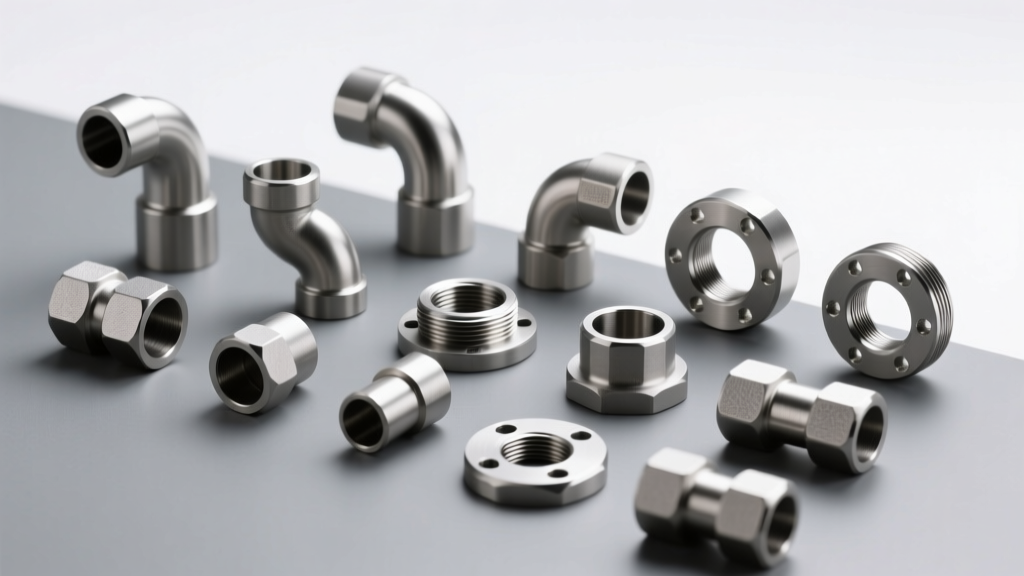
Types of Swivel Wedge Couplers
A swivel wedge coupler is a critical component in modular scaffolding systems, enabling secure and flexible connections between tubes at various angles. These couplers are essential for ensuring structural stability, adaptability, and safety on construction sites. Available in multiple configurations, each type of swivel wedge coupler is engineered to meet specific load requirements, environmental conditions, and assembly needs.
Below is a comprehensive overview of the most common types of swivel wedge couplers, their features, advantages, and ideal applications in modern construction and industrial environments.
Standard Swivel Wedge Coupler
Designed for universal use, the standard swivel wedge coupler allows full 360-degree rotational adjustment. This makes it ideal for complex scaffolding layouts requiring multi-directional tube connections.
Advantages
- Full 360° rotational capability
- High versatility in assembly
- Secure locking mechanism
- Widely compatible with standard scaffolding tubes
Limitations
- May require additional bracing in high-wind areas
- Not optimized for ultra-heavy loads
Best for: General construction, renovation projects, temporary access platforms
Single Point Swivel Wedge Coupler
This variant allows angular adjustment at only one connection point, offering limited swivel functionality compared to the standard model. It's designed for simpler, more predictable scaffolding configurations.
Advantages
- Simplified design for ease of use
- Cost-effective for basic setups
- Quick installation and removal
- Reduced risk of over-adjustment
Limitations
- Limited angular flexibility
- Less suitable for complex geometries
- Narrower application range
Best for: Straight-line scaffolding, interior work, low-complexity structures
Heavy-Duty Swivel Wedge Coupler
Engineered for extreme load-bearing applications, this coupler features reinforced materials and a robust structural design to withstand high stress and dynamic forces.
Advantages
- High load capacity (often rated for 2x standard)
- Reinforced housing and clamping mechanism
- Resistant to deformation under pressure
- Ideal for permanent or semi-permanent installations
Limitations
- Heavier and bulkier than standard models
- Higher cost per unit
- Requires precise installation to avoid stress concentration
Best for: Offshore platforms, mining operations, bridge construction, and other high-stress environments
Double Swivel Coupler
Allows independent movement on two axes, enabling diagonal and multi-plane connections. This provides maximum flexibility for non-standard or curved scaffolding designs.
Advantages
- Dual-axis adjustability for complex angles
- Enables curved or angled structures
- Excellent for architectural scaffolding
- Reduces need for custom fittings
Limitations
- More expensive than single swivel types
- Requires skilled installation
- Less common in standard inventory
Best for: Dome structures, curved facades, artistic installations, and specialized engineering projects
Forged Swivel Wedge Coupler
Made from forged steel through a high-pressure manufacturing process, this coupler offers superior strength, durability, and resistance to cracking under stress.
Advantages
- Exceptional tensile strength
- Superior fatigue resistance
- Longer service life than cast alternatives
- Performs well in extreme temperatures and corrosive environments
Limitations
- Higher production and purchase cost
- Heavier weight increases labor effort
- Limited availability in some regions
Best for: Offshore drilling rigs, heavy industrial sites, high-rise construction, and safety-critical applications
| Type | Adjustability | Load Capacity | Durability | Best Application |
|---|---|---|---|---|
| Standard Swivel | 360° Rotation | Medium-High | High | General construction, renovation |
| Single Point Swivel | Single-Axis | Medium | Medium | Simple scaffolding, interior work |
| Heavy-Duty | 360° (Reinforced) | Very High | Very High | Offshore, mining, heavy infrastructure |
| Double Swivel | Two-Axis | Medium | High | Curved structures, architectural work |
| Forged Steel | 360° (High-Strength) | Extremely High | Exceptional | Critical safety zones, extreme environments |
Expert Tip: Always inspect swivel wedge couplers before installation for signs of wear, deformation, or corrosion. Forged and heavy-duty models should be torque-checked regularly in high-load applications to ensure continued structural integrity and compliance with safety standards.
Industrial Applications of Swivel Wedge Coupler
Swivel wedge couplers are essential mechanical connectors designed to provide secure, flexible, and high-strength joints in tubular structures. Their unique 360-degree rotational capability and wedge-locking mechanism make them ideal for dynamic and demanding environments across multiple industries. These couplers enhance structural adaptability, improve safety, and reduce assembly time in complex scaffolding and support systems.
Key Features of Swivel Wedge Couplers
Construction Industry
The construction industry is the largest consumer of swivel wedge couplers, primarily due to their critical role in scaffolding systems. These couplers enable the creation of stable, modular, and reconfigurable support structures that must adapt to varying building geometries, heights, and load requirements.
Traditional scaffolding often struggles with alignment on uneven or curved surfaces, but the 360-degree swivel feature allows workers to adjust pipe angles seamlessly. This flexibility enhances both safety and efficiency, reducing the risk of structural failure during high-rise construction, bridge work, or interior renovations.
Oil and Gas Industry
In the oil and gas sector, swivel wedge couplers are indispensable for offshore drilling platforms and onshore processing facilities. These environments subject equipment to extreme conditions—high pressure, corrosive seawater, fluctuating temperatures, and constant mechanical vibration.
Couplers used in this industry are typically manufactured from high-grade, corrosion-resistant alloys and undergo rigorous testing to meet safety standards such as API and ISO. Their ability to maintain structural integrity under dynamic loads makes them a preferred choice for access platforms, maintenance walkways, and emergency egress systems on offshore rigs.
Shipbuilding and Marine Industry
The shipbuilding and marine repair industries rely heavily on swivel wedge couplers for constructing large-scale scaffolding around hulls, decks, and confined spaces within vessels. Shipyards face unique challenges, including limited workspace, complex curvature, and exposure to saltwater.
Heavy-duty couplers with enhanced load-bearing capacity ensure that scaffolding remains stable during welding, painting, and inspection tasks. Their adaptability allows for rapid reconfiguration as ships progress through different stages of construction or dry-dock repair, minimizing downtime and improving worker safety.
Rail and Transportation Industry
The rail and transportation sectors utilize swivel wedge couplers for maintenance and inspection of trains, tunnels, overhead lines, and trackside infrastructure. These applications often require scaffolding in narrow, elevated, or hard-to-access areas where traditional rigid connections are impractical.
The couplers' flexibility enables technicians to build secure platforms around locomotives, carriages, and signaling equipment. Their quick assembly and disassembly streamline maintenance schedules, while their robust design ensures stability even in high-traffic or vibration-prone environments like subway systems and freight terminals.
Industrial and Manufacturing Sector
Large-scale manufacturing plants and industrial facilities use swivel wedge couplers extensively during equipment maintenance, plant upgrades, and facility expansions. These environments often involve high-load applications such as supporting platforms for boiler inspections, conveyor system repairs, or reactor vessel access.
Due to the presence of heavy machinery and potential fall hazards, safety is paramount. Swivel couplers contribute to OSHA-compliant scaffolding systems by ensuring secure connections that can withstand both static and dynamic loads. Their durability also reduces replacement frequency, lowering long-term operational costs.
| Industry | Primary Use | Key Benefit of Swivel Wedge Coupler |
|---|---|---|
| Construction | Scaffolding for buildings, bridges, and infrastructure | 360° flexibility for complex structures and fast assembly |
| Oil & Gas | Offshore platform access and maintenance | Corrosion resistance and high strength in extreme conditions |
| Marine & Shipbuilding | Hull scaffolding and vessel repair | Adaptability to curved surfaces and heavy load support |
| Rail & Transportation | Train and track maintenance platforms | Compact, stable setups in confined spaces |
| Manufacturing | Plant maintenance and equipment access | Safety compliance and durability under industrial loads |
Important: Always ensure that swivel wedge couplers meet recognized safety standards (e.g., OSHA, EN 74, BS 1139) and are inspected regularly for wear, deformation, or corrosion. Using substandard or damaged couplers can lead to catastrophic structural failures. Proper training in assembly techniques and load assessment is crucial for safe deployment across all industrial applications.
Product Specifications and Features
Scaffold couplers are essential components in temporary structural systems, providing secure connections between tubes to form stable working platforms. Their design combines strength, adaptability, and ease of use—making them ideal for diverse construction environments where safety and efficiency are paramount.
Swivel Mechanism
Engineered for flexibility, these couplers feature a precision swivel joint that allows angular adjustment from 0° to 15°. This range accommodates real-world construction variances such as uneven surfaces, misaligned tubes, or complex framework geometries.
- Enables seamless integration into non-uniform scaffolding layouts
- Reduces stress concentration at connection points by allowing natural alignment
- Improves worker productivity by eliminating the need for custom fittings or manual adjustments
Pro tip: Use swivel couplers at corners, transitions, or sloped sections for optimal structural integrity.
Quick Lock and Release Wedge
The integrated wedge system provides rapid, tool-free locking with superior holding power. Once positioned, a single strike with a hammer or impact gun drives the wedge into place, creating a rigid, vibration-resistant connection.
- High-tensile steel wedge ensures secure clamping force up to 25 kN (approx. 5,600 lbs)
- Vibration resistance prevents loosening under dynamic loads or wind exposure
- Easy release mechanism allows for fast disassembly during dismantling phases
Key benefit: No specialized tools required—ideal for high-efficiency crew operations.
Material and Finish
Constructed from high-grade forged steel, these couplers deliver exceptional strength-to-weight ratio and long-term durability. The forging process enhances grain structure, increasing resistance to impact and fatigue.
- Galvanized or powder-coated finishes provide robust protection against rust and corrosion
- Ideal for use in high-moisture environments like coastal areas, basements, or outdoor projects during wet seasons
- Surface treatments meet ISO 1461 standards for hot-dip galvanization, ensuring minimum 50-year service life in moderate conditions
Technical note: Avoid mixing galvanized and non-galvanized components to prevent galvanic corrosion.
Load-Bearing Capacity
Each coupler is rated for specific load thresholds, directly influencing scaffold safety and compliance with OSHA and EN 74 standards. Heavy-duty models support industrial applications involving equipment, materials, and multiple workers.
- Standard couplers: Rated for 15–20 kN axial load (3,300–4,500 lbs)
- Heavy-duty variants: Capable of withstanding up to 25 kN (5,600 lbs) with reinforced jaw design
- Tested under cyclic loading to simulate real-world stress conditions
Critical reminder: Never exceed manufacturer-specified load limits—overloading compromises entire scaffold stability.
Installation Guide
Installing scaffold couplers correctly is crucial for structural integrity. Follow this step-by-step procedure to ensure safe and reliable connections every time.
| Step | Action | Best Practices |
|---|---|---|
| 1. Position Coupler | Slide the coupler onto a pre-installed scaffold tube, ensuring the central bore fits snugly around the pipe. | Center the coupler at the joint midpoint for balanced load distribution. |
| 2. Align Halves | Adjust the two halves of the coupler so they are parallel to the pole axis before tightening. | Misalignment can cause binding or uneven wear—double-check orientation. |
| 3. Lock Wedge | Drive the wedge into place using a hammer or impact tool until fully seated. | Avoid over-tightening, which may distort the pipe or damage internal threads. |
| 4. Connect New Pipe | Insert the second scaffold tube into the secured coupler to complete the connection. | Verify full insertion depth and secure with additional couplers if needed. |
| 5. Final Inspection | Check all couplers post-installation for proper seating and stability. | Use a checklist to confirm no missing or loose components. |
Safety First: Always wear appropriate PPE during installation. Ensure scaffolds are erected on stable, level ground and braced according to local regulations. Never work on unsecured or incomplete scaffolding structures.
Maintenance and Repair Guidelines
Regular maintenance extends the service life of couplers and ensures ongoing safety. Implement a proactive inspection and care routine to minimize downtime and prevent hazardous failures.
Inspect for Wear and Tear
Conduct visual and tactile inspections before each major use and periodically throughout the project lifecycle.
- Look for cracks, deformation, or excessive wear in the jaw and wedge mechanism
- Check for corrosion, especially in crevices and contact surfaces
- Remove any coupler showing signs of fatigue or structural compromise immediately
Expert advice: Tag and quarantine damaged units to prevent accidental reuse.
Cleaning and Lubrication
Keep couplers clean and well-maintained to preserve performance and appearance.
- Wipe down with a damp cloth after use to remove dirt, mud, and salt residue
- Use mild detergent for stubborn grime—never abrasive cleaners or wire brushes
- Apply a light layer of anti-seize lubricant to moving parts (e.g., wedge channel) annually or after exposure to moisture
Note: Excess lubricant attracts debris—wipe off surplus after application.
Repair vs. Replacement
While minor surface rust can be treated, structural damage generally requires replacement.
- Light surface corrosion: Clean and reapply protective coating
- Cracks or deformation: Replace immediately—do not attempt field welding
- Worn wedge mechanisms: Replace as a set to maintain consistent clamping force
Important: Only certified professionals should assess repairability. When in doubt, replace.
Storage Best Practices
Proper storage prevents premature degradation and maintains readiness for future use.
- Store in a dry, low-humidity environment to inhibit rust formation
- Use individual plastic or cloth bags to prevent metal-to-metal contact and scratching
- Stack neatly on pallets off the ground—avoid direct contact with concrete floors
- Label and organize by type and size for quick identification
Pro tip: Perform a quick inspection and cleaning cycle before long-term storage.
Professional Recommendation: Establish a formal inspection and maintenance log for all couplers. Track usage frequency, environmental exposure, and service history to predict replacement needs and comply with safety audits. Investing in a durable, well-maintained inventory reduces long-term costs and enhances worksite safety.
Quality Coupler of Scaffold System Products Only From Trusted Suppliers
Safety is the paramount concern in any scaffolding application. Compromising on quality by selecting low-cost, substandard couplers may result in catastrophic failures, putting workers at risk and leading to costly delays, legal liabilities, and project shutdowns. Investing in high-quality scaffold couplers from reputable, trusted suppliers is not just a best practice—it's a critical safety imperative.
Safety Warning: Using inferior or uncertified couplers can lead to structural collapse, serious injury, or fatalities. Always source couplers that meet international safety standards (such as OSHA, EN74, or BS1139) and verify material certifications before installation.
Choosing the Right Coupler for Your Application
Selecting the appropriate coupler type based on the job requirements ensures stability, longevity, and compliance with safety regulations. Below is a breakdown of common coupler types and their ideal applications:
| Coupler Type | Key Features | Recommended Applications | Material & Strength |
|---|---|---|---|
| Forged Coupler | High tensile strength, durable, impact-resistant | Heavy-duty construction, high-rise buildings, offshore platforms | Forged steel, tested to 60 kN+ load capacity |
| Double Swivel Coupler | 360° rotational flexibility, multi-directional alignment | Rail maintenance, curved structures, complex frameworks | Ductile iron or malleable steel, corrosion-resistant coating |
| Right-Angle Coupler | Secure 90° connections, excellent rigidity | Standard scaffolding frameworks, vertical-to-horizontal joints | Grade 350 or higher malleable iron |
| Sleeve Coupler | Internal joint reinforcement, seamless tube connection | Extending scaffold tubes, load-bearing columns | Carbon steel with galvanized finish |
Industry-Specific Sourcing Practices
- Construction & Offshore Industries: These sectors prioritize safety-critical performance and often source forged couplers from suppliers with proven track records. They require couplers that meet rigorous international standards and undergo third-party testing. Online procurement from well-reviewed, certified suppliers ensures traceability, consistent quality, and bulk availability.
- Rail & Transportation Maintenance: Due to the irregular geometries of rail infrastructure, double swivel couplers are preferred for their adaptability. Companies in this field frequently purchase in bulk from suppliers offering volume discounts while maintaining quality assurance and compliance documentation.
- Large-Scale Manufacturing Plants: These facilities use a mix of heavy-duty and double swivel couplers for maintenance scaffolding. Their procurement strategy emphasizes not only product quality but also after-sales support, warranty coverage, and long-term supply reliability. Sustainability is also a growing factor, with preference given to recyclable materials and suppliers with eco-conscious manufacturing practices.
Expert Tip: Always request material test certificates (MTCs) and compliance documentation from your supplier. Reputable manufacturers provide traceable batch numbers and certification to standards like ISO 9001, EN74, or ASTM F2227.
Best Practices for New Buyers
If you're new to sourcing scaffold couplers, avoid committing to large orders immediately. Instead, follow these steps to minimize risk and ensure satisfaction:
- Request a sample batch to evaluate material quality, finish, and dimensional accuracy.
- Inspect for proper markings (size, grade, manufacturer stamp, standard compliance).
- Conduct a load test or have the coupler assessed by a qualified engineer if used in critical applications.
- Verify the supplier’s responsiveness, packaging, and delivery timelines.
- Only proceed with bulk purchasing after successful evaluation and team approval.
Caution: Avoid suppliers offering unusually low prices or vague product descriptions. These are often red flags for counterfeit or substandard products that may fail under stress.
Final Recommendations
- Partner with suppliers who offer product warranties and technical support.
- Ensure all couplers are galvanized or coated to resist rust and corrosion, especially in outdoor or marine environments.
- Train site supervisors to inspect couplers regularly for cracks, deformation, or wear.
- Maintain a procurement log with supplier details, batch numbers, and inspection records for audit purposes.
- Stay updated on local and international scaffolding safety regulations to ensure compliance.
Ultimately, the integrity of any scaffolding system hinges on the quality of its components. By sourcing couplers from trusted, certified suppliers and matching the right type to your specific needs, you ensure worker safety, regulatory compliance, and long-term project success. Never compromise on quality—your team’s safety depends on it.
Frequently Asked Questions About Swivel Coupler Scaffolds
Q1: What is a swivel coupler scaffold?A swivel coupler scaffold is a modular construction system that uses specialized connectors—known as swivel wedge couplers—to join scaffold tubes at variable angles. Unlike rigid connectors, a swivel coupler allows one tube to rotate relative to another, enabling flexible and precise alignment during assembly.
This rotational capability makes it ideal for creating stable structures on uneven surfaces or complex geometries such as stairwells, curved platforms, sloped roofs, or multi-tiered towers. The coupler acts like a pivot joint, providing both strength and adaptability, which enhances safety and structural integrity in dynamic work environments.
Swivel couplers are typically made from high-grade steel and secured using wedge pins or bolts, ensuring a tight, vibration-resistant fit. Their versatility has made them essential in modern scaffolding systems across residential, commercial, and industrial construction projects.
Q2: What are the functions and uses of scaffolding couplers?Scaffolding couplers serve as critical connecting components that bind steel tubes together to form a secure and stable framework. Their primary function is to provide structural integrity while allowing for design flexibility—especially in configurations where straight, right-angle connections are insufficient.
Key functions include:
- Connection: Securely joining scaffold tubes end-to-end or at angles to build frameworks.
- Flexibility: Enabling non-linear arrangements (e.g., diagonals, braces) for enhanced stability.
- Load Distribution: Evenly transferring weight and stress across the structure to prevent localized failure.
- Adjustability: Accommodating variations in terrain or architectural design without compromising safety.
Common applications include:
- Building façade access during construction or maintenance
- Bridge repair and inspection platforms
- Shipbuilding and offshore rigging operations
- Event staging and temporary elevated work zones
- Historic building restoration with irregular surfaces
Due to their reliability and ease of assembly, couplers are widely used in both tube-and-coupler scaffolding systems and hybrid modular designs.
Q3: What are the common problems with swivel coupler scaffolds?While swivel couplers are robust, several issues can compromise their performance and safety over time:
- Corrosion and Rust: Exposure to moisture, rain, or harsh environments can lead to rust, weakening the metal and reducing load capacity. Galvanized or stainless steel couplers offer better resistance.
- Wear and Tear: Repeated assembly/disassembly, impact damage, or exposure to abrasive materials can cause thread degradation, pin wear, or deformation of the socket.
- Improper Installation: Loose couplers, incorrect wedge insertion, or mismatched components can create weak points in the structure, increasing the risk of collapse.
- Overloading: Exceeding the rated load capacity—either through excessive worker weight, equipment, or materials—can stress the coupler beyond its design limits.
- Accumulation of Debris: Dirt, concrete splatter, or paint buildup inside the coupler can interfere with proper seating and clamping force.
To mitigate these risks, regular inspection, cleaning, and maintenance are essential. Damaged or corroded couplers should be immediately replaced to ensure worker safety and compliance with OSHA and other regulatory standards.
Q4: How can you identify a forged scaffolding coupler?Forged couplers are manufactured using a high-pressure shaping process that compresses heated metal into a die, resulting in a denser, stronger, and more durable product compared to cast or welded alternatives. Identifying a forged coupler involves visual, tactile, and marking-based assessments:
- Surface Finish: Forged couplers have a smoother, cleaner appearance with sharp, well-defined edges and minimal surface porosity. Cast couplers often show rough textures, parting lines, or air bubbles.
- Material Density: Forged steel feels heavier and more solid for its size due to the compact grain structure formed during forging.
- Grain Flow Pattern: Under close inspection, forged parts may reveal directional grain patterns that follow the shape, enhancing strength and fatigue resistance.
- Stamped Markings: Most forged couplers feature permanent manufacturer logos, material grade (e.g., ASTM A536), load ratings, or certification stamps (such as CE or UKCA) directly imprinted into the metal.
- Consistency: High-quality forgings exhibit uniform dimensions and symmetry, indicating precision manufacturing.
Using forged couplers is recommended in high-load or safety-critical applications due to their superior mechanical properties and long-term reliability.
Q5: What factors affect the price of scaffolding couplers?The cost of scaffolding couplers varies significantly based on multiple technical, material, and logistical factors. Understanding these helps in making informed purchasing decisions:
| Factor | Impact on Price |
|---|---|
| Material Type | Carbon steel is standard and affordable; stainless steel or alloy variants cost more due to corrosion resistance and strength. |
| Manufacturing Process | Forged couplers are more expensive than cast ones due to higher energy input and superior quality. |
| Finish & Coating | Hot-dip galvanization adds cost but improves longevity. Powder coating or electroplating may also increase price. |
| Brand & Certification | Reputable brands and certified products (e.g., EN 74, OSHA-compliant) command premium pricing due to quality assurance and traceability. |
| Quantity Ordered | Bulk purchases typically reduce per-unit cost through economies of scale and lower handling fees. |
| Design Complexity | Specialty couplers (swivel, right-angle, sleeve) cost more than basic joint types due to intricate machining. |
| Shipping & Handling | Weight, distance, and delivery speed influence final cost—especially for large international orders. |
Investing in higher-quality couplers may have a higher upfront cost but often results in longer service life, reduced maintenance, and improved worksite safety—making it a cost-effective choice in the long run.