
In the rapidly expanding world of home automation, terms like “smart plug” and “smart outlet” are used so interchangeably that many consumers assume they’re different products. But are they? At first glance, both allow you to control electrical devices remotely, schedule on/off times, and integrate with voice assistants like Alexa or Google Assistant. Yet subtle distinctions—ranging from design and installation to functionality and scalability—can influence which option suits your smart home setup best.
This article dives deep into the technical and practical differences between smart plugs and smart outlets, clarifies common misconceptions, and helps you decide which solution aligns with your automation goals.
Understanding the Basics: What Are Smart Plugs and Smart Outlets?
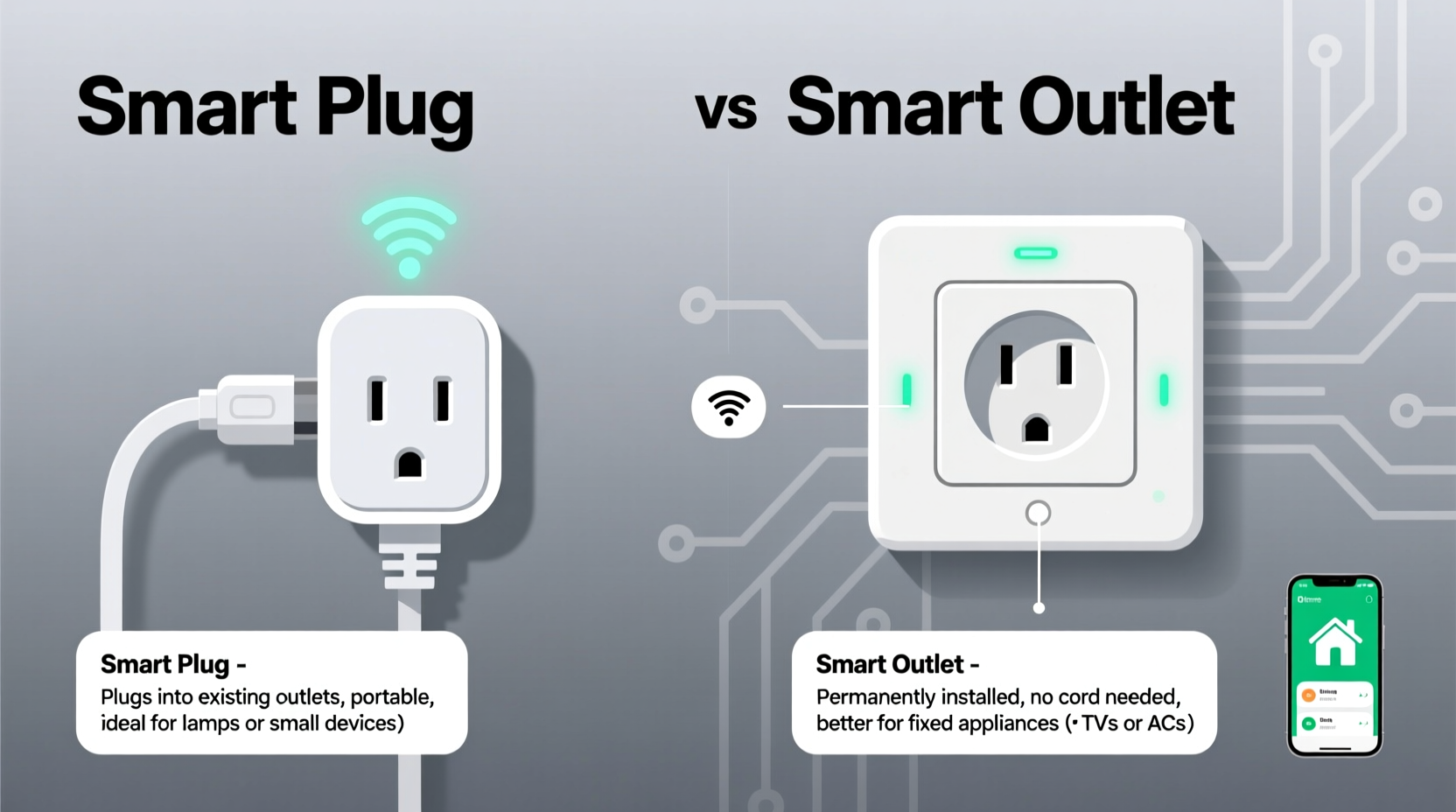
A smart plug is a standalone device that plugs directly into an existing wall outlet. You then connect your lamp, fan, coffee maker, or other appliance into the smart plug. It acts as a bridge between your traditional outlet and the device, enabling remote control via Wi-Fi or Bluetooth. Most smart plugs support mobile apps, scheduling, energy monitoring, and voice commands.
A smart outlet, by contrast, typically refers to a wall-mounted electrical receptacle that replaces your standard outlet. It’s hardwired into your home’s electrical system and requires professional installation. Once installed, it functions similarly to a smart plug but is built directly into the wall, offering a cleaner aesthetic and often more advanced features like multi-zone control or integration with home security systems.
Despite these functional similarities, the key differentiator lies in form factor and installation method—not intelligence or capability.
Tip: If you rent your home or aren’t comfortable with electrical work, a smart plug is almost always the safer, more flexible choice.Key Differences at a Glance
While both devices serve the same fundamental purpose—adding smart control to non-smart appliances—they differ in several important ways. Below is a detailed comparison to clarify their distinctions.
| Feature | Smart Plug | Smart Outlet |
|---|---|---|
| Installation | Plug-and-play; no tools required | Requires electrician; involves wiring |
| Portability | Highly portable; move between rooms | Fixed location; permanent fixture |
| Aesthetic Impact | Bulky; protrudes from wall | Clean, flush-mounted look |
| Cost | $15–$30 per unit | $40–$100+ per outlet + labor |
| Energy Monitoring | Available on mid-to-high-end models | Commonly included, sometimes per socket |
| Integration | Wi-Fi or Zigbee; works with most hubs | Often supports Z-Wave, Zigbee, or proprietary systems |
| Safety Certification | UL/ETL listed for plug-in use | UL listed for permanent installation |
The table highlights that while smart plugs win in convenience and affordability, smart outlets offer permanence, aesthetics, and deeper integration potential—especially in newly constructed or renovated homes.
When to Choose a Smart Plug
Smart plugs are ideal for renters, DIY enthusiasts, or anyone testing the waters of home automation. They require zero commitment and can be removed without leaving any trace. Because they’re designed for temporary use, they’re also easier to upgrade or replace as technology evolves.
They work exceptionally well for:
- Controlling lamps and holiday lighting
- Automating coffee makers or slow cookers
- Power cycling routers or entertainment systems
- Adding smart functionality to space heaters (with caution)
Many modern smart plugs now include energy usage tracking, allowing you to monitor how much power your devices consume over time. Brands like TP-Link Kasa, Wemo, and Eve offer reliable options with robust app support and HomeKit or Matter compatibility.
“Smart plugs are the gateway drug to home automation—they’re low-risk, high-reward, and instantly gratifying.” — Jordan Lee, Smart Home Consultant at Connected Living Labs
When a Smart Outlet Makes More Sense
Smart outlets shine in permanent installations where aesthetics and seamless integration matter. Think of a modern kitchen with under-cabinet lighting controlled via app, or a home office where every desk outlet is part of a larger automation scene.
Because they replace the actual wall outlet, smart outlets free up space—you don’t have a bulky adapter sticking out and blocking adjacent sockets. This is especially useful in tight spaces like behind sofas or entertainment centers.
Additionally, some smart outlets offer dual-control capabilities, meaning each socket in a duplex outlet can be controlled independently. For example, you could set one side to turn on at sunset (for a floor lamp) while the other stays off until 7 a.m. (for a charging phone).
They’re also more suitable for high-power applications when properly rated. While most smart plugs max out at 15 amps, certain smart outlets are designed for heavier loads and can integrate with home energy management systems.
Tip: Always verify local electrical codes before installing smart outlets. In many regions, only licensed electricians can legally perform such modifications.Real-World Example: The Modern Family Home Upgrade
The Thompson family wanted to automate their living room and porch lighting without rewiring the entire house. They initially tried smart plugs for floor lamps and string lights, which worked well—but the plugs were unsightly and occasionally tripped when bumped.
During a minor renovation, they replaced two living room outlets and the outdoor porch outlet with Lutron Caseta smart outlets. The result was transformative: clean lines, no visible hardware, and full integration with their Apple HomeKit system. Now, a single “Goodnight” scene turns off all lights, locks the doors, and adjusts the thermostat—without any dangling adapters.
The upfront cost was higher ($80 per outlet plus $150 labor), but the long-term benefits in usability and aesthetics justified the investment.
Compatibility and Ecosystem Considerations
Both smart plugs and smart outlets must align with your existing smart home ecosystem. Key factors include communication protocols (Wi-Fi, Zigbee, Z-Wave, Thread), hub requirements, and voice assistant support.
For example:
- Wi-Fi devices are easy to set up but can congest your network if you have many.
- Zigbee/Z-Wave models require a hub (like Samsung SmartThings or Hubitat) but offer better reliability and lower latency.
- Matter-over-Thread devices promise future-proof interoperability across Apple, Google, and Amazon platforms.
If you're building a scalable smart home, consider starting with a mix: use smart plugs for temporary or movable devices, and reserve smart outlets for fixed locations like kitchens, bedrooms, and outdoor areas.
Step-by-Step Guide: Choosing the Right Option for Your Needs
- Assess your environment: Are you a renter or homeowner? Do you have access to wiring, or are you limited to surface-level changes?
- Identify use cases: List the devices you want to automate. Are they portable (lamps, fans) or permanently placed (under-cabinet lights, garage tools)?
- Evaluate your network: Check your Wi-Fi strength in key areas. If signal is weak, opt for Zigbee or Z-Wave models with a dedicated hub.
- Determine budget: Factor in not just device cost, but potential electrician fees for smart outlets.
- Check compatibility: Ensure the device works with your preferred voice assistant and automation platform (e.g., HomeKit, Google Home, Alexa).
- Test one first: Start with a single smart plug to gauge satisfaction before committing to permanent installations.
Common Misconceptions Debunked
Misconception 1: “Smart outlets are always more powerful.”
Not necessarily. Power handling depends on the model, not the category. Many smart plugs support up to 1800 watts—plenty for most household devices. Always check specifications before connecting high-draw appliances like space heaters or air conditioners.
Misconception 2: “Smart outlets are more secure.”
Security depends on encryption and firmware updates, not physical form. Reputable brands like Belkin, Eve, and Lutron offer end-to-end encryption and regular OTA updates for both plug-in and hardwired models.
Misconception 3: “You need a hub for smart outlets.”
Some do, but many Wi-Fi-enabled smart outlets operate independently. However, for advanced automation (e.g., geofencing or multi-device scenes), a hub often enhances functionality.
Checklist: Smart Plug vs Smart Outlet Decision Matrix
- ☐ I am a renter or cannot modify wiring → Choose smart plug
- ☐ I want a clean, invisible setup → Consider smart outlet
- ☐ I need to control multiple devices in one location → Smart outlet with dual control may be better
- ☐ I already have a smart home hub → Explore Zigbee/Z-Wave options
- ☐ I prioritize energy monitoring → Verify feature availability in both types
- ☐ I’m building or renovating → Smart outlets are worth the investment
Frequently Asked Questions
Can I use a smart plug with any appliance?
No. Avoid using smart plugs with high-wattage devices like microwaves, refrigerators, or HVAC units unless the plug is explicitly rated for such loads. Motors and compressors can cause power surges that damage electronics. Always consult the manufacturer’s guidelines.
Do smart outlets save energy?
Indirectly, yes. By automating shut-offs, preventing phantom loads, and providing usage data, both smart plugs and outlets help reduce standby power consumption. Studies suggest households can save 5–10% on electricity bills through strategic automation.
Are smart outlets safe?
Yes, when installed correctly by a qualified electrician and certified by safety organizations (UL, ETL). Unlike smart plugs, they undergo rigorous testing for continuous load and thermal performance. Never attempt DIY installation unless you’re trained and permitted.
Final Thoughts: It’s Not About Which Is Better—It’s About Fit
The debate between smart plug and smart outlet isn’t about superiority—it’s about suitability. Both play vital roles in a modern smart home. Smart plugs offer flexibility, affordability, and instant results. Smart outlets deliver elegance, permanence, and deeper integration for long-term setups.
As home automation matures, the line between the two continues to blur. Some manufacturers now offer hybrid solutions—like smart outlet covers with built-in USB ports and plug-in modules that mimic hardwired control. With the rise of Matter and Thread, interoperability will soon outweigh form factor concerns.
“The future of smart homes isn’t choosing between plug and outlet—it’s having both work seamlessly together.” — Dr. Anita Rao, IoT Research Lead at Stanford Digital Habitats Initiative
Take Action Today
Start small. Buy one smart plug and automate a lamp or fan. See how it fits into your daily routine. If you love the convenience, consider upgrading key outlets during your next home improvement project. Whether you go plug or outlet, you’re taking a meaningful step toward a smarter, more efficient living space.
🚀 Ready to automate? Pick one device today, set up a schedule, and experience the simplicity of smart control. Share your setup in the comments—what will you turn smart first?