In 2025, the virtual reality landscape has evolved rapidly, but many enthusiasts are still turning to older, high-performance headsets on the secondhand market. Among these, two models stand out: the Oculus Rift S and the Valve Index. Both were flagship devices in their time, offering immersive experiences at different price points. As new headsets like the Meta Quest 3 and upcoming Apple Vision Pro dominate headlines, the question remains: which of these two legacy systems still holds up as a smart used purchase?
The answer isn’t straightforward. While both headsets deliver room-scale VR, they differ significantly in build quality, tracking technology, visual fidelity, and long-term support. For budget-conscious users or those building a PC-powered VR setup, choosing between them requires weighing trade-offs in performance, comfort, and future-proofing.
Performance and Display Quality
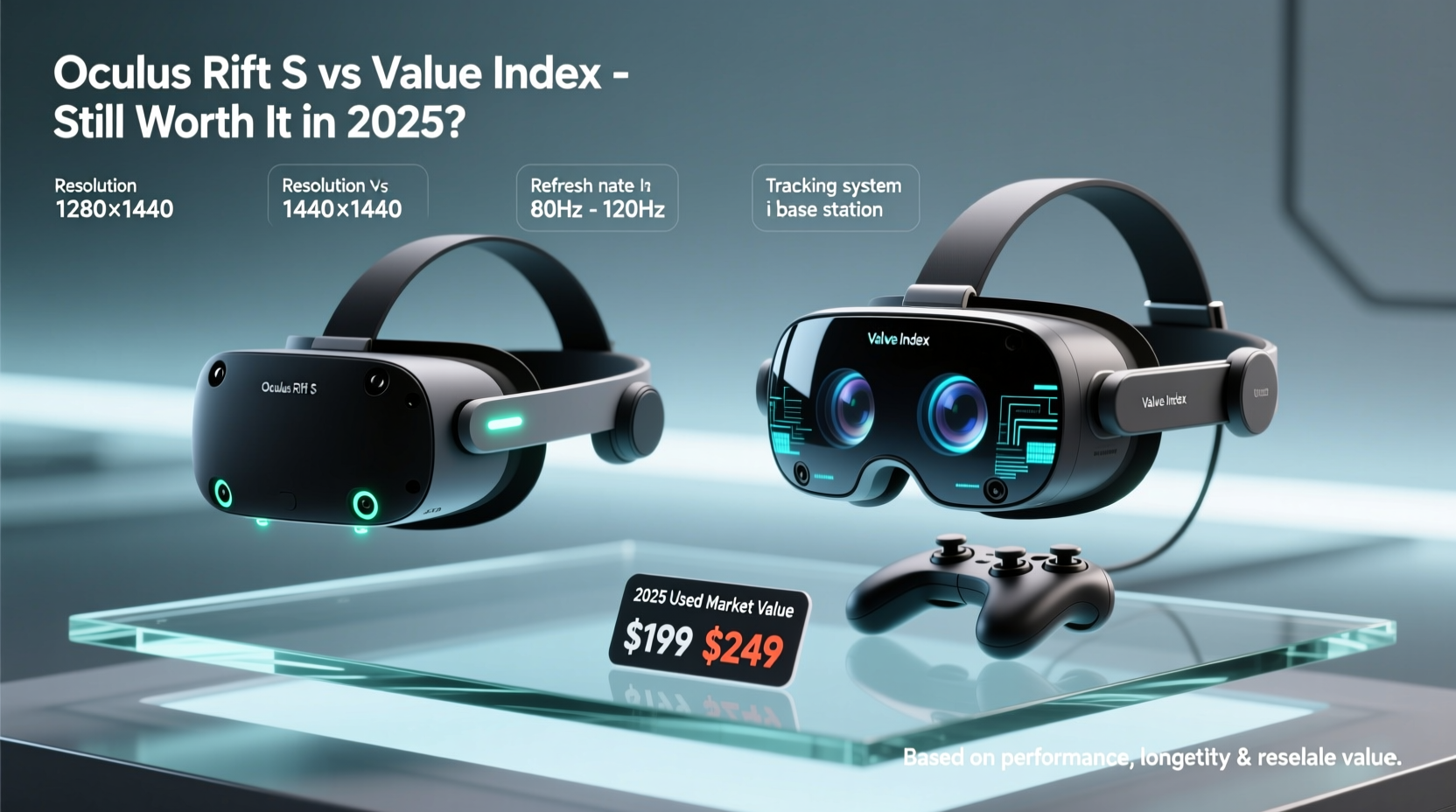
The visual experience is one of the most critical factors in VR immersion. Here, the Valve Index clearly pulls ahead. It features dual 1440×1600 LCD panels per eye, delivering a combined resolution of 2880×1600 across a 130-degree field of view. With refresh rates up to 144Hz (officially supported up to 120Hz for most applications), the Index offers buttery-smooth motion clarity, especially noticeable in fast-paced games like *Beat Saber* or *Onward*.
In contrast, the Oculus Rift S uses a single 2560×1440 LCD panel with a shared screen split between both eyes. While this simplifies optics, it results in lower per-eye resolution and a slightly less sharp image. Its maximum refresh rate is capped at 80Hz, which, while acceptable, introduces more motion blur compared to the Index’s higher frame handling.
One often-overlooked advantage of the Index is its chromatic aberration control. Due to superior lens design and pixel layout, colors stay crisp toward the edges of the display. The Rift S, despite Facebook’s “insight” tracking improvements, still suffers from minor smearing in peripheral vision—a limitation that becomes apparent during extended play sessions.
Tip: If you value visual smoothness and competitive gameplay, prioritize refresh rate. The Valve Index’s 120Hz+ capability gives a tangible edge over the Rift S’s 80Hz ceiling.Tracking and Controllers
Tracking reliability can make or break a VR experience. The Rift S relies on inside-out tracking via five front-facing cameras. This eliminates the need for external sensors but comes with limitations. Occlusion—when your hands or body block camera view—can lead to temporary tracking loss, especially during dynamic movements. Additionally, the system struggles in dimly lit environments, requiring consistent ambient light for optimal performance.
The Valve Index uses outside-in tracking with two Base Stations (versions 1.0 or 2.0). These laser-based emitters create a precise 3D space, enabling millimeter-level accuracy. The result is near-instantaneous response and minimal drift. Even when controllers are behind your back or briefly obscured, predictive algorithms maintain continuity far better than inside-out systems.
Controller design further widens the gap. The Index’s Knuckles controllers are widely regarded as the gold standard in VR input. They feature individual finger tracking, allowing natural hand gestures like pointing or making a fist. Capacitive sensors detect grip pressure, so you can let go of an object without dropping it—ideal for simulation games like *Half-Life: Alyx* or *VTOL VR*.
The Rift S uses the older Oculus Touch controllers, which lack finger tracking and rely on binary button presses. While ergonomic and reliable, they don’t offer the same level of immersion or precision. Secondhand buyers should also note: replacement Knuckles controllers are harder to find and cost more than Touch variants.
“Valve’s controller ergonomics and tracking fidelity set a benchmark that even modern gloves haven’t fully matched.” — Marcus Tran, VR Hardware Analyst at Digital Foundry
Comfort, Fit, and Long-Term Wearability
Even the best VR system fails if it’s uncomfortable. The Rift S wins here for casual users. Its halo-style headband distributes weight evenly and accommodates a wide range of head sizes. The fabric face cushion is soft and replaceable, though prone to sweat buildup during long sessions.
The Valve Index, while powerful, demands adjustment. Its dual-dial fit system provides excellent stability but can feel tight on larger heads. The default foam facial interface may cause discomfort after 60–90 minutes. However, third-party upgrades like the Velcro-compatible silicone masks from ReplaceVR improve breathability and hygiene.
Weight distribution also plays a role. The Index is heavier (about 80 grams more) than the Rift S, and the front-heavy design can strain the nose over time. Users with glasses should consider this—both headsets accommodate moderate frames, but the Index’s deeper lens housing gives slightly more clearance.
For those planning multi-hour sessions or fitness VR (*Supernatural*, *Thrill of the Fight*), comfort becomes a deciding factor. The Rift S may be easier to jump into quickly, but the Index rewards users who fine-tune their setup.
Compatibility and Software Ecosystem
As of 2025, both headsets operate primarily through SteamVR, though with caveats. The Rift S was originally tied to the Oculus PC platform, now rebranded as Meta Horizon. While it still works with SteamVR via Oculus Link or Air Link, full functionality depends on maintaining a linked Meta account—an increasing pain point as Meta shifts focus to standalone Quest devices.
Some users report intermittent driver issues or loss of access following software updates. In 2024, Meta officially ended active development for Rift S firmware, meaning no future optimizations or bug fixes are expected. This raises concerns about long-term compatibility, especially as Windows evolves and security protocols tighten.
The Valve Index, by contrast, is fully agnostic. It runs natively on SteamVR with open-source driver support. Valve continues to update SteamVR with performance enhancements and new features like foveated rendering previews and improved IPD calibration tools. Because it doesn’t rely on a corporate ecosystem tied to a social media company, the Index is more likely to remain functional for years—even as newer headsets emerge.
Additionally, the Index supports OpenXR standards and integrates smoothly with VRChat, Rec Room, and enterprise applications like Varjo’s professional simulators. Its modular design also allows component replacement: broken cables, worn headbands, or faulty base stations can be replaced individually, extending lifespan.
Price and Value on the Used Market (2025)
Used pricing reflects each headset’s reputation and scarcity. As of early 2025, a fully functional Oculus Rift S sells for $150–$200, often bundled with Touch controllers. Complete Valve Index kits—including headset, Knuckles controllers, and two Base Station 2.0 units—range from $400 to $550, depending on condition and included accessories.
At first glance, the Rift S appears to be the budget winner. But value must be assessed over time. Consider this real-world example:
Mini Case Study: Alex’s VR Upgrade Path
Alex, a VR enthusiast in Chicago, bought a used Rift S in 2023 for $180. He enjoyed it for a year but grew frustrated with tracking glitches and screen door effect in *Boneworks*. By 2024, he found himself unable to launch certain titles due to Meta’s deprecation of Oculus PC services. After investing in a new Link cable and troubleshooting for hours, he sold the Rift S for $90 and upgraded to a used Valve Index.
Though the total cost exceeded $500, Alex noted immediate improvements: smoother gameplay, better controller responsiveness, and no ecosystem lock-in. Two years later, his Index still runs every title on Steam without issue. “I wish I’d started with the Index,” he said. “The Rift S felt like a rental.”
This scenario illustrates that lower upfront cost doesn’t always translate to long-term savings. The Index’s durability, open platform support, and superior hardware justify its premium—especially for serious users.
Comparison Table: Key Features at a Glance
| Feature | Oculus Rift S | Valve Index |
|---|---|---|
| Resolution | 2560×1440 (shared LCD) | 2880×1600 (dual LCD) |
| Refresh Rate | Up to 80Hz | Up to 144Hz (120Hz typical) |
| Tracking System | Inside-out (5 cameras) | Outside-in (2 Base Stations) |
| Controllers | Oculus Touch (no finger tracking) | Knuckles (individual finger sensing) |
| Platform Dependency | Meta Horizon (declining support) | SteamVR (actively maintained) |
| Weight | ~470g | ~505g |
| IPD Adjustment | Fixed (3 settings via software) | Mechanical dial (continuous) |
| Typical Used Price (2025) | $150–$200 | $400–$550 (full kit) |
Checklist: What to Verify Before Buying Used
- Test tracking stability: Wave controllers slowly and quickly to check for jitter or dropouts.
- Inspect lenses: Look for scratches, haze, or coating degradation under bright light.
- Confirm all components: For Index, ensure both Base Stations and sync cable are included.
- Check controller battery life: Older Knuckles units may hold charge poorly.
- Verify software recognition: Boot into SteamVR or Oculus app to confirm detection.
- Ask about usage history: Heavy daily use may indicate wear on straps or padding.
- Look for modded parts: Aftermarket headbands or cables aren’t red flags—but know what’s original.
Frequently Asked Questions
Can the Oculus Rift S run SteamVR games effectively?
Yes, but with limitations. Using Oculus Link (USB-C) or Air Link, the Rift S can access SteamVR content. However, performance depends on your PC and connection quality. Some users report input lag or audio sync issues, and Meta’s gradual phaseout of desktop apps increases risk of future incompatibility.
Is the Valve Index worth double the price of a Rift S?
For dedicated VR users, yes. The Index delivers a noticeably better experience in resolution, motion clarity, tracking precision, and controller immersion. If you plan to use VR regularly for gaming, fitness, or creative work, the investment pays off in longevity and satisfaction.
Are replacement parts still available for both headsets?
Valve Index parts—cables, face cushions, base stations—are still sold by Valve and third parties. Rift S components are increasingly scarce; official replacements have been discontinued, though some aftermarket suppliers offer limited stock.
Final Verdict: Which Should You Buy in 2025?
If your priority is low-cost entry into PC VR and you’re okay with potential obsolescence within 1–2 years, the Oculus Rift S remains a functional option. It’s suitable for occasional use, VR newcomers, or those testing the waters before upgrading to standalone headsets.
However, if you want a durable, high-fidelity VR system that will perform reliably for years, the Valve Index is the clear choice. Despite its higher used price, it offers superior visuals, unmatched tracking, and freedom from corporate platform restrictions. Its modular design and ongoing SteamVR support make it the most future-proof legacy headset available today.
Technology moves fast, but not all progress renders past innovations obsolete. The Valve Index, engineered with longevity and openness in mind, proves that thoughtful design outlasts fleeting trends. In 2025, it’s not just worth buying used—it’s the smarter investment for anyone serious about VR.
🚀 Ready to dive into high-end VR without breaking the bank? Hunt for a well-maintained Valve Index on trusted forums like Reddit’s r/VRSwap or eBay with verified sellers. Your future self—and your next VR session—will thank you.