Tank tops are a staple in warm-weather wardrobes and gym bags alike. Simple, breathable, and versatile, they’re worn by people of all genders. Yet walk into any clothing store, and you’ll find separate sections for men’s and women’s tanks—each with different cuts, colors, and price tags. This raises a question that more shoppers are asking: Is there a real functional or structural difference between men’s and women’s tank tops, or is this just another example of gendered marketing dividing a nearly identical product?
The answer isn’t as straightforward as “yes” or “no.” While some distinctions are rooted in practical design choices—like fit and intended use—others stem from long-standing retail conventions that reinforce outdated gender norms. Understanding these nuances helps consumers make smarter purchases, challenge unnecessary categorization, and ultimately wear what works best for their body and lifestyle.
Fit and Cut: Anatomy Meets Design
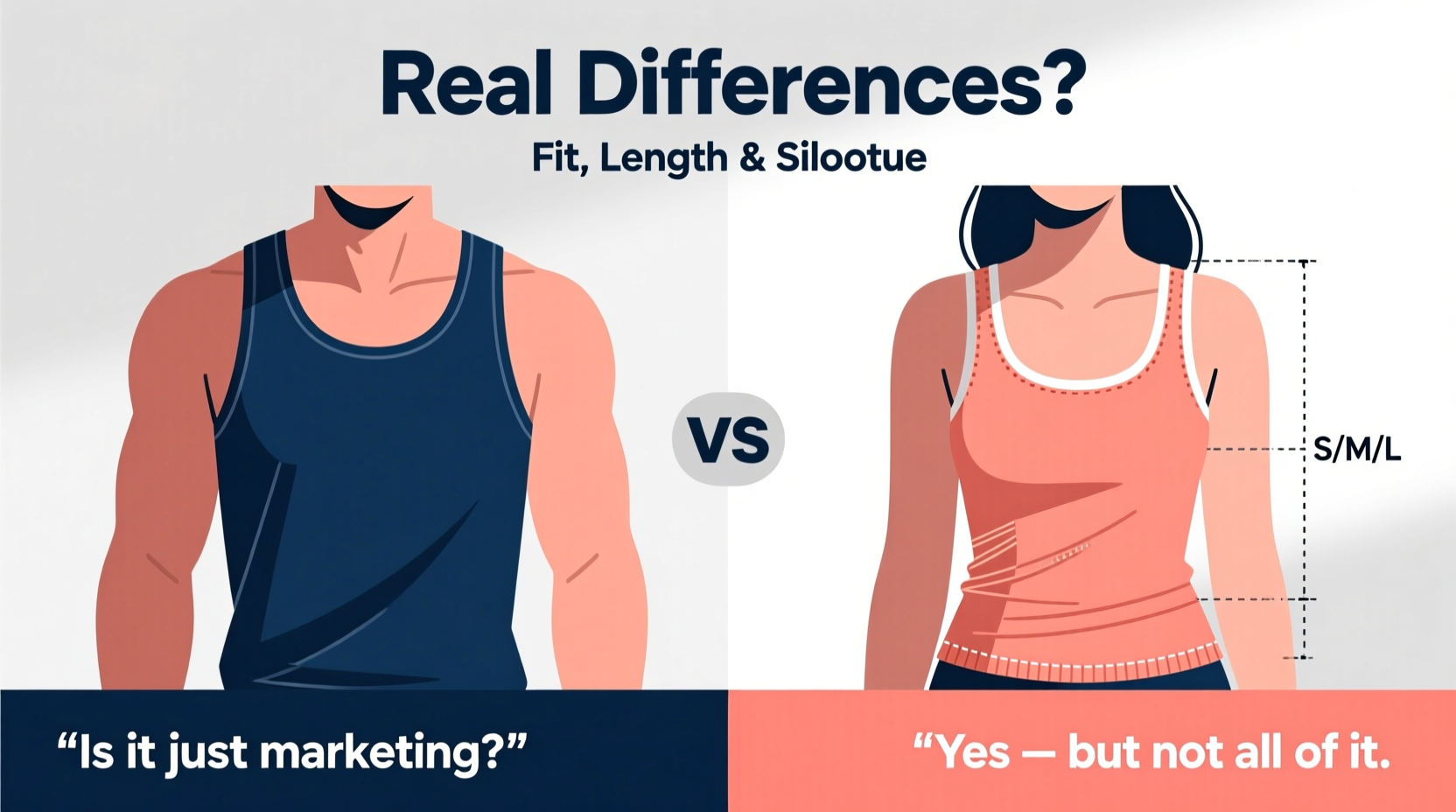
The most noticeable difference between men’s and women’s tank tops lies in the cut. These variations are typically designed to accommodate average body shapes associated with each gender, though individual bodies vary widely.
Men’s tank tops usually feature:
- Broader shoulders and chest area
- Straighter, boxier silhouettes
- Narrower armholes to prevent excessive exposure during movement
- Longer torso length
Women’s tank tops, on the other hand, often include:
- Tapered waistlines or contoured seams for a fitted look
- Shorter hemlines and cropped styles
- Higher armholes and narrower shoulder straps
- Curved side seams to follow hip and bust lines
These design choices aren’t arbitrary—they respond to common proportions. But they can also be limiting. A woman with broad shoulders may find men’s tanks offer better support during workouts, while a man with a slimmer frame might prefer the snug fit of certain women’s styles.
Tip: Don’t let labels dictate your wardrobe. Try on both men’s and women’s tanks to see which cut feels more comfortable and supportive for your body type.Fabric and Functionality: Do Materials Differ?
When it comes to fabric composition, the gap between men’s and women’s tanks narrows significantly. Most are made from cotton, polyester blends, or performance materials like moisture-wicking synthetics. However, subtle differences emerge based on perceived use cases.
Men’s tanks—especially undershirts or workout variants—are more likely to be made from heavier cotton or ribbed knit for durability and sweat absorption. Think of the classic \"A-shirt\" or muscle tank: thick, structured, and built for layering or intense activity.
Women’s tanks often prioritize softness and drape. Fabrics may be lighter, sometimes blended with spandex for stretch and shaping. This makes them ideal for fashion layering but less suited for heavy lifting or prolonged outdoor wear.
Still, many brands now produce unisex performance tanks using technical fabrics regardless of gender labeling. The rise of athleisure has blurred these lines further, with both men and women wearing similar materials for yoga, running, or casual wear.
“Fabric innovation doesn’t care about gender. What matters is how the material performs under stress, heat, and movement.” — Dr. Lena Patel, Textile Researcher at Boston Apparel Lab
Design and Aesthetics: Where Marketing Takes Over
This is where the line between function and marketing becomes thinnest. Color palettes, patterns, and embellishments are often the most gendered aspects of tank tops—and least tied to actual utility.
Men’s tanks typically come in neutral tones: black, gray, navy, white, olive. Prints, if present, lean toward minimalism, logos, or abstract graphics. Women’s tanks, conversely, are frequently offered in pastels, floral prints, lace trim, rhinestones, or slogans. These choices reflect societal expectations more than practical needs.
Marketing plays a major role here. Retailers segment products not just to cater to preferences, but to justify pricing strategies. A plain black tank might cost $12 in the men’s section but $18 in the women’s section simply because it’s labeled “feminine” and styled with thinner straps or a curved hem.
A 2022 study by the New York Consumer Trends Institute found that identical garments (same fabric, construction, and sourcing) were priced up to 13% higher in women’s categories across major retailers—a phenomenon known as the “pink tax.” Tank tops were among the most affected items.
Performance and Use Case Comparison
Despite aesthetic differences, functionality often overlaps. Let’s compare typical use cases:
| Use Case | Men’s Tank Features | Women’s Tank Features | Unisex Alternative? |
|---|---|---|---|
| Gym / Workout | Ribbed knit, reinforced stitching, wider straps | Moisture-wicking, stretch fabric, racerback designs | Yes – performance-focused unisex tanks available |
| Everyday Wear | Crew neck, relaxed fit, durable cotton | V-necks, cropped lengths, decorative details | Sometimes – depends on brand inclusivity |
| Layering | Longer length, tighter armholes | Thin straps, lightweight fabric | Limited options; mostly gender-specific |
| Outdoor Activity | UV protection, ventilation zones | Similar tech features, but fewer styles | Increasingly common in outdoor apparel lines |
The data shows that when performance matters, the differences shrink. Both genders benefit from breathability, durability, and freedom of movement. Yet women’s performance tanks are still less likely to feature structural reinforcements, possibly due to assumptions about intensity of use.
Real-World Example: Alex’s Gym Experience
Alex, a 29-year-old personal trainer in Denver, noticed something odd during her training sessions: her female clients kept adjusting their tank tops during overhead lifts. Straps slipped, fabric rode up, and support was inconsistent.
She started recommending men’s tanks from the same brand—same material, same price point, but different cut. Clients reported less distraction, better coverage, and improved confidence during workouts. One even said, “I didn’t realize I needed broader straps until I tried one.”
Alex now keeps a mix of men’s and women’s tanks in her own closet. “If it fits well and holds up to burpees, I don’t care what section it came from,” she says.
How to Choose the Right Tank Top—Regardless of Label
Instead of defaulting to the “men’s” or “women’s” aisle, consider these factors when selecting a tank top:
- Shoulder and Armhole Fit: Does the armhole sit securely without pinching or gapping? Can you raise your arms freely?
- Strap Width: Wider straps offer more support, especially for athletic use or larger busts.
- Hem Length: Too short, and it rides up; too long, and it bunches. Find a balance for your torso.
- Fabric Weight: Heavy cotton lasts longer but traps heat. Blends offer breathability and stretch.
- Intended Use: Will you wear it under a shirt, during HIIT, or for brunch? Match function to design.
FAQ: Common Questions About Men’s vs Women’s Tanks
Can men wear women’s tank tops?
Absolutely. If the fit, fabric, and style work for your body and preference, wear it. Many women’s tanks have softer fabrics or unique cuts that some men appreciate for comfort or layering.
Are unisex tank tops a good alternative?
Yes. Unisex tanks often combine the best elements: neutral colors, durable fabric, and relaxed-but-flattering fits. Brands like Pact, Tentree, and Stanley/Stella specialize in inclusive basics that prioritize function over gender.
Why do women’s tanks cost more?
In many cases, it’s the “pink tax”—a pricing bias where products marketed to women are marked up despite identical materials and labor. Always compare specs, not just labels.
Conclusion: Look Beyond the Label
The divide between men’s and women’s tank tops exists more in marketing than in meaningful design. While fit differences serve real purposes, many distinctions—color, price, embellishment—are socially constructed rather than functionally necessary.
As consumers become more aware of gender-neutral fashion and demand greater inclusivity, we’re seeing a shift. More brands are offering extended size ranges, unisex collections, and adaptive designs that focus on comfort and performance over outdated norms.
The next time you’re shopping for a tank top, skip the aisle labels. Try on what fits. Prioritize function. Challenge assumptions. Your body—not a tag—should decide what works best.
💬 Your turn: Have you found a “men’s” tank that fits better than women’s versions—or vice versa? Share your experience and help others shop smarter!