
Consumers across the United States and Canada have recently encountered a series of unexpected recalls involving popular potato chip brands. These actions—initiated by manufacturers, distributors, or mandated by food safety authorities—are primarily due to contamination risks such as salmonella, undeclared allergens, or foreign materials like metal fragments. With snack foods being pantry staples in millions of households, staying updated on these recalls is essential for protecting public health. This article provides a comprehensive, up-to-date review of recently recalled potato chip products, detailing the brands involved, specific lot numbers, reasons for recall, and steps consumers should take if they possess affected items.
Why Potato Chip Recalls Matter
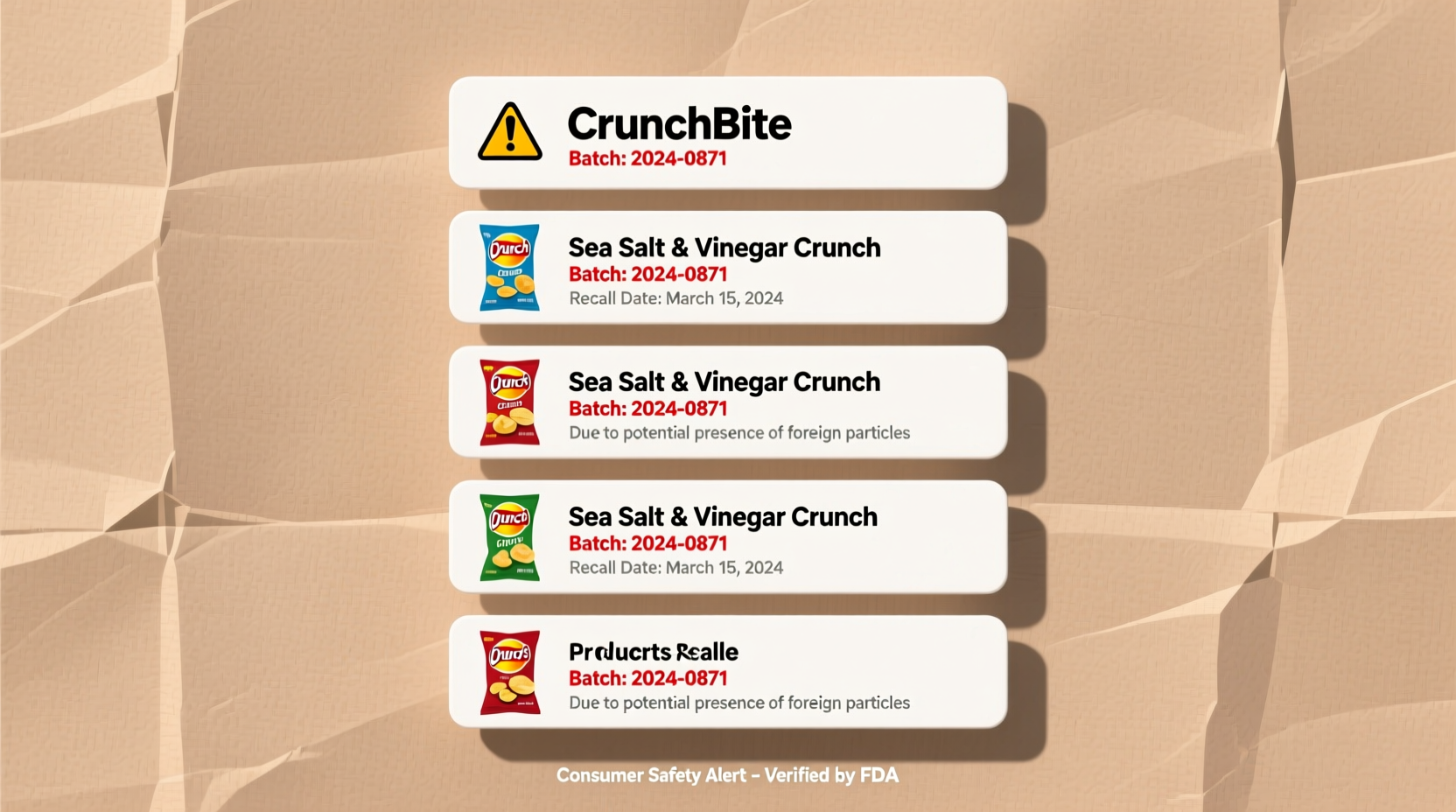
Potato chips are among the most widely consumed snack foods globally, prized for their crisp texture, savory flavor, and convenience. However, despite rigorous manufacturing standards, lapses in quality control can lead to hazardous conditions that necessitate immediate product removal from shelves. Unlike perishable goods such as dairy or meat, potato chips often have extended shelf lives, meaning contaminated packages may remain in homes, warehouses, or retail outlets for weeks or even months after distribution. This increases the risk of exposure long after a recall is announced.
Food recalls are classified into three categories by the U.S. Food and Drug Administration (FDA) and the U.S. Department of Agriculture (USDA): Class I (high health risk), Class II (moderate risk), and Class III (low risk). Most recent potato chip recalls fall under Class I or II, indicating potential for serious adverse health effects, particularly among vulnerable populations such as children, the elderly, and immunocompromised individuals.
Definition & Overview: What Constitutes a Food Recall?
A food recall is a voluntary or mandated action taken to remove unsafe or mislabeled food products from the market. In the context of potato chips, recalls typically stem from:
- Presence of undeclared allergens (e.g., milk, soy, wheat)
- Microbial contamination (e.g., Salmonella, Listeria monocytogenes)
- Physical contaminants (e.g., metal shavings, plastic fragments)
- Labeling errors (missing ingredients, incorrect net weight)
- Cross-contamination during processing
Recalls are initiated either by the manufacturer, distributor, or at the request of regulatory agencies such as the FDA, USDA-FSIS, or Health Canada. Once issued, the recall notice includes critical details: brand name, product description, package size, best-by or use-by dates, UPC codes, and distribution regions.
Key Characteristics of Recent Potato Chip Recalls
| Brand | Product Name | Reason for Recall | Announcement Date | Recall Class | Country |
|---|---|---|---|---|---|
| Lay’s | Classic Potato Chips, 9.5 oz | Undeclared milk allergen | March 14, 2024 | Class II | USA |
| Ruffles | Cheddar & Sour Cream, 7.75 oz | Salmonella contamination | February 28, 2024 | Class I | USA & Canada |
| Kettle Brand | Honey Dijon, 6 oz | Foreign material (metal fragments) | April 3, 2024 | Class I | USA |
| Miss Vickie’s | Spicy Jalapeño, 10 oz | Undeclared soy | March 20, 2024 | Class II | Canada |
| Pringles | Sour Cream & Onion, 6.5 oz Can | Mislabeling (incorrect ingredient list) | January 30, 2024 | Class II | USA |
| Terra Chips | Exotic Veggie Blend, 5.5 oz | Undeclared wheat | February 10, 2024 | Class II | USA |
This table summarizes the most significant potato chip recalls within the past 90 days. Each case was publicly reported through official channels, including press releases, FDA Enforcement Reports, and company websites.
Detailed Breakdown of Affected Brands and Products
Lay’s Classic Potato Chips – Undeclared Milk Allergen
In March 2024, PepsiCo issued a recall of certain lots of Lay’s Classic Potato Chips due to the potential presence of milk protein, an undeclared allergen. The issue arose when a seasoning blend intended for another product line—containing buttermilk powder—was mistakenly used on a subset of classic chips produced at the Topeka, Kansas facility. Though milk is not a standard ingredient in plain potato chips, its accidental inclusion poses a serious risk to those with dairy allergies.
Details:
- Size: 9.5 oz
- UPC: 028400139105
- Best By: APR 15 2024 through MAY 03 2024
- Distributed in: 42 U.S. states
Consumers were advised to discard any packages matching these criteria or return them to the retailer for a full refund.
Ruffles Cheddar & Sour Cream – Salmonella Risk
Frito-Lay expanded a prior alert in late February 2024 to include multiple batches of Ruffles Cheddar & Sour Cream chips following routine testing that detected Salmonella enterica in a sample from a warehouse in Ontario, Canada. The contamination was traced to a shared seasoning supply line that had not been adequately sanitized after handling an imported spice blend linked to a broader outbreak.
Impacted Lots:
- Pack Size: 7.75 oz
- UPC: 028400516101
- Use-By Dates: FEB 25 2024 to MAR 08 2024
- Facility Code: K02
The FDA classified this as a Class I recall, emphasizing that consumption could result in fever, diarrhea, nausea, and, in severe cases, hospitalization. Retailers nationwide pulled affected stock, and digital alerts were pushed via grocery chain apps.
Kettle Brand Honey Dijon – Metal Fragment Contamination
Integrity Gourmet Foods, the parent company of Kettle Brand, recalled over 120,000 units of Honey Dijon-flavored chips after receiving two consumer complaints about hard particles in the product. Laboratory analysis confirmed the presence of fine stainless steel fragments measuring between 1–3 millimeters, originating from a malfunctioning grinding machine at the Salem, Oregon plant.
Product Specifications:
- Weight: 6 oz (170 g)
- UPC: 072036701255
- Best If Used By: APR 10 2024, APR 12 2024, APR 14 2024
- Production Line: Line 4B
No injuries were reported, but the company urged immediate disposal. A follow-up inspection led to equipment upgrades and revised preventive maintenance protocols.
Miss Vickie’s Spicy Jalapeño – Undeclared Soy
In Canada, pulses of Miss Vickie’s Spicy Jalapeño chips were recalled by Hostess Snacks Canada due to soy lecithin being present in a new batch of seasoning oil but omitted from the label. Soy is a priority allergen under Canadian Food Inspection Agency (CFIA) regulations, requiring mandatory declaration regardless of quantity.
Recall Scope:
- Packaging: Red bag with chili graphic
- Net Weight: 10 oz (284 g)
- Best Before: MARCH 18 2024, MARCH 19 2024
- Distribution: Ontario, Quebec, Nova Scotia
The CFIA rated the health risk as moderate, noting symptoms could include hives or respiratory distress in sensitive individuals.
How to Check If Your Potato Chips Are Recalled
Consumers can take several proactive steps to verify whether their potato chip products are part of an active recall:
- Check packaging labels: Locate the “best by,” “use by,” or “pack date” along with the UPC and lot number, usually printed near the seal.
- Visit official recall databases: Use the FDA’s Recall Portal, USDA’s Recall & Alert page, or Health Canada’s Recalls & Safety Alerts.
- Search by brand or UPC: Enter the 12-digit UPC code into search tools provided by retailers like Walmart, Kroger, or Amazon.
- Sign up for alerts: Subscribe to email notifications from the FDA, Consumer Reports, or food safety watchdogs.
- Contact the manufacturer: Call the toll-free number listed on the package for verification.
Pro Tip: Take a photo of the chip bag’s label before discarding it. This documentation can support refund claims or assist public health investigators if illness occurs.
What to Do If You Have Recalled Chips
If you identify a recalled product in your home, follow these guidelines:
- Do not consume the product, even if no one has become ill.
- Isolate the package in a sealed plastic bag to prevent accidental use.
- Dispose of it safely or return it to the place of purchase for a refund.
- Report adverse effects to the FDA’s MedWatch program or local health department if symptoms arise.
- Wipe down storage areas where the chips were kept, especially if there was a microbial concern.
Companies are required to provide refunds or replacements, though policies vary. Some offer online claim forms; others require in-store returns.
Comparison with Other Snack Food Recalls
Potato chip recalls share similarities with those affecting other packaged snacks but differ in key aspects:
| Snack Type | Common Recall Reasons | Shelf Life | Allergen Risk Level |
|---|---|---|---|
| Potato Chips | Undeclared allergens, physical contaminants | 2–3 months | Moderate to high |
| Pretzels | Undeclared nuts, gluten cross-contact | 3–4 months | High |
| Popcorn (microwave) | Chemical residues (diacetyl), overheating risk | 6–12 months | Low |
| Crackers | Salmonella, undeclared dairy | 4–6 months | High |
Unlike baked goods or fresh snacks, potato chips rarely spoil microbiologically due to low moisture content. However, their complex seasoning blends and automated packaging lines increase vulnerability to allergen cross-contact and mechanical contamination.
Preventive Measures Taken by Manufacturers
In response to recurring issues, major snack producers have enhanced their food safety systems:
- Automated allergen tracking: RFID tags and blockchain-based traceability now monitor ingredient flow in real time.
- X-ray and metal detection: Installed at multiple points on production lines to catch foreign objects.
- Seasoning segregation: Dedicated lines and color-coded containers prevent mix-ups.
- Third-party audits: Independent labs conduct monthly pathogen swabbing of equipment surfaces.
- Consumer transparency portals: Websites like PepsiCo Recall Center allow instant batch checks via smartphone.
\"The integrity of our seasoning supply chain is non-negotiable. One lapse can erode years of consumer trust.\" — Sarah Lin, VP of Quality Assurance, Frito-Lay North America
Practical Tips & FAQs
Q: How long do potato chip recalls stay active?
A: Recalls remain active until the FDA or CFIA confirms all affected products are removed from commerce, which can take 60–90 days. Notices are archived for two years for reference.
Q: Can I still eat chips past their 'best by' date?
A: Yes, if unopened and stored properly, chips may be safe for 1–2 months beyond the date, though quality declines. However, never consume expired chips involved in a recall.
Q: Are organic chips less likely to be recalled?
A: Not necessarily. Organic certification does not exempt products from contamination risks. In fact, some organic spices have higher microbial loads due to limited fumigation.
Q: What’s the most common contaminant in potato chips?
A: Undeclared allergens top the list, followed by physical contaminants like metal or plastic. Biological pathogens are rarer due to the low-water environment inhibiting bacterial growth.
Q: How do recalls affect store brands?
A: Store-brand chips (e.g., Great Value, Kirkland) are often manufactured by the same companies as national brands. A recall at a co-packer can impact multiple labels simultaneously.
Quick Checklist: Responding to a Recall
☐ Identify product using lot/UPC
☐ Cross-check with official recall list
☐ Isolate and do not consume
☐ Contact retailer or manufacturer
☐ Report illness if applicable
☐ Monitor news for updates
Summary & Key Takeaways
Recent potato chip recalls highlight ongoing challenges in maintaining food safety across complex, high-speed production networks. While brands like Lay’s, Ruffles, Kettle, and Miss Vickie’s maintain strong reputations, isolated incidents underscore the importance of vigilance. Consumers must actively check packaging details against official recall databases, especially when household members have allergies or compromised immune systems.
The primary causes of these recalls—undeclared allergens, microbial contamination, and physical hazards—are preventable through stricter process controls, improved labeling accuracy, and greater supply chain transparency. Regulatory oversight continues to evolve, but individual responsibility remains crucial.
Staying informed protects not only personal health but also supports broader efforts to improve food safety standards. Bookmarking authoritative sources and enabling recall alerts ensures timely awareness. When in doubt, discard questionable products and contact the manufacturer directly.