Types of Laser-Weld Torch Machines
A laser-weld torch machine is a high-precision tool that uses concentrated laser beams to fuse materials together with minimal heat distortion. These machines are widely used in industries requiring accuracy, strength, and clean welds. From automotive manufacturing to delicate medical devices, laser welding offers unmatched control and efficiency. Below is a detailed breakdown of the most common types of laser-weld torch machines and their applications.
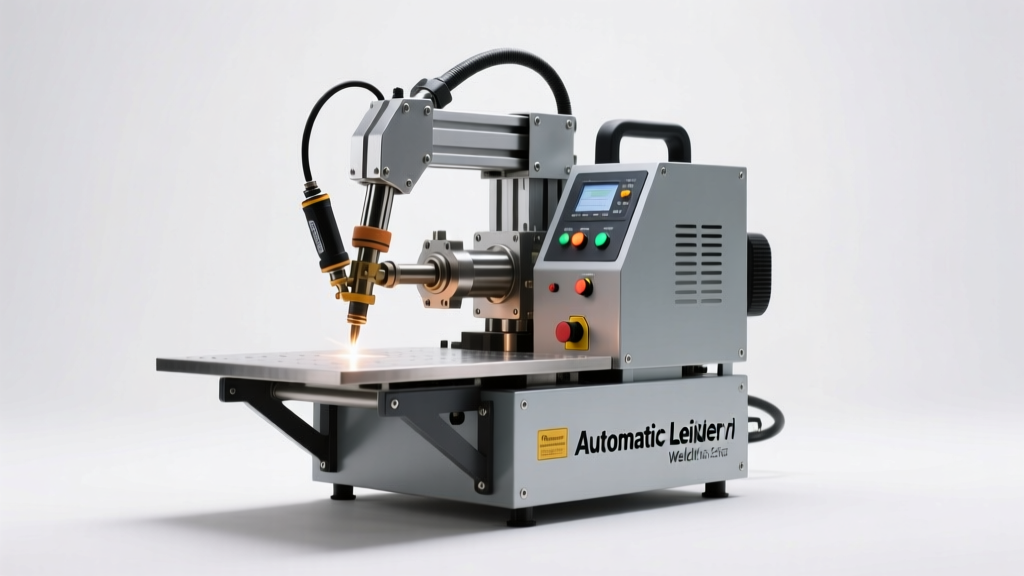
Automatic Laser Weld Machine
Designed for high-volume production environments, automatic laser welding machines operate with minimal human intervention. These systems often integrate robotic arms and CNC controls to deliver consistent, repeatable welds with exceptional precision.
Advantages
- High production speed and throughput
- Exceptional weld consistency and accuracy
- Reduced labor costs over time
- Integration with assembly lines and automation systems
Limitations
- High initial investment cost
- Requires specialized programming and maintenance
- Less flexibility for custom or small-batch jobs
Best for: Mass production, automotive manufacturing, industrial fabrication
Portable Laser Weld Machine
Compact and mobile, portable laser welders are engineered for on-site repairs and field service applications. Their lightweight design and ease of transport make them ideal for technicians who need to perform welding in various locations.
Advantages
- High mobility and field usability
- Quick setup and deployment
- Effective for emergency or remote repairs
- Smaller footprint saves workspace
Limitations
- Lower power output compared to stationary units
- Limited duty cycle for continuous operation
- Fewer automation features
Best for: On-site repairs, automotive service, jewelry restoration, maintenance teams
Handheld Laser Weld Machine
While larger than portable units, handheld laser welding machines offer superior maneuverability for intricate or hard-to-reach areas. Operators can precisely guide the laser beam manually, making them ideal for detailed or custom welding tasks.
Advantages
- Excellent control for precision work
- Flexibility in welding complex geometries
- Reduced need for fixturing
- Widely used in repair and prototyping
Limitations
- Operator fatigue during prolonged use
- Weld consistency depends on skill level
- Requires proper training and safety gear
Best for: Aerospace repairs, custom fabrication, tool and die work
Pulse Laser Welding Machine
These machines deliver energy in short, controlled bursts (pulses), minimizing heat input and preventing warping. This makes them perfect for welding thin or heat-sensitive materials where precision is critical.
Advantages
- Minimal heat-affected zone (HAZ)
- Prevents warping and distortion
- Ideal for delicate or thin materials
- High precision for micro-welding applications
Limitations
- Slower than continuous-wave lasers for thick materials
- Not suitable for deep penetration welding
- Higher complexity in pulse parameter tuning
Best for: Electronics, medical devices, sensors, and thin metal components
| Type | Portability | Precision | Best Material Thickness | Typical Industries |
|---|---|---|---|---|
| Automatic Laser Weld Machine | Low | Very High | Thin to Medium | Automotive, Industrial Manufacturing |
| Portable Laser Weld Machine | Very High | Moderate | Thin to Medium | Field Repair, Jewelry, Automotive |
| Handheld Laser Weld Machine | High | High | Thin to Medium | Aerospace, Repair, Custom Fabrication |
| Pulse Laser Welding Machine | Medium | Extremely High | Very Thin | Electronics, Medical Devices, Precision Engineering |
Expert Tip: When using pulse laser welding on sensitive components, optimize pulse frequency and duration to balance penetration depth with minimal thermal stress. Pre-weld testing on scrap material is recommended for critical applications.
Important Features of Laser-Weld Torch Machines
Laser-weld torch machines have revolutionized modern manufacturing with their precision, speed, and reliability. Beyond the basic types of welding they support, a range of advanced features determines their performance, efficiency, and suitability for different industrial applications. Understanding these key features helps operators and manufacturers select the right equipment for high-quality, consistent results.
Cooling Systems
Water-Cooled Systems
Water-cooling is the most widely used method in industrial laser-weld torch machines due to its superior heat dissipation. These systems circulate chilled water through the laser source and torch head to maintain optimal operating temperatures, even during prolonged use. This prevents thermal degradation of sensitive components such as optics and diodes, ensuring consistent beam quality and extended equipment lifespan.
Water-cooled systems are ideal for high-power applications (above 1 kW) and continuous production environments where downtime must be minimized.
Air-Cooled Systems
Air-cooled systems rely on fans and heat sinks to dissipate heat generated during operation. While less efficient than water-cooling, they offer simplicity, lower maintenance, and reduced setup complexity. These systems are commonly found in lower-power laser machines (typically under 1 kW) used for light-duty tasks or in environments where water supply and plumbing are impractical.
Though limited in duty cycle, air-cooled models are cost-effective and portable, making them suitable for repair shops, small fabrication units, or mobile operations.
Seam Tracking Systems
Seam tracking technology enhances welding accuracy by automatically detecting and following the joint path in real time. Using optical sensors, laser triangulation, or tactile probes, these systems continuously monitor the position and geometry of the weld seam. If deviations occur—due to part misalignment, thermal distortion, or material inconsistencies—the system dynamically adjusts the torch position to maintain precise alignment.
This feature is especially valuable when working with complex or uneven surfaces, such as curved panels, castings, or large assemblies with variable tolerances. Seam tracking reduces the need for perfect fixturing, minimizes rework, and improves overall weld consistency and strength, contributing to higher throughput and lower scrap rates.
Power Control and Adjustability
Advanced laser-weld torch machines offer precise control over laser output power, allowing operators to tailor energy delivery to specific materials and thicknesses. Adjustable power settings enable fine-tuning of penetration depth, weld width, and heat input—critical parameters for avoiding defects like burn-through, under-penetration, or excessive spatter.
Modern systems often include programmable power profiles that can ramp up or down during a single weld cycle (e.g., pre-heating, main weld, post-annealing), enhancing control over metallurgical properties. Digital interfaces and software integration allow for preset recipes, remote monitoring, and repeatability across batches, improving process standardization and quality assurance.
Multiple Welding Modes
Continuous Wave (CW) Mode
In CW mode, the laser emits a steady, uninterrupted beam ideal for deep penetration welding and high-speed joining of thick materials. This mode is commonly used in automotive frame assembly, pipeline welding, and structural fabrication where consistent, strong welds are required.
Pulsed Mode
Pulsed mode delivers energy in short, controlled bursts, reducing overall heat input while maintaining peak power. This is particularly effective for thin materials, heat-sensitive components, or delicate applications such as electronics, medical devices, or aerospace parts. Pulsing minimizes distortion, prevents warping, and allows for precise spot or stitch welding.
The ability to switch between multiple modes—such as CW, pulsed, modulated, or hybrid—greatly enhances machine versatility. Multi-mode functionality enables a single system to handle diverse tasks, from fine micro-welding to heavy-duty seam welding, reducing the need for multiple machines and increasing operational flexibility.
Optics and Beam Quality
The optical system is at the heart of any laser-weld torch machine, directly influencing beam focus, intensity distribution, and energy efficiency. High-quality optics—including collimators, focusing lenses, and protective windows—are essential for producing a tightly focused, stable beam with minimal divergence.
Beam quality, often measured by the Beam Parameter Product (BPP) or M² factor, determines how small a spot the laser can achieve and how deeply it can penetrate. A lower M² value indicates a near-perfect Gaussian beam, enabling finer welds, higher aspect ratios, and cleaner edges with little dross or spatter.
OEMs and high-precision industries prioritize machines with premium-grade optics and adaptive beam shaping technologies (e.g., fiber delivery, beam wobbling, or multi-kilowatt disc lasers) to achieve superior weld integrity, aesthetics, and mechanical performance. Regular maintenance of optical components—such as cleaning and alignment—is crucial to sustain optimal beam quality over time.
| Feature | Impact on Performance | Best Use Cases |
|---|---|---|
| Cooling System (Water vs. Air) | Directly affects duty cycle, stability, and component longevity | Water: High-power, continuous production; Air: Low-power, intermittent use |
| Seam Tracking | Improves accuracy, reduces scrap, and enhances automation | Complex joints, variable fit-up, robotic welding cells |
| Power Adjustability | Enables material-specific tuning and defect prevention | Mixed-material fabrication, variable thickness welding |
| Multiple Welding Modes | Increases versatility and process control | Aerospace, automotive, medical device manufacturing |
| Beam Quality (Optics) | Determines weld precision, strength, and surface finish | High-precision applications requiring minimal post-processing |
Important: Selecting a laser-weld torch machine should be based on a comprehensive evaluation of these features in relation to your specific application requirements. Ignoring factors like cooling capacity, beam quality, or seam tracking can lead to subpar welds, increased downtime, and higher long-term costs. Always consult technical specifications and consider future scalability when investing in laser welding technology.
Commercial Uses of Laser Weld Torch Machines
Laser weld torch machines have revolutionized modern manufacturing by offering unmatched precision, speed, and reliability across a wide range of industries. Their ability to deliver focused, high-energy beams enables clean, strong welds on various materials—from delicate electronics to heavy-duty aerospace components. Understanding the diverse commercial applications of these advanced systems helps businesses make informed investment decisions, optimize production efficiency, and improve product quality.
Automotive Industry
Laser welding plays a pivotal role in automotive manufacturing, where it is used to join steel, aluminum, and stainless steel components with exceptional strength and minimal distortion. Key applications include welding body-in-white structures, chassis frames, doors, exhaust systems, and engine subassemblies.
- Produces lightweight yet durable joints, contributing to improved fuel efficiency and vehicle performance
- Enables high-speed, automated production lines, significantly reducing cycle times
- Reduces the need for post-weld finishing due to clean, spatter-free welds
- Supports the integration of mixed-material designs (e.g., steel-aluminum) in modern vehicles
Key benefit: Faster production cycles lead to lower operational costs and quicker return on investment for manufacturers.
Electronics Manufacturing
In the electronics sector, laser welding is essential for assembling small, sensitive components such as circuit boards, sensors, connectors, and battery housings. The non-contact nature and precise control of laser energy make it ideal for micro-welding applications.
- Delivers micron-level accuracy for welding tiny conductive paths and delicate leads
- Minimizes heat-affected zones (HAZ), preventing damage to surrounding electronic elements
- Ensures hermetic seals in sensors and MEMS devices for reliable long-term performance
- Supports automated integration into SMT (Surface Mount Technology) production lines
Quality advantage: Significantly reduces defect rates and enhances consistency in high-volume electronics production.
Aerospace Industry
The aerospace industry relies on laser welding for mission-critical components where structural integrity, precision, and material performance are paramount. Applications include turbine blades, fuel nozzles, landing gear components, and structural airframe elements.
- Welds high-strength alloys like Inconel, titanium, and nickel-based superalloys with superior joint integrity
- Meets strict regulatory and safety standards (e.g., AS9100, NADCAP) for aviation components
- Reduces part weight through optimized joint design, improving fuel efficiency
- Lowers maintenance and repair costs by enhancing component durability and fatigue resistance
Critical impact: Ensures the reliability and longevity of systems operating under extreme temperatures and pressures.
Jewelry Production
Laser welding has transformed jewelry manufacturing by enabling precise repairs, resizing, and intricate design work without damaging surrounding gemstones or delicate metalwork. It is widely used in both artisan workshops and large-scale production facilities.
- Allows for pinpoint welding on gold, silver, platinum, and palladium with minimal heat spread
- Facilitates complex custom designs and seamless stone settings
- Eliminates the need for extensive polishing after repairs, saving time and labor
- Supports eco-friendly practices by reducing material waste and rework
Customer value: Enhances craftsmanship quality and enables faster turnaround for custom orders, boosting client satisfaction.
Medical Device Manufacturing
Laser welding is a cornerstone technology in the production of medical devices, where cleanliness, precision, and biocompatibility are non-negotiable. It is used to assemble surgical instruments, implantable devices (e.g., pacemakers, stents), and diagnostic equipment.
- Creates sterile, burr-free welds on titanium, stainless steel, and other implant-grade materials
- Enables hermetic sealing of sensitive electronic components in implants
- Maintains dimensional accuracy in miniature devices like catheters and biopsy tools
- Complies with ISO 13485 and FDA regulations for medical device manufacturing
Safety benefit: Reduces the risk of contamination and failure in life-critical devices, directly improving patient outcomes.
Emerging & Cross-Industry Applications
Beyond traditional sectors, laser welding is gaining traction in renewable energy, defense, and consumer goods, driven by its versatility and automation compatibility.
- Solar & Battery Tech: Welds thin-film solar cells and lithium-ion battery tabs with high conductivity and low resistance
- Defense & Security: Used in armored vehicle components and secure communication devices requiring rugged construction
- Consumer Goods: Assembles premium watches, eyewear, and smart devices with invisible, high-strength joints
- R&D and Prototyping: Supports rapid iteration in product development due to flexible setup and precision control
Future-ready: Laser systems integrate seamlessly with robotics and Industry 4.0 platforms for smart factory environments.
Strategic Insight: When evaluating laser weld torch machines for commercial use, consider not only the immediate application but also scalability, automation potential, and total cost of ownership. Machines with programmable parameters, remote monitoring, and modular designs offer greater long-term value across multiple production lines and evolving business needs.
| Industry | Primary Materials | Key Benefits | Production Impact |
|---|---|---|---|
| Automotive | Steel, Aluminum, Stainless Steel | Lightweight joints, high speed, automation-friendly | Up to 30% faster assembly, reduced rework |
| Electronics | Copper, Gold, Kovar, Nickel | Micro-precision, low heat input, clean welds | Defect rates reduced by 40–60% |
| Aerospace | Titanium, Inconel, Superalloys | High strength-to-weight ratio, fatigue resistance | Extended service life, lower maintenance costs |
| Jewelry | Gold, Silver, Platinum | Precision repairs, minimal finishing required | 50% faster customization and repair turnaround |
| Medical Devices | Titanium, 316L Stainless Steel | Biocompatible, hermetic seals, no contamination | Improved regulatory compliance and patient safety |
Additional Considerations for Investment
- Material Compatibility: Ensure the laser wavelength and power output match the reflectivity and thermal properties of target materials
- Automation Integration: Look for models compatible with CNC systems, robotic arms, and IoT-enabled monitoring
- Operator Training: Invest in certified training to maximize precision and safety, especially in high-risk environments
- Maintenance Requirements: Fiber lasers generally require less upkeep than CO₂ systems, improving uptime
- Energy Efficiency: Modern laser systems consume less power per weld compared to traditional methods, reducing operational costs
How to Choose Laser Weld Torch Machines: A Comprehensive Buyer’s Guide
Selecting the right laser weld torch machine is a critical decision that impacts welding precision, efficiency, and return on investment across industries. Whether you're outfitting a manufacturing facility, aerospace workshop, or automotive repair center, understanding key selection criteria ensures optimal performance and long-term value. This guide breaks down the most important factors buyers should evaluate when choosing laser welding systems for their customers’ specific needs.
Important Note: Laser welding technology varies significantly in power, precision, and application scope. Always match the machine specifications to your customer’s material types, production volume, and operational environment to avoid underperformance or unnecessary costs.
1. Material Compatibility
One of the most crucial considerations is the range of materials the laser welder can effectively process. Different metals react uniquely to laser energy due to variations in thermal conductivity, reflectivity, and melting points.
A high-quality laser welder should seamlessly handle common industrial metals such as:
- Carbon and Stainless Steel: Widely used in automotive, construction, and heavy machinery due to their strength and durability.
- Aluminum: Popular in aerospace and transportation industries for its lightweight properties, though it requires precise control due to high reflectivity and thermal expansion.
- Titanium: Essential in medical devices and aerospace applications; demands contamination-free environments and stable beam control.
- Copper and Brass: Challenging to weld due to high thermal conductivity; require higher peak power and specialized beam delivery systems.
Machines with adjustable wavelength settings or hybrid laser-arc capabilities offer greater flexibility across diverse material portfolios, making them ideal for multi-industry clients.
2. Welding Thickness and Power Output
The required welding thickness directly influences the necessary laser power and beam focus. Selecting a machine with appropriate power ensures clean, deep-penetration welds without warping or incomplete fusion.
- High-Power Systems (1000W–6000W+): Suitable for thick-section welding in shipbuilding, structural steel, and heavy equipment manufacturing. These systems provide deep penetration and fast travel speeds.
- Medium-Power Systems (300W–1000W): Ideal for general fabrication, automotive bodywork, and appliance manufacturing where moderate thicknesses (1–6 mm) are common.
- Low-Power Systems (50W–300W): Designed for precision tasks in jewelry, electronics, and medical device assembly. These deliver fine, localized heat input for delicate components without distortion.
Always verify the machine’s maximum penetration depth and spot size adjustability to ensure compatibility with your customer’s typical workpiece dimensions.
3. Portability and Mobility
For clients operating in dynamic environments—such as field service, on-site aerospace repairs, or mobile fabrication—portability is a decisive factor.
Modern solutions include:
- Handheld Laser Welding Torches: Lightweight and ergonomic, allowing operators to reach tight spaces and complex geometries. Often paired with fiber lasers for flexibility.
- Cart-Mounted Systems: Integrated units with wheels, cooling systems, and cable management for semi-mobile use within large facilities.
- Robotic Integration: For fixed production lines, robotic arms equipped with laser heads offer repeatability and automation, though less portable.
Portable models typically feature quick-connect fittings, compact power sources, and battery-assisted options for remote operation, enhancing versatility in real-world applications.
4. Maintenance and Service Support
Reliability and uptime are essential in industrial settings. Machines designed with serviceability in mind reduce downtime and long-term costs.
Key aspects to evaluate:
- Modular Design: Components like laser sources, cooling units, and optics should be easily replaceable without full system disassembly.
- Self-Diagnostics: Advanced models include built-in monitoring systems that alert users to lens contamination, misalignment, or cooling issues.
- Service Network: Choose brands with established service histories, readily available spare parts, and local technical support to minimize repair delays.
- Preventive Maintenance Requirements: Check recommended service intervals for optics cleaning, alignment checks, and coolant replacement.
Machines with sealed optical paths and dust-resistant enclosures perform better in harsh workshop environments, reducing maintenance frequency.
5. Work Area and Footprint Requirements
The physical space available for the laser welding system plays a major role in selection. Consider both the machine’s footprint and the surrounding operational zone.
- Large Production Facilities: Can accommodate stationary systems with large bases, integrated safety enclosures, and automated material handling. These often support continuous operation and high throughput.
- Small Workshops or Repair Shops: Benefit from compact, benchtop, or wall-mounted units that conserve floor space while delivering robust performance. Look for foldable arms or retractable torches.
- Safety Clearance: Ensure adequate space around the machine for ventilation, cable routing, operator movement, and compliance with laser safety standards (e.g., ANSI Z136.1).
Some systems offer modular expansion options, allowing future upgrades without relocating the entire setup—ideal for growing businesses.
| Selection Factor | Ideal For | Key Features to Look For | Common Trade-offs |
|---|---|---|---|
| Material Compatibility | Multimaterial fabrication shops | Adjustable wavelength, hybrid welding mode, anti-reflective optics | Higher cost, more complex setup |
| Welding Thickness | Heavy industry vs. precision manufacturing | Power range (50W–6000W), focus control, pulse modulation | Bulkier size with higher power |
| Portability | Field service, on-site repairs | Handheld torch, lightweight design, quick disconnects | Lower max power, limited duty cycle |
| Maintenance & Service | High-utilization environments | Modular components, diagnostic alerts, local support | Premium pricing for service-ready models |
| Work Area Fit | Small workshops, production lines | Compact footprint, wall-mount options, foldable arms | May require external chillers or power units |
Expert Tip: Before finalizing a purchase, request a live demonstration using your customer’s actual materials and joint configurations. This real-world test reveals performance nuances that specs alone cannot capture—such as ease of use, beam stability, and fume management.
Additional Considerations for Optimal Selection
- Laser Type: Fiber lasers dominate industrial applications due to efficiency and low maintenance; CO₂ lasers are less common but useful for non-metal materials.
- Beam Delivery: Choose between rigid articulated arms or flexible fiber-optic cables based on reach and mobility needs.
- Cooling System: Air-cooled units are simpler and portable; water-cooled systems handle higher duty cycles but require chiller units.
- Safety Compliance: Ensure the machine meets OSHA and laser safety class standards (e.g., Class 1 enclosure for operator protection).
- Software Integration: Modern systems offer programmable parameters, remote monitoring, and integration with factory IoT networks for smart manufacturing.
Ultimately, the best laser weld torch machine balances performance, adaptability, and total cost of ownership. By carefully evaluating material needs, thickness requirements, portability, serviceability, and workspace constraints, buyers can confidently recommend systems that deliver precision, reliability, and long-term value to their customers.
Frequently Asked Questions About Laser Welding Machines
Q1: Which Materials Do Laser Weld Machines Work On?Laser welding machines are highly versatile and can effectively join a wide range of metals, including steel, titanium, aluminum, and gold. These materials are commonly used in precision manufacturing and require specialized welding techniques to maintain structural integrity and finish quality.
The mention of "光电延时二极管" (which translates to "photoelectric delay diode") appears to be a technical error or misplaced phrase, as it is not directly related to material compatibility in laser welding. Instead, the selection of a laser welder depends on the material’s thermal conductivity, reflectivity, and melting point.
- Steel: Both carbon and stainless steel respond well to laser welding due to their consistent absorption of laser energy, resulting in deep, strong welds.
- Titanium: Known for its high strength-to-weight ratio, titanium requires an inert atmosphere during welding to prevent oxidation—laser welding provides excellent control for this.
- Aluminum: Highly reflective and thermally conductive, aluminum demands high-powered, pulsed lasers to achieve clean welds without porosity.
- Gold and Precious Metals: Often used in jewelry and electronics, gold can be welded with low-power, precision lasers to avoid excessive melting or discoloration.
Different types of laser systems—such as fiber, CO₂, or Nd:YAG—are chosen based on the metal type, thickness, and desired weld characteristics.
Q2: How Do Laser Weld Machines Compare To Other Welding Methods?Laser welding stands out from traditional welding techniques due to its use of a highly focused beam of light rather than electric arcs or gas flames. This fundamental difference offers several distinct advantages:
- Precision: The laser beam can be focused to a diameter as small as 0.1 mm, enabling extremely accurate welds ideal for micro-components.
- Minimal Heat Input: Unlike MIG or TIG welding, which generate broad heat zones, laser welding concentrates energy in a small area, reducing thermal distortion and preserving surrounding material.
- Cleaner Results: There is little to no splatter, and weld seams are smooth and narrow, often eliminating the need for post-weld finishing.
- Speed and Automation: Laser systems integrate easily with robotic arms, allowing high-speed, repeatable production in industrial settings.
Compared to traditional methods like arc welding, laser welding is superior for delicate applications such as medical devices, aerospace components, and electronic enclosures, where precision and aesthetics are critical.
Q3: Do Laser Weld Machines Have Any Special Requirements or Precautions?Yes, due to the high energy levels and invisible radiation involved, laser welding requires strict safety protocols and operational precautions to protect users and ensure reliable performance:
- Protective Eyewear: Operators must wear laser-safe goggles specifically rated for the wavelength of the machine (e.g., 1064 nm for fiber lasers) to prevent retinal damage.
- Enclosed Workspaces: Laser operations should occur in designated areas with interlocked enclosures that shut off the beam if opened.
- Warning Signs: Clearly visible signs indicating laser use must be posted to alert personnel and prevent accidental exposure.
- Ventilation Systems: Fumes from vaporized metal and coatings require extraction systems to maintain air quality.
- Electrical Safety: High-voltage power supplies necessitate proper grounding and protection against surges or short circuits.
- Operator Training: Only trained personnel should operate laser equipment to minimize risks of misuse or injury.
Regular maintenance and system calibration are also essential to ensure beam accuracy and machine longevity.
Q4: What Are The Benefits Of Using Laser Weld Machines For Jewelry?Laser welding has revolutionized the jewelry industry by offering unmatched precision and control, making it the preferred method for crafting and repairing fine pieces:
- Micro-Welding Capability: The focused beam allows jewelers to weld tiny settings, prongs, and delicate filigree without damaging adjacent areas.
- Reduced Heat Damage: Low heat input prevents warping of thin metal and protects sensitive gemstones like emeralds, opals, or diamonds from cracking due to thermal shock.
- No Flux or Solder Residue: Unlike traditional soldering, laser welding is a fusion process that doesn’t require additional materials, resulting in cleaner joints and less cleanup.
- Repair Without Disassembly: Broken chains or clasps can be fixed in place without removing stones or other components.
- High Efficiency: Repairs and assembly are faster, increasing productivity in busy workshops.
Because of these benefits, professional jewelers increasingly rely on laser welders to deliver high-quality, durable, and aesthetically flawless results—especially for platinum, gold, and silver alloys.
Q5: How Do Cooling Systems In Laser Weld Machines Work?Laser welding generates significant heat during operation, especially during prolonged or high-power tasks. An effective cooling system is crucial to maintain performance, prevent component damage, and extend the machine’s lifespan.
There are two primary types of cooling systems used in laser welders:
| Feature | Water-Cooled Systems | Air-Cooled Systems |
|---|---|---|
| How It Works | Uses circulating coolant (usually water or a water-glycol mix) through internal channels to absorb and dissipate heat via a radiator or chiller. | Relies on fans and heat sinks to draw heat away from the laser source and electronics. |
| Cooling Efficiency | High—ideal for continuous, high-power operation in industrial environments. | Moderate—suitable for low to medium-duty cycles and portable units. |
| Maintenance Needs | Requires regular checks for leaks, coolant levels, and pump function. | Minimal—mainly cleaning dust from vents and fans. |
| Best For | Industrial laser welders, high-output fiber lasers, and production lines. | Compact desktop units, hobbyist machines, and repair shops with intermittent use. |
Choosing the right cooling system depends on the machine’s power output and usage frequency. Water-cooled systems offer superior thermal management for demanding applications, while air-cooled models provide simplicity and ease of use for lighter tasks.