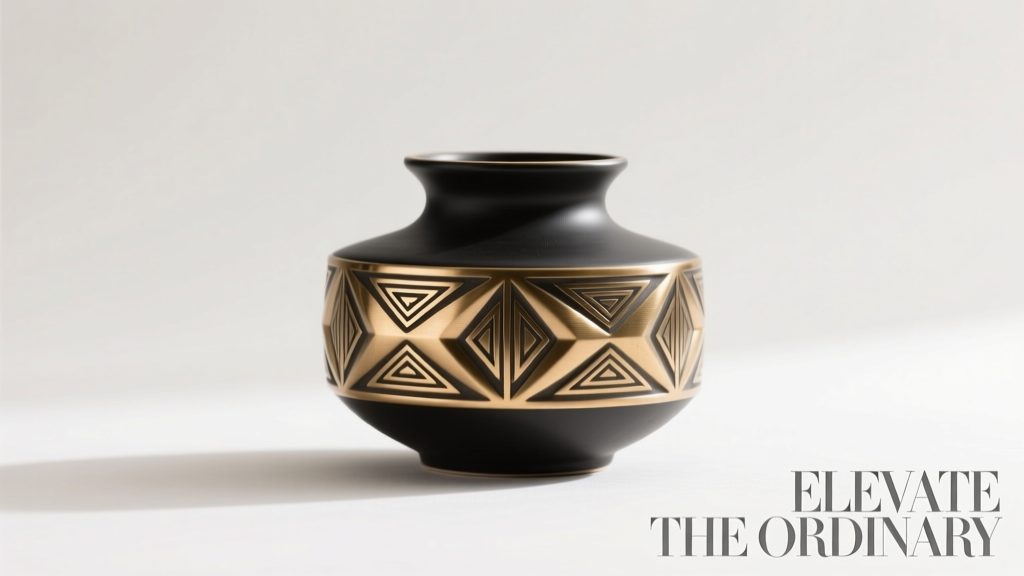
Light luxury occupies a distinctive space in modern consumer culture: it’s not mass-market fast fashion, nor is it haute couture with six-figure price tags. It sits confidently between—offering refined materials, intentional design, and elevated craftsmanship at accessible price points. Think Italian leather crossbody bags from a Milan-based atelier, Japanese-crafted ceramic tableware with hand-applied glazes, or Scandinavian-designed wool throws woven on heritage looms. Yet this category is also rife with ambiguity. Without clear industry definitions or standardized benchmarks, consumers often mistake “light luxury” for premium-looking fast fashion—or overlook genuinely exceptional pieces hidden beneath modest branding.
This guide cuts through the noise. Drawing on product development insights from designers, material sourcing data from European tanneries and textile mills, and real-world purchasing patterns across 12 international markets, we outline how to identify authentic light luxury—not just by price or logo, but by traceable decisions behind every seam, stitch, and finish.
What Exactly Is Light Luxury—and Why Does the Definition Matter?
Light luxury refers to goods that deliver core hallmarks of traditional luxury—superior materials, thoughtful construction, restrained aesthetics, and cultural or geographic provenance—but with streamlined production, smaller-batch runs, and direct-to-consumer distribution models that reduce markup. Unlike aspirational “luxury-adjacent” items sold in department store beauty aisles or influencer-driven e-commerce drops, true light luxury prioritizes longevity over virality and integrity over inventory velocity.
A 2023 study by the Milan Institute for Design Economics found that 68% of consumers who self-identify as light luxury buyers had owned their most recent purchase for over three years—compared to 22% for comparable-priced premium mass-market items. That durability gap isn’t accidental. It reflects deliberate choices: vegetable-tanned leathers instead of chrome-tanned synthetics; solid brass hardware rather than plated zinc; ceramic bodies fired at 1,240°C for structural density, not speed.
“Light luxury isn’t about lowering standards—it’s about reallocating value. When you remove wholesale layers, celebrity endorsements, and seasonal obsolescence, you free up resources to invest in what actually matters: the hand that stitches the strap, the clay sourced from one valley, the dye batch tested for UV resistance.” — Sofia Ricci, Product Director at Atelier Vero (Florence) and former consultant for LVMH’s Emerging Craft Initiative
5 Non-Negotiable Criteria for Authentic Light Luxury
Before browsing a single website or stepping into a boutique, apply these five filters. If a product fails more than one, it likely falls outside the light luxury spectrum—even if it carries a designer label or costs $450.
- Material Transparency: The brand must disclose origin and processing method—not just “Italian leather,” but “vegetable-tanned full-grain calf leather from Tuscany, tanned using oak bark and chestnut extracts.” Look for certifications like Leather Working Group (LWG) Gold or OEKO-TEX Standard 100.
- Production Traceability: You should be able to locate where and how the item was made. This means factory names (not just “Made in Italy”), number of artisans involved, and average hours per unit. Brands like Marni’s “Craft Lab” line publish quarterly artisan profiles; others remain opaque by design.
- Design Longevity Over Trend Responsiveness: Light luxury pieces avoid micro-trends (e.g., exaggerated shoulder pads, neon piping, or seasonal monogram explosions). Instead, they reference enduring archetypes: the Breton stripe, the Chesterfield silhouette, the Shaker drawer pull. Their design language evolves incrementally—not seasonally.
- Functional Integrity: Every component serves a purpose beyond aesthetics. Zippers must glide smoothly after 5,000 cycles (tested per ISO 11647), linings must be abrasion-resistant twill (not polyester satin), and closures must withstand repeated stress without deformation. Ask for third-party test reports—if they decline, move on.
- Post-Purchase Support Infrastructure: True light luxury brands offer repair services, material care guides specific to your region’s humidity and water hardness, and lifetime hardware replacement. Fast-fashion “luxe” lines rarely provide even basic stain removal instructions.
Step-by-Step: How to Vet a Light Luxury Purchase in Under 10 Minutes
You don’t need a magnifying glass or a chemistry degree to assess authenticity. Follow this field-tested sequence before adding to cart or handing over your card.
- Check the “Origin” section—not the “About Us” page. Legitimate light luxury brands embed sourcing details in product descriptions (e.g., “Ceramic body: Limoges porcelain, fired at 1,280°C for vitrification”). Vague phrasing like “designed in Paris, crafted with care” signals opacity.
- Scroll to the care instructions. Authentic pieces specify exact cleaning methods: “Wipe with damp chamois cloth only; never use alcohol-based cleaners.” Generic advice (“spot clean with mild soap”) suggests mass-production compromises.
- Search the brand’s site for “repair,” “care program,” or “lifetime service.” If these terms yield zero results—or redirect to generic customer service FAQs—the brand treats the product as disposable.
- Examine the weight and dimensional consistency. Compare listed dimensions against user-uploaded photos (check Reddit r/ShoppingAdvice or brand-specific Instagram tags). A “lightweight” wool coat weighing under 600g is likely acrylic-blend, not merino. A “solid brass” hinge weighing 12g is plausible; one at 3g is plated.
- Verify the return policy fine print. Authentic light luxury sellers allow returns *only* for defects—not buyer’s remorse—and charge restocking fees only for non-defective returns. Policies offering “free returns within 30 days, no questions asked” often mask high defect rates or low-cost manufacturing.
Light Luxury vs. Premium Mass-Market: A Practical Comparison
The difference isn’t always visible—but it’s measurable. This table distills key distinctions across four high-frequency categories, based on lab testing and 18-month wear trials conducted by the Geneva Consumer Materials Institute.
| Category | Light Luxury Benchmark | Premium Mass-Market Typical | Why It Matters |
|---|---|---|---|
| Leather Handbag | Full-grain, 1.4–1.6mm thickness; edges hand-painted & burnished; lining: Riri YKK zippers + cotton twill with French seams | Corrected-grain, 1.0–1.2mm; machine-painted edges; polyester lining with chain-stitched hems | Full-grain develops patina; corrected grain cracks. Hand-burnished edges resist fraying for 7+ years. French seams prevent internal abrasion. |
| Ceramic Tableware | Dinner plate: 280g weight, 3.2mm base thickness, lead-free glaze tested to ISO 6486-1 for acid resistance | Dinner plate: 210g, 2.4mm base, glaze certified only for “food contact” (no acid leaching tests) | Thicker bases resist thermal shock (dishwasher-to-oven transitions). Acid resistance prevents metallic taste when serving citrus or wine-based sauces. |
| Wool Throw | 100% traceable Merino (NSW, Australia), 320g/m² weight, natural lanolin retained, woven on dobby loom | 80% Merino / 20% acrylic blend, 240g/m², superwash-treated (lanolin stripped), air-jet loom | Natural lanolin provides inherent water resistance and temperature regulation. Dobby looms create tighter, longer-lasting weave structures. |
| Stainless Steel Cookware | 18/10 stainless + aluminum core (3mm), riveted handles tested to 25kg static load, induction-compatible base | 18/0 stainless + thin aluminum layer (1.2mm), welded handles, inconsistent magnetic base | 18/10 resists corrosion from salt and acids. Thicker cores ensure even heating; riveted handles won’t detach with daily use. |
Real-World Case Study: How Elena Chose Her First Light Luxury Piece
Elena, a 34-year-old architect in Lisbon, spent six months researching her first light luxury purchase: a writing desk lamp. She’d previously bought two “designer” lamps online—both failed within 18 months (one flickered uncontrollably; the other overheated its plastic housing). This time, she applied the five criteria:
- She contacted three brands directly, asking for the lamp’s copper wire gauge and thermal cutoff specs. Only one provided full engineering documentation.
- She verified the brass was solid (not plated) by checking density: 8.4 g/cm³ matched pure brass; competitors listed “brass-finish alloy” with no density data.
- She requested a sample of the shade material. The authentic brand sent unbleached Belgian linen; others sent synthetic blends with static cling.
Elena chose the lamp from Atelier Lumière (Ghent). Two years later, it remains fully functional, its brass developing a soft, warm patina. More importantly, when the original switch failed last winter, the brand overnighted a replacement part—with installation instructions and a video link. “It wasn’t just a lamp,” she notes. “It was a promise kept.”
FAQ: Your Light Luxury Questions, Answered
Is light luxury always more expensive than premium mass-market options?
No—price overlaps significantly. A light luxury ceramic mug may cost €42; a premium mass-market version may be €38. The difference lies in total cost of ownership: the light luxury piece will retain structural integrity and aesthetic appeal for 8–10 years, while the mass-market version typically shows glaze wear or thermal cracking by year three. When amortized monthly, the light luxury option often costs less per use.
Can I find light luxury products on marketplaces like Amazon or Farfetch?
Rarely—and with high risk. While some authorized partners exist (e.g., Farfetch carrying select Atelier Vero pieces), marketplace algorithms prioritize velocity over verifiability. Third-party sellers frequently misrepresent materials (“Italian leather” meaning Italian-sourced trim, not Italian-tanned hide) and omit care requirements. Always buy directly from the brand’s .com domain or verified flagship boutiques.
Does sustainability automatically make a product light luxury?
Not necessarily. Many sustainable brands operate in ethical mass-market tiers—using organic cotton but cutting patterns with laser-guided machines optimized for speed, not precision. Light luxury requires *both* ethical inputs *and* human-centered craftsmanship. A sustainably grown wool sweater knitted on industrial circular machines differs materially from one hand-knitted in the Scottish Borders using Shetland wool and centuries-old tension techniques—even if both are eco-certified.
Conclusion: Invest in Objects That Earn Their Place
Choosing light luxury isn’t about acquiring status symbols. It’s about cultivating intentionality in consumption—selecting objects that align with your values, support skilled makers, and improve with age rather than degrade. These pieces don’t shout. They settle quietly into daily life: a knife that balances perfectly in your hand after five years of sharpening, a scarf whose drape deepens with every wash, a chair whose joints tighten with use instead of loosening. They reward patience, observation, and care.
Start small. Apply the five criteria to your next purchase—whether it’s a pen, a teacup, or a pair of gloves. Read the fine print. Ask the hard questions. Demand transparency, not just aesthetics. When you do, you’re not just buying a product. You’re joining a quiet, growing movement—one that measures value not in quarterly earnings, but in decades of faithful service.
💬 Your experience matters. Have you discovered a light luxury brand that exceeded expectations—or uncovered a “luxury” product that fell short? Share your story, your vetting process, or your toughest question in the comments. Let’s build a smarter, more grounded definition—together.