The witch snake keychain has become a beloved accessory among collectors, spiritual practitioners, and fashion enthusiasts alike. With its intricate design—often featuring coiled serpents, occult symbols, or metallic finishes—it's more than just a functional item; it’s a statement piece. However, like any detailed metal or resin accessory, it’s prone to tarnishing, scratches, and wear if not properly cared for. Without regular maintenance, the once-sharp engravings can dull, the finish may chip, and the chain might weaken over time.
Maintaining your witch snake keychain doesn’t require elaborate tools or costly products. What it does demand is consistency, awareness of environmental risks, and a few smart habits. Whether your keychain is made of zinc alloy, stainless steel, brass, or includes painted details, the following guidance will help you protect its appearance and structural integrity for years to come.
Understand Your Keychain’s Material Composition
Before applying any cleaning method or storage solution, identify what your witch snake keychain is made from. The material determines how it reacts to moisture, friction, and chemicals. Common materials include:
- Stainless Steel: Resistant to rust and corrosion; ideal for daily use but can scratch.
- Brass or Bronze: Prone to oxidation; develops a patina over time unless protected.
- Zinc Alloy: Often used in detailed designs; lightweight but can chip or crack under impact.
- Resin or Polymer: Used for colored or translucent elements; sensitive to heat and UV exposure.
Knowing the base material allows you to tailor your care routine. For instance, polishing brass too aggressively can remove intentional antiquing, while soaking resin components in alcohol-based cleaners may cause clouding or cracking.
Tip: If unsure about the material, check product packaging or consult the seller. When in doubt, assume it’s mixed media and proceed gently.Establish a Gentle Cleaning Routine
Dirt, oils from skin, and environmental pollutants accumulate on keychains quickly due to frequent handling. A consistent cleaning schedule prevents grime buildup that can etch surfaces or obscure fine details.
For most metal-based witch snake keychains, follow this weekly cleaning process:
- Remove the keychain from your keys to avoid damaging other items during cleaning.
- Use a soft microfiber cloth dampened with distilled water to wipe down all surfaces.
- For crevices, use a clean toothbrush with soft bristles to dislodge debris.
- Pat dry immediately with a lint-free cloth.
- If needed, apply a drop of mild dish soap diluted in water—but rinse thoroughly and dry completely.
Avoid commercial jewelry cleaners unless explicitly safe for your material. Many contain acids or solvents that degrade finishes or strip protective coatings.
Cleaning Do’s and Don’ts
| Do | Don’t |
|---|---|
| Use distilled water to prevent mineral deposits | Soak the keychain for long periods |
| Clean after exposure to saltwater or sweat | Use paper towels (can scratch) |
| Dry thoroughly before storing | Expose painted areas to alcohol or acetone |
| Polish occasionally with a jewelry cloth | Use ultrasonic cleaners on resin or plated pieces |
Store with Intention to Prevent Damage
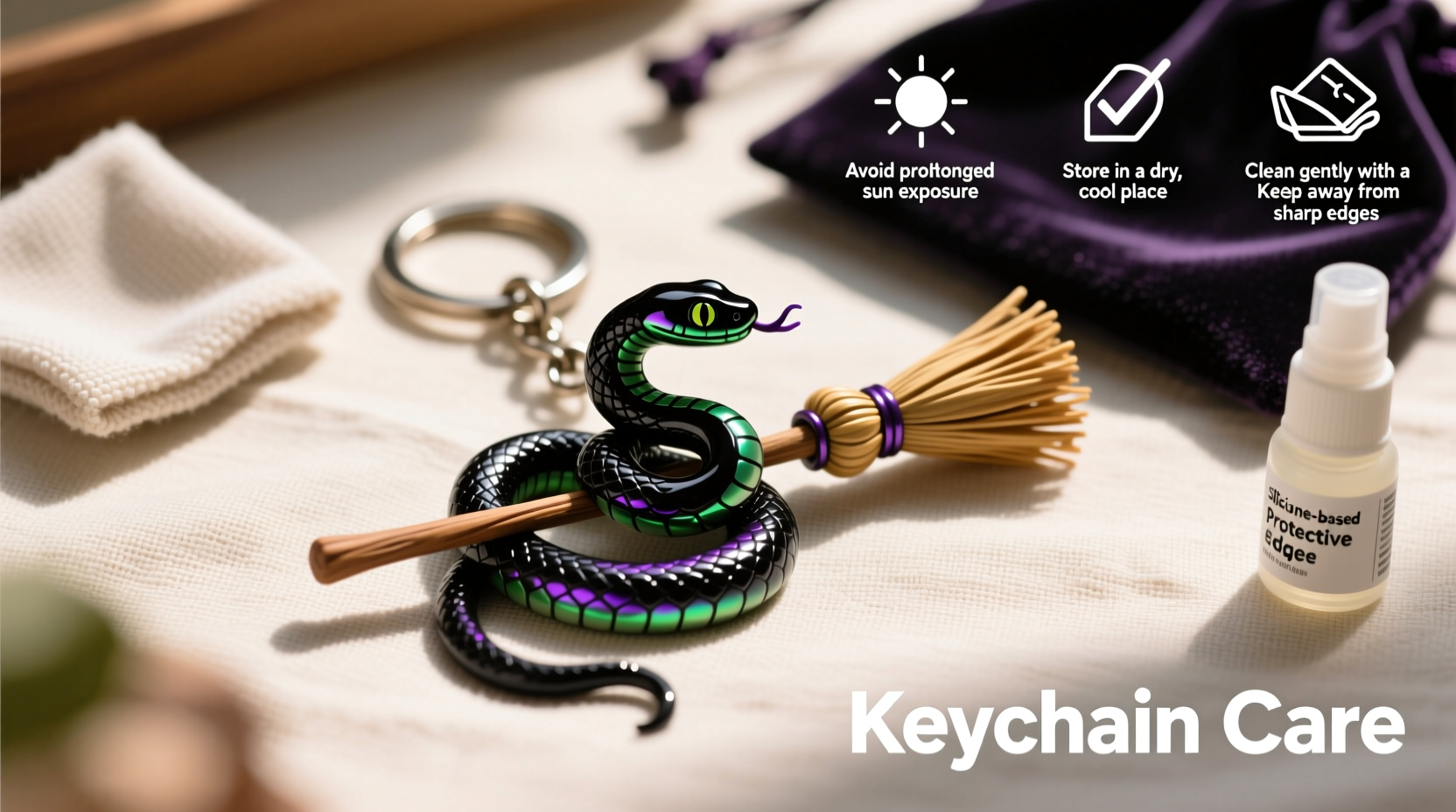
How you store your keychain when not in use plays a major role in preserving its condition. Tossing it into a drawer with loose coins or other keys invites scratches and dents.
Ideally, store your witch snake keychain in a fabric-lined box or a soft pouch. This isolates it from harder objects and reduces friction. If you own multiple decorative keychains, consider using individual compartments or hanging them on a small display rack lined with felt.
Tip: Place a silica gel packet in your storage container to absorb ambient moisture and reduce oxidation risk.Avoid plastic bags for long-term storage—they trap humidity and accelerate tarnishing, especially in brass or copper alloys.
Handle with Care During Daily Use
Your keychain goes everywhere you do—jostling in pockets, swinging from bags, exposed to rain or gym bags. Minimize unnecessary stress by adjusting how you carry and interact with it.
Limit direct contact with hands as much as possible. Skin oils accelerate tarnishing, particularly on silver-toned metals. When attaching or removing keys, hold the ring rather than gripping the sculptural element.
If you wear the keychain as a pendant or bag charm, detach it before swimming, showering, or exercising. Chlorine, saltwater, and perspiration are highly corrosive. Even brief exposure can lead to pitting or discoloration over time.
“Decorative keychains are often treated like disposable accessories, but with mindful handling, they can last a decade or more.” — Lila Monroe, Accessory Preservation Specialist
Real-Life Example: How One Collector Preserved Her Vintage Set
Sophia, a collector from Portland, owns a series of limited-edition witch snake keychains released between 2018 and 2022. Initially, she carried one daily and noticed rapid fading on the black enamel detailing within six months. After researching preservation techniques, she changed her approach.
She now rotates her keychains monthly, stores unused ones in velvet pouches inside a cedar box, and cleans each piece every two weeks using only a microfiber cloth and distilled water. She also avoids wearing them during workouts or outdoor hikes. As a result, her collection remains in near-mint condition, with original finishes intact and no visible tarnish—even on brass models.
Her experience underscores a simple truth: minor behavioral shifts yield significant long-term benefits.
Monthly Maintenance Checklist
To make upkeep effortless, follow this concise checklist every 30 days:
- ✅ Inspect for loose links, cracks, or worn paint
- ✅ Wipe down with a dry microfiber cloth
- ✅ Check storage environment for moisture
- ✅ Rotate usage if you have multiple keychains
- ✅ Polish metal surfaces lightly with a non-abrasive cloth
- ✅ Verify clasp strength and integrity
This routine takes less than ten minutes but prevents cumulative damage that’s difficult to reverse.
Frequently Asked Questions
Can I use silver polish on my witch snake keychain?
Only if it’s made of solid silver or high-quality silver plating. Most decorative keychains use base metals with a silver-colored finish. Harsh polishes can strip this coating. Opt for a dry jewelry polishing cloth instead.
Why is my keychain turning green?
This is typically caused by copper oxidation, especially in lower-cost alloys. Moisture and skin acidity accelerate the reaction. While harmless, it can stain fabrics. Wipe the area gently with a damp cloth and ensure thorough drying afterward.
Is it safe to wear my witch snake keychain every day?
You can, but daily wear increases exposure to wear factors. For longevity, reserve it for special occasions or rotate it with other accessories. Always remove it before water activities or strenuous movement.
Final Thoughts: Honor the Craft, Protect the Symbol
The witch snake keychain is more than a tool—it’s an emblem of personal expression, mysticism, or artistic appreciation. Its value isn't just monetary; it carries meaning. Treating it with care reflects respect for the craftsmanship and symbolism embedded in its design.
By understanding its materials, cleaning it gently, storing it wisely, and handling it mindfully, you preserve both its aesthetic and emotional significance. These practices take little time but deliver lasting rewards.
💬 Have a favorite care tip or restoration story? Share your experience below and inspire others to protect their cherished pieces with intention and pride.