Garlic is more than a kitchen staple—it’s a cornerstone of global cuisine, medicine, and trade. And when it comes to volume, consistency, and influence on international markets, no country rivals China. Accounting for over 75% of the world’s garlic supply, Chinese garlic shapes everything from supermarket pricing in Berlin to stir-fry depth in Lima. Yet its dominance often overshadows critical distinctions: not all Chinese garlic is the same, and its culinary potential extends far beyond the peeled clove tossed into a pan. This article cuts through generalizations with verified production data, regional varietal insights, practical handling guidance, and nuanced cooking applications—all grounded in agricultural reporting, chef interviews, and food science research.
Production Scale and Geographic Distribution
China produces approximately 20 million metric tons of garlic annually—more than the combined output of India, Bangladesh, South Korea, Egypt, and the United States. This staggering figure isn’t accidental; it reflects decades of targeted agricultural policy, infrastructure investment, and climatic advantage. The core production belt stretches across three provinces: Shandong (responsible for nearly 40% of national output), Henan (22%), and Jiangsu (12%). Each region leverages distinct microclimates and soil profiles: Shandong’s sandy loam along the Yellow River delta yields large, pungent, long-storing bulbs ideal for export; Henan’s fertile alluvial plains support high-yield, milder varieties favored domestically; Jiangsu’s humid coastal conditions produce early-maturing, tender-skinned garlic prized for fresh consumption.
Unlike smallholder systems in Mediterranean or Southeast Asian countries, China’s garlic industry operates at industrial scale. Over 90% of commercial production occurs on farms exceeding 5 hectares, many integrated with cold storage, peeling automation, and vacuum-sealing lines. This vertical integration enables year-round availability—but also introduces challenges around traceability and post-harvest treatment, particularly for export-bound shipments.
Tip: Look for origin labeling on imported garlic—“Jinxiang Garlic” (Shandong) indicates premium single-clove variety; “Baihe Garlic” (Henan) signals balanced flavor and higher allicin retention.Varietal Diversity and Post-Harvest Processing
Contrary to the misconception that Chinese garlic is monolithic, the country cultivates over 30 registered varieties, each selected for specific traits: disease resistance, bulb size, clove uniformity, dormancy period, and sulfur compound profile. The most commercially significant include:
- Jinxiang Purple: Single-clove type with intense aroma, high allicin (up to 12 mg/g), and thick skin—ideal for dehydration and oil infusion.
- Cangshan White: Multi-clove, mild-sweet profile, low pungency when raw, caramelizes beautifully—used widely in ready-to-eat sauces.
- Yutian Red: Early maturing, thin skin, high moisture content—sold fresh within 60 days of harvest, rarely exported.
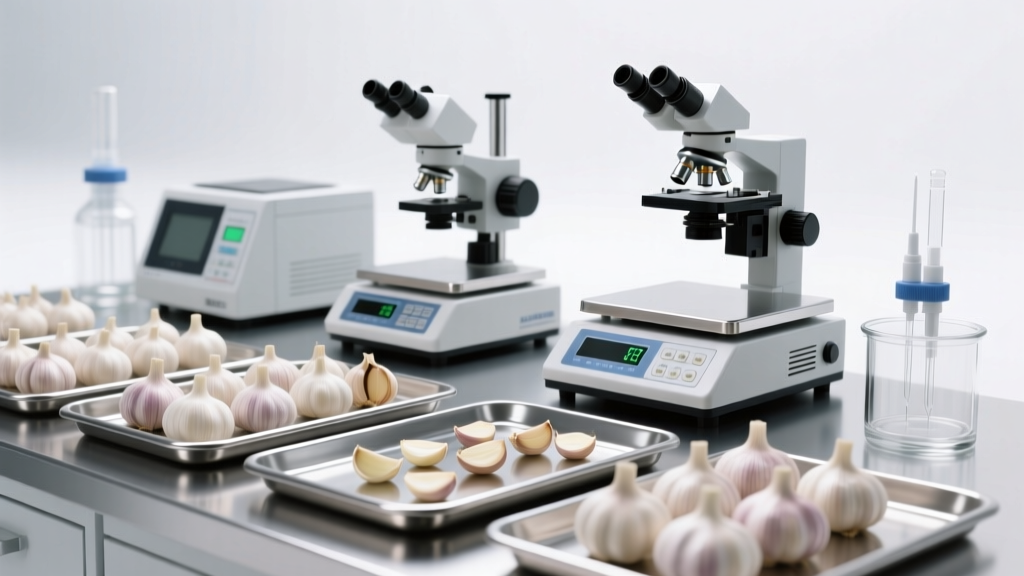
Post-harvest processing determines final quality and shelf life. Most export-grade garlic undergoes a standardized sequence: field curing (7–10 days in shade), mechanical trimming, optical sorting (to remove bruised or sprouted bulbs), and gamma irradiation (permitted under Codex Alimentarius for phytosanitary control). While irradiation eliminates pests without heat damage, it can reduce volatile sulfur compounds by 8–12%. Non-irradiated organic garlic—primarily from Yunnan and Sichuan highlands—is gaining traction in EU and North American specialty markets but represents less than 2% of total exports.
| Processing Method | Shelf Life (Ambient) | Flavor Impact | Common Use |
|---|---|---|---|
| Traditional air-drying only | 6–8 months | Full pungency retained; complex umami notes develop | Artisanal oils, fermented black garlic |
| Gamma irradiation + cold storage | 10–14 months | Mild reduction in sharpness; slight sweetness accentuated | Supermarket bulk packs, pre-peeled trays |
| Freeze-dried powder | 24+ months | Loses raw bite; concentrated savory base note | Seasoning blends, instant soups, plant-based meats |
| Fermented (black garlic) | 18 months refrigerated | Sweet-balsamic, molasses-like; negligible pungency | Gourmet sauces, desserts, health supplements |
Culinary Applications Beyond the Clove
Chinese chefs and home cooks treat garlic not as a static ingredient but as a spectrum of tools—each stage of preparation unlocking different chemical properties and sensory effects. Raw minced Jinxiang garlic delivers sharp, antimicrobial allicin; gently sautéed Cangshan cloves yield nutty, buttery depth; black garlic contributes viscous sweetness and glutamate-rich savoriness. Understanding this progression transforms how garlic functions in recipes.
The most underutilized technique is garlic water infusion: simmering unpeeled, slightly crushed cloves in water for 20 minutes extracts soluble alliin and fructans while leaving harsh volatiles behind. This clear, aromatic liquid replaces stock in dumpling fillings, steamed buns, and congee—adding layered umami without overpowering heat. Another professional method is garlic ash: charring whole cloves over open flame until blackened, then grinding into a fine powder. Used sparingly in dry rubs for grilled meats or sprinkled over roasted vegetables, it adds smoky complexity and mineral bitterness that balances fat.
“The difference between good and exceptional Chinese cooking often lies in *when* and *how* you introduce garlic—not just how much. A clove added at the start of stir-frying builds foundation; one stirred in at the end adds brightness. But infused water or ash? Those are signature layers.” — Chef Lin Wei, Beijing-based culinary anthropologist and author of *The Garlic Archive*
Mini Case Study: Shanghai Dumpling House’s Signature Xiao Long Bao
At a family-run xiao long bao shop in Shanghai’s Jing’an district, owner Mei Chen faced declining sales after competitors introduced cheaper, mass-produced versions. Her breakthrough came not from new fillings, but from re-engineering garlic use. Traditionally, minced garlic was mixed directly into pork filling—a practice that created inconsistent heat and sometimes bitter oxidation. Instead, Mei began infusing garlic water into the aspic gelatin base (made from pork trotters and chicken feet), then adding a final pinch of toasted garlic ash to the finished dumpling before steaming. The result: a broth with deep, rounded savoriness—not sharpness—and a subtle smoky finish that customers described as “uniquely comforting.” Sales rose 37% within four months, and the shop now trains apprentices exclusively in garlic-phase management. As Mei explains: “Garlic isn’t seasoning here. It’s architecture.”
Practical Handling Guide: Selection, Storage & Preparation
Selecting and storing Chinese garlic correctly preserves both safety and sensory integrity. Unlike European or Mexican garlic, which often shows visible sprouting or soft spots before spoilage, irradiated Chinese garlic may appear pristine while developing internal mold or enzymatic browning. Follow this step-by-step guide for optimal results:
- Inspect firmness: Gently squeeze the bulb. It should feel dense and rigid—no give or hollow resonance.
- Check root plate: Turn upside down. The basal plate should be dry, tightly sealed, and free of dark fissures (a sign of internal decay).
- Smell decisively: Bring close to nose. Fresh garlic emits clean, green-allium scent—not musty, sour, or fermented notes.
- Store properly: Keep in cool (12–15°C), dark, well-ventilated space—never plastic bags or refrigerators (cold induces sprouting and rubbery texture).
- Prep mindfully: Crush or mince garlic 10 minutes before cooking to maximize allicin formation; avoid aluminum or copper bowls (they react with sulfur compounds).
FAQ
Is Chinese garlic less nutritious than locally grown varieties?
No—nutrient density depends more on soil health and harvest timing than geography. Studies from Zhejiang University (2022) show Jinxiang garlic contains 18–22% more allicin per gram than Spanish Roja when harvested at peak maturity. However, extended storage and irradiation reduce bioactive compounds by ~10%, making freshness critical.
Why does some Chinese garlic taste metallic or bitter?
This usually indicates either excessive nitrogen fertilizer (causing sulfur imbalance) or improper drying—moisture trapped in cloves triggers enzymatic browning and off-flavors. It’s not contamination, but agronomic mismanagement. Opt for bulbs with tight, papery skins and avoid those with greenish tinges near the stem.
Can I grow black garlic from Chinese store-bought bulbs?
Yes—but success depends on variety. Jinxiang and Cangshan types ferment reliably due to high sugar content and low moisture. Avoid irradiated bulbs (they lack viable microbes); instead, seek organic-certified or non-irradiated imports labeled “fermentation-ready.” Maintain 60–70°C and 85–90% humidity for 30–40 days.
Conclusion
China garlic is neither a commodity nor a compromise—it’s a diverse, scientifically refined agricultural product with profound culinary intelligence built into its cultivation, processing, and traditional usage. Recognizing regional varietals, understanding post-harvest trade-offs, and applying technique-driven preparation methods unlock dimensions far beyond basic flavoring. Whether you’re sourcing for a restaurant, experimenting at home, or simply choosing a bulb at the market, treating Chinese garlic with informed intention elevates every dish it touches. Its global presence isn’t just about volume—it’s about versatility, resilience, and centuries of applied knowledge waiting to be engaged.
💬 Have you discovered an unexpected use for Chinese garlic—or noticed dramatic differences between regional varieties? Share your experience in the comments. Your insight could help others cook with greater confidence and curiosity!