Keychains are more than just functional accessories—they’re personal statements. Whether clipped to a bag, keys, or backpack, they reflect personality, nostalgia, and style. Among the most popular types are cartoon keychains and character keychains. At first glance, they might seem similar, but they represent two distinct aesthetics with unique emotional appeals. So, which one is actually cuter? The answer isn’t as simple as it seems—it depends on design philosophy, emotional resonance, and individual taste.
Defining the Two: What Makes Them Different?
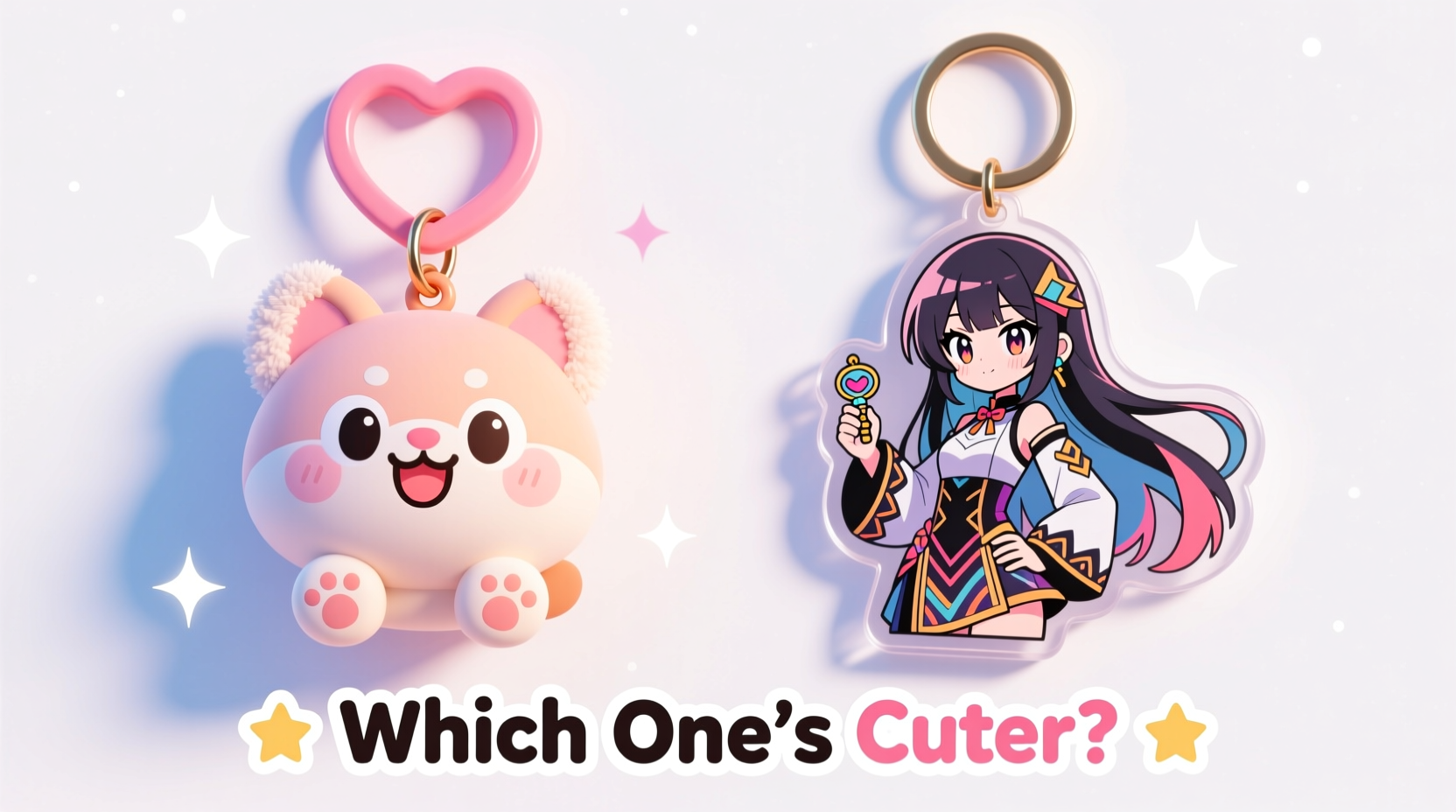
The terms “cartoon keychain” and “character keychain” are often used interchangeably, but they describe different categories of collectible accessories.
- Cartoon keychains typically feature stylized, exaggerated designs inspired by animation—think big eyes, soft shapes, minimal details, and bright colors. They may not represent a specific licensed character but instead embody a universal \"cute\" aesthetic (e.g., a smiling cloud, a winking star, or a chibi-style animal).
- Character keychains, on the other hand, are based on recognizable figures from media—like Mickey Mouse, Pikachu, Hello Kitty, or characters from Studio Ghibli films. These are often officially licensed and carry strong narrative and emotional associations.
While both aim to charm, their paths to cuteness diverge. Cartoon keychains rely on abstract, universal appeal; character keychains draw power from familiarity and fandom.
Tip: When choosing between styles, consider whether you're drawn to broad visual charm or deep personal connection.The Anatomy of Cuteness: What Makes a Keychain \"Cute\"?
Cuteness isn’t arbitrary—it follows psychological principles. Researchers in aesthetics and design point to traits like symmetry, rounded edges, large eyes relative to head size, and soft color palettes as triggers for our perception of cuteness. This is known as the \"baby schema\" effect, where features resembling infants activate nurturing instincts.
Both cartoon and character keychains leverage these traits, but in different ways:
- Cartoon keychains are designed from the ground up to maximize cuteness. Designers use simplified forms, pastel tones, and exaggerated expressions to create instant visual delight. Because they lack narrative context, their charm is immediate and accessible.
- Character keychains inherit cuteness through established design language. Pikachu’s round cheeks and lightning tail aren’t just cute—they’re iconic. The emotional weight of seeing a beloved character amplifies perceived cuteness, especially for fans.
“Cuteness in design is about emotional accessibility. A well-designed cartoon keychain can feel like a smile in object form.” — Dr. Lena Tran, Cognitive Aesthetics Researcher, Kyoto Institute of Design
Comparative Breakdown: Cartoon vs Character Keychains
| Feature | Cartoon Keychain | Character Keychain |
|---|---|---|
| Design Origin | Original or generic cute concepts | Licensed from films, games, or comics |
| Emotional Appeal | Instant, universal charm | Nostalgic, fan-driven attachment |
| Variety & Uniqueness | High—endless creative possibilities | Moderate—limited to existing IPs |
| Rarity Value | Low to medium (often mass-produced) | High (limited editions, exclusives) |
| Personal Connection | Visual pleasure | Story-based affection |
| Average Price | $3–$8 | $8–$25+ (collector’s editions higher) |
Real-World Example: The Case of Yuki and Her Keychain Collection
Yuki, a 24-year-old graphic designer from Osaka, owns over 30 keychains. Her favorites? A pastel pink penguin cartoon keychain she bought at a street market and a rare Sanrio Kiki & Lala duo keychain from a limited release.
When asked which she finds cuter, she hesitates. “The penguin is adorable—it makes me smile every time I see it. But the Kiki & Lala one? That’s special. It reminds me of watching anime with my sister when we were kids.”
Her experience illustrates a broader truth: cuteness isn’t solely about appearance. For Yuki, the cartoon keychain wins on visual charm, but the character keychain wins on emotional depth. Both are “cute,” but in different dimensions.
How to Choose the Right One for You: A Step-by-Step Guide
Deciding between cartoon and character keychains doesn’t have to be arbitrary. Follow this process to find the option that resonates most with your personality and lifestyle.
- Reflect on your motivations. Are you looking for something cheerful and decorative, or do you want a piece that connects to your identity or memories?
- Assess your existing collection. If you already have several character-based items, a whimsical cartoon keychain might add refreshing variety.
- Consider gifting potential. A character keychain from someone’s favorite show is a thoughtful gift. A cartoon keychain works better as a universal present.
- Evaluate durability and use. Cartoon keychains made of soft enamel or PVC may wear faster. Licensed character keychains often use higher-quality materials due to brand standards.
- Trust your gut reaction. Hold them in your hand. Which one makes you smile more? Cuteness is ultimately subjective.
Frequently Asked Questions
Are cartoon keychains only for kids?
No. While their playful design may seem juvenile, many adults embrace cartoon keychains as part of kawaii culture, fashion expression, or stress-relief tools. Their simplicity often appeals to minimalist and modern aesthetics.
Do character keychains hold value over time?
Some do. Limited-edition releases from franchises like Disney, Pokémon, or Studio Ghibli can appreciate in value, especially if kept in mint condition. Mass-produced versions, however, are generally meant for enjoyment rather than investment.
Can I mix both types on the same keyring?
Absolutely. Many collectors blend cartoon and character keychains for visual balance and personal storytelling. A tiny cartoon cupcake next to a Mario keychain creates a fun, layered look.
Final Verdict: Which Is Actually Cuter?
There’s no definitive winner. Cartoon keychains win on pure, unfiltered cuteness—the kind that transcends language and culture. Their strength lies in design purity: they exist to be adorable.
Character keychains, meanwhile, offer a deeper kind of cuteness—one rooted in memory, story, and belonging. Seeing Doraemon on your keys isn’t just cute; it’s comforting.
If you prioritize immediate visual joy and versatility, go for a cartoon keychain. If you value emotional resonance and fandom pride, a character keychain will likely feel cuter to you.
In the end, “cuteness” isn’t a fixed trait. It’s a feeling—a spark of warmth, a flicker of joy. And both styles deliver it, just through different doors.
“People don’t fall in love with objects. They fall in love with what those objects represent. That’s where true cuteness lives.” — Hiroshi Noguchi, Toy Designer & Author of *The Aesthetics of Joy*
Take Action: Build Your Own Cute Narrative
Your keychain doesn’t just hold your keys—it holds meaning. Whether you choose a wide-eyed cartoon mushroom or a classic Winnie the Pooh figure, make it intentional. Start a small collection that reflects your journey, your moods, or your favorite stories.
💬 Which do you find cuter—cartoon or character keychains? Share your favorite in the comments and tell us why it brings you joy!