
Apple’s AirPods are designed for convenience—wireless, compact, and always ready to go. But their small size comes with a downside: they’re easy to misplace. Enter the AirPods case with a keychain attachment—a trending accessory that promises to keep your earbuds secure and within reach. But does it deliver on its promise, or does it just add unnecessary weight to your pocket or bag? Let’s examine the practicality, benefits, and drawbacks of this increasingly common add-on.
The Core Problem: Losing Small Tech
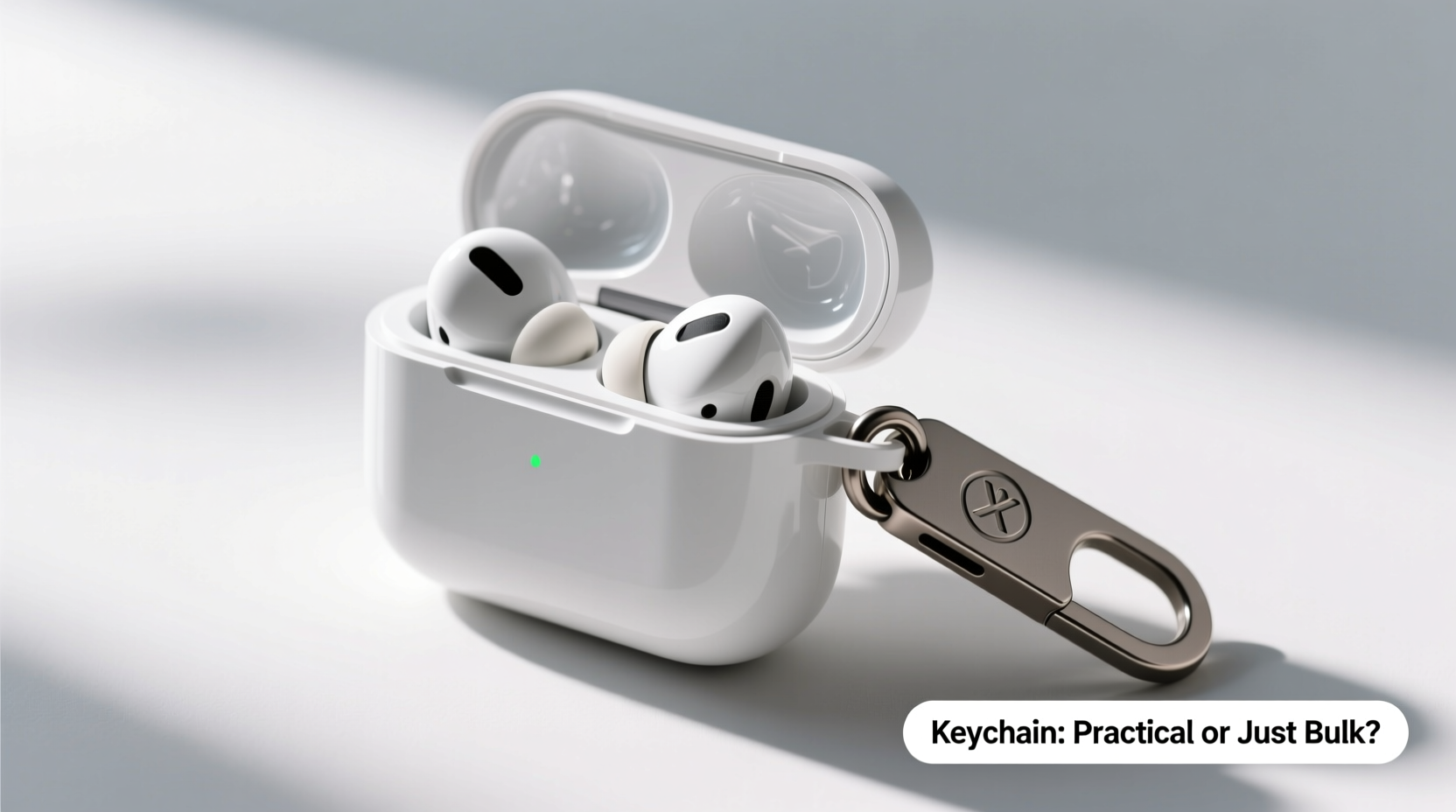
AirPods cases are about the size of a matchbox. Their sleek design makes them easy to slip into a pocket or purse, but also incredibly easy to lose. According to a 2023 consumer electronics survey by Retrevo, nearly 37% of wireless earbud owners have misplaced or lost at least one earbud in the past year. The charging case, while protective, often gets separated from keys, phones, or bags during daily transitions—tossing it onto a café table, leaving it in a gym locker, or dropping it between car seats.
This is where the keychain concept steps in. By attaching the AirPods case to a set of keys, users aim to tether their earbuds to something they’re less likely to leave behind.
Tip: If you frequently misplace small items, anchoring them to high-use objects like keys can significantly reduce loss.Practical Benefits of a Keychain-Compatible Case
Not all AirPods cases come with keychain loops—many third-party models do, while Apple’s official versions typically don’t. However, adding this feature brings several tangible advantages:
- Reduced risk of misplacement: Keys are among the most consistently carried personal items. Attaching your AirPods case ensures it moves with you through doorways, exits, and transitions.
- Quick access: For runners, commuters, or parents juggling multiple items, having both keys and earbuds on the same ring means fewer pockets to dig through.
- Deterrent against forgetfulness: The added weight and visual presence of the case on your keyring serve as a reminder that it’s there—especially helpful when packing up after meetings or workouts.
- Emergency readiness: In situations where you need earbuds quickly (e.g., taking a call while unlocking your car), having them attached to your keys streamlines access.
“Tethering small electronics to everyday carry items is a behavioral nudge—it leverages habit strength to prevent loss.” — Dr. Lena Patel, Cognitive Ergonomics Researcher, MIT Human Systems Lab
When It Adds Unnecessary Bulk
Despite its benefits, the keychain approach isn’t universally ideal. For some users, it introduces more problems than it solves:
- Pocket discomfort: A keyring with a bulky case can dig into your thigh or make sitting awkward, especially if carried in tight jeans or slim-fit pants.
- Increased wear on keyrings: Over time, the constant friction from a hard plastic or silicone case can weaken keyring metal, leading to breakage.
- Cluttered keychains: If you already carry multiple items—USB drives, bottle openers, fobs—the addition of an AirPods case may turn your keychain into an unwieldy cluster.
- Risk of damage: Swinging the case around or letting it dangle increases the chance of impact drops, especially on tile or concrete floors.
Moreover, frequent jostling can loosen the lid latch on older AirPods models, potentially exposing the earbuds inside to dust or moisture over time.
Comparison: Keychain vs. No Keychain – Real-World Tradeoffs
| Factor | With Keychain | Without Keychain |
|---|---|---|
| Likelihood of Misplacement | Lower – tied to essential item | Higher – easily left behind |
| Pocket Comfort | Reduced – adds rigidity and volume | Higher – minimal profile |
| Access Speed | Faster – consolidated location | Slower – requires separate search |
| Durability Risk | Moderate – swing impacts, lid stress | Low – controlled placement |
| Portability (Bag Use) | Neutral – may tangle with other items | Better – fits freely in compartments |
Real-Life Scenario: Commuter’s Dilemma
Consider Mark, a city commuter who bikes to work. He keeps his keys on a carabiner clipped to his backpack strap. After losing two AirPods cases in three months—one left at a coffee shop, another dropped on the subway platform—he switched to a rugged silicone case with a built-in loop. He now attaches it directly to his key carabiner.
The change reduced his losses to zero over six months. While he occasionally feels the case bump against his hip when biking, he considers the minor discomfort worth never having to buy a replacement case again. “It’s not elegant,” he admits, “but I haven’t lost a single bud since. That’s peace of mind.”
Choosing the Right Keychain Case: A Checklist
If you're considering making the switch, use this checklist to ensure you pick a functional, durable option:
- ✅ Look for reinforced attachment points (metal grommets or thick silicone loops)
- ✅ Choose materials with shock absorption (TPU or hybrid silicone)
- ✅ Ensure precise cutouts for charging ports and button access
- ✅ Opt for a low-profile design to minimize snagging
- ✅ Test compatibility with your keyring size and carrying method
- ✅ Avoid overly decorative models that add weight without function
Alternatives to Keychain Attachment
If the keychain route feels too cumbersome, consider these alternatives:
- Magnetic clip-ons: Attach to belt loops, bags, or jackets using strong neodymium magnets—removable and low-profile.
- Wrist lanyards: Ideal for travel or active use, keeping the case visible and accessible.
- Dedicated pouches: Zippered slots in wallets or crossbody bags eliminate loose movement.
- Smart trackers: Devices like AirTags or Tile stickers offer digital recovery options without altering carry habits.
These options provide security without permanently linking your AirPods to your keys, offering flexibility based on context and clothing choices.
FAQ
Can a keychain damage my AirPods case?
Potentially, yes. Constant swinging or dropping can weaken the hinge or crack brittle materials over time. High-quality flexible cases with reinforced loops minimize this risk.
Do Apple’s official cases support keychains?
No, Apple does not include keychain loops on its standard or MagSafe charging cases. You’ll need a third-party model or an adapter loop to attach one.
Is it safe to carry an AirPods case on keys in a washing machine?
No. Even if the case survives, the earbuds inside could be damaged by heat and agitation. Always remove electronic accessories before laundry.
Final Verdict: Useful Tool or Just Extra Bulk?
The answer depends on your lifestyle. For people who move quickly, multitask constantly, or have a history of losing small items, an AirPods case with a keychain is a smart, low-cost insurance policy. The slight increase in bulk is outweighed by the reduction in anxiety and replacement costs.
However, if you’re meticulous about organization, rarely misplace things, or prioritize minimalist carry, the keychain may introduce more friction than benefit. In such cases, alternative tracking or storage methods might serve you better.
The keychain isn’t inherently good or bad—it’s a tool. Its value emerges only when matched to the right user and routine.
🚀 Ready to stop losing your AirPods? Evaluate your daily habits, try a well-built keychain case for a week, and see if the tradeoff works for you. Share your experience—what’s your go-to method for keeping track of small tech?