Religious symbols carry deep spiritual meaning for millions around the world. When thoughtfully integrated into everyday accessories like keychains, they can serve as both personal reminders of faith and subtle expressions of identity. However, designing keychains with religious imagery requires more than just aesthetic consideration—it demands sensitivity, intentionality, and craftsmanship. This guide walks through the essential principles, techniques, and ethical considerations for creating meaningful, respectful, and visually compelling keychains that honor sacred symbols.
Understanding the Significance of Religious Symbols
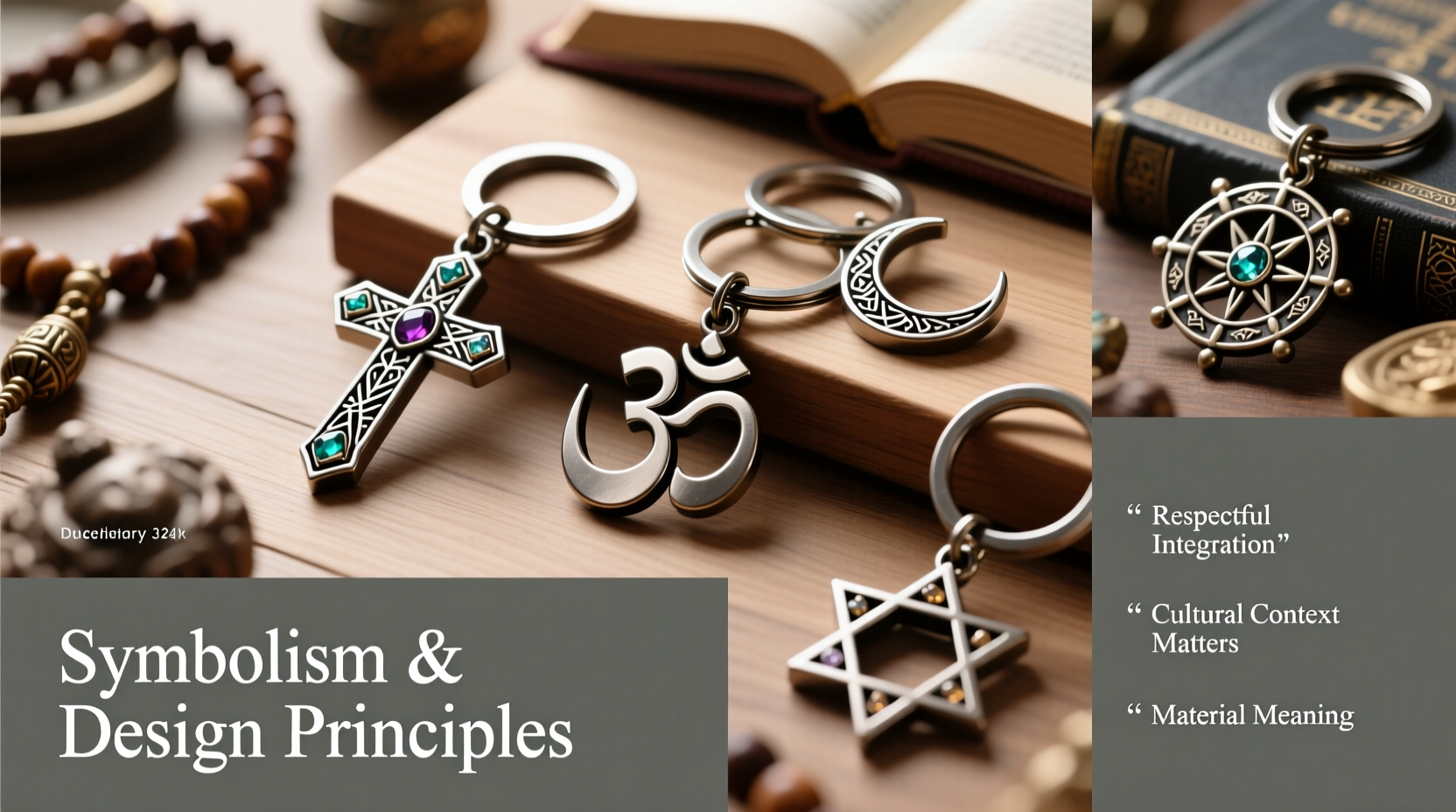
Before translating a symbol into metal, wood, or resin, it’s crucial to understand its context. Religious icons such as the cross, Star of David, Om, crescent moon, dharmachakra, or the Eye of Providence are not merely decorative—they represent centuries of belief, tradition, and communal identity. Misuse or oversimplification can lead to cultural appropriation or unintended disrespect.
Designers must approach these symbols with reverence. Researching their origins, theological meanings, and proper usage within their respective traditions ensures authenticity. For example, the Hamsa hand is widely recognized in Islamic, Jewish, and Middle Eastern cultures as a protective amulet. Using it solely as a trendy motif without acknowledging its significance diminishes its value.
“Sacred symbols are not fashion statements. They are vessels of meaning. When used in design, they should reflect understanding, not convenience.” — Dr. Leila Nassar, Cultural Anthropologist
Design Principles for Meaningful Keychains
Creating a keychain that honors a religious symbol involves balancing visual appeal with symbolic integrity. Here are core design principles to follow:
- Proportion and Clarity: Ensure the symbol remains recognizable even at small sizes. Overly intricate details may blur when miniaturized.
- Material Integrity: Choose materials that convey dignity—sterling silver, engraved wood, or cast pewter feel more appropriate than flimsy plastic.
- Contextual Harmony: Pair the symbol with complementary elements (e.g., a prayer quote, floral border, or geometric pattern) that enhance rather than distract from its meaning.
- Cultural Accuracy: Use correct orientations and forms. For instance, the Buddhist dharmachakra should have eight spokes, not six or ten, to preserve doctrinal accuracy.
Step-by-Step Guide to Creating Symbolic Keychains
Follow this structured process to develop keychains that are both beautiful and respectful:
- Choose the Symbol with Purpose: Identify which symbol aligns with the intended wearer’s beliefs. Avoid generic “spiritual” mashups unless explicitly requested.
- Research Traditional Forms: Study historical and liturgical depictions. For example, Celtic crosses feature a distinctive circle; Latin crosses do not.
- Select Durable Materials: Opt for tarnish-resistant metals or sustainably sourced wood. Consider hypoallergenic options for sensitive skin.
- Design with Minimalism in Mind: Focus on clean lines and legibility. Engraving works well for text-based symbols like “Om” or Arabic calligraphy.
- Prototype and Test: Create a sample and evaluate readability, weight, and wearability. Does the symbol remain visible after polishing?
- Add Personalization Options: Offer engraving space for names, dates, or short prayers to increase emotional resonance.
- Package with Respect: Include a small card explaining the symbol’s meaning and care instructions, reinforcing the item’s significance.
Common Pitfalls and How to Avoid Them
Even well-intentioned designers can misstep. The table below outlines frequent errors and recommended corrections:
| Do’s | Don’ts |
|---|---|
| Use accurate proportions and orientations for each symbol | Combine unrelated religious icons (e.g., cross + crescent + star) |
| Offer customization so users can connect personally | Mass-produce symbols without cultural consultation |
| Educate customers about the symbol’s background | Sell items during religious holidays without context |
| Partner with artisans from relevant faith communities | Use sacred scripts (like Quranic verses) as mere decoration |
| Ensure durability for daily use | Create fragile pieces that degrade quickly |
Mini Case Study: A Baptism Gift That Resonated
A small artisan studio in Vermont was commissioned to create keychains for a family’s baptism celebration. Instead of defaulting to a standard cross, the designer researched early Christian symbols and proposed the Ichthys (fish), an ancient emblem of faith. Each keychain was laser-engraved onto cherry wood, paired with a linen pouch, and included a printed note explaining the fish’s historical use by persecuted Christians as a secret sign of identification. The family reported that guests were moved by the depth of thought behind the gift—many said it was the most meaningful keepsake they’d received in years.
Legal and Ethical Considerations
While religious symbols themselves are generally not copyrighted, specific artistic renderings may be protected. For example, a stylized depiction of Christ created by an artist could be subject to intellectual property laws. To avoid infringement:
- Use public domain or original designs.
- Avoid replicating trademarked logos from religious organizations.
- When in doubt, seek permission or adapt the form sufficiently to ensure originality.
Equally important is avoiding commercial exploitation. Selling religious keychains during sacred seasons like Ramadan, Easter, or Diwali should not prioritize profit over purpose. Transparent pricing, fair labor practices, and charitable giving (e.g., donating a portion of sales to faith-based charities) can help maintain ethical balance.
Checklist: Designing Respectful Religious Keychains
- ✅ Research the symbol’s origin and meaning
- ✅ Consult with members of the faith community if possible
- ✅ Choose high-quality, durable materials
- ✅ Maintain accurate proportions and orientation
- ✅ Avoid combining multiple religious symbols unnecessarily
- ✅ Provide educational context with each product
- ✅ Ensure packaging reflects the item’s significance
- ✅ Offer personalization to deepen emotional connection
FAQ
Can I use religious symbols if I’m not part of that faith?
Yes, but only with deep respect and thorough research. Treat the symbol as a sacred trust, not a trend. When in doubt, collaborate with someone from the tradition or choose universal symbols like light, water, or trees that carry spiritual meaning across cultures.
Are there symbols that should never be used commercially?
Some symbols, such as the Sikh Khanda or passages from holy texts like the Bible or Quran, are considered too sacred for casual use. If you’re considering them, seek formal guidance from religious authorities. In many cases, abstract representations (e.g., a radiant sun for divine presence) are safer and still meaningful.
How can I make my keychains stand out without being flashy?
Focus on craftsmanship and storytelling. A simple sterling silver pendant with a finely engraved Om symbol speaks louder than a gaudy, oversized charm. Let the quality of materials and the sincerity of intent elevate the design.
Final Thoughts: Crafting With Intention
Religious keychains are more than functional objects—they are quiet affirmations of belief, identity, and continuity. When designed with care, they become heirlooms passed down through generations. Whether you’re a jeweler, a hobbyist, or a small business owner, your work has the power to inspire, comfort, and connect.
Start today by revisiting one of your current designs. Ask yourself: Does this honor the symbol it represents? Could it educate as well as adorn? By answering honestly, you elevate your craft from mere production to purposeful creation.
🚀 Ready to design with deeper meaning? Share your story, ask questions, or showcase your latest piece in the comments—let’s build a community that values respect as much as creativity.