When it comes to statement jewelry, few pieces command attention like a Cuban link chain. Its bold, interlocking design has become a staple in both streetwear and high fashion. But when selecting one, a critical decision arises: Should you go with 925 silver or white gold? While both materials offer a lustrous, cool-toned finish, they differ significantly in cost, durability, longevity, and prestige. The choice isn’t just about aesthetics—it’s about aligning the material with your lifestyle, budget, and long-term goals.
Understanding the Materials: What You’re Actually Wearing
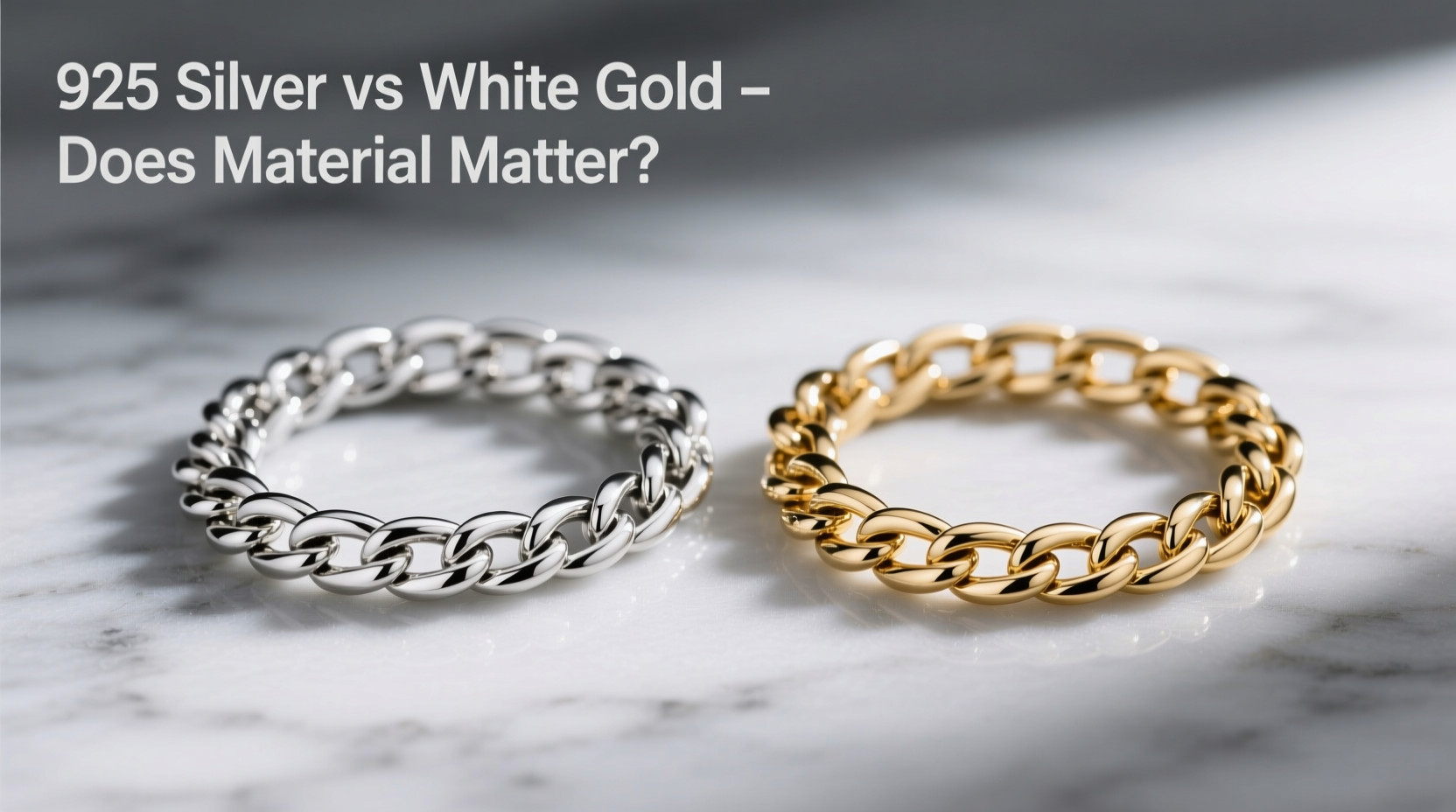
Before comparing 925 silver and white gold, it’s essential to understand what each material is made of and how it performs over time.
925 Silver (Sterling Silver): This alloy consists of 92.5% pure silver and 7.5% other metals—usually copper—to enhance strength. Pure silver is too soft for durable jewelry, so this blend improves resilience while maintaining brilliance. Sterling silver develops a natural patina over time, which some appreciate as character; others see it as tarnish that requires upkeep.
White Gold: A more complex alloy, white gold is typically 75% gold (18K) mixed with white metals like palladium, nickel, or manganese. It’s often plated with rhodium—a rare metal from the platinum family—to boost shine and scratch resistance. Unlike silver, white gold doesn’t tarnish, but the rhodium plating wears down over time and may need re-plating every 1–3 years.
Tip: Always check for hallmarks—“925” for silver and “14K” or “18K” for white gold—to verify authenticity.Performance Comparison: Durability, Maintenance, and Longevity
A Cuban link chain endures constant movement, friction, and exposure to sweat, lotions, and environmental pollutants. How each material holds up under these conditions is crucial.
| Feature | 925 Silver | White Gold |
|---|---|---|
| Durability | Moderate; prone to scratches and dents over time | High; more resistant to deformation and wear |
| Tarnish Resistance | Low; reacts with sulfur in air and skin oils | High; no tarnishing, though rhodium may dull |
| Maintenance | Frequent polishing needed; store separately | Periodic rhodium re-plating recommended |
| Lifespan (with care) | 5–10 years | 20+ years |
| Hypoallergenic | Varies; copper content may irritate sensitive skin | Depends on alloy—nickel can cause reactions |
The structural demands of a Cuban link—thick, tightly woven links—favor stronger metals. White gold’s superior density makes it less likely to bend or break during daily wear, especially with heavier chain styles. In contrast, sterling silver chains over 20 grams may begin showing signs of stress at the joints after prolonged use.
“While silver offers accessibility, white gold is engineered for endurance. If you're wearing a chain daily, the investment pays off in reduced maintenance and longer life.” — Daniel Reyes, Master Jeweler & GIA Graduate
Cost and Value: Short-Term Savings vs. Long-Term Investment
Price is often the deciding factor. A 20-inch, 10mm-wide Cuban link in 925 silver might cost $150–$300, whereas the same design in 14K white gold could range from $1,800 to $3,500 depending on weight and craftsmanship.
Silver is inherently less valuable than gold. Even with markup, the raw material cost difference is substantial. However, white gold retains its worth over decades. It can be resold, repurposed, or passed down—silver rarely appreciates and is seldom treated as heirloom jewelry.
Consider inflation in maintenance costs: silver requires regular cleaning kits, anti-tarnish cloths, and potential re-shaping. Over ten years, these small expenses accumulate. Meanwhile, white gold’s occasional rhodium dip (typically $50–$100) is predictable and infrequent.
Tip: Buy white gold during sales at reputable jewelers who include free rhodium services with purchase.Style and Prestige: Perception Matters
Jewelry communicates identity. In professional settings, red-carpet events, or luxury circles, material signals intention. A white gold Cuban link carries connotations of permanence, success, and taste. It’s the kind of piece worn by executives, athletes, and collectors—not just as decoration, but as a symbol.
Silver, while stylish and versatile, is widely associated with fashion jewelry. It works perfectly for rotating trends, seasonal looks, or experimental styling. But it lacks the gravitas of gold when making a lasting impression.
In pop culture, the shift is evident. Artists like Jay-Z, Travis Scott, and Rihanna are rarely seen in silver chains. Their collections feature thick, custom white or yellow gold pieces—pieces built to last generations. As one designer put it: “Silver gets replaced. Gold gets inherited.”
Real Example: Two Brothers, Two Choices
Take the case of Marcus and Jamal, brothers shopping for their first premium Cuban links. Marcus chose a 14K white gold 8mm chain for $2,200—saving six months to afford it. Jamal opted for a nearly identical 925 silver version at $240.
Three years later, Marcus’s chain remains bright, needing only biannual polishing and a single rhodium refresh. He wears it weekly without worry. Jamal’s silver chain now shows deep scratches, has developed uneven tarnish, and one link bent during a workout. He replaced it twice, spending $680 total—and still feels it lacks the “real” look he wanted.
Material didn’t just affect appearance—it shaped their experience and satisfaction.
Care Guidelines: Maximizing Lifespan for Both Materials
No matter your choice, proper care extends beauty and function. Here’s how to maintain each:
For 925 Silver Chains
- Wipe with a microfiber cloth after each wear.
- Store in an airtight bag with anti-tarnish strips.
- Use a silver polish solution monthly—avoid abrasive pastes.
- Remove before swimming, showering, or exercising.
- Never spray perfume or apply lotion while wearing it.
For White Gold Chains
- Clean weekly with mild soap and warm water; dry thoroughly.
- Have the rhodium plating checked annually.
- Inspect clasp integrity every few months.
- Keep away from chlorine, which can damage gold alloys.
- Store flat or hanging to prevent kinking.
Checklist: Before You Buy Any Cuban Link Chain
- ✅ Verify metal stamp (925, 14K, 18K)
- ✅ Confirm chain weight and link thickness
- ✅ Check clasp type (lobster claw or spring ring?)
- ✅ Ask about return policy and warranty
- ✅ Consider your daily routine—will it survive?
- ✅ Decide: Is this a trend or a legacy piece?
Frequently Asked Questions
Can I wear a 925 silver Cuban link every day?
You can, but expect increased wear and tarnishing. Daily exposure to moisture, sweat, and friction accelerates deterioration. For everyday wear, white gold is a more sustainable option.
Does white gold look exactly like platinum?
Freshly rhodium-plated white gold closely resembles platinum, but over time, the gold undertone may become slightly warmer. Platinum is denser, heavier, and naturally hypoallergenic—but also 2–3x more expensive.
Is there such a thing as “high-quality” silver chains?
Yes. Look for thick gauge wires, tight link construction, and reinforced clasps. Some artisans use anti-tarnish coatings or palladium-infused silver blends. Still, even premium silver won’t match gold’s longevity.
Final Thoughts: Material Matters More Than You Think
The question isn’t whether 925 silver or white gold looks better at first glance—they both shine brilliantly. The real issue is what happens next. Time, use, and environment test every chain. Silver may dazzle initially at a fraction of the price, but it demands vigilance and accepts a shorter lifespan. White gold, though costly upfront, delivers resilience, consistency, and enduring value.
If you’re building a capsule jewelry collection—if you want a chain that survives trends, workouts, travel, and time—white gold is the smarter long-term choice. But if you love changing styles frequently or are on a tight budget, a well-cared-for silver Cuban link can still make a bold statement.
In the end, the material doesn’t just define the chain. It reflects your priorities.
💬 What’s your go-to chain material? Share your experience with 925 silver or white gold Cuban links in the comments—your insight could help someone make their next big jewelry decision.